



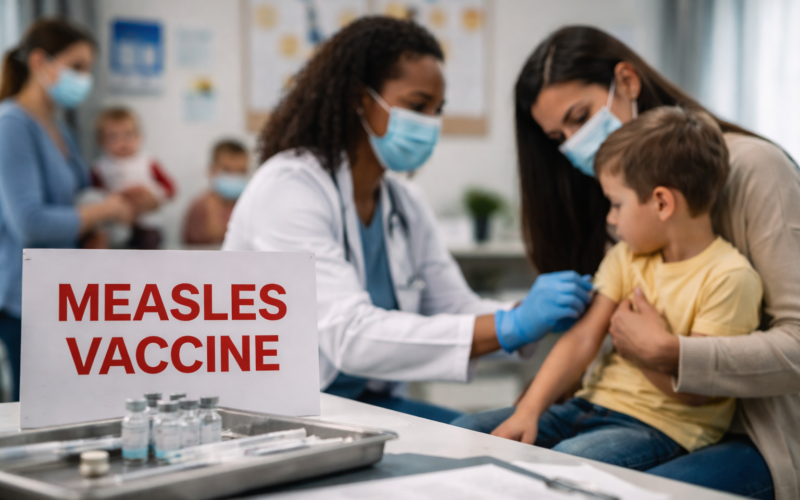
In a direct intervention amid the most significant measles resurgence in decades, the Centers for Disease Control and Prevention has seen its acting director publicly call for expanded measles vaccination across the United States. Acting Director Jay Bhattacharya urged Americans to ensure they and their children are immunized as confirmed cases climb to levels not seen in over 30 years. The warning comes as the United States faces mounting pressure over its measles elimination status and as localized outbreaks strain public health infrastructure in multiple states. The development signals a shift toward more assertive federal messaging at a moment when vaccination coverage gaps are translating into measurable epidemiological and policy risk.
Why is the Centers for Disease Control and Prevention escalating its measles vaccination messaging at this specific moment in 2026?
The timing of the acting director’s statement is not coincidental. Confirmed measles infections have surpassed one thousand cases nationally in early 2026, with a disproportionate concentration in South Carolina and smaller clusters emerging elsewhere. For context, the United States declared measles eliminated in 2000, meaning endemic transmission had been halted. The current surge raises the prospect of losing that designation if sustained spread continues.
Measles is one of the most contagious viral diseases known. Epidemiologists estimate that a single infected individual can transmit the virus to 12 to 18 susceptible people in close-contact settings. That transmission rate demands exceptionally high vaccination coverage, often cited at roughly 95 percent, to maintain herd immunity. Even modest declines below that threshold create vulnerability pockets that can ignite outbreaks when the virus is reintroduced through travel or community spread.
The Centers for Disease Control and Prevention is escalating its messaging because those vulnerability pockets are no longer theoretical. Kindergarten vaccination rates have slipped in several regions, and religious or philosophical exemptions have increased in certain districts. Federal public health officials are attempting to preempt a broader crisis by emphasizing vaccination before transmission spreads further into undervaccinated communities.
How does the current measles outbreak expose structural weaknesses in U.S. vaccination coverage and state-level enforcement?
The present outbreak underscores a persistent structural challenge in American public health: vaccination policy is federally guided but state administered. School-entry vaccine requirements vary by state, and enforcement rigor differs across districts. When compliance monitoring weakens or exemption approvals rise, the system becomes fragmented.
In South Carolina, which accounts for a substantial share of recent confirmed cases, local health authorities have sought additional reinforcements beyond standard Centers for Disease Control and Prevention support mechanisms. That request is significant. It indicates that outbreak management capacity at the local level may be stretched when case counts escalate quickly.
The situation also reflects broader trends in vaccine hesitancy that gained momentum during and after the COVID-19 pandemic. While measles vaccination historically enjoyed bipartisan support, trust erosion in public health institutions has complicated messaging. The acting director’s intervention can therefore be viewed as both epidemiological containment and institutional credibility management.
What does this renewed federal emphasis signal about U.S. measles elimination status and global health standing?
The Pan American Health Organization has postponed a review meeting that was expected to assess the United States’ elimination status. That delay is not procedural trivia. It signals that global health bodies are monitoring whether the United States can sustain its elimination classification.
Losing elimination status would not mean measles becomes permanently endemic overnight. However, it would represent a reputational and operational setback. It would signal that one of the world’s most advanced healthcare systems is struggling to maintain routine immunization thresholds for a vaccine-preventable disease.
For policymakers, the reputational dimension matters. Public health credibility influences everything from international disease surveillance cooperation to domestic funding allocations. The Centers for Disease Control and Prevention’s assertive messaging is partly about preventing a symbolic downgrade that could ripple through broader global health diplomacy.
Why is the measles vaccine considered uniquely critical compared with other routine immunizations?
The measles, mumps, and rubella vaccine is among the most effective vaccines in modern medicine. Two doses provide approximately 97 percent protection against measles. Unlike some pathogens where partial immunity meaningfully reduces transmission, measles requires near-universal coverage to block outbreaks due to its extraordinary transmissibility.
Moreover, measles is not a benign childhood illness. Complications include pneumonia, encephalitis, and long-term neurological damage. Hospitalization rates during outbreaks can strain pediatric capacity, especially in areas already dealing with staffing shortages or seasonal respiratory disease surges.
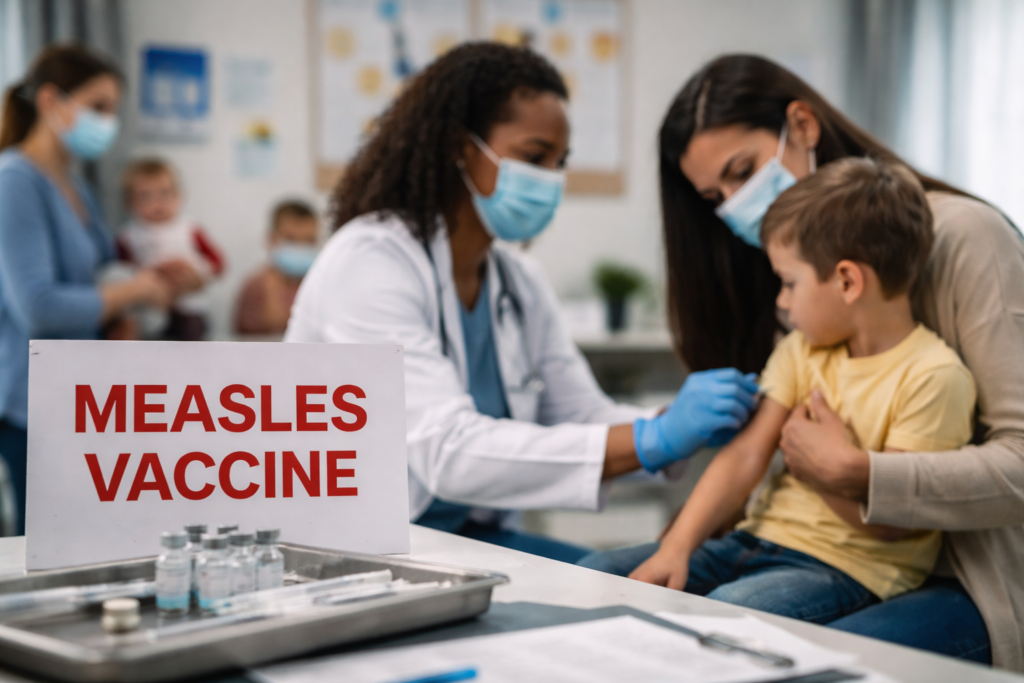
The Centers for Disease Control and Prevention is therefore prioritizing measles not merely because of case counts but because the risk-return equation for vaccination is unequivocal. High efficacy, long safety track record, and severe complication risk create a compelling public health calculus.
How does this episode reflect a shift in leadership tone within the Centers for Disease Control and Prevention?
Public health observers have noted that earlier controversies surrounding vaccine messaging had introduced uncertainty into federal communication. The current acting director’s public call for vaccination marks a clearer alignment with longstanding scientific consensus.
This tone recalibration matters. Public health messaging must be consistent to maintain credibility. Even subtle ambiguity at the federal level can amplify misinformation narratives at the community level. By explicitly stating that vaccination remains the most effective protection against measles, the Centers for Disease Control and Prevention is attempting to reassert clarity in its guidance.
The broader policy implication is that leadership tone influences compliance. When senior officials speak directly and unequivocally about prevention tools, they can help counter fragmented narratives circulating on social media platforms.
What are the operational and economic implications if measles transmission continues to expand?
If measles cases continue rising, the implications extend beyond clinical treatment. Contact tracing, isolation protocols, school exclusions, and emergency vaccination campaigns impose administrative and financial burdens on local health departments.
Healthcare systems face increased emergency department visits and inpatient admissions, particularly among infants too young to be vaccinated. Employers may experience absenteeism in communities where outbreaks occur. Schools may confront temporary closures or expanded exclusion rules for unvaccinated students.
From a policy perspective, sustained outbreaks can trigger legislative reconsideration of exemption policies. States that have already tightened exemption standards in past outbreaks may revisit enforcement frameworks. Conversely, political resistance in other regions could intensify. The trajectory of case counts will shape that debate.
What does public sentiment data suggest about the broader vaccination environment in the United States?
Recent polling indicates that a majority of Americans continue to support vaccines and school-entry requirements. However, support levels vary geographically and ideologically. The measles outbreak has reignited debate over how best to communicate risk without inflaming polarization.
The Centers for Disease Control and Prevention faces a delicate balancing act. Messaging must remain firm enough to convey urgency while avoiding rhetoric that alienates hesitant populations. The acting director’s approach appears calibrated toward emphasizing prevention benefits rather than mandating language.
The ultimate effectiveness of this communication strategy will depend on whether it translates into measurable increases in vaccination uptake in affected counties.
What happens next if vaccination rates rebound versus if hesitancy persists?
If vaccination uptake increases quickly in outbreak zones, transmission chains could be interrupted within months. Targeted campaigns combined with school enforcement measures could restore herd immunity thresholds and stabilize national case counts before elimination status is formally questioned.
If hesitancy persists and coverage remains uneven, outbreaks may become recurrent rather than episodic. That scenario would complicate future policy planning and potentially normalize measles as a recurring public health event in the United States.
The difference between those outcomes hinges on near-term behavioral response. Vaccines are available. Distribution systems exist. The bottleneck is confidence and compliance rather than supply.
What are the keytakeaways for executives, policymakers, and public health leaders assessing the CDC measles vaccination push?
- The Centers for Disease Control and Prevention’s public vaccination call reflects escalating epidemiological risk rather than routine messaging.
- Measles case growth threatens the United States’ elimination status, carrying reputational and policy implications.
- Declines in localized vaccination coverage have translated directly into outbreak vulnerability.
- State-level enforcement variability remains a structural weak point in U.S. immunization governance.
- Hospital systems and local health departments face operational strain if transmission expands further.
- Clear leadership tone from federal officials is central to rebuilding vaccination confidence.
- Public sentiment remains broadly supportive of vaccines, but regional polarization complicates uniform compliance.
- Near-term vaccination uptake will determine whether outbreaks remain contained or become cyclical events.
- Legislative debates over exemption policies may intensify if case counts continue rising.
- The measles episode serves as a stress test for broader U.S. public health resilience post-pandemic.
Discover more from Business-News-Today.com
Subscribe to get the latest posts sent to your email.