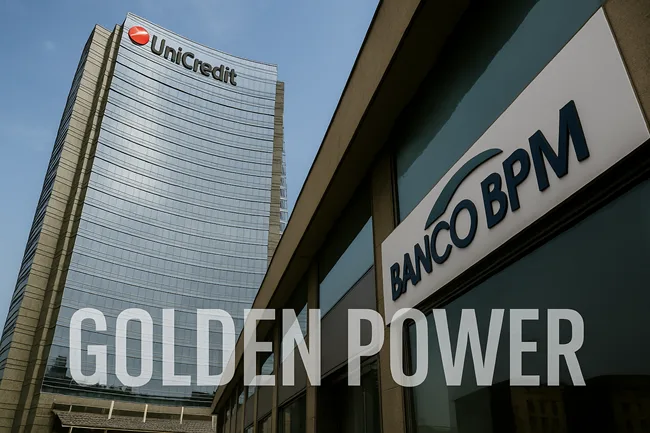
UniCredit S.p.A. (CRDI.MI) officially withdrew its €14.6 billion all‑share bid for Banco BPM S.p.A. (BAMI.MI) on July 22, 2025, blaming Italy’s “golden power” intervention for creating regulatory and operational barriers. The move ended what could have been Italy’s largest domestic banking merger in over a decade and highlighted a growing clash between national sovereignty and European Union ambitions for banking consolidation.
The golden power decree, invoked in April 2025 by Prime Minister Giorgia Meloni’s Cabinet, required UniCredit to exit its Russian operations by early 2026, preserve Banco BPM’s loan‑to‑deposit ratio for five years, retain strategic domestic fund management holdings, and guarantee no significant branch closures or staff reductions. While the Lazio regional administrative court struck down two of these conditions in early July, the Russian divestment mandate remained binding. Political signals of potential legislative reinforcement of other conditions convinced UniCredit that the risks outweighed the strategic benefits.
Institutional investors described the decision as a pragmatic retreat. They noted that the golden power requirements undermined key synergy assumptions, particularly in cost optimization and capital redeployment.
What specific golden power requirements created operational and financial risks for UniCredit’s acquisition plan?
The mandatory divestment of Russian operations was the most critical hurdle. UniCredit, which still manages profitable assets in Russia, would have been forced to unwind these positions within nine months, creating potential write‑downs and disrupting capital allocation. Maintaining Banco BPM’s existing loan‑to‑deposit ratio further restricted the merged entity’s ability to optimize funding structures and shift toward higher‑margin lending.
The conditions forbidding significant job cuts or branch closures negated UniCredit’s cost synergy targets, estimated by analysts at €400–500 million annually. Furthermore, retaining Banco BPM’s domestic asset management links, particularly its stake in Anima Holding, would have constrained UniCredit’s plans to rationalize overlapping businesses. Institutional sentiment framed these combined measures as “strategically suffocating,” leaving UniCredit with no clear path to deliver shareholder value through the acquisition.
How did UniCredit’s financial performance after the withdrawal affect investor sentiment and future guidance?
The timing of the withdrawal coincided with strong second‑quarter results, reinforcing investor confidence in UniCredit’s ability to generate returns without politically complicated M&A. Adjusted net profit rose to €2.9 billion, with total net income at €3.3 billion including one‑off items, beating consensus estimates of €2.5 billion and exceeding €2.7 billion a year earlier. Total revenue was €6.13 billion, down slightly year‑on‑year, but core revenue increased 1.3 percent, supported by stable net interest income and steady fee-based businesses.
The cost‑to‑income ratio improved to below 36 percent as UniCredit reduced expenses by 1.5 percent. The bank upgraded its 2025 net profit outlook to approximately €10.5 billion from earlier guidance above €9.3 billion and committed to at least €30 billion in shareholder distributions through 2027, including dividends and buybacks. Institutional investors viewed this as evidence that UniCredit could balance growth and capital discipline, further justifying its decision to avoid a politically fraught merger.
What does the collapse of the deal mean for Italy’s banking sector and the broader European consolidation outlook?
The failure of the UniCredit–Banco BPM deal highlights a growing fragmentation in European banking consolidation. Italy’s golden power use mirrors trends in other member states, such as Spain blocking BBVA’s acquisition of Banco Sabadell and Germany resisting UniCredit’s control ambitions over Commerzbank. These actions reflect national priorities to protect employment, credit access, and domestic financial ecosystems.
The European Commission, which has consistently promoted cross‑border consolidation to create globally competitive banks, has criticized these interventions as disproportionate. Brussels issued a warning to Rome in mid‑July, suggesting that Italy’s golden power application could violate EU single‑market rules and may face annulment orders. However, with national governments prioritizing sovereignty, analysts expect cross‑border deals to remain politically challenging.
Domestically, the Italian government is expected to promote a merger between Banco BPM and Monte dei Paschi di Siena, creating a “third pillar” bank to compete with UniCredit and Intesa Sanpaolo. This approach aligns with Rome’s goal of strengthening domestic players while keeping strategic control within Italy.
How does this decision fit into UniCredit’s history of politically influenced consolidation attempts?
UniCredit’s withdrawal follows a pattern of failed politically sensitive consolidation attempts. In 2021, it abandoned negotiations to acquire Monte dei Paschi di Siena due to disagreements with Italy’s Treasury over recapitalization plans. In late 2024, UniCredit quietly increased its stake in Commerzbank to nearly 29.9 percent, but German regulators signaled that any move toward control would be blocked.
Italy’s golden power measures, originally designed to safeguard national security, have evolved into strategic tools for protecting key industries, including banking. The Banco BPM episode reinforces the growing influence of political considerations in shaping Europe’s financial sector consolidation.
How did markets react to the withdrawal, and what is the future outlook for Banco BPM as an independent bank?
The immediate market response was mixed. UniCredit’s shares gained on news of stronger earnings and raised guidance, reflecting investor approval of its capital discipline. Banco BPM’s stock fell about 3–4 percent as investors adjusted expectations for its growth without UniCredit’s backing.
Institutional analysts believe Banco BPM will pursue a domestic merger, most likely with Monte dei Paschi di Siena, to build scale and remain competitive. As of 2023, Banco BPM posted €5.34 billion in revenue, €2.77 billion in operating income, and €1.26 billion in net profit, supported by a solid Common Equity Tier 1 ratio of 14.2 percent. This strong capital base provides flexibility, but achieving sustainable scale remains a priority for long-term valuation growth.
What are analysts and investors watching in the coming quarters regarding regulatory policy, consolidation moves, and shareholder returns?
Analysts are closely tracking the European Commission’s review of Italy’s golden power decision. A formal ruling against Rome could set a precedent, encouraging future cross‑border deals. Conversely, a lack of enforcement could cement national governments’ dominance in merger decisions.
For UniCredit, investors expect a shift away from politically exposed M&A toward organic growth, digital transformation, and disciplined capital allocation. The bank is likely to leverage its stakes in Commerzbank and Alpha Bank for incremental growth opportunities rather than full acquisitions.
Institutional sentiment favors banks that emphasize domestic stability, capital strength, and shareholder returns over those pursuing contested mega-mergers. Analysts believe that, in the near term, domestic mergers like Banco BPM–Monte dei Paschi are more likely to succeed than cross-border consolidations, given the current regulatory climate.
UniCredit’s decision to withdraw from the Banco BPM bid underscores the increasing tension between EU-level integration goals and national sovereignty. While disappointing for advocates of European banking scale, the move demonstrates UniCredit’s focus on financial discipline and shareholder value. Banco BPM’s future now hinges on whether Italy supports a domestic consolidation path that could reshape the country’s banking sector in the years ahead.
Discover more from Business-News-Today.com
Subscribe to get the latest posts sent to your email.