

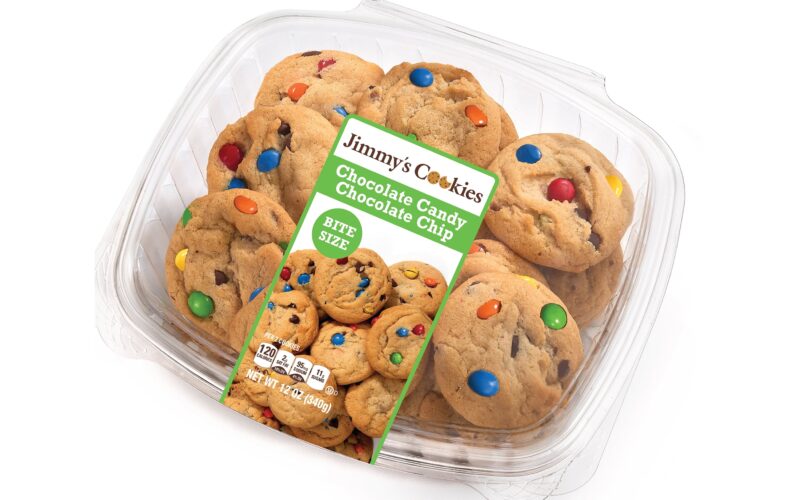
Rise Baking Company has completed its acquisition of Jimmy’s Gourmet Bakery, strengthening its position in the North American cookie market and expanding its manufacturing presence in the Northeast. The transaction adds three production facilities covering more than 350,000 square feet, along with Jimmy’s Cookies, King Krumb Cookie and Ecce Panis product lines. Jimmy’s Gourmet Bakery will initially operate independently while the companies develop their integration plan, reducing the immediate risk of disrupting customer relationships or manufacturing operations. The financial terms were not disclosed, leaving the strategic logic clearer than the near-term return profile. The central test will be whether Rise Baking Company can translate the additional capacity, product-development expertise and customer access into sustainable growth without weakening the entrepreneurial capabilities that made Jimmy’s attractive.
The completion follows the definitive agreement announced in June 2026 and represents another step in Rise Baking Company’s acquisition-led expansion strategy. The Minneapolis-headquartered manufacturer already supplies cakes, cookies, muffins, icings, pies and other bakery products to grocery chains, convenience stores, quick-service restaurants, foodservice operators and mass merchandisers.
Jimmy’s Gourmet Bakery brings a more specialised position in gourmet cookies, frozen cookie dough, thaw-and-sell products, artisan breads and private-label bakery programmes. That combination makes the transaction more than a straightforward purchase of production space. Rise Baking Company is acquiring a platform that can help customers formulate new products, test flavours, create retailer-specific formats and bring bakery concepts to market at commercial scale.
The acquisition also extends Rise Baking Company’s physical network in a region where proximity can influence freight costs, delivery reliability and responsiveness to major retail customers. Bakery products often require tightly managed production, freezing, warehousing and replenishment schedules. Additional Northeast capacity could therefore improve service levels while giving the combined group greater flexibility in deciding where individual products should be manufactured.
How does the Jimmy’s Gourmet Bakery acquisition strengthen Rise Baking Company’s cookie strategy?
The most immediate strategic benefit is greater scale in cookies, one of the categories where Rise Baking Company already has established manufacturing expertise through businesses such as Best Maid Cookie Company and South Coast Baking. Jimmy’s Gourmet Bakery adds further capacity, recipes, product formats and retailer relationships rather than forcing Rise Baking Company to enter an unfamiliar market.
That overlap creates opportunities, but it also makes integration discipline important. The value of the acquisition will not come simply from producing more cookies. It will depend on whether Rise Baking Company can use the combined portfolio to serve a wider range of customer requirements, improve production utilisation and develop products that command attractive margins.
Jimmy’s Gourmet Bakery has operated for more than four decades and has built capabilities around custom recipe formulation, premium cookie production and private-label manufacturing. Private-label bakery is strategically important because retailers increasingly want differentiated products that strengthen their own brands rather than simply filling shelves with identical national offerings.
A manufacturer capable of developing customised flavours, sizes, packaging and merchandising concepts can become more deeply embedded in a retailer’s category-planning process. That relationship can be more defensible than competing solely on production volume or price, although it also places greater pressure on innovation speed, quality consistency and confidentiality.
Rise Baking Company can potentially combine Jimmy’s product-development model with its own broader manufacturing and distribution platform. A successful integration could allow an innovation developed within Jimmy’s network to reach more customers, more channels and more geographic markets. Conversely, Rise Baking Company’s existing customers could gain access to Jimmy’s premium cookie concepts and artisan bread capabilities.
The risk is that centralisation could slow the customer-specific development process that helped Jimmy’s Gourmet Bakery grow. Large bakery groups often benefit from procurement scale, manufacturing discipline and broader sales coverage, but entrepreneurial product teams can lose speed when approval structures become more complex. Rise Baking Company’s decision to allow Jimmy’s to operate independently during the initial integration period suggests management is attempting to protect continuity while evaluating where combination will create genuine value.

Why does the addition of three Northeast facilities matter for bakery customers and supply chains?
Jimmy’s Gourmet Bakery operates three manufacturing facilities with more than 350,000 square feet of combined production space. The acquired footprint gives Rise Baking Company additional capacity in the Northeast, one of the largest and most densely populated consumer markets in the United States.
Manufacturing location matters in commercial bakery because frozen dough, thaw-and-sell goods and finished baked products require coordinated cold-chain or temperature-controlled logistics. Long transportation distances can increase freight expense, complicate replenishment and make it harder to respond quickly when retailer demand changes.
The Northeast facilities could allow Rise Baking Company to produce selected items closer to customers, rebalance volumes across its network and reduce dependence on individual plants. This becomes particularly valuable during seasonal demand peaks, equipment outages, weather disruptions or major promotional programmes.
The acquisition may also improve Rise Baking Company’s ability to compete for national accounts. Large grocery groups and foodservice operators increasingly prefer suppliers that can provide consistent products across multiple regions while maintaining contingency capacity. A wider manufacturing network can support that requirement, provided recipes, quality procedures and food-safety standards remain consistent across plants.
However, more facilities also mean more complexity. Rise Baking Company will need to evaluate production lines, labour availability, equipment condition, warehousing arrangements, ingredient flows and customer commitments across the expanded network. The group must determine which plants should remain specialised, which products can be transferred and where capital investment will generate the strongest operational return.
Moving production merely to improve apparent utilisation can be counterproductive if it creates qualification delays or changes product characteristics. Retail and foodservice customers may need to approve facility transfers, packaging changes or ingredient modifications. The integration plan must therefore balance efficiency with the practical requirements of customer acceptance and product consistency.
Can Rise Baking Company create value without disrupting Jimmy’s customer relationships?
Rise Baking Company has said Jimmy’s Gourmet Bakery will initially operate independently while the businesses take a measured approach to integration. That decision is strategically sensible because customer continuity is one of the most important assets being acquired.
Jimmy’s Gourmet Bakery serves retail and foodservice customers nationwide and has developed relationships around responsiveness, customisation and product quality. Customers are unlikely to view ownership changes as valuable on their own. They will judge the transaction by whether service levels remain reliable, innovation improves and the combined company can offer broader capabilities without introducing operational friction.
The early integration phase should therefore focus on retaining employees, protecting customer contacts and understanding how Jimmy’s product-development and production processes differ from those used elsewhere in Rise Baking Company. Howard Hirsch, chief executive officer of Jimmy’s Gourmet Bakery, indicated that the transaction would allow the company to build on its existing legacy while opening additional opportunities for employees, customers and partners. Michael Pisani, president of Jimmy’s Gourmet Bakery, similarly said the combination would provide greater resources for innovation and expansion.
Those expectations are credible in principle, but the benefits must be demonstrated through measurable commercial outcomes. Relevant evidence could include new customer wins, cross-selling activity, improved service performance, successful product launches and capital investment in the acquired facilities.
Employee retention will be particularly important. In food manufacturing, practical knowledge is often distributed across production managers, maintenance teams, quality specialists, product developers and customer-facing employees. Losing key personnel during integration can reduce the value of the acquired recipes, processes and relationships even when the physical plants remain intact.
Mark McNeil, chief executive officer of Rise Baking Company, placed particular emphasis on Jimmy’s workforce, culture and history of innovation. That framing indicates management understands that the acquisition’s value is not confined to machinery or square footage. The harder challenge will be preserving those capabilities while introducing the controls, performance expectations and scale advantages of a larger organisation.
What does the acquisition reveal about Rise Baking Company’s private equity-backed growth model?
Rise Baking Company has used acquisitions to assemble a diversified bakery manufacturing platform spanning cookies, cakes, pies, breads, icings and related categories. The business was acquired in 2024 by investment firms Platinum Equity and Butterfly, replacing Olympus Partners as the company’s ownership group.
The Jimmy’s Gourmet Bakery transaction shows that the new owners are continuing the consolidation strategy rather than pausing expansion after the ownership change. This suggests Rise Baking Company remains positioned as a platform capable of absorbing complementary bakery businesses and extending their products across a larger commercial network.
The financial terms were not disclosed, preventing an external assessment of the purchase multiple, funding structure or expected return. That absence matters because acquisition success depends not only on strategic fit but also on price. Even a well-positioned business can produce disappointing returns when the buyer pays too much or requires aggressive synergy assumptions to justify the transaction.
Private equity ownership may give Rise Baking Company access to capital and transaction expertise, but it can also increase expectations for operating improvement and eventual value realisation. The combined group will need to generate benefits through revenue growth, manufacturing efficiency, procurement leverage or stronger customer retention rather than relying on acquisition activity alone.
Potential purchasing advantages could emerge in ingredients, packaging, logistics, insurance, maintenance and other shared services. Yet bakery inputs and product requirements vary, meaning procurement savings must not compromise recipes or customer specifications. The most valuable efficiencies may come from better capacity planning, coordinated capital investment and reduced duplication in selected corporate functions.
The acquisition also strengthens Rise Baking Company’s position in a fragmented bakery manufacturing industry where retailers and foodservice operators seek both scale and flexibility. Smaller producers can excel at craftsmanship and innovation but may lack national distribution, capital for automation or sufficient redundancy. Larger platforms can provide those resources, although their competitive advantage depends on retaining the speed and customer intimacy of the acquired companies.
Which products and brands does Jimmy’s Gourmet Bakery add to the Rise portfolio?
Jimmy’s Gourmet Bakery contributes the Jimmy’s Cookies brand, the King Krumb Cookie line and Ecce Panis artisan breads. It also produces frozen cookie dough, thaw-and-sell baked goods and private-label products for commercial customers.
The portfolio broadens Rise Baking Company’s ability to serve different price points, channels and merchandising formats. Branded products can provide recognition and established demand, while private-label manufacturing allows the company to participate in retailer-led product development. Artisan bread adds another capability that may be relevant to grocery bakery departments, foodservice operators and premium meal programmes.
The combination could create cross-category selling opportunities. A retailer already purchasing pies, cakes or icings from Rise Baking Company may be able to source premium cookies or artisan breads from the same supplier. Similarly, Jimmy’s customers may gain access to Rise Baking Company’s wider dessert and bakery portfolio.
Cross-selling, however, should not be treated as automatic. Commercial bakery customers typically approve suppliers by category, product, facility and specification. Sales teams will need to demonstrate that the expanded portfolio improves assortment, economics or operational simplicity for each customer.
The acquisition’s product-development potential may ultimately matter more than the existing brands. Consumer bakery preferences change quickly, influenced by indulgence trends, portion size, seasonal flavours, premium ingredients, packaging formats and demand for convenient thaw-and-sell products. A manufacturer that can move efficiently from concept development to scaled production may capture more value than one relying only on established recipes.
What will determine whether the Jimmy’s Gourmet Bakery acquisition succeeds?
The acquisition improves Rise Baking Company’s strategic position by adding Northeast capacity, experienced employees, established products and private-label innovation capabilities. It also deepens the company’s participation in cookies without requiring a move into an unrelated category.
What remains unresolved is the economics of the transaction and the detailed integration plan. Rise Baking Company has not disclosed the purchase price, expected synergies, financing structure or financial contribution of Jimmy’s Gourmet Bakery. Without those figures, the transaction can be assessed mainly through its industrial and competitive logic rather than its investment return.
The next measurable proof points will come from operational continuity and commercial expansion. Stable customer retention, continued employee engagement, new product introductions and evidence of cross-selling would indicate that Rise Baking Company is preserving the acquired platform while extending its reach.
Capital deployment will provide another signal. Investment in automation, production lines, warehousing or product-development capabilities could increase the capacity and competitiveness of the acquired facilities. Conversely, prolonged uncertainty over plant roles or organisational responsibilities could slow decision-making and weaken momentum.
The strongest outcome would be a combination in which Jimmy’s Gourmet Bakery retains its customer responsiveness and product creativity while gaining the manufacturing scale, sales reach and investment resources of Rise Baking Company. The weaker outcome would be an integration that adds complexity without producing meaningful growth or operating leverage.
For Rise Baking Company, completing the acquisition is therefore the beginning rather than the proof of value creation. The decisive test will be whether the expanded network produces more innovation, stronger customer relationships and better use of manufacturing capacity while maintaining the quality and service standards on which both businesses depend.
What are the key takeaways from Rise Baking Company’s Jimmy’s Gourmet Bakery acquisition?
- Rise Baking Company completed its acquisition of Jimmy’s Gourmet Bakery on July 31, 2026, after announcing the definitive agreement in June.
- The transaction adds three Northeast manufacturing facilities with more than 350,000 square feet of production space.
- Jimmy’s Gourmet Bakery contributes gourmet cookies, frozen cookie dough, thaw-and-sell bakery products, artisan breads and private-label development expertise.
- The acquired portfolio includes Jimmy’s Cookies, King Krumb Cookie and Ecce Panis.
- Jimmy’s will initially operate independently while the companies develop a phased integration plan.
- Rise Baking Company could benefit from regional production flexibility, cross-selling and stronger service capabilities for national customers.
- Retaining Jimmy’s employees, customer relationships and entrepreneurial product-development model will be central to the acquisition’s success.
- The purchase price, financing structure and expected financial contribution were not disclosed.
- The transaction continues Rise Baking Company’s acquisition-led expansion under owners Platinum Equity and Butterfly.
- Customer retention, new product launches, plant investment and manufacturing utilisation will provide the clearest evidence of whether the deal creates lasting value.
Discover more from Business-News-Today.com
Subscribe to get the latest posts sent to your email.