

Swiss-headquartered Jungbunzlauer, a global producer of bio-based ingredients, has signed a definitive agreement to acquire a multipurpose production facility in Thomson, Illinois from International Flavors & Fragrances, Inc. (NYSE: IFF), marking its first direct manufacturing footprint in the United States.
Announced on September 2, 2025, the acquisition supports Jungbunzlauer’s broader North American expansion strategy as demand for sustainable and naturally derived ingredients continues to accelerate across food, beverage, health, and personal care sectors. While financial terms of the asset purchase were not disclosed, the deal is expected to close in early Q4 2025, subject to regulatory approvals and customary conditions.
Jungbunzlauer emphasized that the transaction includes only the physical site and assets—not any of International Flavors & Fragrances’ existing product lines, businesses, or workforce at the facility.
Why is Jungbunzlauer acquiring a U.S. site, and how does Thomson, Illinois fit into its global strategy?
Jungbunzlauer’s decision to acquire a U.S.-based facility signals a strategic pivot toward domestic manufacturing in one of its most important markets. In a statement accompanying the announcement, Chief Executive Officer Bruno Tremblay described the move as a “key step in delivering on our strategic capacity expansion in North America.” He added that the new site will allow the company to work more closely with U.S. customers and “better understand their challenges.”
This localized approach mirrors a growing trend among European industrial and specialty ingredient suppliers who are increasingly investing in U.S. operations to reduce supply chain vulnerabilities and align with regional sustainability regulations. For Jungbunzlauer, which operates large-scale fermentation plants across Europe and North America (primarily Canada until now), a U.S. presence brings its capabilities even closer to end markets and contract manufacturers.
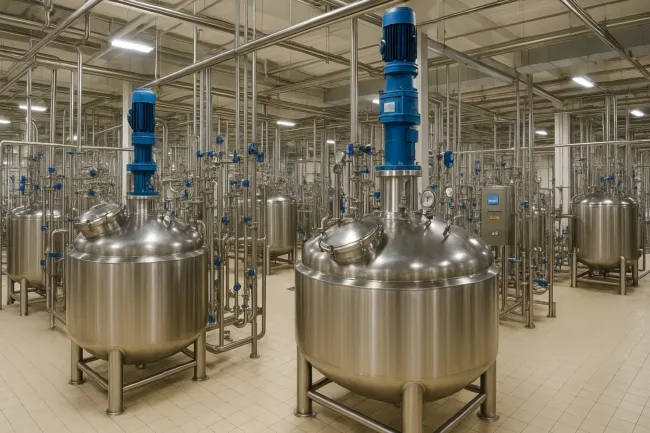
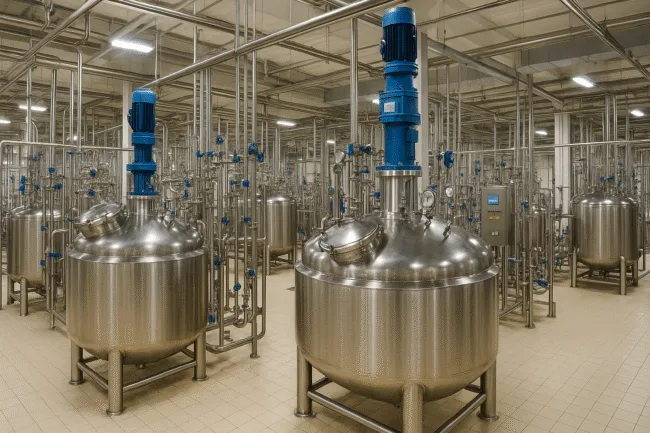
Thomson, Illinois offers logistical and operational advantages for scalable production. The site’s multi-purpose infrastructure, inherited from International Flavors & Fragrances, could be readily adapted to accommodate fermentation, purification, or other food-grade production methods tailored to Jungbunzlauer’s portfolio of acidulants, sweeteners, minerals, and texturants.
What will happen to the facility post-acquisition and when will production begin?
According to Jungbunzlauer, the immediate priority after closing the deal will be to configure the Thomson facility for its own manufacturing requirements. Tremblay confirmed that the company is still finalizing its operational plans, but intends to share more details—including future hiring—once preparations are complete.
As of now, no official timeline has been given for when production will begin. The early Q4 2025 closing leaves limited runway for 2025 operations, suggesting that initial production could start in 2026 depending on plant retooling requirements. Importantly, since the transaction excludes IFF’s personnel and business units, Jungbunzlauer is likely to conduct its own recruitment and onboarding process, which may contribute to regional job creation in Thomson and surrounding counties.
How big is Jungbunzlauer’s business today and how has it evolved in recent years?
Jungbunzlauer has transformed over the past decade from a niche European supplier to a CHF 1.3 billion multinational enterprise with customers in over 130 countries. The Swiss ingredient manufacturer is best known for producing high-purity and eco-friendly ingredients such as citric acid, xanthan gum, gluconates, and erythritol.
Its global footprint already includes fermentation sites in Austria, France, and Canada, with North America emerging as a strategic growth geography amid changing food and nutrition preferences. The company has repeatedly stressed its sustainability-first approach, investing in closed-loop systems, bio-based production, and carbon-neutral targets.
With approximately 1,400 employees worldwide, Jungbunzlauer is positioned as a mid-sized but highly specialized player in the broader ingredients ecosystem. The acquisition of the Thomson plant strengthens its position in the U.S. without the need to build a greenfield facility from scratch—allowing faster market integration and de-risked capital deployment.
How are institutional investors viewing this acquisition, and what signals does it send to the industry?
While Jungbunzlauer is privately held and not listed on public markets, institutional sentiment toward the specialty and food-grade ingredients sector remains broadly bullish. Analysts tracking adjacent public companies such as International Flavors & Fragrances, DSM-Firmenich, and Kerry Group have noted growing demand for transparency, clean-label formulations, and natural origin inputs in food, pharma, and cosmetic applications.
From a supply chain perspective, Jungbunzlauer’s U.S. manufacturing debut addresses key resilience concerns shared by customers and regulators alike. Post-COVID disruptions and geopolitical tensions have made regional production not just a preference—but a competitive necessity.
Industry watchers view this deal as a tactical consolidation play that enables Jungbunzlauer to scale selectively in high-demand categories, while avoiding the complexity of absorbing entire business units or legacy product lines.
What does this mean for International Flavors & Fragrances, and is it part of a broader portfolio shift?
For International Flavors & Fragrances, the divestiture aligns with an ongoing effort to streamline its portfolio and focus on higher-margin core businesses. Over the past two years, the multinational has been rebalancing its assets, cutting underperforming units, and improving operational efficiency following its 2021 merger with DuPont’s Nutrition & Biosciences division.
While the Thomson site was not central to IFF’s commercial operations, its sale allows the company to unlock value from non-core assets without disrupting existing customer relationships or product continuity. The fact that no commercial lines or employees were transferred confirms that IFF sees this as an isolated infrastructure divestment rather than a strategic exit from any particular market segment.
What comes next for Jungbunzlauer in the U.S. after the Thomson deal?
With the Illinois acquisition, Jungbunzlauer has laid the groundwork for deeper U.S. market penetration. Analysts expect the company to follow this move with further investments in capacity, R&D partnerships, and potentially direct-to-brand offerings, particularly in functional foods and sustainable home care segments.
The American ingredients market is evolving rapidly, with customers increasingly seeking localized, certified, and traceable supply chains. Jungbunzlauer’s ability to bring fermentation-based ingredients closer to these customers could open doors to larger B2B contracts, as well as potential joint ventures with CPG firms, pharmaceutical manufacturers, or nutraceutical startups.
As Bruno Tremblay hinted, updates on hiring and product focus will likely arrive after Q4 2025, once the facility’s capabilities are fully mapped out.
Jungbunzlauer’s acquisition of the Thomson, Illinois facility marks a strategic milestone in its North American growth story. By gaining a direct manufacturing foothold in the U.S., the Swiss ingredient supplier is not only reducing logistical friction but also signaling a long-term commitment to one of its most important markets. For customers, the move promises faster response times, deeper collaboration, and a more resilient supply network. For the industry, it highlights how asset-light acquisition strategies—focused on infrastructure over full business units—can accelerate global expansion without the integration headaches of traditional M&A.
Discover more from Business-News-Today.com
Subscribe to get the latest posts sent to your email.