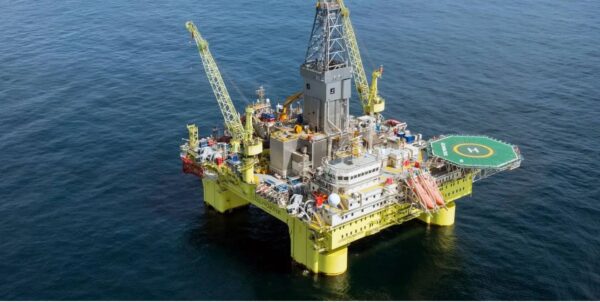
ASP Isotopes Inc. (Nasdaq: ASPI) and ENDRA Life Sciences Inc. (Nasdaq: NDRA) have agreed to a proposed transaction that would place ASP Isotopes’ South African helium interests inside a separately traded Nasdaq company. Noble Africa LLC, the ASP Isotopes subsidiary holding Renergen Limited, would merge with an ENDRA Life Sciences subsidiary and continue as the surviving business. The combined company would be renamed Noble Africa Inc. and seek to trade under the proposed Nasdaq ticker NOBA. A concurrent private placement is expected to raise approximately $50 million, including a $20 million commitment from ASP Isotopes and about $30 million from other investors. The structure could give the Virginia Gas Project direct public-market access while separating part of its financing and execution risk from ASP Isotopes’ broader isotope enrichment portfolio.
Why is ASP Isotopes using ENDRA Life Sciences to build a separate Nasdaq helium company?
The proposed combination resembles a reverse-merger route to the public markets more than a conventional strategic acquisition of ENDRA Life Sciences’ medical technology operations. ASP Isotopes already owns Renergen Limited, having completed that acquisition in January 2026, and Noble Africa LLC functions as the intermediate holding company for the acquired business. Merging Noble Africa LLC with a subsidiary of an existing Nasdaq-listed company offers a pathway to establish a separately traded helium vehicle without undertaking a traditional initial public offering from scratch.
The strategic logic is partly about investor segmentation. ASP Isotopes currently combines several capital-intensive narratives, including specialist isotopes, semiconductor materials, advanced nuclear fuel development, helium and liquefied natural gas. Those businesses share exposure to critical-material supply chains, but they operate with different development cycles, commodity risks, capital requirements and valuation frameworks. A standalone Noble Africa Inc. could allow helium-focused investors to evaluate the Virginia Gas Project independently rather than embedding it inside the increasingly complex ASP Isotopes group.
The separation could also make future project financing easier to structure. Lenders, infrastructure funds and strategic industrial-gas investors may prefer investing directly in a vehicle whose cash flows, assets and liabilities are tied primarily to the Virginia Gas Project. ASP Isotopes would retain overwhelming control, however, meaning the deal is not a disposal of the helium business. It is closer to creating a separately financed subsidiary with its own public currency and capital-market identity.
That distinction matters. ASP Isotopes shareholders would continue to have indirect exposure to Noble Africa Inc. through ASP Isotopes’ expected 89% ownership, while Noble Africa Inc. could issue its own shares, raise project-level capital or pursue strategic transactions. The structure potentially expands financing flexibility, although it also creates another listed entity with separate governance, reporting, compliance and investor-relations costs.
How does the $50 million private placement change funding for the Virginia Gas Project?
Noble Africa LLC has secured commitments for approximately $50 million in gross private-placement proceeds, with the financing expected to close immediately before the merger. ASP Isotopes would contribute approximately $20 million as the lead investor, while other accredited, institutional and non-US investors would provide about $30 million. Directors and management of ASP Isotopes have committed approximately $750,000 within the external investor portion.
The financing provides a meaningful near-term bridge, but it should not be confused with full funding for the Virginia Gas Project’s larger expansion ambitions. Phase 1 is targeted to reach commercial production during the third quarter of 2026, while Phase 2 is expected to be approximately 13 times larger and require substantially greater capital. Tetra4 Proprietary Limited has conditional approval for up to $500 million of senior debt from the U.S. International Development Finance Corporation and another $250 million from Standard Bank of South Africa, but those facilities remain subject to extensive conditions.

The $50 million private placement therefore appears designed to strengthen Noble Africa’s balance sheet, support Phase 1 completion, advance Phase 2 development work and provide enough corporate liquidity to establish the new listed platform. It may also supply part of the equity contribution needed before lenders release larger amounts of project debt. The capital is strategically useful, but it does not eliminate the need for permitting, engineering arrangements, customer contracts and equity funding associated with Phase 2.
ASP Isotopes appears financially capable of making the $20 million commitment. At March 31, 2026, the company held approximately $207.3 million in cash and cash equivalents and another $83.2 million in short-term investments. The investment represents a manageable portion of that liquidity, although ASP Isotopes is simultaneously funding isotope enrichment facilities, advanced nuclear initiatives and other commercialisation programmes.
Capital allocation discipline will consequently remain important. A strong balance sheet can support several development programmes, but it does not make execution risk disappear. Investors will need evidence that each additional dollar committed to Noble Africa improves the probability of production, customer contracting and sustainable project-level cash flow.
What does the 89% ownership structure mean for ASP Isotopes and ENDRA shareholders?
ASP Isotopes is expected to own approximately 89% of the combined Noble Africa Inc. business when the transactions close. Existing ENDRA Life Sciences shareholders are expected to own approximately 3%, while private-placement investors other than ASP Isotopes would hold about 7%. The percentages are rounded, which explains why the disclosed figures do not total precisely 100%.
The distribution confirms that ENDRA Life Sciences is supplying the Nasdaq-listed corporate platform rather than contributing the primary operating asset. Renergen Limited and the Virginia Gas Project provide the economic centre of the combined company, while ENDRA Life Sciences shareholders receive a relatively small interest in the new helium vehicle. ASP Isotopes would also control board appointments, with five of the planned six directors effectively selected by ASP Isotopes and one non-executive director selected by ENDRA Life Sciences.
For ASP Isotopes shareholders, the structure preserves most of the project’s potential upside while bringing external capital into the subsidiary. ASP Isotopes would own a controlling stake in a separately listed company without having to fund the entire $50 million placement. The new NOBA shares could eventually become an additional source of liquidity, financing collateral or acquisition consideration.
For ENDRA Life Sciences shareholders, the equation is more complicated. ENDRA Life Sciences had a market capitalisation of only about $6.2 million during June 26 trading, making the proposed 3% interest potentially meaningful relative to its current size. However, the ownership percentage alone does not reveal the value being received because the final share count, private-placement price, fully diluted capitalisation and treatment of existing warrants remain undisclosed.
The forthcoming Form S-4 registration statement will be crucial. Investors will need the detailed exchange ratio, valuation methodologies, merger consideration, transaction expenses, PIPE security terms and pro forma balance sheet before determining whether the deal offers fair value to ENDRA Life Sciences shareholders. Until those details arrive, the 3% allocation is an important headline number rather than a complete valuation answer.
What happens to ENDRA Life Sciences’ TAEUS business after the Noble Africa merger?
The most significant unanswered strategic question concerns ENDRA Life Sciences’ existing Thermo Acoustic Enhanced UltraSound platform. ENDRA Life Sciences has spent years developing TAEUS Liver as a point-of-care method for measuring liver fat, and recent clinical validation work indicated correlation with magnetic resonance imaging-based measurements. The proposed merger announcement does not explain whether that technology will remain inside Noble Africa Inc., be sold, licensed, transferred to another entity or discontinued.
That omission is material because the transaction represents a dramatic change in corporate identity. A medical imaging developer focused on steatotic liver disease would become a helium and liquefied natural gas company centred on a South African resource project. The two businesses have little operational overlap, different regulatory pathways and almost entirely different investor audiences.
ENDRA Life Sciences had already initiated a review of strategic alternatives in March 2026 while facing limited liquidity and Nasdaq compliance pressure. At March 31, 2026, the company reported approximately $356,000 in cash alongside roughly $2.4 million held in its digital asset treasury. It also completed additional private financing in May, demonstrating the continuing need for external capital.
Against that background, the Noble Africa transaction appears to be the outcome of ENDRA Life Sciences’ strategic review and a possible solution to its listing and financing challenges. The deal gives shareholders exposure to a larger industrial project, but it may also mean that ENDRA Life Sciences’ original medical-device thesis is no longer the principal reason to own NDRA.
Management will need to clarify whether TAEUS retains independent economic value for shareholders. A sale or licensing agreement could create additional consideration, while an orderly spinout could preserve exposure to the technology. Absorbing TAEUS into a helium company without a clear development plan would risk leaving it as a stranded asset inside an organisation whose management attention is focused elsewhere.
Can the Virginia Gas Project support a standalone Nasdaq valuation despite execution risk?
The investment case for Noble Africa Inc. rests primarily on whether the Virginia Gas Project can move from development and commissioning into dependable commercial production. Phase 1 is designed to produce approximately 2,500 gigajoules per day of liquefied natural gas and around 70 thousand cubic feet per day of liquid helium. Commercial production remains targeted for the third quarter of 2026.
Tetra4 Proprietary Limited recently entered its first five-year take-or-pay helium agreement with an Asian industrial-gases customer. The initial contract covers approximately 15% of expected Phase 1 helium capacity and carries a base plant-gate price above $600 per thousand cubic feet of contained helium. That agreement is strategically important because contracted revenue can support lender confidence and demonstrate customer willingness to diversify helium supply.
The project’s broader attraction comes from helium’s use across magnetic resonance imaging, semiconductor manufacturing, space systems, scientific research and other specialised industries. Global production remains concentrated among a relatively small group of countries and facilities. A commercially reliable South African source could therefore attract customers seeking greater geographic diversification.
However, Noble Africa Inc. will not be valued simply because helium is strategically important. Production reliability, recovery rates, transport availability, customer credit quality and operating costs will ultimately determine project economics. Helium development has a history of commissioning delays and technical complications, particularly where gas composition, purification and liquefaction systems must work together consistently.
Phase 2 introduces an even larger set of risks. The proposed expansion targets around 34,000 gigajoules per day of liquefied natural gas and 900 thousand cubic feet per day of helium, but the associated debt funding remains conditional. Lenders require evidence covering land access, environmental approvals, engineering arrangements, marketing plans, definitive offtake contracts and an acceptable debt-to-equity structure.
The public listing could help Noble Africa raise the equity needed to satisfy some of those requirements. It could equally expose shareholders to further dilution if project costs rise or debt conditions take longer to complete. The decisive milestones are not the merger announcement or ticker change, but Phase 1 commissioning, stable production and conversion of conditional Phase 2 financing into funded facilities.
Why did ASPI stock fall while NDRA stock rose after the Noble Africa transaction?
ASP Isotopes shares traded around $6.23 at approximately 10:08 a.m. Eastern Time on June 26, down about 1.9% during the session. ASPI had fallen approximately 10% on June 25, the day the transaction was announced. The stock was around 13% below its June 18 closing level but remained approximately 12% higher than its May 26 close.
ASPI was also trading well below its 52-week high of $14.49, although it remained above the corresponding low of $3.92. Its market capitalisation stood at roughly $754 million. The initial decline suggests that investors focused on the $20 million capital commitment, the complexity of another public-company structure and the continuing financing demands of the Virginia Gas Project.
The market reaction does not necessarily mean investors oppose the strategic separation. ASPI had risen strongly during parts of the preceding month, leaving the stock vulnerable to profit-taking. The announcement also arrived shortly after positive operational and helium contracting updates, meaning some optimism may already have been reflected in the share price.
ENDRA Life Sciences shares moved in the opposite direction. NDRA traded around $5.17, up approximately 20.2% during June 26 trading, with a market capitalisation of about $6.2 million. The stock was approximately 9% above its June 19 close and broadly flat compared with its level around one month earlier, while remaining inside a 52-week range of $2.96 to $11.96.
The divergence is logical. ENDRA Life Sciences shareholders are being offered exposure to a much larger project and a $50 million financing package, while ASP Isotopes shareholders are committing capital and accepting additional structural complexity. NDRA remains a highly illiquid nano-cap stock, however, so relatively small trading volumes can produce large percentage movements. The share-price gain should not be treated as a definitive market verdict on the merger’s fairness.
What must investors watch before Noble Africa can begin trading under the NOBA ticker?
The companies expect the proposed transactions to close during the third or fourth quarter of 2026. Completion requires an effective Securities and Exchange Commission registration statement, ENDRA Life Sciences shareholder approval, closing of the private placement and satisfaction of customary conditions. Noble Africa Inc. must also meet Nasdaq’s initial and continuing listing requirements.
The Form S-4 will be the first major test of transaction transparency. It should reveal how the parties valued Noble Africa LLC and ENDRA Life Sciences, how outstanding securities will be converted, what transaction expenses will be paid and whether any legacy liabilities will remain. Investors should also look for lock-up agreements, registration rights, warrant terms and provisions that could increase the fully diluted share count.
Operationally, Phase 1 commissioning is likely to matter more than the merger timetable. Production during the third quarter would strengthen the case for the proposed valuation and provide evidence that Noble Africa is becoming an operating business rather than remaining a development vehicle. A delay would increase pressure on liquidity and could complicate the larger Phase 2 financing.
The treatment of TAEUS must also be resolved before ENDRA Life Sciences shareholders vote. Shareholders need to know whether their 3% interest in Noble Africa represents the entire consideration or whether the medical imaging assets, digital asset treasury and other balance-sheet items provide additional value.
In our view, the transaction is strategically coherent for ASP Isotopes because it creates a dedicated capital-market vehicle without surrendering control of Renergen Limited. It could also offer ENDRA Life Sciences shareholders a viable route out of a cash-constrained development story. The principal risk is that financial engineering moves faster than operational delivery. A new ticker can sharpen a corporate narrative, but only commercial helium production can validate it.
What are the key takeaways from the ASP Isotopes and ENDRA Life Sciences merger plan?
- ASP Isotopes is seeking to create a separately traded helium company while retaining approximately 89% ownership and effective board control.
- The ENDRA Life Sciences merger provides a faster Nasdaq pathway for Noble Africa than a conventional initial public offering process.
- The approximately $50 million private placement improves near-term liquidity but does not fully fund the much larger Phase 2 expansion.
- ASP Isotopes’ $20 million commitment is manageable relative to its cash and short-term investments, although competing projects increase capital-allocation pressure.
- Existing ENDRA Life Sciences shareholders would receive approximately 3% of Noble Africa Inc., making the forthcoming valuation and exchange-ratio disclosures essential.
- The future of ENDRA Life Sciences’ TAEUS medical imaging platform remains unclear and could materially affect shareholder value.
- Phase 1 commercial production, targeted for the third quarter of 2026, is the most important near-term operating catalyst.
- Conditional debt of up to $750 million gives Phase 2 substantial financing potential, but multiple technical, commercial and regulatory conditions remain.
- ASPI’s initial decline suggests investor concern about complexity and capital demands, while NDRA’s gain reflects the potential value of its new helium exposure.
- Noble Africa’s investment case ultimately depends on reliable production and contracted cash flow, not merely completion of the merger or adoption of the NOBA ticker.
Discover more from Business-News-Today.com
Subscribe to get the latest posts sent to your email.