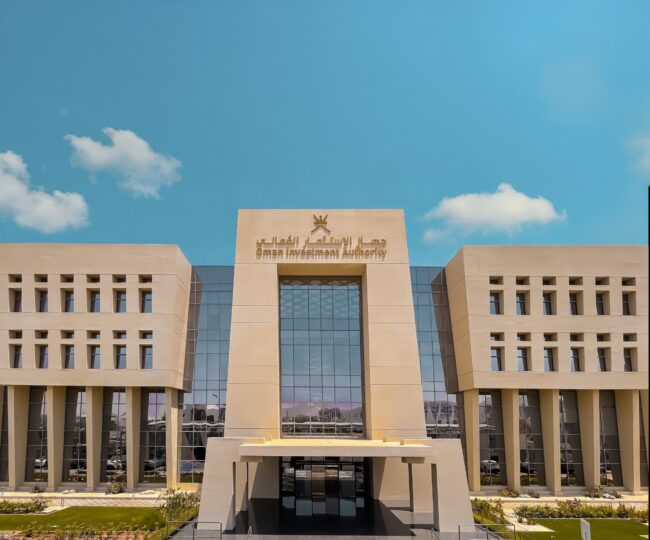
Future Fund Oman, established by the Oman Investment Authority with a five-year capital deployment target of $5.2 billion, confirmed that it has committed $1.2 billion across 141 projects as of 2025. The fund has now mobilized over $2.1 billion in additional private and international capital, aligning its momentum with the national economic goals outlined in Oman Vision 2040. Key sectors targeted include clean energy, industrial manufacturing, healthcare, advanced materials, logistics, and ICT.
This surge in deployment not only signals Oman’s growing appeal as an industrial investment destination but also positions the fund as one of the Gulf region’s fastest-moving sovereign capital programs. The dual-track investment model — combining large-scale national infrastructure projects with early-stage venture capital and SME financing — reflects a hybrid strategy aimed at accelerating long-term diversification while addressing short-term economic multipliers such as job creation and industrial capacity.
How is Future Fund Oman attracting international capital despite regional competition for FDI?
The standout figure in the 2025 update is not just the $1.2 billion committed but the $2.1 billion in co-investment capital the fund has already attracted. Participation has come from strategic partners in the United States, China, India, Saudi Arabia, Egypt, and the United Arab Emirates — a competitive group of capital providers that frequently target high-growth GCC markets such as Saudi Arabia’s Vision 2030 or Abu Dhabi’s Mubadala-backed platforms.
What appears to differentiate Future Fund Oman is its exclusive in-country mandate and its leverage structure. Every rial of fund investment must go into domestic projects, ensuring direct national economic benefit. With a leverage ratio trending higher, the fund is showing early signs of catalytic credibility — essentially proving that its capital is sufficient to draw in larger pools of private and institutional funds. That is a significant signal to both policymakers and foreign direct investors evaluating Oman against regional peers for infrastructure or manufacturing plays.
What sectors are emerging as priorities in Future Fund Oman’s project pipeline?
Five national priority clusters dominate the fund’s portfolio: energy transition, advanced materials, healthcare, logistics, and ICT. Two of the largest current projects — a $1.6 billion solar-grade polysilicon facility by United Solar and a $442 million solar cell manufacturing complex by JA Solar in SOHAR Port and Freezone — show a sharp concentration of effort in clean energy and industrial value chains linked to photovoltaics.
These are not token ESG plays. The United Solar project has already delivered over 1,000 jobs and $317 million in in-country value. JA Solar’s facility, targeting a six-gigawatt capacity, is nearing construction milestones and expected to employ 500+ people once operational. Together, these projects mark Oman’s pivot from a pure hydrocarbons export model to one where it aspires to control upstream and midstream components of clean energy supply chains, particularly in solar and potentially green hydrogen over time.
How is the venture and SME pipeline aligned with Oman Vision 2040 priorities?
Beyond the headline megaprojects, Future Fund Oman has also approved 132 SME and venture capital deals, with $56.7 million committed and $37.4 million deployed through eight specialized vehicles. These span the pre-seed, seed, growth equity, and SME debt stages — a rare full-stack model within a sovereign context.
This is where Oman’s industrial modernization ambitions intersect with job creation and innovation diffusion. By seeding startups and early-stage tech, the fund is not only injecting liquidity into the entrepreneurial ecosystem but also creating domestic solutions aligned with industrial clusters such as digital logistics, e-health, or advanced manufacturing tools.
Application volume across both VC and SME tracks remains strong, indicating that the bottleneck is not in deal flow but in filtering for scalable, locally relevant ventures. Oman’s regulatory and banking systems will now need to adapt quickly to support these high-velocity segments — particularly with respect to IP commercialization, bankruptcy protection, and SME access to export credit.
What risks could slow or derail the fund’s trajectory over the next 24 months?
Execution capacity remains the biggest near-term constraint. While the fund has approved 141 projects out of 828 proposals, the pace of actual disbursement and ground-level implementation will dictate whether Oman hits its five-year $5.2 billion deployment target.
There is also the macro question of absorptive capacity. Oman’s infrastructure, skilled labor pool, and capital markets are still relatively shallow compared to its neighbors. Scaling high-tech projects like solar PV component manufacturing or ICT hubs will require not just capital but concurrent upgrades in vocational training, power reliability, customs efficiency, and export logistics.
Institutionally, the fund has a 40 percent equity ceiling and a target IRR of 12 percent — fairly ambitious in a market where sovereign-led industrial plays may have slower payback periods. Balancing financial discipline with strategic impact will be essential, especially as the fund scales its participation in higher-risk venture and growth-stage deals.
How does this affect Oman’s long-term competitiveness in the GCC and global supply chains?
If execution keeps pace with commitments, Future Fund Oman could become the key enabler of Oman’s global supply chain positioning — particularly in renewable energy inputs, precision manufacturing, and mid-tech sectors often overlooked by larger GCC investment platforms.
The success of the fund could also shift investor perceptions of Oman. Historically viewed as more conservative and slower-moving than its Gulf peers, Oman is now actively broadcasting a different narrative: one that is aggressively leveraging sovereign capital to unlock private sector participation at scale.
By tying fund activity directly to Oman Vision 2040, policymakers have also insulated it from short-term political shifts. The challenge now is operational — building the regulatory and physical infrastructure to match investor appetite. If that gap narrows, Oman may emerge as one of the region’s most attractive destinations for industrial and energy transition capital over the next decade.
What are the key takeaways from Future Fund Oman’s latest update and capital deployment momentum?
- Future Fund Oman has committed $1.2 billion across 141 projects, with over $2.1 billion in additional private and foreign capital mobilized since inception.
- Large-scale projects in solar-grade polysilicon and solar cell manufacturing anchor the fund’s industrial clean energy focus.
- The fund is emerging as a national vehicle for catalyzing economic diversification under Oman Vision 2040, with capital restricted to domestic projects.
- Venture capital and SME financing channels are gaining traction, with $56.7 million committed and 132 smaller projects approved across eight vehicles.
- Execution risk remains high, particularly in converting approved projects into operational assets within Oman’s relatively constrained institutional environment.
- The fund’s leverage strategy, sector concentration, and job creation metrics are being closely watched as indicators of long-term economic transformation success.
- Oman’s emerging value proposition — clean energy, advanced materials, tech, and logistics — could shift investor perceptions and attract broader industrial FDI.
- Policy continuity, regulatory upgrades, and workforce development will be essential to sustain investor confidence and meet the fund’s five-year $5.2 billion goal.
Discover more from Business-News-Today.com
Subscribe to get the latest posts sent to your email.