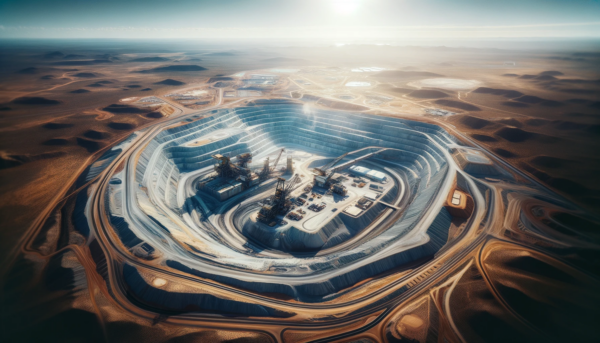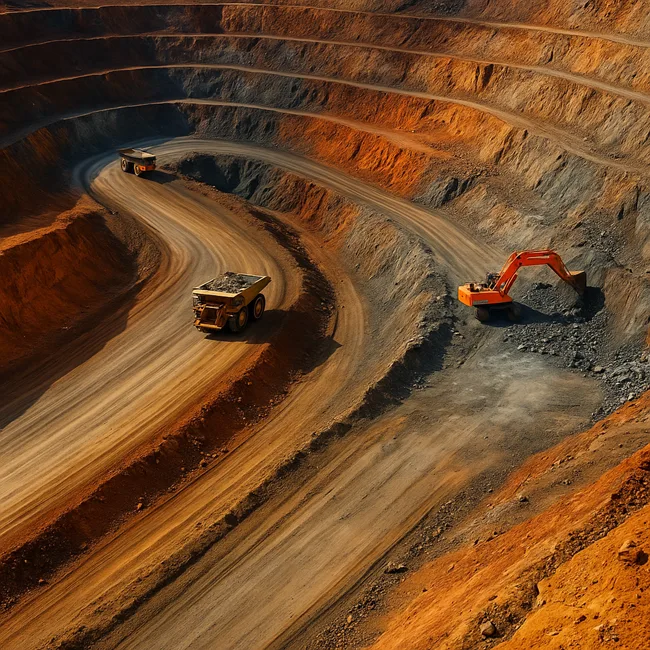
Copper is no longer just an industrial workhorse. It has emerged as the metal that underpins the energy transition, electrification, and the next wave of digital infrastructure. Analysts increasingly describe copper as “the new oil,” a strategic commodity whose scarcity could shape energy security and industrial policy for decades. The global supply crunch is intensifying, with demand rising faster than miners can bring new projects online. For resource majors such as BHP Group Limited, Rio Tinto, and Glencore, the copper squeeze is more than an earnings story — it is a structural shift that could redefine their identity and market positioning.
How severe is the global copper shortage, and what forces are driving it?
Copper demand is accelerating at a pace unseen in decades. Industry forecasts show refined demand growing from around 27 million tonnes in 2024 to nearly 33 million tonnes by 2035. Longer-term projections suggest the world may need over 50 million tonnes by 2050, a near 70% increase from today’s levels.
The drivers are clear. Renewable energy systems require significantly more copper wiring than fossil fuel plants. Electric vehicles consume up to four times more copper than combustion cars. Transmission lines, charging infrastructure, and energy storage systems all rely heavily on the red metal. Added to this is the rapid buildout of AI-enabled data centers, which require advanced cooling and power delivery systems that are copper-intensive.
At the same time, population growth, urbanization, and rising living standards in emerging markets continue to underpin traditional demand. When combined, these trends create a near-perfect storm of rising structural consumption.
What supply-side challenges are compounding the crunch?
While demand surges, supply is stalling. One of the biggest constraints is the long lead time for new mines. On average, it takes 15 to 20 years from discovery to production. That means projects identified today will not meaningfully contribute to supply until the 2040s.
Ore grades are also declining. In Chile, the world’s top producer, average copper grades have fallen from over 1.2% in the 1990s to below 0.7% today. This means more rock must be processed to yield the same amount of copper, driving costs higher.
Operational setbacks are tightening the market further. Chilean state miner Codelco was forced to cut its 2025 output forecast after a fatal accident at El Teniente reduced expected production by 33,000 tonnes. In the Democratic Republic of Congo, flooding halted production at Kamoa-Kakula, one of the most important new copper mines. Even smelting capacity is showing strain, with Chinese processors recently accepting near-zero fees to secure feedstock.
With permitting delays, environmental challenges, and rising costs, the supply pipeline looks stretched just as demand is accelerating.
How are BHP, Rio Tinto, and Glencore positioning for copper’s moment?
BHP Group Limited
BHP has been explicit in positioning copper as its future growth engine. The company estimates that global demand could exceed 52 million tonnes by 2050, and is reshaping its portfolio accordingly. Copper already contributed 45% of BHP’s underlying EBITDA in FY25, nearly matching iron ore’s 44%.
Projects at Escondida in Chile and Copper South Australia are central to this growth, while the Vicuña joint venture in Argentina and Chile offers exposure to one of the world’s largest recent copper discoveries. BHP also holds a 45% stake in the Resolution Copper Project in Arizona, a potential long-term supplier for the U.S. market. Management has flagged ambitions to double attributable copper production to 2 million tonnes per year by the mid-2030s.
Rio Tinto
Rio Tinto is focusing on ramping up production at Oyu Tolgoi in Mongolia, one of the most significant copper-gold deposits in the world. The mine has the potential to deliver up to 700,000 tonnes of copper annually at peak production. Rio has also sought exposure to U.S. supply through projects in Utah and partnerships that align with American energy security priorities.
Glencore
Glencore’s approach blends production and trading. The group’s copper trading business provides leverage in tight markets, while on the production side, it is advancing the MARA project in Argentina, which has reserves of over 5 million tonnes. Glencore also holds stakes in African assets that provide access to some of the world’s highest-grade copper resources.
Together, these three miners are shaping how the industry responds to copper’s strategic role. Their investments and project sequencing will influence whether the market can close the looming supply gap.
Why is copper now being likened to oil in strategic importance?
Oil has long been viewed as the lifeblood of the global economy. But as electrification replaces combustion, copper is emerging as the critical enabler. Its conductivity, durability, and recyclability make it irreplaceable in most energy applications. Unlike oil, copper cannot be substituted with renewables or alternative materials at scale.
Policymakers are taking notice. In the United States, copper is being classified as a critical mineral for energy security. The European Union has also identified copper as essential for its net-zero goals. Military spending adds another dimension. With Europe boosting defense budgets, demand for copper in electronics, vehicles, and communications is likely to rise further.
This combination of industrial, energy, and defense demand elevates copper’s status from a cyclical industrial metal to a strategic commodity with decades of relevance.
What risks and opportunities lie ahead for miners and investors?
For miners, the opportunity is obvious: copper scarcity could support structurally higher prices for decades. But the risks are equally clear. New projects require billions in upfront capital, face permitting delays, and must meet rising environmental standards. Cost inflation, from labor to equipment, threatens to erode margins if projects are not managed carefully.
For investors, copper offers both opportunity and volatility. On one hand, structural demand makes copper miners attractive long-term holdings. On the other, short-term price swings can be sharp, especially during global economic downturns. Institutional investors are increasingly viewing copper exposure as a hedge against energy transition bottlenecks, in much the same way oil once served as a macro hedge for energy security.
What does this mean for the identity of the mining sector?
For decades, iron ore and coal defined the global mining majors. Rio Tinto and BHP were valued as Pilbara powerhouses, while Glencore leaned on its trading and coal assets. But copper is changing the equation.
BHP’s FY25 results already show a portfolio in transition, with copper nearly matching iron ore as the group’s main earnings driver. Rio Tinto is touting Oyu Tolgoi as a generational project. Glencore’s trading desks are positioning it as a copper market maker. The industry is realigning around a single metal whose strategic importance now rivals that of oil in the last century.
This identity shift is not just semantic. It could influence valuation multiples, capital allocation, and how investors categorize the miners themselves. If copper continues to dominate profits, BHP and Rio may be seen less as iron ore companies and more as diversified copper growth stocks.
How realistic is it to view copper as the new oil in shaping global energy and industrial policy?
The evidence points strongly in that direction. Demand is rising in every major growth market — energy, technology, infrastructure, and defense. Supply is struggling to keep pace, with grades falling, projects delayed, and geopolitics complicating trade. Unlike oil, which has substitutes in renewables and gas, copper has no easy replacement.
For miners, the race is on to secure and expand supply. For investors, the challenge is to navigate volatility while capturing the long-term upside. And for policymakers, ensuring copper supply chains remain secure could prove as critical in the 21st century as oil supply was in the 20th.
Discover more from Business-News-Today.com
Subscribe to get the latest posts sent to your email.