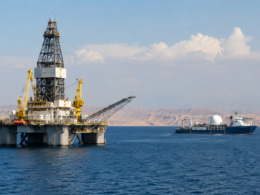




Chevron Corporation (NYSE: CVX) has agreed an asset swap with Petroleos de Venezuela, S. A. (PDVSA) that increases its exposure to two of the country’s most strategic extra-heavy oil positions while reducing its footprint in offshore gas and a smaller western Venezuela oil venture. The deal lifts Chevron Corporation’s stake in Petroindependencia to 49% and gives the Petropiar joint venture rights to develop the adjacent Ayacucho 8 area in the Orinoco Oil Belt, while PDVSA takes over Chevron’s interests in Plataforma Deltana Blocks 2 and 3 and its minority stake in Petroindependiente. The transaction matters because it sharpens Chevron Corporation’s Venezuela portfolio around producing and near-field heavy oil rather than longer-dated gas optionality. It also arrives as Chevron Corporation shares trade around $185.71, below both the April 13 close of $191.78 and the stock’s 52-week high of $214.71, suggesting the market remains more focused on commodity volatility than on portfolio fine-tuning in Venezuela.
Why is Chevron Corporation exchanging offshore gas exposure for more heavy oil in Venezuela now?
At first glance, surrendering gas discoveries for heavier crude can look like an old-economy pivot dressed up as portfolio management. In reality, the logic is more operational than ideological. Chevron Corporation is trading into assets that sit closer to existing producing infrastructure and joint venture operations in the Orinoco Belt, where execution pathways are clearer and scale advantages are easier to capture. Javier La Rosa said the agreement expands Chevron Corporation’s heavy oil position in two key joint ventures and improves development efficiency because Ayacucho 8 is adjacent to Petropiar. That adjacency matters. In upstream portfolios, proximity is not just geography. It is often shorthand for lower coordination friction, shared infrastructure potential, and faster monetization.
The gas side of the swap tells the other half of the story. Plataforma Deltana Blocks 2 and 3 include the Loran and Macuira discoveries, but offshore gas monetization in Venezuela has historically depended on more complicated regulatory, export, infrastructure, and cross-border coordination dynamics than incremental heavy-oil development. Reuters reported that Shell is expected to pursue a separate route around Loran in conjunction with Trinidad and Tobago’s Manatee field, underscoring that these gas resources may fit a different industrial logic than Chevron Corporation’s Venezuela strategy. Chevron Corporation appears to be choosing barrels that it can integrate more directly into an existing operating framework rather than molecules that require a longer political and commercial runway.
How does the Petroindependencia and Petropiar asset swap change Chevron Corporation’s Venezuela strategy?
The most important feature of this transaction is concentration. Chevron Corporation is not broadly “expanding in Venezuela” in a vague, headline-friendly way. It is narrowing its bet toward extra-heavy oil assets in the Orinoco Oil Belt, where scale, blending, upgrading, and export know-how can create a more coherent operating model. Raising the Petroindependencia stake from 35.79% to 49% pushes Chevron Corporation closer to the maximum strategic influence possible without formal control, while the Ayacucho 8 addition to Petropiar creates a contiguous growth option rather than a disconnected acreage story. Reuters described the agreements as part of Chevron Corporation’s effort to expand output in Venezuela, where its ventures currently account for roughly a quarter of national production.
This is also a signal about what Chevron Corporation values in politically complicated jurisdictions. In countries where above-ground risk is high, supermajors usually prefer assets with immediate production relevance, infrastructure adjacency, and shorter payback visibility. The swap suggests Chevron Corporation sees more value in thickening its position around proven Orinoco corridors than in maintaining a broader but more diffuse Venezuela footprint. That does not remove country risk. It simply means the company is trying to make each unit of that risk work harder.
What does this transaction suggest about Venezuela’s energy priorities after recent reforms?
For Venezuela, the swap is not merely an inward transfer of assets. It is also a sorting exercise. PDVSA appears to be reclaiming assets that may be better aligned with state-led gas strategy and a more nationalized approach to offshore resource development, while leaving Chevron Corporation with a stronger role in projects that can support crude production and export flows sooner. Reuters linked the agreements to Venezuela’s recent oil law reforms aimed at making the sector more attractive to foreign investors. Whether those reforms are sufficient is another question, but this deal suggests the country is at least trying to rationalize who develops what.
That matters because Venezuela’s energy challenge is no longer just geological. It is organizational. The country has enormous resource depth, but converting that into durable production growth requires capital discipline, export logistics, upgraded facilities, and partners willing to stay through volatility. By concentrating Chevron Corporation around extra-heavy oil projects and pulling gas assets back into a different strategic lane, the transaction reflects a more segmented energy development model. In plain English, Venezuela seems to be saying that not every foreign partner needs every kind of asset. Sometimes the more realistic path is to match asset type with operator capability, rather than force a broad one-size-fits-all structure.
Why could Ayacucho 8 matter more than the headline percentages in Chevron Corporation’s deal?
The headline percentage increase in Petroindependencia is important, but the more interesting piece may be Ayacucho 8. Adjacent acreage that is already producing is usually worth more strategically than remote exploration optionality because it can feed into existing development plans with lower incremental complexity. Chevron Corporation explicitly described Ayacucho 8 as a producing asset near Petropiar, which enhances development efficiencies. That phrase may sound corporate and polished, but the practical meaning is straightforward: fewer standalone headaches, more near-field growth.
In heavy-oil systems, nearby additions can improve economics through shared facilities, coordinated drilling, and lower commercial fragmentation. This is especially relevant in the Orinoco Belt, where scale and handling matter as much as geology. Chevron Corporation is effectively choosing to make its Venezuela exposure denser, not merely bigger. For investors, that is usually a more useful distinction. Bigger can impress. Denser can generate returns.
How should investors read Chevron Corporation stock reaction alongside this Venezuela portfolio move?
Chevron Corporation’s shares were trading at about $185.71 on April 14, with a market capitalization near $268.3 billion, while the stock’s 52-week range sits roughly between $132.33 and $214.71. On April 13, before the broader selloff reflected in current pricing, Chevron Corporation closed at $191.78. Over the previous week, MarketWatch records show the stock closed at $201.54 on April 7, which implies a drop of roughly 7.9% to the April 13 close. One-month performance data cited by Moneycontrol showed Chevron Corporation down about 2.66% as of April 14. The share-price backdrop suggests investors are currently trading Chevron Corporation more as an oil-price-sensitive major than as a company being repriced for Venezuela portfolio optimization.
That is not irrational. Reuters and other market coverage noted that energy equities were hit recently by lower crude prices after the U.S.-Iran ceasefire reduced immediate supply fears. In that environment, even strategically sensible upstream moves can be drowned out by macro commodity sentiment. Still, the absence of a dramatic rerating does not make the transaction irrelevant. It simply means investors see it as part of Chevron Corporation’s long-cycle portfolio engineering rather than a standalone catalyst. That is often how serious upstream value creation works. It arrives quietly, then shows up later in volumes, costs, and capital efficiency.
What happens next for Chevron Corporation in Venezuela if this heavy oil consolidation works as intended?
If the strategy works, Chevron Corporation could emerge with a more efficient Venezuela operating base centered on assets that are easier to integrate, scale, and monetize. Reuters reported the company is targeting a 50% increase in Venezuelan oil output within two years. That is ambitious, and the path will still run through sanctions policy, joint venture execution, infrastructure reliability, and export logistics. But the asset swap improves alignment between what Chevron Corporation already knows how to operate in Venezuela and where future incremental barrels may come from.
If it fails, the reasons are unlikely to be geological. They will be political, operational, or commercial. Heavy oil remains capital intensive and logistically demanding. Venezuela remains Venezuela, which is a polite way of saying no investor gets to forget the country risk slide in the deck. But as portfolio moves go, this one is surprisingly disciplined. Chevron Corporation is not trying to do everything. It is trying to own more of what fits.
What are the key takeaways on what Chevron Corporation’s Venezuela asset swap means for the company, competitors, and the oil industry?
- Chevron Corporation is concentrating its Venezuela exposure around extra-heavy oil assets with clearer operational synergies rather than maintaining a broader but less focused portfolio.
- The increase to 49% in Petroindependencia materially strengthens Chevron Corporation’s influence in a core Orinoco project without requiring formal control.
- Ayacucho 8 may be more strategically important than the headline stake change because adjacent producing acreage can be monetized more efficiently than isolated assets.
- Chevron Corporation’s exit from Plataforma Deltana gas suggests offshore Venezuelan gas may suit a different operator and commercialization model than Chevron Corporation’s current country strategy.
- For PDVSA, the swap indicates a more segmented approach to resource development, with foreign partners matched to asset types rather than spread across everything.
- The deal looks less like a growth-at-any-cost push and more like a portfolio quality upgrade inside a politically complex jurisdiction.
- Chevron Corporation stock has recently traded more in line with crude-price swings than with this company-specific portfolio adjustment, which may keep the market reaction muted in the near term.
- If Chevron Corporation can translate this denser asset base into higher output and better capital efficiency, the value of the swap will likely show up operationally before it shows up in the headline multiple.
- Competitors will read this as a reminder that in frontier or politically sensitive markets, adjacency and execution visibility often matter more than headline reserve optionality.
- The broader industry signal is that Latin American portfolio strategy is still being rewritten around practicality: shorter-cycle monetization, infrastructure fit, and selective exposure rather than maximum acreage sprawl.
Discover more from Business-News-Today.com
Subscribe to get the latest posts sent to your email.