

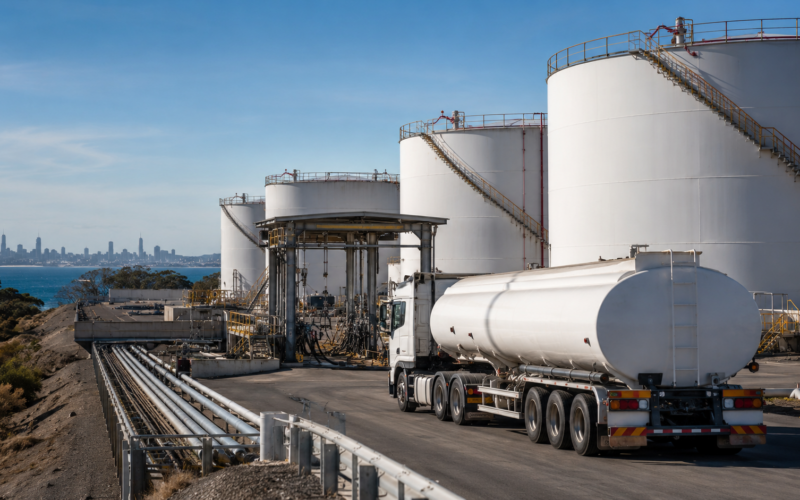
Australia has extended a temporary fuel security measure that allows petrol and diesel to be released from domestic reserves, keeping the arrangement in place until September as global energy disruption continues to test supply chains. The measure reduces fuel companies’ minimum stockholding obligations by 20%, freeing up as much as 762 million litres of petrol and diesel for market use. The decision carries immediate importance for regional fuel supply, mining logistics, agricultural transport and household fuel availability at a time when conflict-linked disruption has already exposed Australia’s reliance on imported refined fuels. For policymakers and industry, the move is less about one short-term reserve release and more about whether Australia’s fuel security architecture is resilient enough for a more volatile energy trade environment.
Why is Australia extending petrol and diesel reserve releases instead of relying only on normal fuel imports?
Australia’s decision to extend the reserve release measure reflects a practical reality: normal fuel imports may still be arriving, but supply confidence is no longer the same as supply resilience. Australia depends heavily on imported refined fuel and has limited domestic refining capacity, which makes the country exposed when shipping routes, Asian refining availability, insurance costs or geopolitical risk interfere with regular supply patterns. The government’s decision to keep the measure active until September signals that Canberra does not view the current disruption as a one-week logistics problem that can be solved by waiting for markets to calm down.
The 20% reduction in minimum stockholding obligations gives fuel companies more flexibility to draw down available petrol and diesel instead of holding those volumes back for compliance purposes. In an ordinary market, such obligations support system resilience by ensuring reserve levels remain available. In a stressed market, however, rigid stockholding rules can create a strange outcome where fuel is technically present in the country but not fully available to ease shortages. The extension therefore functions as a pressure valve, allowing stored fuel to move into the economy before regional supply problems become politically and commercially damaging.

The policy also acknowledges that fuel shortages do not affect all parts of Australia equally. Regional communities, mining operations, farms, freight operators and remote businesses are more vulnerable to disruption because supply routes are longer and alternatives are weaker. Urban motorists may experience price spikes and service station stress, but regional industries can face genuine operational interruption if diesel availability tightens. That is why the reserve release is strategically important even if national supply numbers appear manageable on paper.
How does Australia’s fuel reserve decision expose the country’s dependence on imported refined fuels?
Australia’s reserve extension underlines the structural weakness of relying heavily on imported refined products in a crisis-prone global market. Crude oil security and refined fuel security are not the same thing. A country can participate in global energy markets and still struggle if finished petrol, diesel and jet fuel shipments are delayed, diverted or priced higher because of conflict, refinery outages or freight constraints.
The sharper issue for Australia is domestic refining capacity. With only a small remaining refining base, Australia has less ability to convert crude into finished fuels during periods of import disruption. That means the country’s energy security depends not only on commodity availability, but also on refinery output in Asia, tanker availability, port logistics, storage infrastructure and commercial supplier decisions. In a calm market, that system can appear efficient. In a disrupted market, it can look uncomfortably thin.
The extension of the reserve release measure is therefore a policy admission without saying the quiet part too loudly. Australia’s fuel system has enough flexibility to respond, but not enough redundancy to ignore global shocks. The government is trying to balance immediate supply management with longer-term fuel security planning. That balance matters because overcorrecting could impose costs on fuel companies and consumers, while undercorrecting could leave regional supply chains exposed during the next escalation.
This is also where energy transition policy becomes more complicated. Australia is pushing electrification, renewable power and lower-emission transport over the long term. Yet the economy still runs heavily on diesel for freight, mining, agriculture, construction and remote power applications. The reserve release shows that liquid fuel security remains a hard infrastructure issue even as policy attention moves toward renewables and electric vehicles. The transition may be coming, but diesel did not get the calendar invite.
What does the 762 million-litre fuel release mean for regional industries and national logistics?
The release of up to 762 million litres of petrol and diesel can provide meaningful short-term breathing room for the Australian economy, particularly in regions where supply interruptions can become operationally serious. Diesel is the key fuel for heavy freight, mining equipment, agricultural machinery, construction vehicles and parts of remote power generation. If diesel availability becomes uncertain, the impact spreads beyond service stations and into food supply chains, commodity exports, infrastructure work and regional employment.
For fuel companies, the measure gives more room to manage inventory while imports remain vulnerable to timing, cost and routing issues. It may help smooth distribution into areas where shortages would otherwise develop more quickly. However, it does not create new fuel. It changes when and how existing reserve volumes can enter the market. That distinction is important because reserve releases are best understood as liquidity tools, not as substitutes for deeper supply capacity.
For the government, the extension reduces the risk of visible shortages and panic buying, both of which can magnify a fuel disruption. Once consumers or businesses believe supply is uncertain, demand can spike even if underlying availability is manageable. Strategic reserve flexibility can therefore work partly through psychology. It tells fuel distributors and users that the government is prepared to intervene before stress turns into scarcity.
The risk is that repeated reserve flexibility can become habit-forming. If fuel companies and users come to expect emergency releases during every supply shock, minimum stockholding rules may lose some of their discipline. Policymakers need to ensure that temporary flexibility does not quietly become a standing workaround. Otherwise, Australia could weaken the very reserve buffer it needs for a worse crisis.
Why does the Iran war make Australia’s fuel security debate more urgent in 2026?
The Iran war has intensified Australia’s fuel security debate because it has turned a long-known vulnerability into a live operational concern. Energy security risks often sit in policy reports for years until a geopolitical shock forces governments to test them under pressure. The current disruption has done exactly that. It has pushed fuel availability, shipping reliability and reserve adequacy from specialist energy circles into mainstream economic management.
The Middle East remains central to global oil flows and shipping risk. Even when Australia’s direct fuel routes do not depend exclusively on the most dangerous corridors, global market stress can still affect prices, insurance, freight availability and refinery economics. Energy markets are connected enough that disruption in one region can tighten supply confidence elsewhere. Australia’s exposure is therefore not only physical, but also financial and logistical.
The strategic concern is that conflict-linked energy disruption can collide with domestic inflation pressure. Higher fuel prices can feed transport costs, food prices, airline costs and household budgets. For a government already balancing cost-of-living concerns, fuel security is not just an energy department problem. It becomes a fiscal, monetary and political issue.
That is why the reserve release extension matters beyond the mechanics of stockholding obligations. It signals that Australia is willing to use administrative flexibility to protect domestic supply chains during a geopolitical shock. It also raises the question of whether temporary interventions can buy enough time for longer-term reforms in storage, refining, import diversification and demand reduction.
Could Australia’s fuel reserve strategy reshape investment in storage, refining and alternative fuels?
Australia’s reserve strategy could accelerate investment debate across storage, refining resilience and alternative fuel pathways. The immediate policy tool is a stockholding adjustment, but the larger market signal is that fuel security now has strategic value again. Investors, fuel suppliers and infrastructure operators may read the extension as evidence that storage capacity, import flexibility and regional distribution assets will matter more in future policy design.
Storage is the most obvious area. If the government wants larger domestic buffers, Australia will need sufficient tankage, logistics access and commercial arrangements to hold and rotate fuel without creating waste or distortion. Public reserve models may also become more attractive if policymakers believe private inventory rules alone cannot deliver national security outcomes.
Refining is more difficult. Rebuilding or expanding domestic refining capacity is capital intensive and faces long-term demand uncertainty as transport gradually electrifies. Yet the current disruption may strengthen the case for at least preserving strategic domestic fuel processing capability. The policy challenge is that refining capacity can be valuable in a crisis but commercially unattractive in a normal market. That gap often requires government support, which then raises questions about cost, competition and climate alignment.
Alternative fuels and electrification also gain relevance. Every litre of diesel demand reduced through electrified freight corridors, rail upgrades, renewable-powered remote operations or alternative fuel adoption lowers exposure to imported refined products. However, those transitions take time. The reserve release extension is therefore a bridge policy, not a destination. It keeps the economy moving while the longer-term energy mix changes at a pace that is useful in PowerPoint but slower on highways, mine roads and farms.
What should executives and investors watch next in Australia’s fuel security response?
Executives and investors should watch whether the September extension becomes the end point or the midpoint of a longer policy shift. If supply conditions stabilise, the government may allow the temporary stockholding reduction to expire and rebuild reserve discipline. If disruption persists, Australia may be forced to extend flexibility again, add further import support or accelerate public reserve planning.
The second signal will be regional fuel availability. National reserve figures can look reassuring while localised shortages still affect remote areas, mining corridors or agricultural regions. The effectiveness of the policy will depend on whether released fuel reaches the places where logistics stress is highest. Distribution, not just volume, will decide whether the measure is judged successful.
The third signal is whether Australia’s broader fuel security package becomes a platform for structural reform. Policymakers now have a stronger case to expand storage, diversify suppliers, improve shipping resilience and support critical fuel users. The danger is that emergency measures may relieve pressure just enough to delay deeper decisions. Energy security policy has a long history of moving quickly during crises and then becoming sleepy again once prices calm down.
For companies, the lesson is straightforward. Fuel availability should be treated as a board-level operational risk, particularly for sectors with heavy diesel dependence. Mining, logistics, agriculture, aviation, construction and remote infrastructure operators may need stronger contingency planning, supplier diversification and inventory visibility. Waiting for the next crisis to ask where the diesel is stored is not a strategy. It is a very expensive scavenger hunt.
Key takeaways on what Australia’s fuel reserve extension means for energy security and supply chains
- Australia’s extension of the reserve release measure shows that fuel security has moved from a theoretical policy concern to an active operational risk for the economy.
- The 20% temporary reduction in fuel company stockholding obligations can free up to 762 million litres of petrol and diesel, giving the market short-term flexibility during supply disruption.
- The policy is especially important for regional communities, mining operations, agriculture and freight networks, where diesel shortages can quickly affect production and logistics.
- Australia’s reliance on imported refined fuel remains the core vulnerability, particularly because limited domestic refining capacity reduces the country’s ability to respond independently to global shocks.
- The Iran war has sharpened the fuel security debate by raising risks around shipping, refinery supply, insurance costs and price volatility across global energy markets.
- The reserve release is useful as a pressure valve, but it does not create new supply, which means storage, import resilience and demand reduction remain critical long-term issues.
- Repeated use of emergency reserve flexibility could weaken stockholding discipline if policymakers do not clearly define when temporary measures end and reserve rebuilding begins.
- The episode may strengthen the investment case for fuel storage infrastructure, regional distribution resilience, strategic reserves and selective domestic refining support.
- Electrification and alternative fuels can reduce long-term exposure to imported diesel, but heavy industry and regional logistics will remain dependent on liquid fuels for years.
- For executives, the immediate lesson is that fuel security should be treated as a supply chain risk, not just a commodity price issue.
Discover more from Business-News-Today.com
Subscribe to get the latest posts sent to your email.