Ares Management Corporation (NYSE: ARES), the American alternative investment manager, announced that it will acquire Meade Pipeline Company LLC for approximately USD 1.1 billion. The deal, executed through funds managed under its Infrastructure Opportunities strategy, underscores Ares’ intention to deepen its exposure to energy infrastructure at a time when institutional appetite for stable, cash-generating midstream assets is rising.
The seller, XPLR Infrastructure LP, an independent power producer formed by NextEra Energy, Inc., has been consolidating and divesting certain midstream interests as part of its portfolio rotation. By acquiring 100 percent of Meade Pipeline’s equity, Ares secures a significant position in a regulated energy transport system that plays an essential role in feeding gas from the country’s most prolific shale basins to key demand centers.
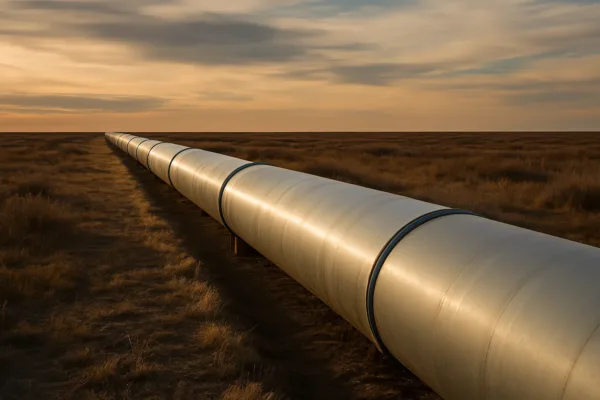
Meade Pipeline owns 40 percent of the Central Penn Line, a Federal Energy Regulatory Commission (FERC)-regulated 180-mile natural gas pipeline system. The line connects gas-rich Marcellus and Utica shale production in northeast Pennsylvania with markets stretching through the Mid-Atlantic and into the Southeast. The pipeline began operating in 2018 and expanded further with the completion of the Leidy South project in 2022, lifting total transportation capacity to around 2.3 billion cubic feet per day. Williams Companies, through its Transcontinental Gas Pipe Line system, jointly owns the pipeline and serves as operator under long-term triple-net-lease agreements.
How does the Central Penn Line fit into the U.S. natural gas supply chain and why is it strategic for Ares?
The Central Penn Line is a vital component of the U.S. gas distribution network. Its integration with the Transcontinental Gas Pipe Line ensures that production from the Marcellus and Utica shale fields—two of the largest natural gas basins in the world—can reach electricity generators, industrial users, and residential markets across the East Coast. Transco itself is among the most significant interstate pipelines, providing the backbone for natural gas flows from Pennsylvania to states as far south as Texas.
Ares stated that the acquisition aligns with its objective of investing in strategically located, high-capacity infrastructure. Demand for natural gas in the United States is expected to remain robust over the next decade, fueled by electrification trends, manufacturing growth, and the steady expansion of liquefied natural gas exports from the Gulf Coast. Analysts following the deal noted that ownership in a regulated midstream pipeline offers Ares the opportunity to secure stable and predictable revenue streams, while also positioning its portfolio to capture the benefits of long-term U.S. energy demand growth.
Institutional investors pointed out that even as renewables gain momentum, natural gas infrastructure retains strong relevance because of its ability to balance grids during high-demand periods and extreme weather conditions. The Central Penn Line, in particular, is seen as strategically indispensable because it links production basins with some of the most energy-hungry regions of the country.
What does this transaction reveal about institutional sentiment toward natural gas in the energy transition era?
The acquisition of Meade Pipeline reflects a pragmatic outlook within capital markets. While global policy discussions and investor mandates highlight the rapid scaling of renewable capacity, infrastructure funds continue to place significant bets on natural gas. Analysts suggested that this trend is not contradictory but complementary: natural gas is being positioned as a transitional energy source capable of supporting baseload reliability while renewables scale.
For Ares, this acquisition complements its diversified infrastructure portfolio by offering exposure to contracted cash flows insulated from short-term commodity price volatility. Institutional investors generally favor such assets, especially at a time when equity and bond markets are experiencing periodic swings driven by shifting interest rate expectations. The ability of pipelines to deliver steady, regulated income streams makes them attractive for pension funds, sovereign wealth funds, and insurance companies allocating to infrastructure through managers like Ares.
The deal also highlights how private capital is selectively leaning into hydrocarbons where the assets are strategically located, essential for reliability, and capable of generating resilient returns. Analysts described the Meade acquisition as a demonstration of conviction that U.S. natural gas infrastructure remains a cornerstone of energy security, despite ongoing policy debates about emissions reduction.
How does the deal expand Ares Infrastructure Opportunities’ portfolio and what are the growth implications?
Ares Infrastructure Opportunities is managed by a team of around 30 senior professionals with a track record in energy, transportation, and utility assets. The addition of Meade Pipeline to its portfolio provides diversification and long-term contracted revenue. The acquisition enhances Ares’ ability to offer investors exposure to assets that underpin essential services in the U.S. economy.
In the future, growth opportunities for the Central Penn Line may include capacity optimization, new interconnections to serve regional markets, and participation in broader decarbonization initiatives such as carbon capture and storage. Analysts observed that while natural gas infrastructure today primarily supports hydrocarbon flows, its physical rights-of-way could one day be adapted for transporting renewable natural gas, hydrogen, or other low-carbon energy carriers. Ares’ investment therefore preserves optionality for the firm’s portfolio in the energy transition era.
How is the stock market reacting to Ares Management after the pipeline acquisition?
Shares of Ares Management have been trading with resilience in 2025, reflecting broader investor confidence in alternative asset managers with exposure to stable infrastructure. Following the announcement of the Meade deal, market sentiment was described as cautiously optimistic. Investors interpreted the transaction as disciplined and accretive, adding to Ares’ base of contracted, fee-generating assets without overleveraging the balance sheet.
Market observers highlighted that while private equity-style investments face cyclical risks, infrastructure acquisitions of this type help Ares reassure limited partners of its ability to generate consistent returns. Analysts suggested that the transaction fits into a broader pattern of institutional flows into hard assets, especially in midstream energy and digital infrastructure, at a time when more volatile sectors like growth equity face valuation pressure.
What does the acquisition mean for the future of U.S. energy infrastructure and Ares’ positioning?
The deal places Ares firmly in the conversation among leading global managers investing in U.S. midstream assets, alongside rivals such as Blackstone, Brookfield, and KKR, which have all executed multi-billion-dollar transactions in natural gas and pipeline infrastructure in recent years. Ares’ move demonstrates that demand for natural gas assets remains strong and that investors see them as critical for balancing short-term reliability with long-term energy transition goals.
As U.S. electricity demand accelerates due to electric vehicle adoption, artificial intelligence data center growth, and industrial reshoring, natural gas infrastructure is expected to remain essential. Pipelines like the Central Penn Line will play a pivotal role in ensuring supply security across densely populated regions. By acquiring Meade Pipeline, Ares has positioned itself as both a beneficiary of today’s energy market fundamentals and a participant in shaping the infrastructure backbone of the transition era.
In the view of institutional investors, this transaction reinforces the reality that while renewables will continue to expand, natural gas remains a stabilizing force. The acquisition of Meade Pipeline represents not only a financial transaction but also a broader strategic statement: infrastructure funds will continue to allocate to hydrocarbons where assets are indispensable, cash-generating, and adaptable to future decarbonization pathways.
Discover more from Business-News-Today.com
Subscribe to get the latest posts sent to your email.