




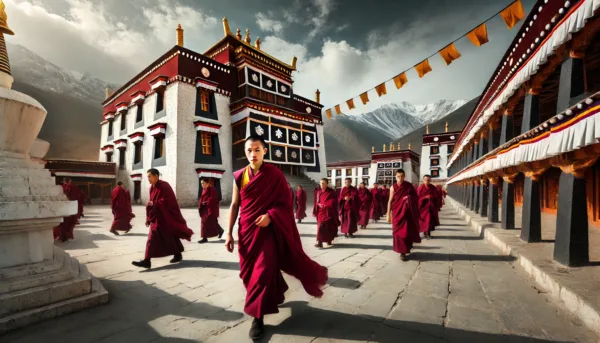
China’s foreign ministry has strongly condemned the Dalai Lama’s assertion that his successor will be born outside China, rejecting his authority to make such a determination. The controversy erupted following the release of his new book, Voice for the Voiceless, in which the Tibetan spiritual leader insisted that the next Dalai Lama successor would emerge from a country beyond Beijing’s control.
A spokesperson for the foreign ministry stated that the Dalai Lama has “no right to represent the people of Tibet,” adding that the process of recognizing Tibetan Buddhist reincarnations must adhere to Chinese laws and government regulations. The official reiterated that “reincarnation is a special tradition of Tibetan Buddhism” and that Tibetan religious leadership remains under the jurisdiction of China’s central government.
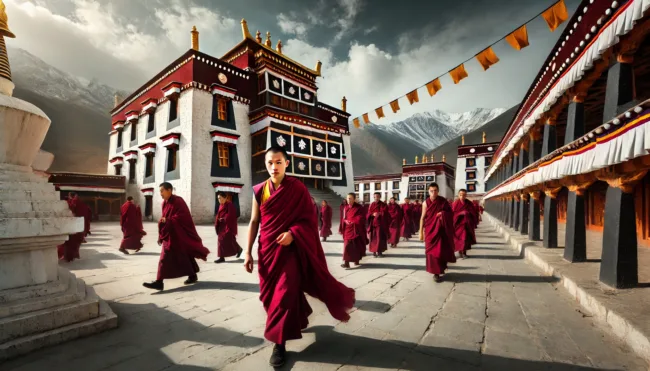
China’s Position on Tibetan Buddhism Leadership
The dispute over the Dalai Lama’s reincarnation has long been a source of tension between the exiled leader and Beijing. China maintains that it has the sole authority to approve the next Dalai Lama successor, based on a system of state-controlled recognition. The Chinese Communist Party has emphasized that all religious matters, including Tibetan Buddhist reincarnations, must comply with national policies.
At a press conference on March 10, a foreign ministry spokesperson described the Dalai Lama as “a political exile engaged in anti-China separatist activities under the cloak of religion.” The statement reflects China’s long-standing position that the Tibetan spiritual leader’s influence threatens national stability.
The Dalai Lama, however, has consistently argued that any successor chosen by Beijing will not be recognized by Tibetans, who largely remain opposed to Chinese interference in Tibetan religious leadership.
A History of Tibetan Resistance
The dispute over the next Dalai Lama successor is rooted in a decades-long conflict between Beijing and Tibetan exiles. In 1959, Tenzin Gyatso, the 14th Dalai Lama, fled to India following a failed uprising against Mao Zedong’s government. Since then, China has maintained strict control over Tibet, suppressing calls for autonomy and closely monitoring Tibetan Buddhist reincarnations.
In Voice for the Voiceless, the Dalai Lama asserted that his successor would be born in “a free world,” directly challenging China’s claim to religious authority. He argued that the aspirations of Tibetans for self-determination could not be silenced indefinitely.
“The right of the Tibetan people to be the custodians of their own homeland cannot be indefinitely denied, nor can their aspiration for freedom be crushed forever through oppression,” he wrote.
He further warned that ignoring the will of the people could have long-term consequences, stating, “One clear lesson we know from history is this: if you keep people permanently unhappy, you cannot have a stable society.”
China’s Influence Over Tibetan Religious Leadership
China has attempted to institutionalize control over Tibetan Buddhist reincarnations, asserting that the Communist Party has the final authority in religious appointments. In 1995, Chinese officials detained a six-year-old boy, Gedhun Choekyi Nyima, who had been recognized by the Dalai Lama as the Panchen Lama, Tibet’s second-highest religious figure. Beijing later installed its own candidate, widely seen as a government-appointed replacement.
A similar scenario is expected regarding the next Dalai Lama successor, with China likely to appoint a figure who aligns with its political interests. However, Tibetan exiles and Buddhist communities outside China have signaled they would reject any state-controlled selection.
The Global Implications of the Dalai Lama’s Succession
The battle over the next Dalai Lama successor carries significant geopolitical implications. The United States and other Western nations have criticized China’s suppression of Tibetan culture and religious freedoms, often citing it as part of broader concerns about human rights.
Observers suggest that the Dalai Lama’s succession could become a flashpoint for diplomatic tensions, particularly as China seeks to expand its influence over Tibetan Buddhism beyond its borders.
While Beijing insists that the process will follow its established framework, the Dalai Lama’s global stature ensures that any attempt to impose a government-approved successor will face strong international opposition.
As China continues to assert control over Tibetan religious leadership, the Dalai Lama’s defiance presents a challenge to Beijing’s authority. While the Communist Party claims exclusive rights to recognize Tibetan Buddhist reincarnations, the Tibetan spiritual leader and his followers insist that the process should remain independent of political influence.
With the debate over succession gaining momentum, China’s ability to enforce its will on the global Tibetan community remains uncertain. The next Dalai Lama successor could ultimately become a symbol of resistance against Beijing’s control, setting the stage for a protracted conflict over Tibet’s religious and cultural future.
Discover more from Business-News-Today.com
Subscribe to get the latest posts sent to your email.