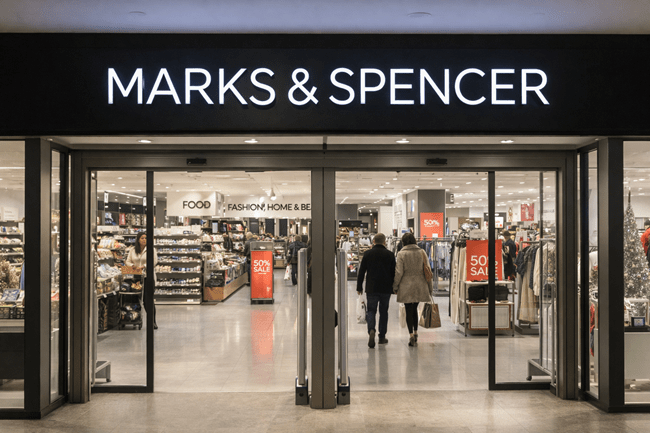




H & M Hennes & Mauritz AB (publ) (NASDAQ Stockholm: HM B) has unveiled its H&M Beauty concept in India, marking a milestone moment as the Swedish fashion giant extends its brand beyond apparel and home décor into the country’s fast-growing beauty and personal care market. The launch comes as the company celebrates ten years of operations in India, with the curated offering spanning makeup, fragrances, and beauty tools designed to bring trend-led, high-quality, and accessible products to millions of Indian consumers.
Why is H&M bringing its beauty concept to India after a decade of fashion expansion?
H&M first entered the Indian market in 2015 and has since built a footprint of 66 stores across 30 cities, along with strong online sales through HM.com, Myntra, and Ajio. The expansion into beauty coincides with the retailer’s broader global strategy to diversify revenue streams and deepen consumer engagement beyond apparel. The Indian beauty and personal care market, projected by Euromonitor and Redseer Consulting to surpass USD 30 billion by 2027, has become a battleground for global and local players alike. Companies such as L’Oréal, Estée Lauder, Reliance Retail, and Nykaa are aggressively building market share, while fashion-adjacent brands like Zara and Uniqlo have begun experimenting with lifestyle extensions.
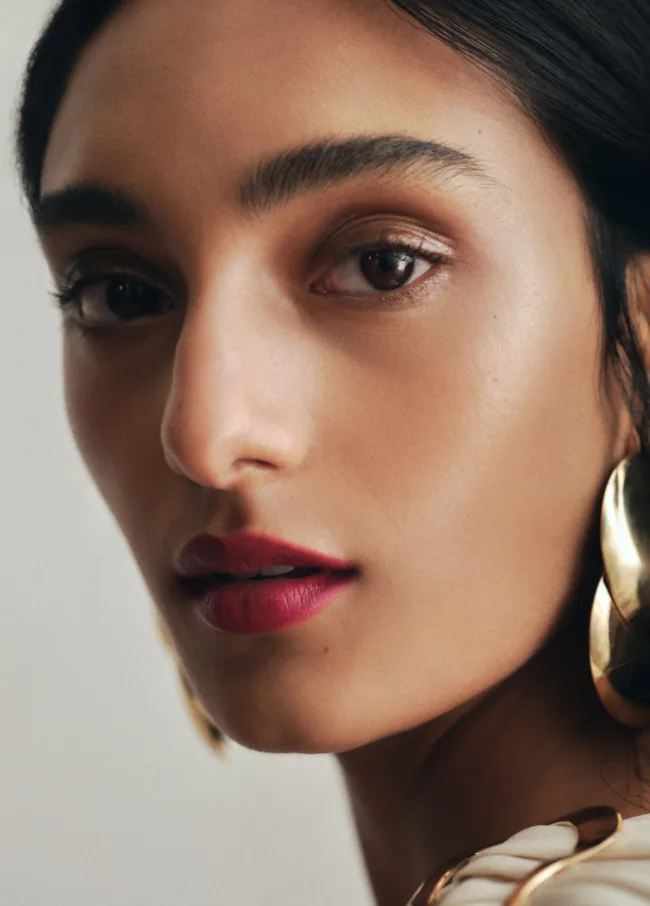
By bringing its beauty concept to India, H&M is seeking to leverage brand familiarity with younger consumers, who already view the retailer as a go-to destination for fast fashion, and to capture a slice of discretionary spending that increasingly flows into cosmetics and personal care.
What does the H&M Beauty product portfolio include and how is it priced for Indian consumers?
The debut line offers over 200 products, spanning categories such as makeup, fragrances, and beauty tools. Flagship items include the Satin Icon Lipstick, the Mad for Matte Liquid Lipstick, the Never Ending Lash Mascara, and the multi-use Do-it-All Stick Blush. For fragrance lovers, the retailer is introducing a new Eau de Parfum collection with vegan formulations, designed to deliver richer scent profiles and longer wear.
Price positioning has been carefully calibrated. Makeup products are priced under INR 799, while perfumes start at INR 1,299. This puts H&M Beauty in the competitive mid-market sweet spot — above mass-market offerings from brands like Lakmé and Maybelline but still well below prestige lines from Dior, Chanel, or Estée Lauder. The pricing strategy mirrors H&M’s traditional “fashion at the best price” proposition, tailored for a consumer base that is aspirational yet price-conscious.
How is H&M localizing its global beauty play for Indian consumers?
H&M has emphasized a hybrid model combining locally produced makeup and fragrances with a broader range of globally sourced beauty tools. This localization strategy is critical in India, where consumer preferences often differ from Western markets due to climate, skin tone diversity, and cultural habits. For instance, demand for long-wear, sweat-resistant makeup is high in India’s tropical climate, while fragrance choices often skew toward intense florals and spices.
Moreover, H&M has underscored its commitment to vegan and cruelty-free formulations, aligning with a rising demand among urban Indian millennials and Gen Z consumers who prioritize sustainability and ethical sourcing. The positioning is designed to resonate with a demographic that is increasingly vocal about environmental and animal welfare concerns, while also aligning with global best practices in responsible retail.
How does the launch tie into H&M’s broader India growth story?
The timing of the launch is symbolic. H&M India is marking its 10th anniversary this year, and the beauty debut reinforces the brand’s long-term commitment to the market. Executives highlighted that the milestone reflects a decade of expanding access to global fashion and now aims to create a one-stop destination where fashion and beauty converge.
The move also signals H&M’s intent to strengthen its omnichannel ecosystem in India. With beauty available both in-store and online from October 2, 2025, the retailer is betting that shoppers will increasingly seek bundled experiences where clothing, accessories, and cosmetics can be purchased as part of a single transaction. This approach mirrors trends in Europe and the United States, where H&M Beauty has already gained traction as an extension of the retailer’s fast fashion ecosystem.
How is the Indian beauty sector shaping up and what competition will H&M face?
The Indian beauty market is undergoing rapid transformation. Digital-first brands like Nykaa have disrupted the space by blending e-commerce, private labels, and influencer-driven marketing. At the same time, conglomerates such as Reliance Retail and Tata are doubling down on acquisitions and partnerships to expand their portfolios. Luxury players like Sephora and MAC Cosmetics continue to target premium urban consumers, while domestic stalwarts such as Hindustan Unilever’s Lakmé maintain mass-market dominance.
Against this backdrop, H&M’s entry comes at a time when consumer preferences are shifting toward affordable luxury and self-expression through beauty. The company’s ability to differentiate may rest on two factors: its strong existing brand equity in fashion and its reputation for trend-led design. By cross-pollinating its fashion sensibilities into beauty packaging, marketing, and seasonal drops, H&M has the potential to carve out a unique identity that sits comfortably between mass and premium brands.
What does this mean for H&M globally and how does India fit into the group’s strategy?
H&M’s global expansion into beauty is not new. The company has been experimenting with the category in select European markets, using it as a way to increase average basket size and consumer stickiness. India’s inclusion in this strategy reflects the country’s importance as a high-growth frontier market for the Swedish retailer.
Globally, H&M has faced challenges including slowing sales growth, margin pressure from rising input costs, and increased competition from ultra-fast fashion players like Shein and Temu. By branching into adjacent categories such as beauty, the group is diversifying revenue sources while aligning with consumer megatrends around self-care, sustainability, and lifestyle convergence.
What is the future outlook for H&M Beauty in India and how might it evolve?
Analysts suggest that success will hinge on three key areas. First, H&M will need to scale distribution quickly to make beauty products widely available across its existing 66-store network and online channels. Second, the retailer must continuously refresh collections to stay ahead of beauty trends, just as it does with fast fashion. Finally, consumer adoption will depend on whether the brand can strike the right balance between price accessibility and aspirational value.
Industry observers also note that H&M’s decision to emphasize vegan and cruelty-free products could help it build credibility in the premium-mass segment, appealing to eco-conscious shoppers who are often underserved in India. If successful, the beauty vertical could grow into a meaningful revenue contributor for H&M India and a blueprint for similar rollouts in other emerging markets.
How are stock markets and investors reacting to H&M’s decision to diversify into beauty in India?
While H&M Hennes & Mauritz AB (publ) (NASDAQ Stockholm: HM B) is primarily watched by investors for its fashion and retail performance, the diversification into beauty has been flagged as a potential margin-accretive move. On Nasdaq Stockholm, H&M shares have shown resilience in 2025, with year-to-date performance trending upward despite macro headwinds in Europe. Analysts tracking the stock note that beauty typically carries higher gross margins compared to apparel, offering H&M a cushion as it navigates cost inflation in textiles and supply chain disruptions.
Institutional sentiment toward the stock has been cautiously optimistic, with foreign institutional investors maintaining positions amid expectations of long-term growth in emerging markets like India. Buy-side commentary suggests that while H&M’s competitive pressures from Shein and Zara remain intense, the move into beauty could provide incremental upside if execution is strong. Market watchers currently view the stock as a hold with selective buy opportunities, given steady dividends and a stable balance sheet.
Why H&M’s India beauty launch is more than just lipstick and perfume
H&M’s India beauty launch is not a standalone experiment but a strategic extension of its brand ecosystem, aligning with consumer shifts and reinforcing its global ambitions. By positioning itself at the intersection of fashion and beauty, the retailer is betting on lifestyle convergence as the next growth frontier. The rollout comes at a time when Indian consumers are increasingly looking for affordable luxury, trend-forward design, and ethical consumption — all areas where H&M has chosen to play.
If the company can maintain accessibility while elevating the aspirational quotient, H&M Beauty could emerge as a category disruptor in India’s crowded beauty market. For now, the debut signals that the Swedish retailer is not just celebrating its first decade in India but laying down markers for the next one.
Discover more from Business-News-Today.com
Subscribe to get the latest posts sent to your email.