




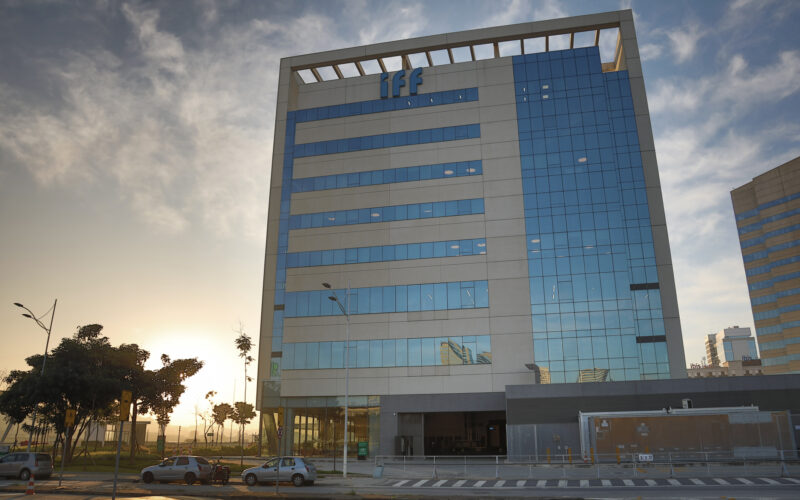
International Flavors & Fragrances Inc. has announced the transformation of its Arroyito facility in Argentina into a fermentation-based enzyme production hub and the launch of a household care application laboratory at its Innovation Center in São Paulo, Brazil. The expansion is designed to strengthen the company’s Health and Biosciences division in Latin America by enabling regional enzyme manufacturing and application development across sectors such as brewing, animal nutrition, biofuels, and home care.
Why localized enzyme production could reshape industrial biotechnology supply chains in Latin America
The strategic significance of the announcement lies less in the physical infrastructure itself and more in what it signals about how industrial biotechnology companies are reconfiguring global production networks. For decades, enzyme manufacturing has largely followed a centralized model, with fermentation occurring in a limited number of highly specialized facilities and finished products distributed globally. International Flavors & Fragrances Inc.’s decision to bring full fermentation capability into Latin America suggests a gradual shift toward geographically distributed production models designed to improve supply reliability, reduce logistics complexity, and enable faster adaptation to regional customer needs.
Enzymes occupy a foundational role in modern industrial biotechnology. They enable chemical reactions in brewing, animal feed digestion, detergent formulation, and biofuel production while reducing energy consumption and environmental impact. As industries seek alternatives to petrochemical processes and increasingly adopt bio-based manufacturing methods, demand for industrial enzymes has expanded significantly across both developed and emerging markets. Latin America in particular has become an attractive growth region due to its large agricultural base, expanding biofuel sector, and growing consumer markets for home and personal care products.
Industry observers tracking the sector note that fermentation infrastructure represents one of the most complex and capital-intensive components of enzyme production. Unlike final formulation or packaging operations, fermentation requires large-scale bioreactors, microbial strain management, precise process control, and significant quality assurance capabilities. By upgrading the Arroyito site to support full fermentation rather than downstream processing alone, the United States-based biosciences supplier is effectively moving the most technically demanding stage of enzyme manufacturing closer to Latin American customers.
What this expansion reveals about Latin America’s emerging role in global industrial biotechnology
This localization strategy carries several operational advantages. Producing enzymes regionally reduces lead times associated with transcontinental shipping and allows manufacturers to respond more rapidly to fluctuations in customer demand. In sectors such as brewing and animal nutrition, where formulation adjustments may be required to account for variations in raw materials or environmental conditions, the ability to adapt production quickly can provide a significant competitive advantage.
The expansion also reflects the growing role of Latin America as a hub for bio-industrial innovation rather than merely a consumption market. Countries such as Brazil and Argentina possess extensive agricultural supply chains that generate large quantities of biomass suitable for fermentation-based industries. The region’s strong ethanol industry, particularly in Brazil’s sugarcane sector, has already created a sophisticated ecosystem around industrial biotechnology and fermentation technologies. By establishing a fermentation-capable enzyme facility in Argentina, International Flavors & Fragrances Inc. appears to be positioning itself closer to this ecosystem.
Why application laboratories matter for translating bioscience innovation into commercial products
Another important element of the expansion is the new household care application laboratory in Brazil. While enzyme production addresses manufacturing capacity, application laboratories play a different but equally critical role in the commercialization of bioscience solutions. Detergent and cleaning product manufacturers rely on application labs to evaluate how enzymes perform under real-world conditions, including water hardness variations, temperature fluctuations, and regional consumer usage patterns. These variables can significantly influence the effectiveness of enzyme-based formulations.
The São Paulo laboratory therefore serves as a bridge between enzyme production and product development. By enabling testing in conditions that reflect Latin American consumer environments, the facility can accelerate the development cycle for laundry and dishwashing formulations. For consumer goods manufacturers, this localized testing capability can shorten the time required to bring new products to market while improving formulation accuracy.
How production and application integration strengthens the Health and Biosciences strategy
The decision to invest in both production and application infrastructure suggests that the Health and Biosciences division of International Flavors & Fragrances Inc. is pursuing an integrated regional strategy. Enzyme manufacturing alone does not guarantee market success if customers lack the tools to translate those enzymes into effective commercial formulations. Conversely, application labs without regional production can still face delays associated with supply logistics. Combining the two capabilities within the same region strengthens the company’s ability to support customers across the entire product development cycle.
The move also aligns with broader structural trends in the industrial biotechnology sector. Over the past decade, bioscience companies have increasingly emphasized sustainability as a key driver of innovation. Enzymes often enable lower-temperature processing, reduced chemical usage, and improved efficiency in industrial processes. As regulatory frameworks and corporate sustainability commitments push industries toward greener production methods, demand for enzyme-based technologies is expected to rise across multiple sectors.
What industry adoption dynamics could determine the success of regional enzyme manufacturing
In brewing, enzymes help improve fermentation efficiency and enhance yield from raw ingredients. In animal nutrition, specialized enzymes enable livestock to digest feed components more effectively, improving feed conversion ratios and reducing waste. In biofuel production, enzymes break down plant biomass into fermentable sugars that can be converted into ethanol or other bio-based fuels. Household detergents rely on enzymes to remove stains at lower washing temperatures, enabling energy savings and improved environmental performance.
These applications illustrate why the enzyme market has become strategically important within the broader life sciences and biotechnology landscape. While pharmaceutical biotechnology often attracts greater public attention, industrial biotechnology represents a vast and growing market focused on improving efficiency in everyday manufacturing processes. Companies operating in this space increasingly compete not only on scientific innovation but also on their ability to deliver regionally tailored solutions.
What risks and operational challenges observers will watch as the expansion unfolds
The expansion in Latin America may therefore represent a competitive positioning strategy as much as a capacity investment. Several global biotechnology suppliers operate in the enzyme market, including companies with extensive fermentation expertise and global distribution networks. Establishing localized production infrastructure allows International Flavors & Fragrances Inc. to strengthen its regional presence while reducing potential supply chain vulnerabilities.
However, several challenges remain that industry observers are likely to monitor closely. Fermentation facilities require continuous optimization to maintain production efficiency and product consistency. Scaling fermentation processes across different geographic regions can introduce variability related to raw materials, microbial strains, and operational conditions. Ensuring consistent enzyme performance across applications will therefore remain a key operational priority for the biosciences supplier.
Another consideration involves market adoption dynamics. While enzymes offer sustainability and efficiency benefits, their adoption often depends on cost competitiveness relative to traditional chemical processes. Industries such as detergents and animal nutrition operate on tight margins, and customers may require clear economic incentives before adopting new formulations at scale.
Regulatory considerations also play a role in enzyme commercialization. Industrial enzymes must meet safety and environmental standards that vary across jurisdictions. For companies expanding production into new regions, maintaining compliance with regulatory frameworks while ensuring consistent product quality is an ongoing challenge.
Despite these uncertainties, the broader trajectory of industrial biotechnology suggests continued expansion of enzyme-based solutions. Advances in microbial engineering, fermentation technology, and process optimization have steadily improved the performance and cost efficiency of enzyme manufacturing. As these technologies mature, regional production hubs may become an increasingly common feature of the global biotechnology landscape.
For International Flavors & Fragrances Inc., the Latin American expansion underscores the strategic importance of its Health and Biosciences division within the company’s broader portfolio of flavor, fragrance, and ingredient businesses. Industrial biotechnology sits at the intersection of sustainability, manufacturing efficiency, and consumer product innovation. By strengthening its regional infrastructure in enzyme production and application development, the United States-based biosciences supplier appears to be positioning itself to capture a larger share of this evolving market.
Industry observers tracking the development of the Arroyito fermentation hub and the São Paulo application laboratory will likely focus on how quickly these investments translate into commercial growth. Indicators such as new customer collaborations, expanded product portfolios, and regional market penetration will provide early signals of whether the strategy delivers its intended impact.
In the longer term, the expansion may also offer insights into how biotechnology companies balance centralized expertise with localized production capabilities. If regional enzyme manufacturing proves effective in accelerating innovation and improving supply resilience, similar investments could emerge across other emerging markets where demand for bio-based industrial solutions continues to expand.
Discover more from Business-News-Today.com
Subscribe to get the latest posts sent to your email.