

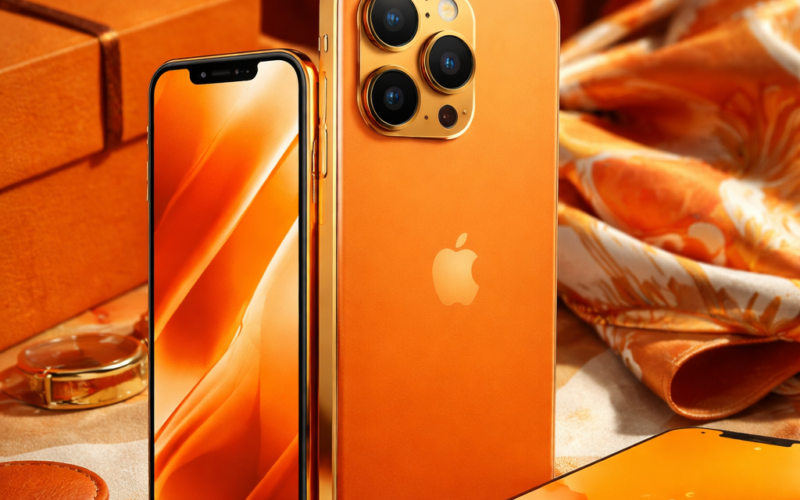
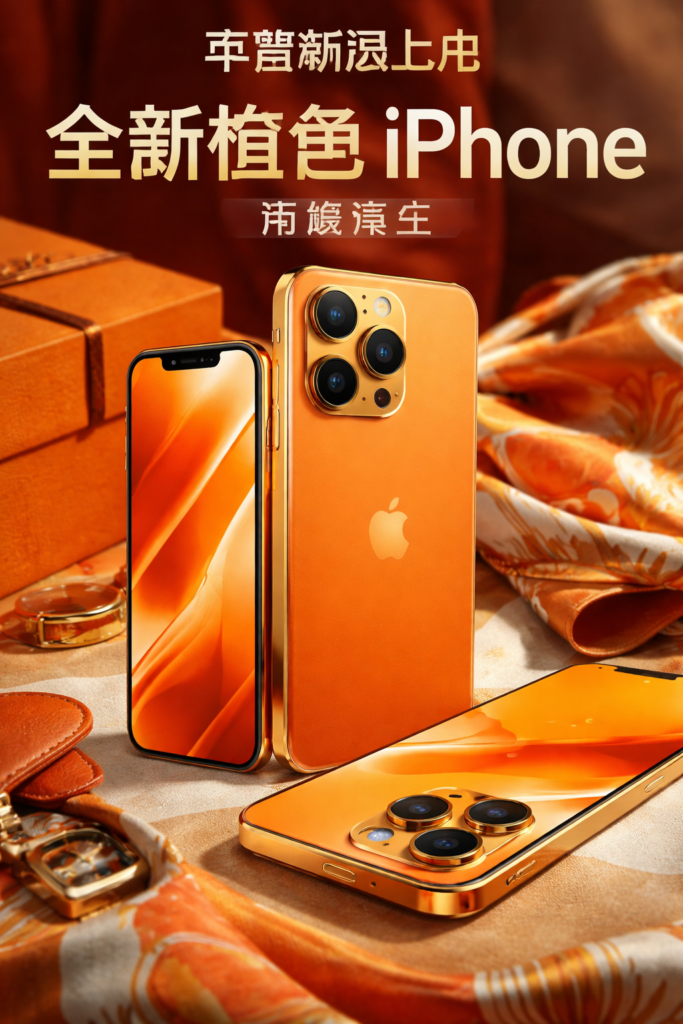
Apple Inc. (NASDAQ: AAPL) has leaned into luxury signaling in China with the release of a Hermès-inspired orange iPhone finish, a move designed to reignite demand in its most competitive international market at a time when unit growth has been under pressure. The colorway, positioned as a fashion-forward and status-conscious variant rather than a core hardware upgrade, underscores a strategic shift toward emotional differentiation as pricing power and ecosystem stickiness face intensifying local competition.
Why Apple Inc. is using a Hermès-inspired orange finish to reset brand heat in China’s premium smartphone market
The decision to introduce a Hermès-adjacent orange finish is not about pigments alone. It reflects Apple Inc.’s recognition that China’s premium smartphone buyers increasingly weigh cultural symbolism, fashion cues, and brand signaling alongside specifications. In a market saturated with technically competitive devices from domestic players, the company is leaning on aesthetics and aspiration to restore excitement around annual refresh cycles.
Orange occupies a unique space in Chinese consumer culture, frequently associated with prosperity, visibility, and celebration. By echoing the visual language of Hermès, Apple Inc. taps into an existing luxury shorthand that resonates with affluent urban buyers without explicitly co-branding or diluting its own identity. The approach mirrors how luxury cues have historically lifted demand in China across automotive interiors, fashion accessories, and consumer electronics finishes.
How color-driven differentiation fits into Apple Inc.’s broader China strategy amid slowing iPhone upgrade cycles
Apple Inc.’s China challenge is no longer about awareness or distribution. It is about relevance in a market where replacement cycles are stretching and domestic manufacturers offer credible alternatives at lower price points. Hardware innovation alone has struggled to deliver a clear, must-upgrade narrative in recent years, particularly as camera and processor gains feel incremental to mainstream users.
Against this backdrop, color becomes a low-cost, high-impact lever. It allows Apple Inc. to refresh desirability without altering bill-of-materials economics or supply-chain complexity in a meaningful way. The Hermès-style orange variant functions as a soft relaunch, creating social-media buzz, in-store differentiation, and a renewed sense of novelty that standard spec upgrades may not achieve on their own.
This tactic also aligns with Apple Inc.’s longer-term emphasis on personalization within a controlled ecosystem. By expanding the emotional palette of the iPhone while keeping the core platform unchanged, the company reinforces brand intimacy without fragmenting its product line.
What the Hermès aesthetic signals about Apple Inc.’s positioning against domestic Chinese smartphone rivals
The move implicitly acknowledges that Apple Inc. no longer competes purely on technology leadership in China. Domestic brands have closed the gap on displays, batteries, fast charging, and even silicon optimization. Where Apple Inc. still maintains an edge is in brand perception, ecosystem coherence, and aspirational value.
By borrowing from Hermès’ visual language, Apple Inc. draws a sharper contrast with rivals that emphasize value-for-money or aggressive specification marketing. The orange finish signals confidence and exclusivity rather than technical one-upmanship. It reframes the iPhone as a fashion object as much as a computing device, a positioning that domestic competitors have historically struggled to replicate at scale.
This strategy also reduces direct comparability. When purchase decisions hinge on aesthetics and identity, spec sheets matter less, and price sensitivity can soften among premium buyers.
How Chinese consumer psychology makes color and status cues a powerful demand lever for Apple Inc.
Chinese premium consumers often treat smartphones as visible extensions of personal status, particularly in first-tier and emerging second-tier cities. Color choices, finishes, and limited-edition variants carry outsized influence in social settings, from business meetings to lifestyle content on local platforms.
The Hermès-inspired orange iPhone plays into this psychology by offering instant recognizability. It stands out visually in a sea of neutral-toned devices and communicates discernment without overt branding. For Apple Inc., this is a way to stimulate word-of-mouth and peer validation, two forces that have historically driven disproportionate sales impact in China’s high-end segments.
Investor sentiment and what the China color strategy means for Apple Inc.’s near-term revenue outlook
From a market perspective, the color-driven push is unlikely to transform Apple Inc.’s China revenue trajectory on its own. However, it does signal tactical agility at a time when investors have questioned the company’s growth levers in the region. Recent stock performance has reflected concerns around China exposure, competitive pressure, and macro softness rather than balance-sheet stress or ecosystem weakness.
Institutional investors are likely to view the Hermès-orange strategy as a defensive optimization rather than a growth breakthrough. It suggests management is focused on protecting average selling prices and stabilizing unit volumes through branding nuance rather than price cuts. That restraint may be read positively, particularly given Apple Inc.’s emphasis on margin discipline and services monetization layered on top of hardware sales.
What happens next if Apple Inc.’s luxury-leaning color strategy succeeds or falls flat in China
If the Hermès-inspired orange variant meaningfully lifts demand, Apple Inc. may expand its use of culturally tuned aesthetics across future launches in China, potentially with region-specific finishes or materials. Success would reinforce the idea that emotional design remains a scalable growth lever even in mature smartphone markets.
If the impact proves marginal, the signal is more sobering. It would suggest that brand-led differentiation is no longer sufficient to offset ecosystem nationalism, price sensitivity, and domestic innovation. In that scenario, Apple Inc. may face harder strategic choices around localization, pricing architecture, or deeper services integration to maintain relevance.
Either way, the experiment provides valuable real-time feedback on how much pricing power and cultural resonance Apple Inc. still commands in the world’s most scrutinized smartphone market.
Key takeaways on what Apple Inc.’s Hermès orange iPhone means for China, competitors, and investors
- Apple Inc. is using luxury aesthetics as a strategic lever to refresh iPhone desirability in China without altering core hardware economics.
- The Hermès-inspired orange finish targets emotional differentiation in a market where technical advantages have narrowed.
- Color-driven variants offer a low-risk way to stimulate demand and social buzz amid slowing upgrade cycles.
- The move reinforces Apple Inc.’s premium positioning against domestic rivals focused on specifications and pricing.
- Chinese consumer psychology amplifies the impact of visible status cues, making aesthetic choices commercially meaningful.
- Investor sentiment is likely to view the strategy as margin-protective rather than transformational.
- Success could lead to more China-specific design localization in future Apple Inc. launches.
- Limited impact would underscore the structural challenges Apple Inc. faces in China beyond branding alone.
Discover more from Business-News-Today.com
Subscribe to get the latest posts sent to your email.