Trilogy Metals Inc. (NYSE American: TMQ; TSX: TMQ) has completed the approximately US$35.6 million strategic equity investment by the U.S. Department of War, converting more than a year of federal backing, documentation and closing steps into an actual ownership position. The U.S. Government now holds approximately 10% of Trilogy Metals, while proceeds from transactions involving Trilogy Metals and South32 Limited are being committed entirely to the Upper Kobuk Mineral Projects in northwestern Alaska.
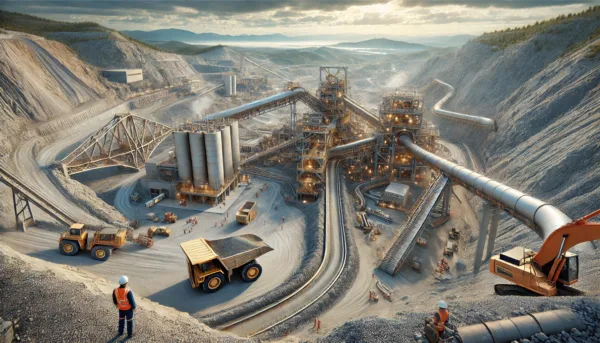
The Upper Kobuk portfolio covers approximately 190,929 hectares and contains the high-grade Arctic polymetallic deposit as well as the Bornite copper-cobalt deposit. The assets are held through Ambler Metals LLC, which is owned 50:50 by Trilogy Metals and South32 Limited.
Why does a 10% U.S. Government stake matter for Trilogy Metals?
Government equity ownership does not make a mine automatically financeable or permit-ready, but it changes the political context around the asset. The United States has explicitly identified domestic copper and other critical-mineral supply as a strategic priority, and becoming a roughly 10% shareholder places federal financial interests more directly alongside development of the Upper Kobuk Mineral Projects.
That alignment is especially relevant because infrastructure has historically been one of the project’s largest obstacles. The proposed Ambler Road is a roughly 211-mile industrial-access route needed to connect the mineral district to Alaska’s broader transport network. As part of the investment framework, the U.S. Department of War has committed to work in good faith to facilitate financing for that road in coordination with Alaska and the Alaska Industrial Development and Export Authority.
This does not amount to a federal guarantee that the road or mine will be built. It does, however, reduce the strategic contradiction that previously surrounded the project, where Washington wanted more domestic critical minerals while access infrastructure and permitting remained politically difficult.
Is $35.6 million enough to finance the Arctic Project?
No, and that distinction is crucial. The investment meaningfully strengthens the development programme, but it is nowhere near the capital ultimately required to construct a large mining operation and its supporting infrastructure.
Trilogy Metals reported $38.8 million of cash at May 31, 2026, while its 2026 work programme included permitting, engineering, geotechnical activity and drilling across the Upper Kobuk portfolio. The federal proceeds provide additional capital for those activities and reduce near-term funding pressure as the company advances Arctic toward a construction decision.
However, the latest established feasibility economics for Arctic have contemplated initial capital expenditure of roughly US$1.18 billion. Against that figure, the entire US$35.6 million federal strategic investment is equivalent to only around 3% of initial mine-construction capital. The cheque therefore matters much more as a de-risking and policy signal than as complete project financing.
That difference should shape investor expectations. Trilogy Metals still needs a bankable development pathway, infrastructure clarity, permitting completion and substantially more construction capital before Arctic can become a producing mine.
What has changed on permitting in 2026?
The Arctic Project filed its Clean Water Act Section 404 permit application with the U.S. Army Corps of Engineers in April 2026, formally advancing federal mine permitting. It was then accepted on May 15 as a covered project under the FAST-41 framework, placing the review process on a coordinated federal timetable with publicly tracked permitting milestones.
Those steps matter because mining investors often discount otherwise attractive resources when approval timelines are open-ended. FAST-41 does not predetermine the outcome, but it can improve transparency across agencies and impose more structure around the review process.
Trilogy Metals is therefore moving through several forms of de-risking simultaneously. There is now federal ownership, a more defined permitting pathway, a funded field programme and continued work on access infrastructure. None individually guarantees construction, but together they change the probability distribution around a project that has historically carried large political and infrastructure discounts.
Why is the Arctic deposit strategically interesting?
Arctic is not simply a copper project. The deposit contains copper, zinc, lead, gold and silver, while the broader Upper Kobuk portfolio includes Bornite’s copper-cobalt mineralisation. That multi-metal exposure fits Washington’s effort to reduce dependence on foreign-controlled supply chains for materials used across defence, infrastructure and electrification.
The geopolitical value does not replace mining economics, however. Investors ultimately require grades, recoveries, operating costs, capital intensity and commodity prices that can support an acceptable return. Government sponsorship can reduce certain risks, but it cannot rescue an uneconomic orebody.
What the federal investment does is make it more plausible that strategic considerations could help mobilise infrastructure and financing around an already advanced resource. That is a very different proposition from the government simply funding early exploration in an unknown geological target.
What did Trilogy Metals stock do after the investment closed?
Trilogy Metals shares finished the September 11 regular session at $3.27, down 1.21%, but the company announced the closing at 4:43 p.m. Eastern Time, after normal U.S. trading had ended. The shares subsequently traded around $3.52 after hours, up approximately 7.6% from the regular close according to Investing.com data, giving investors a cleaner initial indication of market reaction than the daytime decline.
That response suggests the market assigns value to closing risk finally disappearing. The investment had been discussed for months and had previously experienced deadline extensions, so completion converts a politically important promise into actual capital and government ownership.
The next re-rating catalyst will be harder. Investors now need evidence that federal alignment accelerates the road, mine permitting and construction-financing path. A 10% government shareholder can strengthen confidence, but Trilogy Metals remains a development-stage miner whose ultimate value depends on turning Arctic and Bornite from strategically attractive deposits into financeable producing assets.
Discover more from Business-News-Today.com
Subscribe to get the latest posts sent to your email.