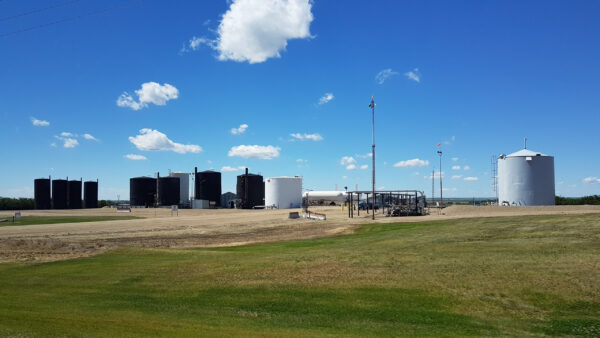




Vistra Corp (NYSE: VST) shares slipped 0.66 percent to USD 205.84 by midday on September 29, 2025, as investors digested the company’s announcement of two new advanced natural gas-fueled power units at its Permian Basin Power Plant. The intraday chart showed early weakness with the stock dipping below USD 200 before recovering toward USD 206, reflecting both enthusiasm for the long-term growth strategy and caution around its near-term capital intensity. The project, worth more than USD 1 billion, will add 860 megawatts of dispatchable capacity and more than triple the Permian site’s output from 325 megawatts to 1,185 megawatts.
The mixed share price reaction highlighted the balancing act facing Vistra: rewarding shareholders after a meteoric rally from below USD 30 in 2023 to over USD 200 in 2025, while committing nearly USD 2 billion to growth projects designed to stabilize Texas’ grid and secure market share.

Why does Vistra’s latest stock movement underline investor caution about new capital projects in Texas?
The 0.66 percent decline in Vistra’s share price on the day of the announcement was modest compared to the volatility seen in broader markets. Yet it carried symbolic weight, as the stock has been one of the sector’s standout performers over the past two years. Institutional investors pointed out that while the Permian Basin expansion strengthens the company’s long-term competitive edge in the Electric Reliability Council of Texas (ERCOT) market, it also raises questions about balance sheet leverage and execution risk.
Hedge funds, which have been actively trading Vistra’s swings, used the news as an opportunity to lock in gains. Long-only funds, on the other hand, remain supportive of the company’s diversified portfolio approach but are closely watching whether USD 2 billion of cumulative capital spending since 2020 can translate into sustainable earnings. Analysts characterized the stock’s movement as “a pause rather than a pullback,” indicating that the market is processing the announcement rather than punishing it.
Why is Vistra focusing on dispatchable natural gas in the Permian Basin instead of expanding renewables alone?
Vistra’s management emphasized that natural gas remains critical to balancing Texas’ growing but variable renewable generation. The Permian Basin, home to some of the nation’s most energy-intensive operations in oil, gas, and industrial production, requires reliable 24/7 supply. Wind and solar power dominate Texas’ capacity additions, but without dispatchable resources, ERCOT’s grid remains vulnerable to price spikes and outages during peak demand or weather stress events.
By selecting gas-fired technology, Vistra is aligning itself with ERCOT’s push for reliability while also positioning to capture premium prices during system tightness. This is not the company’s first foray into large-scale reliability projects. Between 2020 and 2023, Vistra added approximately 1,000 megawatts of new capacity in Texas by upgrading its gas fleet and completing projects at Brightside, Emerald Grove, and DeCordova. In 2024, it identified more than USD 1 billion of further opportunities to add up to 2,000 megawatts by 2028, contingent on supportive conditions.
The final investment decision to build in the Permian Basin confirms that conditions — customer demand, political support, and financing capacity — have now converged.
What other capacity additions are reinforcing Vistra’s Texas strategy beyond the Permian project?
The Permian Basin units are part of a broader program of investment that demonstrates Vistra’s multi-track approach. Over the past year, the company completed more than 400 megawatts of new capacity by upgrading existing gas plants. Additional upgrades underway are expected to bring that figure to 500 megawatts once finalized.
At the same time, Vistra is pushing into renewables with the nearly completed Oak Hill solar project. This 200-megawatt facility, constructed on the reclaimed site of a lignite mine, is scheduled to commence commercial operations in late 2025. The project illustrates how Vistra is leveraging legacy assets for new-age power.
Another cornerstone of the strategy is the repowering of the Coleto Creek Power Plant. Originally scheduled for retirement in 2027, the facility will instead be converted into a dispatchable gas plant, restoring around 630 megawatts to ERCOT’s grid. This not only ensures reliable generation but also preserves local jobs and tax revenues in Goliad County.
Taken together, Vistra’s investments will bring total capacity additions since 2020 to 3,100 megawatts — equivalent to powering about 1.5 million Texas homes.
How are political leaders and local communities reacting to Vistra’s expansion strategy?
Texas Governor Greg Abbott praised the Permian Basin investment, calling it a bold move that will reinforce the grid, spur jobs, and drive economic growth for years to come. His remarks echoed the state’s consistent emphasis on maintaining leadership in energy production, both fossil and renewable. For Texas policymakers, reliability is as much about economic competitiveness and national security as it is about keeping the lights on.
Local communities have also expressed support. Monahans Mayor Adam Steen noted that the Permian Basin Power Plant has been part of the region for more than 75 years, and this expansion further integrates the community into Texas’ energy future. The positive political and local response reduces regulatory and permitting risks, which institutional investors flagged as a key advantage of operating in Texas compared to other U.S. jurisdictions.
How is Vistra’s stock rally since 2023 shaping investor sentiment around these new commitments?
Vistra’s transformation from a USD 30 stock in 2023 to above USD 200 in 2025 has turned it into a case study in how utilities can outperform in deregulated markets. Investors have rewarded the company for combining traditional generation with renewables and storage, while also capturing windfall revenues during ERCOT’s most volatile pricing events.
But that very success is also a source of caution. Some market participants argue that much of the upside from natural gas expansion is already priced in, and further rallies depend on flawless execution. The 0.66 percent dip on the day of the Permian announcement illustrates this recalibration: investors want proof that these megawatts will translate into earnings growth, not just capital expenditure headlines.
Institutional sentiment remains cautiously constructive. Growth-oriented funds continue to view Vistra as a rare “growth utility” that bridges fossil reliability and energy transition, while conservative investors prefer to wait for evidence that the balance sheet can support nearly USD 2 billion of spending without straining dividends or credit metrics.
What is the long-term outlook for Vistra in Texas and across the U.S. power sector?
Vistra’s strategy positions it as both a reliability provider and a transition player. By expanding dispatchable natural gas, it ensures that it can capture margins in times of renewable intermittency. By investing in solar and converting coal sites into gas facilities, it signals adaptability.
The risk lies in regulatory and technological change. If federal policy moves quickly toward carbon pricing or stricter emissions standards, the economics of new gas plants could shift. Likewise, rapid deployment of long-duration storage could eventually displace the premium value gas plants earn during scarcity. For now, however, ERCOT’s needs and Texas’ policy stance provide a favorable environment.
In my view, Vistra is executing a pragmatic strategy that prioritizes reliability while keeping a toe in the energy transition. Investors should expect volatility — both in stock performance and in Texas’ power market — but also recognize that volatility is where Vistra has historically outperformed.
Discover more from Business-News-Today.com
Subscribe to get the latest posts sent to your email.