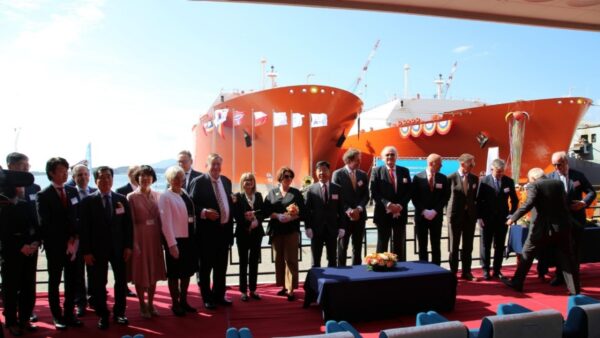

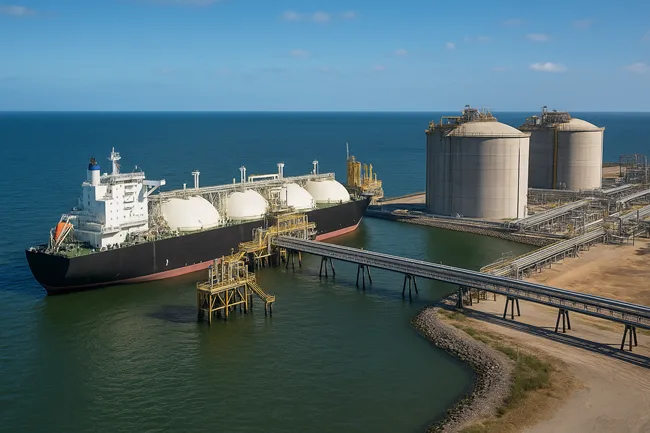
Venture Global, Inc. (NYSE: VG) has expanded its commercial footprint in Asia by signing a 20-year Sales and Purchase Agreement with Tokyo Gas Co., Ltd., marking its fourth long-term liquefied natural gas (LNG) contract with a Japanese utility. The agreement, announced from Arlington, Virginia, will see Tokyo Gas receive 1 million tonnes per annum (MTPA) of American LNG from 2030. The latest deal brings Venture Global’s total long-term LNG contracts in 2025 to 7.75 MTPA, highlighting the American exporter’s increasing traction in one of the world’s most strategic energy import markets.
The long-term nature of this supply arrangement underscores the urgency among Japanese buyers to lock in stable LNG volumes amid a global shift in energy geopolitics. The deal comes on the heels of a similar 20-year agreement signed earlier this month with Mitsui & Co., Ltd., also for 1.0 MTPA of supply starting in 2029. These consecutive contract wins reflect growing confidence in Venture Global’s project execution capability and its modular, cost-competitive LNG delivery model.
Venture Global Chief Executive Officer Mike Sabel stated that the Tokyo Gas partnership builds on the firm’s 2025 momentum and represents a significant milestone in U.S.–Japan energy cooperation. He described Tokyo Gas as a pioneer in the LNG sector and emphasized the role this deal would play in enhancing U.S. LNG trade flows to Japan. Sabel added that the agreement would help strengthen the bilateral balance of trade while offering Tokyo Gas reliable and affordable American energy for two decades.
How Japanese LNG demand is shaping the U.S. export map in 2025
Japan, historically the world’s largest LNG importer, is accelerating its strategy to secure long-term gas supplies as global energy markets experience increased volatility. After disruptions from the Russia–Ukraine conflict and weather-related LNG price spikes, Japanese buyers are seeking diversification through U.S. producers with proven execution capabilities. Analysts following Asian energy trends point out that long-duration contracts are now back in favor among utilities looking to shield themselves from spot market unpredictability.
Venture Global’s approach, which is anchored by modular liquefaction trains and rapid deployment, has attracted attention from Asian buyers who prioritize reliability, scale, and competitive pricing. The Tokyo Gas agreement comes at a time when Japanese utilities are reducing exposure to Russian and Qatari gas, focusing instead on American volumes that come with clearer regulatory and logistical pathways. With Mitsui and Tokyo Gas now onboard, Venture Global is carving out a consistent presence in Japan’s evolving energy matrix.
According to observers familiar with Tokyo Gas’s global procurement model, the firm’s decision to engage in another 20-year deal suggests a broader strategy to reinforce supply diversification. As Japan undergoes structural changes in its power mix and reconsiders its dependence on nuclear energy, LNG is expected to serve as a critical baseload source, especially during peak demand seasons. That demand profile aligns with Venture Global’s ability to deliver scalable volumes from the U.S. Gulf Coast.
What Tokyo Gas and Mitsui’s commitments signal about bankability and investor interest
The back-to-back announcements from Venture Global involving Mitsui and Tokyo Gas suggest a deliberate targeting of high-credit, low-risk offtakers in the Asian LNG ecosystem. Mitsui is already an established player in the global LNG value chain, and Tokyo Gas is widely considered one of the most bankable gas buyers in the Asia-Pacific region. Their combined participation provides a strong signal to institutional lenders and project financiers evaluating Venture Global’s development roadmap.
While Venture Global’s Calcasieu Pass facility began operations in 2022, the company has rapidly added commercial credibility through successful execution at Plaquemines LNG and the launch of CP2 LNG. This depth in portfolio development, paired with Japanese counterparties now locked into SPAs, is expected to facilitate more favorable debt terms for future expansions.
Investor sentiment around Venture Global’s long-term growth strategy has improved significantly over the past quarter. Market participants tracking the stock have noted that the addition of Tokyo Gas and Mitsui as offtakers materially enhances credit strength and lowers risk premiums across the firm’s debt stack. This has the potential to accelerate financial closure for ongoing and upcoming infrastructure phases.
Venture Global files for major Plaquemines LNG expansion amid contract momentum
Parallel to the Tokyo Gas deal, Venture Global has filed with the Federal Energy Regulatory Commission for the permitting of its Plaquemines LNG brownfield expansion project. The filing also includes an export authorization request submitted to the U.S. Department of Energy. This expansion would add 32 new liquefaction trains and push the facility’s peak output from 28.0 MTPA to over 58.0 MTPA.
The project will be executed in three modular phases, designed to scale alongside commercial demand. Venture Global stated that the output increase—up nearly 40 percent from previously disclosed plans—was driven by optimization of its liquefaction trains and market feedback. The firm is positioning Plaquemines as a flexible, scalable hub capable of addressing evolving market needs while leveraging existing infrastructure.
Chief Executive Officer Mike Sabel described the FERC application as a strategic move that offers Venture Global optionality to respond to future LNG market dynamics. He reiterated that the project’s first two phases remain on schedule and emphasized that the brownfield nature of the expansion allows for faster execution compared to greenfield developments.
The expansion of Plaquemines is expected to play a key role in Venture Global’s future LNG contracting, offering volume headroom to meet additional demand from Asian, European, and emerging markets. With the Tokyo Gas and Mitsui SPAs already contributing to offtake coverage, the project is on track to attract further interest from utilities, traders, and sovereign energy buyers.
How institutional flows are responding to Venture Global’s project and contract pipeline
Institutional flows into Venture Global equity and related debt instruments have gained momentum in recent weeks, supported by the company’s ability to convert strategic dialogues into bankable long-term contracts. Investors have interpreted the Tokyo Gas deal as a validation of Venture Global’s LNG delivery model, particularly in contrast to more delayed or capital-intensive competitors.
The stock performance of Venture Global has shown modest but steady gains following the series of contract announcements this quarter. While broader energy equities have remained sensitive to global LNG price shifts, Venture Global’s focus on long-term SPAs provides revenue visibility that many investors consider a hedge against short-term commodity fluctuations.
Investor analysts believe that the Tokyo Gas and Mitsui deals will also catalyze discussions with South Korean, Taiwanese, and Southeast Asian energy importers who are similarly looking to de-risk their LNG procurement. Venture Global’s modular capacity model, combined with U.S. regulatory clarity and port access, provides a platform for scaling exports well into the 2030s.
Why Venture Global’s carbon capture push is another differentiator for ESG buyers
In addition to expanding LNG volumes, Venture Global is actively developing carbon capture and sequestration infrastructure across all of its production sites. The integration of CCS aligns with growing ESG demands from Asian utilities and institutional investors who are under pressure to decarbonize energy portfolios while maintaining grid stability.
By offering CCS-ready LNG contracts, Venture Global is positioned to attract buyers looking to offset or reduce lifecycle emissions from gas-fired power generation. This capability could become a strategic advantage in future contract negotiations, particularly with European or Asian buyers facing stricter emissions regulations post-2030.
With the Tokyo Gas deal now finalized, industry watchers expect Venture Global to pursue similar contracts that bundle CCS into their LNG sales framework. This could appeal to Japanese and Korean utilities pursuing blue hydrogen, ammonia co-firing, or synthetic gas programs.
What are the key strategic implications of the Tokyo Gas agreement and Plaquemines filing?
The execution of the 20-year agreement with Tokyo Gas confirms Venture Global’s transformation from a fast-growing LNG exporter into a cornerstone supplier for Asia’s largest utilities. Combined with the regulatory filings for the Plaquemines Expansion Project, the firm is now entering a phase of accelerated scale-up, with a long-term demand base already established.
The Tokyo Gas and Mitsui contracts anchor demand through the next two decades, providing commercial visibility that few other U.S. projects currently possess. Meanwhile, the FERC and DOE processes for Plaquemines are expected to advance swiftly, given the project’s brownfield profile and existing infrastructure.
These developments together indicate that Venture Global is poised not just to respond to market demand, but to shape the LNG supply structure of the future. With continued institutional backing, regulatory progress, and high-credit offtakers, the company appears well-positioned to expand its market share in the global LNG ecosystem.
What are the key takeaways from Venture Global’s Tokyo Gas LNG deal and Plaquemines expansion?
- Venture Global, Inc. has signed a 20-year Sales and Purchase Agreement with Tokyo Gas Co., Ltd. to supply 1 million tonnes per annum (MTPA) of liquefied natural gas starting in 2030.
- This is the American LNG exporter’s fourth long-term contract with a Japanese utility and brings its total volume of SPAs signed in 2025 to 7.75 MTPA.
- The deal follows a similar 1.0 MTPA agreement signed with Mitsui & Co., Ltd. earlier this month, reinforcing Venture Global’s presence in Japan’s LNG procurement strategy.
- Tokyo Gas is Japan’s largest city gas utility with over 13 million customers, and its commitment reflects Japan’s strategy to secure stable U.S. gas amid global supply shifts.
- Venture Global has also submitted a formal application to the Federal Energy Regulatory Commission and the U.S. Department of Energy for a major brownfield expansion at its Plaquemines LNG facility in Louisiana.
- The Plaquemines expansion will increase the project’s peak output from 28.0 MTPA to over 58.0 MTPA through the construction of 32 new modular liquefaction trains across three phases.
- CEO Mike Sabel stated that the expansion reflects both strong market demand and the company’s ability to optimize and scale modular LNG infrastructure.
- Investors and analysts have responded positively to the Tokyo Gas and Mitsui agreements, viewing them as bankable offtake contracts that reduce risk and support future project financing.
- Venture Global’s integrated carbon capture and sequestration plans at its LNG facilities are also emerging as a strategic differentiator for ESG-conscious buyers.
- The company is expected to pursue additional long-term SPAs in the near future as Asian and European utilities seek reliable and carbon-conscious U.S. LNG supply solutions.
Discover more from Business-News-Today.com
Subscribe to get the latest posts sent to your email.