




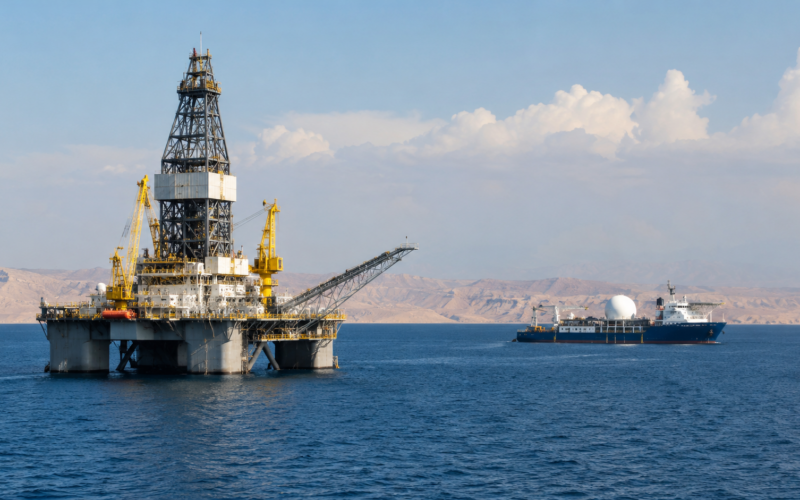
Valeura Energy Inc. (TSX: VLE, OTCQX: VLERF) has completed an eight-well drilling campaign at the Nong Yao oil field in the Gulf of Thailand, including the company’s first multilateral development well. The June 19, 2026 update covered one appraisal well and seven horizontal development wells drilled from the Nong Yao A and Nong Yao B platforms, with all seven development wells brought into production. Combined with workovers conducted at the Nong Yao B and Nong Yao C facilities, Valeura Energy increased working-interest production before royalties from 8,870 barrels per day in early April to approximately 10,500 barrels per day in mid-June, an increase of about 18.4%. The programme also produced a Gulf of Thailand record through a 4,960-foot horizontal lateral and delivered the first multilateral well of this level of complexity attempted in Thailand. The strategic question is whether Valeura Energy can repeat these drilling efficiencies across its mature offshore portfolio, offset natural decline and turn operational success into stronger cash flow and renewed investor confidence.
Why does Valeura Energy’s 18% Nong Yao production increase matter to VLE investors?
The increase to approximately 10,500 barrels per day confirms that Nong Yao remains Valeura Energy’s largest producing asset and a central contributor to the company’s broader Thailand portfolio. The current Nong Yao rate alone represents approximately half of Valeura Energy’s 2026 corporate production-guidance midpoint of 21,000 barrels per day, highlighting how strongly group performance depends on drilling and facility reliability at this one field.
The production improvement is economically meaningful because it came from a combination of new development wells and lower-cost optimisation work on existing wells. Valeura Energy conducted workovers at the Nong Yao B and Nong Yao C platforms while the drilling campaign was underway, allowing the company to improve output from both new and established reservoir intervals.
That distinction is important for investors. Valeura Energy has not disclosed how much of the 1,630-barrel-per-day increase came from newly drilled wells and how much resulted from the workovers. The entire production gain should therefore not be attributed solely to the eight-well drilling programme.
The mixed contribution nevertheless supports Valeura Energy’s operating model. Mature offshore fields rarely maintain production through drilling alone. Operators must repeatedly combine new wells, sidetracks, workovers, artificial-lift optimisation and facility maintenance to counter reservoir decline.
Nong Yao averaged 9,480 barrels per day during the first quarter of 2026. The new rate of approximately 10,500 barrels per day puts the field above that quarterly average, providing a stronger starting point for the second half of the year while the drilling rig moves to Valeura Energy’s Jasmine field.
How can one multilateral well improve recovery from mature Gulf of Thailand reservoirs?
The most strategically interesting part of the campaign was the NYB-02ST1 multilateral well. Valeura Energy constructed a junction within one primary wellbore and drilled two separate horizontal production legs into two different reservoir intervals.
Both lateral sections are now producing oil, but they occupy only one slot on the Nong Yao B wellhead platform. Offshore well slots are finite, and expanding an existing platform can require structural work, additional conductors, new flowlines and extended shutdown periods. Accessing two reservoirs through one slot can therefore preserve infrastructure capacity and delay more expensive modifications.
A multilateral design may also reduce the cost of drilling two completely independent wells. The operator can share parts of the upper wellbore, casing system and surface connection rather than duplicating every component from the platform to the reservoir.
The economics are not automatically superior in every situation. Constructing a reliable downhole junction is technically more complicated than drilling a conventional single-bore well. Completion design, pressure management and future interventions can also become more difficult when two producing branches share part of the same well system.
Valeura Energy must therefore compare the lower surface footprint and potential drilling savings with the additional engineering and intervention risk. A multilateral well that performs reliably can improve recovery per platform slot. A complicated junction failure can create a much more expensive repair than a conventional well.
The company sees possible applications for wells with two or more lateral production legs across its Gulf of Thailand portfolio. The next deployment at Jasmine will provide an early indication of whether the approach can move from a successful Nong Yao experiment into a repeatable development method.
Why does Valeura Energy need continuous drilling to maintain its long-term production target?
Gulf of Thailand oil fields typically contain numerous relatively small sandstone reservoirs rather than one enormous continuous accumulation. Individual wells can produce strongly after completion but may decline rapidly as pressure falls and accessible oil is depleted.
This geological structure rewards operators that can drill quickly, cheaply and repeatedly. The commercial model depends on identifying remaining compartments, placing horizontal wells accurately and bringing new production online before decline from older wells reduces total field output.
Valeura Energy’s 2026 base programme includes 16 development and appraisal wells across Nong Yao, Jasmine and Manora, together with two exploration wells. The company has guided to full-year production of between 19,500 and 22,500 barrels per day and believes its existing portfolio can sustain between 20,000 and 25,000 barrels per day into the 2030s.
Maintaining that range will require continual reinvestment. The Nong Yao increase creates additional production, but it does not permanently remove decline risk. New wells will begin declining, workover benefits may weaken, and unplanned facility downtime can quickly affect a relatively concentrated production portfolio.
Valeura Energy has already taken steps to secure drilling capacity. The company agreed to charter the Shelf Drilling Enterprise jack-up rig through December 31, 2029, with operations expected to begin during the fourth quarter of 2026. This provides greater visibility over rig availability and could help Valeura Energy avoid losing drilling opportunities during periods of tighter offshore-service capacity.
Long-term rig access also creates a commitment. A multiyear charter can improve scheduling and potentially protect day rates, but it requires Valeura Energy to maintain a sufficiently attractive inventory of development, appraisal and exploration targets. An idle rig is an unusually efficient machine for converting shareholder cash into nothing useful.
What do Nong Yao’s reserves and infrastructure reveal about future development economics?
Valeura Energy owns and operates a 90% working interest in Licence G11/48, while Palang Sophon holds the remaining 10%. Nong Yao produces medium sweet crude from Miocene sandstone reservoirs and contains approximately 13.9 million barrels of proved and probable reserves attributable to Valeura Energy’s working interest before royalties.
The field has been developed through wellhead platforms, a mobile offshore production unit and a floating storage and offloading vessel owned by Valeura Energy. Existing facilities give the company a relatively direct route for connecting incremental wells without constructing a new standalone production system for each small reservoir.
Infrastructure ownership is particularly relevant for marginal accumulations. A discovery that would be uneconomic as an independent development can become commercially attractive when it sits within drilling distance of an operating platform and can use existing processing, storage and export capacity.
Valeura Energy expanded Nong Yao through the Nong Yao C accumulation, which began production during the second quarter of 2024. The latest appraisal well at Nong Yao A encountered its intended target and is expected to support future development drilling, creating another potential source of infrastructure-led production.
The company is also engineering four additional well slots at the Nong Yao A platform. Those slots could allow Valeura Energy to commercialise nearby targets earlier than would be possible if it had to install another platform or wait for existing wells to be abandoned.
Across Thailand, Valeura Energy reported 57.8 million barrels of proved and probable reserves at the end of 2025, with an estimated after-tax net present value discounted at 10% of approximately US$692 million. Nong Yao represented 13.9 million barrels of those reserves and approximately US$257.4 million of the portfolio’s after-tax 2P net present value.
These valuation figures are useful indicators, but they should not be treated as guaranteed cash proceeds or directly compared with Valeura Energy’s market capitalisation without adjustment. Reserve valuations depend on future oil prices, production schedules, operating costs, taxes, capital expenditure and technical assumptions that may change materially.
Can Valeura Energy fund drilling, Wassana redevelopment and acquisitions without adding debt?
Valeura Energy entered the Nong Yao campaign with a comparatively strong balance sheet. The company reported US$261.6 million of cash, including restricted cash, and no debt at March 31, 2026, despite a front-loaded investment programme and the US$15.5 million acquisition of the Manora Princess floating storage and offloading vessel.
First-quarter revenue was US$92.3 million, down 38% from the previous year, but the decline was heavily affected by sales timing. Valeura Energy produced 2.00 million barrels during the quarter but sold only 1.39 million barrels because there were no cargo liftings during March.
The unsold oil increased inventory to approximately 1.23 million barrels at quarter-end. Valeura Energy then sold 0.82 million barrels during April at an average realised price of US$110.40 per barrel, generating more than US$90 million of revenue during that month alone.
This timing effect makes the first-quarter income statement look weaker than the underlying production performance. It also illustrates the volatility created by offshore lifting schedules. Production, sales and revenue do not always occur within the same reporting period because crude must accumulate in floating storage before a full cargo is exported.
Valeura Energy expects to spend between US$175 million and US$195 million on capital expenditure and exploration during 2026. Approximately US$70 million is allocated to completing and installing a new central processing platform for the Wassana redevelopment, while the remainder supports drilling, infrastructure and other portfolio investments.
The balance sheet appears capable of supporting the existing programme, but management is pursuing several capital-intensive objectives at once. Valeura Energy must fund continuous drilling, complete Wassana, prepare new Nong Yao slots, evaluate exploration opportunities and retain flexibility for acquisitions across Southeast Asia.
The commercial test is not whether Valeura Energy can spend the money. Its cash position clearly gives it that capacity. The test is whether each additional dollar of drilling and infrastructure spending adds reserves and production quickly enough to offset depletion and generate an acceptable return.
Why does moving the drilling rig to Jasmine make this more than a one-field technical experiment?
After completing the Nong Yao campaign, Valeura Energy moved its contracted drilling rig to the Jasmine field in Block B5/27, where the company holds a 100% operated interest. The planned five-well programme includes three conventional development wells and a multilateral well with two separate production branches.
This immediate redeployment matters because it shortens the gap between technical proof and commercial replication. Valeura Energy does not need to wait for a future annual budgeting cycle before testing whether the multilateral design can work in another field with different reservoir characteristics.
Jasmine has already served as a testing ground for other drilling innovations. Valeura Energy previously reused sections of existing wellbores, drilled sidetracks through existing casing and deployed autonomous inflow-control devices intended to restrict unwanted water or gas entering the producing well.
The company’s strategy appears to be cumulative rather than dependent on one breakthrough. Longer horizontal sections improve reservoir contact, reused wellbores can reduce drilling time, autonomous controls manage fluid inflow, and multilateral designs improve reservoir access per well slot.
The value of these technologies lies in repetition. Saving several days on one well may not materially change a company’s valuation. Applying the same reduction across dozens of wells and several years of continuous drilling can meaningfully lower development costs and increase recoverable reserves.
Jasmine will also test whether the Nong Yao result depended on particularly favourable local conditions. Successful delivery from another platform would strengthen the argument that Valeura Energy has developed a transferable operating capability rather than benefiting from one technically fortunate well.
Investors should watch the time required to drill the Jasmine multilateral well, the number of productive intervals encountered, initial production rates and whether the company discloses any cost or schedule advantage compared with two conventional wells.
How should investors read VLE’s daily gain against weaker five-day and one-month trends?
Valeura Energy shares closed at C$11.16 on the Toronto Stock Exchange on June 19, gaining 2.48% during the announcement session. The positive daily reaction indicates that investors welcomed the production increase and technical drilling result.
The broader performance was less encouraging. The stock declined approximately 4.4% from its June 12 close of C$11.67 and fell about 15.5% from its May 19 close of C$13.21. The shares traded within a 52-week range of C$6.07 to C$15.60, leaving Valeura Energy around 28.5% below its annual high but approximately 83.9% above its 52-week low.
That combination suggests constructive reaction to the operational update but weaker medium-term sentiment toward the stock. Investors may be balancing successful drilling and a debt-free balance sheet against oil-price volatility, heavy capital expenditure and the natural decline associated with mature offshore assets.
Valeura Energy’s market capitalisation was approximately C$1.19 billion at the June 19 close. The company therefore has sufficient scale to attract specialist energy investors, but it remains small enough for drilling results, production outages or changes in oil prices to cause significant share-price movement.
The stock’s retreat from the 52-week high may also reflect expectations that were already elevated following previous reserve growth and operational improvements. Investors generally become less impressed by each successful well when success has become the base assumption.
In my assessment, the Nong Yao result improves the fundamental story but does not resolve the market’s central concern. Valeura Energy must show that continuous drilling can sustain portfolio production and free cash flow after funding the US$175 million to US$195 million investment programme.
What operational and market risks could weaken the value of Valeura Energy’s drilling success?
The first risk is production decline. The announced 10,500-barrel-per-day rate was measured over the seven days ending June 16, 2026. Initial well rates can change as reservoir pressure stabilises, water production rises or operating conditions are adjusted.
The second risk is technical concentration. The multilateral design improves access through one platform slot, but it also connects two producing branches through a shared well system. A problem affecting the common wellbore or junction could restrict production from both targets.
The third risk is facility reliability. Nong Yao depends on offshore platforms, processing equipment, flowlines and floating storage. A drilling programme can perform exactly as designed and still fail to deliver expected sales if an unrelated facility outage interrupts production or cargo loading.
Weather and marine logistics also remain important. Drilling, well intervention and equipment installation are vulnerable to vessel availability and operating conditions in the Gulf of Thailand. Delays can increase rig costs and disrupt the sequence of work across several fields.
Commodity pricing is the largest external financial risk. Valeura Energy’s first-quarter realised price was US$66.20 per barrel, while April cargoes benefited from a much stronger price environment. This variability can materially change drilling returns and the amount of cash available for capital spending.
Regulatory and fiscal conditions in Thailand represent another consideration. Valeura Energy’s offshore licences carry royalty, tax, abandonment and work-commitment obligations. Changes in domestic fuel-security policy or government requirements could affect the timing and destination of future production.
The final risk is capital allocation. A strong balance sheet can encourage management to pursue more drilling, infrastructure and acquisitions simultaneously. Valeura Energy must avoid allowing operational confidence to become capital indiscipline.
Which milestones will show whether multilateral drilling becomes a repeatable growth engine?
The first milestone will be production durability at Nong Yao. Investors should compare the approximately 10,500-barrel-per-day June rate with subsequent quarterly averages rather than assuming the initial increase will remain unchanged.
The second will be the Jasmine drilling result. Successful delivery of another multilateral well across two reservoir targets would provide evidence that Valeura Energy can apply the approach beyond Nong Yao.
The third will be the development of the Nong Yao appraisal target. The campaign’s appraisal well encountered its intended reservoir and is expected to support future drilling from the Nong Yao A platform. Converting that target into reserves and production would extend the campaign’s value beyond its seven immediate producers.
The fourth milestone will be completion of the four additional well slots at Nong Yao A. These slots should expand the number of nearby accumulations that Valeura Energy can reach through existing infrastructure.
The fifth will be Valeura Energy’s second-quarter financial performance. The delayed March cargoes were sold during April at higher realised prices, meaning the results should provide a clearer picture of cash generation than the timing-distorted first quarter.
Management must also demonstrate that the 2026 drilling programme keeps full-year production within the guided range of 19,500 to 22,500 barrels per day while the company continues spending on Wassana.
The longer-term test begins when the Shelf Drilling Enterprise rig starts its proposed continuous programme. A stable sequence of successful wells through 2029 could extend field lives, improve reserve replacement and reduce unit drilling costs.
Valeura Energy’s Nong Yao result is strategically important because it improves production and expands the company’s technical toolkit at the same time. The stock rerating case, however, will depend on repetition, not novelty. One multilateral well makes a good headline. A portfolio of reliably profitable multilateral wells makes a business model.
What are the key takeaways from Valeura Energy’s Nong Yao drilling campaign?
- Valeura Energy completed eight new wellbores at Nong Yao, including one appraisal well and seven horizontal development wells.
- All seven development wells encountered their intended targets and were placed into production.
- Drilling and concurrent workovers increased Nong Yao output from 8,870 to approximately 10,500 barrels per day, an improvement of about 18.4%.
- NYB-02ST1 accesses two reservoir targets through one platform well slot, potentially improving infrastructure and drilling efficiency.
- NYA-42ST1H established a new Gulf of Thailand horizontal-drilling record with a lateral measuring 4,960 feet.
- Nong Yao contains approximately 13.9 million barrels of working-interest proved and probable reserves and remains Valeura Energy’s largest producing field.
- The drilling rig has moved to Jasmine, where Valeura Energy plans another multilateral well within a five-well programme.
- Valeura Energy held US$261.6 million of cash and no debt at March 31, supporting its US$175 million to US$195 million 2026 investment programme.
- VLE shares gained 2.48% on June 19 but remained down about 4.4% over five trading sessions and 15.5% over one month.
- Sustained production, successful replication at Jasmine and disciplined capital spending will determine whether the drilling result supports a lasting valuation recovery.
Discover more from Business-News-Today.com
Subscribe to get the latest posts sent to your email.

