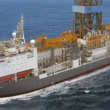





HD Hyundai Heavy Industries Co. Ltd. and Huntington Ingalls Industries Inc. have signed a memorandum of agreement that could reshape how allied navies and global shipyards approach construction, logistics, and distributed industrial capacity. Announced on October 26 during the APEC 2025 forum in Gyeongju, South Korea, the agreement builds on an earlier memorandum of understanding from April 2025 and establishes a long-term collaboration framework around distributed shipbuilding, digital manufacturing, and teaming on auxiliary and commercial vessels.
The new memorandum sets out a roadmap that blends U.S. naval requirements with Korea’s global shipyard expertise. While non-binding, it reflects a policy-driven effort to strengthen the U.S. defense-industrial base, modernize production for naval support ships, and introduce advanced automation and AI-assisted design into the core of American shipbuilding.
How distributed shipbuilding could redefine cost, speed, and industrial resilience in naval production
Distributed shipbuilding refers to a model in which hull sections, superstructures, and modules are fabricated across multiple yards and later assembled at a central site. This approach—pioneered in Korea and Japan and increasingly adopted in U.S. defense contracts—offers the potential to reduce bottlenecks and expand capacity without requiring new megayard construction.
For Huntington Ingalls Industries (NYSE: HII), America’s largest military shipbuilder, the agreement brings access to HD Hyundai’s proven modular production and digital-twin technologies that underpin its commercial success in tankers, LNG carriers, and naval auxiliaries. The South Korean partner already manages about 10 percent of the global shipbuilding market through automation-driven yards in Ulsan and Geoje. By linking those systems to U.S. industrial sites, HII could shorten delivery times for critical fleet assets such as replenishment oilers, hospital ships, and logistics support vessels.
The companies also plan to co-develop digital-engineering tools using AI and machine learning to optimize layout designs and maintenance schedules. Automation and predictive analytics are expected to reduce labor intensity and enable a more resilient response to supply-chain disruptions—an issue that has haunted the U.S. naval industrial base since the pandemic. Observers noted that the agreement echoes Washington’s ongoing drive to revitalize critical manufacturing capacity and to bring foreign partners into compliance with domestic security standards without offshoring classified work.
Why defense and Indo-Pacific strategic cooperation make the alliance a policy signal as much as a business move
Beyond production efficiency, the partnership carries symbolic and strategic value. The Indo-Pacific region is increasingly defined by logistics competition, where navies require auxiliary and commercial support vessels to maintain presence across vast distances. By teaming a U.S. prime contractor with one of Korea’s most technologically advanced shipyards, the two nations are signaling industrial solidarity amid escalating supply-chain pressures and regional tensions.
For HII, whose 135-year legacy includes aircraft carriers and amphibious assault ships for the U.S. Navy, partnering with HD Hyundai Heavy Industries offers a bridge to higher-volume commercial projects that can sustain skilled labor between defense contracts. For the Korean group, which has historically served the Republic of Korea Navy and global commercial clients, entry into the U.S. auxiliary market could be transformational, particularly if future teaming agreements qualify it for U.S. procurement under distributed-production schemes.
Defense analysts said the MOA aligns with broader Pentagon objectives to build redundant shipbuilding capacity and to ensure that critical platforms—like oilers and resupply vessels—can be produced without delays from limited domestic yard availability. The Indo-Pacific Command’s emphasis on logistics and pre-positioning means that auxiliary ship output could become a national priority as much as combatant production. In that sense, the HHI–HII deal has policy overtones that extend beyond corporate strategy.
What factors may determine whether distributed shipbuilding can deliver on efficiency and U.S. industrial-base resilience
The distributed model’s promise depends on interoperability and standards. Both companies must synchronize engineering software, welding processes, and material sourcing to ensure that modules built in different countries fit flawlessly at assembly. Export-control regulations and classified technologies will require careful partitioning of responsibilities. Yet both partners have experience managing multi-nation projects in commercial and defense contexts, suggesting that regulatory alignment is achievable with government oversight.
The MOA also calls for joint research on robotics and AI-driven inspection systems, leveraging HHI’s automation labs and HII’s Ingalls and Newport News shipyards. Such integration could support a more data-rich maintenance environment for U.S. fleet operations and commercial clients. While neither company has disclosed financial terms or timelines, industry insiders expect pilot projects within 18 months, likely focused on logistics or auxiliary hull segments that carry low classification risk but high production value.
Investor reaction has been muted but constructive. HII shares closed at $299.91 on October 24, up 3.4 percent over the week, implying a market capitalization near $12 billion. The stock has traded within a tight band since August 2025, with analysts describing the agreement as a potential medium-term catalyst if it leads to contract awards from the U.S. Navy or Maritime Administration. HD Hyundai Heavy Industries, listed on the Korea Exchange (329180.KS), saw its shares rise about 2 percent in Seoul trading following the announcement.
The sentiment from defense-sector analysts leans positive. Many see the agreement as a pragmatic response to shipyard backlogs and workforce constraints in both countries. However, skeptics caution that distributed manufacturing across national jurisdictions may complicate security vetting and supply-chain accountability, particularly for dual-use technologies. Execution will ultimately depend on regulatory clarity from the U.S. Department of Defense and South Korea’s Ministry of Trade, Industry and Energy.
How this agreement positions both companies for the next cycle of global naval and commercial ship procurement
From a market-positioning perspective, the MOA gives HII a new avenue to apply its digital-engineering initiatives beyond aircraft carriers and submarines. It has already invested heavily in AI-assisted design tools and additive manufacturing, which could be extended to auxiliary programs and commercial orders through this partnership. For HHI, access to U.S. program-management standards and federal procurement protocols may boost its competitiveness in Western markets, where tighter security vetting has historically limited Asian yard participation.
The agreement also plays to each company’s strengths: HHI brings automation, capacity, and cost efficiency; HII offers regulatory compliance, defense integration, and political alignment with U.S. policy. Analysts noted that this blend mirrors the automotive industry’s global-platform strategy—design once, build anywhere, maintain standardization. If successful, the two companies could extend the model to commercial projects such as LNG bunkering vessels or offshore-energy support ships, which increasingly require defense-grade standards for dual-use operations.
From a policy lens, the MOA fits squarely within the U.S. administration’s Industrial Base Resilience initiative and South Korea’s Drive K-Ship program for high-tech maritime exports. Both governments have indicated support for cross-border industrial cooperation that enhances regional stability and supply-chain resilience. Should future projects move forward under co-production arrangements, it could open new financing avenues through the U.S. Export-Import Bank and Korea Trade Insurance Corporation.
Why analysts believe this U.S.–Korea deal could reshape how naval supply chains are structured over the next decade
Analysts tracking the defense industrial base suggest that the HHI–HII MOA marks the start of a longer trend toward modular and multi-nation ship-production networks. While similar concepts exist in commercial aviation, naval platforms have lagged due to security concerns and bureaucratic constraints. The new agreement signals that both industry and government stakeholders are increasingly comfortable with shared production when it improves capacity and reduces costs.
In practical terms, distributed shipbuilding could allow a naval vessel to have its hull built in Mississippi, its superstructure in Ulsan, and its final assembly in Virginia under a unified quality standard. That model would create a global maritime supply chain optimized for throughput and flexibility rather than location-bound capacity. If the two companies succeed in standardizing digital interfaces and AI-based inspection, they may set a template for other allied nations to follow.
Institutional sentiment around HII has strengthened as investors rotate toward defense equities with predictable cash flows. Analysts at major brokerages expect the stock to benefit from any future contract announcements arising from the partnership. For HHI, the story adds strategic depth to its commercial portfolio and reinforces its leadership in automated modular construction—an advantage that could prove decisive as global ship demand recovers.
How this cross-border shipbuilding framework could influence global naval procurement and allied industrial strategies over the next decade
The HHI–HII agreement illustrates how cross-border collaboration between commercial and defense shipbuilders is evolving into a strategic policy tool. As governments seek to balance sovereignty, cost efficiency, and supply-chain security, distributed manufacturing frameworks like this one could redefine how allied nations procure, finance, and sustain their fleets.
In practice, the partnership signals a transition from national shipyards working in isolation to an integrated, modular ecosystem that leverages each country’s strengths—Korea’s automation expertise and the United States’ defense-grade engineering and regulatory infrastructure. This model could eventually extend to allied nations such as Japan, Australia, and Canada, establishing an Indo-Pacific maritime network built on interoperable production standards.
Economically, the arrangement supports industrial diversification while reducing the capital intensity associated with single-yard programs. Politically, it provides a model for how allies can maintain control over critical systems without duplicating infrastructure. As distributed shipbuilding gains traction, investors and policymakers alike will watch whether this framework yields faster delivery, higher quality, and improved industrial resilience—outcomes that could reshape global naval procurement strategies through the 2030s.
Discover more from Business-News-Today.com
Subscribe to get the latest posts sent to your email.
