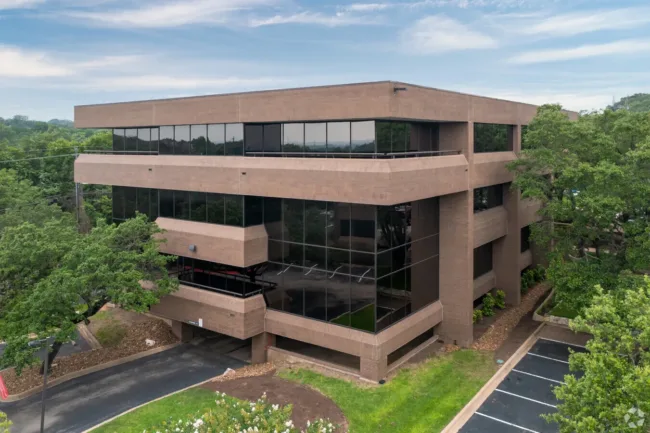

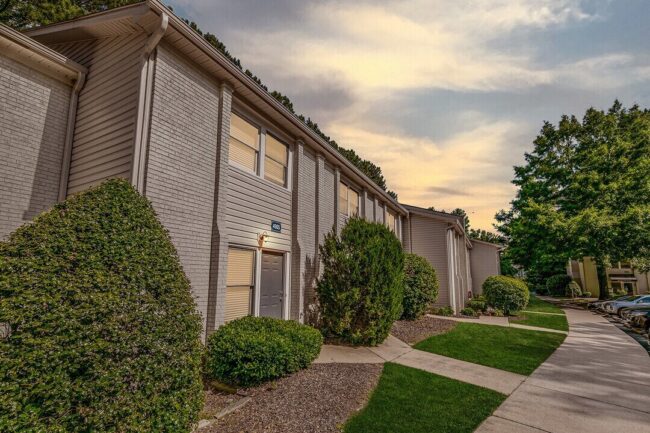
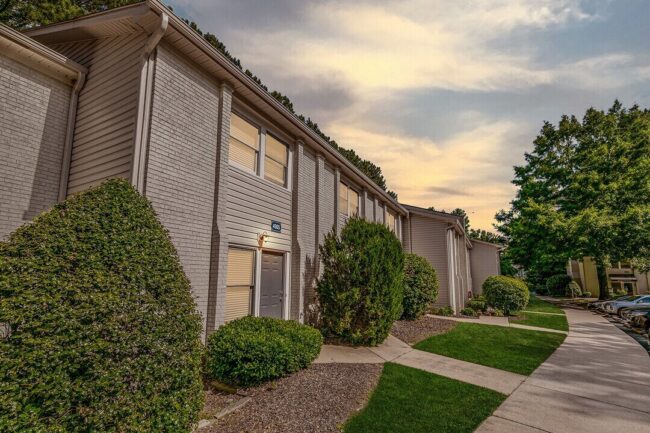
Elevest Capital has completed the acquisition of a 97-unit B+ class multifamily property in the Raleigh-Durham metropolitan statistical area, marking the close of Fund 63. The deal, executed in partnership with Rise48 Equity, extends the private equity firm’s footprint in high-growth Southeastern U.S. rental markets and follows a similar 263-unit dual-property acquisition in Chapel Hill and Greensboro under Fund 62 earlier in December. Both investments reflect Elevest Capital’s evolving strategy of targeted value-add repositioning in economically resilient submarkets.
The 1987-vintage Raleigh asset acquired under Fund 63 is supported by favorable demand drivers including job and population growth, high occupancy, and rising renter-by-choice trends. Elevest Capital and Rise48 Equity plan to implement a comprehensive renovation program across the units and community amenities. The upgrades, which include in-unit washer-dryer installations and interior refurbishments, aim to reposition the asset to compete more effectively within the B+/A– subsegment, supporting rental uplift while enhancing resident experience.
This two-step portfolio expansion signals Elevest Capital’s deeper conviction in North Carolina as a multi-cycle growth corridor for real estate investors seeking risk-adjusted returns outside of core gateway markets.
Why is Elevest Capital focusing its expansion strategy on the Raleigh-Durham and broader North Carolina multifamily market?
The Fund 63 close underscores a broader directional shift in Elevest Capital’s capital allocation: targeting high-growth Southeastern metros with pro-business climates, demographic tailwinds, and rent-to-income resilience. North Carolina, particularly the Raleigh-Durham-Chapel Hill research triangle, has emerged as a magnet for both employers and residents, driven by strong university systems, life sciences clusters, and technology sector inflows.
For Elevest Capital, this region offers a balanced risk-return profile—characterized by above-average rental demand, relatively affordable entry points compared to coastal markets, and the ability to execute meaningful value-add strategies with low-to-moderate execution risk. The firm is effectively seeking Class B+ assets that can be elevated toward the A– range through focused capex, without being overexposed to the luxury segment or undercapitalized C-grade properties that often require heavier stabilization.
Notably, the company’s selection of properties built in the 1980s and 1990s also reflects a calculated operational thesis: older but structurally sound buildings with underutilized upside potential, particularly where amenity gaps exist relative to newer builds. These factors allow for controllable improvements, not reliant solely on market-driven rent inflation.
What differentiates Elevest Capital’s approach from other private equity-backed multifamily strategies?
While many private equity players continue to pursue opportunistic plays or core-plus assets in Tier 1 markets, Elevest Capital has carved out a middle-path strategy that emphasizes moderate leverage, operational enhancements, and localized execution through partners such as Rise48 Equity. In both Fund 62 and Fund 63 transactions, Rise48 Equity acts as the operator responsible for on-the-ground renovations and leasing strategy, while Elevest provides the capital structuring, investor interface, and portfolio oversight.
This collaborative model allows Elevest Capital to scale with relatively lean internal infrastructure while preserving asset-specific oversight. The firm’s preference for B+ assets further reflects a desire to sidestep the overcrowded luxury segment, where Class A cap rates remain compressed and tenant expectations (and concessions) have escalated. Simultaneously, the firm avoids the capital-intensive repositioning risk associated with Class C distressed stock, especially as construction and labor inflation have not fully normalized.
Elevest’s strategy appears disciplined, prioritizing yield through value creation rather than aggressive market timing. This approach could attract institutional limited partners seeking multifamily exposure with mitigated downside and moderate value capture.
What are the execution risks and market sensitivities surrounding Fund 63 and Fund 62’s North Carolina plays?
Despite favorable macroeconomic fundamentals, Elevest Capital’s ability to deliver investor returns hinges on successful execution of its renovation plans, tenant retention during construction phases, and effective rent reversion once upgrades are complete. Although Raleigh-Durham boasts a diversified employment base and in-migration tailwinds, the region is not immune to broader multifamily supply overhang concerns, particularly as delayed pandemic-era builds reach completion.
Moreover, while Fund 63’s 97-unit footprint offers manageable scale for a single-property repositioning, it also limits economies of scale relative to larger portfolios. The success of the investment depends in part on rapid operational turnaround and stabilization. As for Fund 62, the two-asset structure across Chapel Hill and Greensboro introduces geographic spread that could complicate asset management unless Rise48 Equity maintains tight operational coordination.
Another important consideration is the interest rate environment. While inflation has shown signs of moderation, the Federal Reserve’s policy direction remains cautious. Conservative leverage—highlighted in the firm’s Fund 62 communication—will be critical to weather potential interest rate shocks or valuation recalibrations in the short term.
Lastly, tenant affordability in upgraded units will need to be closely monitored. While Raleigh-Durham remains more affordable than primary metros, there is an upper bound to how far rents can be pushed without eroding occupancy, particularly in B+ segments where renters are more price-sensitive than luxury market cohorts.
How does this acquisition wave fit into broader investor sentiment and institutional strategy in U.S. multifamily real estate?
The back-to-back announcements of Fund 62 and Fund 63 signal that investor demand for stabilized, cash-flowing multifamily deals remains intact—so long as sponsors demonstrate disciplined underwriting and operational clarity. In a volatile capital markets environment, private equity investors are shifting away from growth-at-all-costs models and toward lower-beta, yield-focused real estate plays in non-gateway metros.
Institutional investors and family offices appear to be recalibrating their exposure toward secondary markets like Raleigh-Durham, Nashville, and Charlotte, which offer better rent growth headroom, favorable tax environments, and a steady influx of knowledge-economy jobs. For Elevest Capital, aligning its acquisition strategy with these secular trends could support fundraising momentum for future funds and generate LP confidence even amid broader commercial real estate uncertainty.
The firm’s willingness to announce deals in quick succession also serves a signaling function: it suggests pipeline depth, execution capability, and liquidity readiness—factors that matter more than ever as real estate capital flows consolidate around a smaller group of trusted operators.
Key takeaways on what Elevest Capital’s Fund 63 acquisition means for strategy, market positioning, and private equity real estate
- Elevest Capital has closed Fund 63 through the acquisition of a 97-unit B+ multifamily asset in Raleigh-Durham, expanding its North Carolina portfolio.
- The property, built in 1987, offers value-add potential via interior upgrades, in-unit washer-dryer installations, and amenity enhancements.
- Fund 63 follows the recent closing of Fund 62, which involved a two-property, 263-unit acquisition in Chapel Hill and Greensboro, also with Rise48 Equity.
- The firm’s strategy centers on repositioning B+ assets in high-growth, affordable submarkets with demographic and employment tailwinds.
- Execution risks include rental ceiling limits, tenant displacement during renovations, and rising regional multifamily supply.
- Elevest Capital’s partnership-driven model enables it to operate leanly while leveraging operator expertise for day-to-day asset improvements.
- Conservative leverage and focus on yield generation over speculative appreciation align with evolving institutional investor preferences.
- North Carolina’s economic fundamentals, combined with Elevest’s operational focus, position these assets for medium-term performance if execution remains on track.
Discover more from Business-News-Today.com
Subscribe to get the latest posts sent to your email.