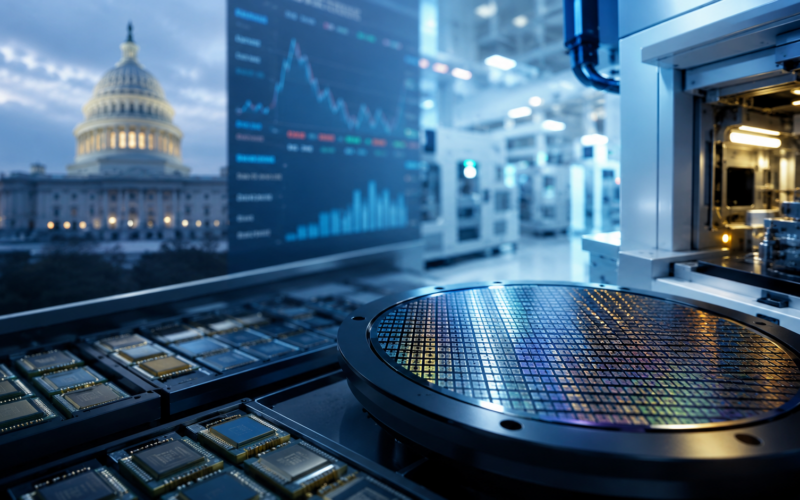
Taiwan Semiconductor Manufacturing Company Limited (NYSE: TSM, TWSE: 2330) is facing renewed U.S. political scrutiny as lawmakers press the U.S. International Trade Commission to enforce patent rights in a dispute involving foreign-made chips. The issue comes as the world’s most important contract chip manufacturer remains central to artificial intelligence, defence electronics, smartphones, data centers and advanced semiconductor supply chains. TSM recently traded around $421.07, close to its 52-week high of $450.16 and far above its 52-week low of $206.20, showing that investors still value Taiwan Semiconductor Manufacturing Company Limited as a core AI infrastructure holding. The company also reported May 2026 revenue of NT$416.98 billion, up 30.1 percent year on year, reinforcing the strength of demand even as Washington risk increases. The strategic question is whether Taiwan Semiconductor Manufacturing Company Limited’s extraordinary importance to U.S. AI and industrial policy protects the company from disruption or makes it a bigger political target.
Why is Taiwan Semiconductor Manufacturing Company Limited facing a tougher Washington test now?
Taiwan Semiconductor Manufacturing Company Limited has become one of the most strategically important companies in the global economy. That status gives the company influence, but it also places every legal, trade and policy dispute under a brighter spotlight. The latest pressure around the U.S. International Trade Commission matters because lawmakers are asking whether a company that is critical to American AI and defence supply chains should receive different treatment when patent enforcement issues arise.
The tension is clear. On one side, strong patent enforcement is central to U.S. technology policy. If Washington weakens intellectual property protection because a company is strategically important, it risks sending an uncomfortable message to domestic innovators and patent holders. On the other side, any remedy that disrupts the import of advanced chips or semiconductor components could create collateral damage across AI development, cloud infrastructure, defence systems and the broader electronics supply chain.
That is why this story is bigger than one legal dispute. Taiwan Semiconductor Manufacturing Company Limited sits at the intersection of industrial policy, national security, intellectual property enforcement and AI competition. The company is useful to Washington because the United States needs advanced chip capacity outside mainland China. It is also exposed to Washington because dependence on one dominant foundry makes policymakers nervous. In politics, being indispensable is useful until everyone starts asking why you became indispensable.
How does the patent dispute change the investment debate around TSM stock?
The investment case for TSM stock has been dominated by AI demand, advanced-node pricing power, customer concentration and capital expenditure. The patent dispute adds a different risk category: legal and policy uncertainty in the company’s most important strategic market. Investors are not likely to abandon the TSMC thesis because of one Washington fight, but they may assign a higher risk discount if legal remedies could affect product flows or customer confidence.
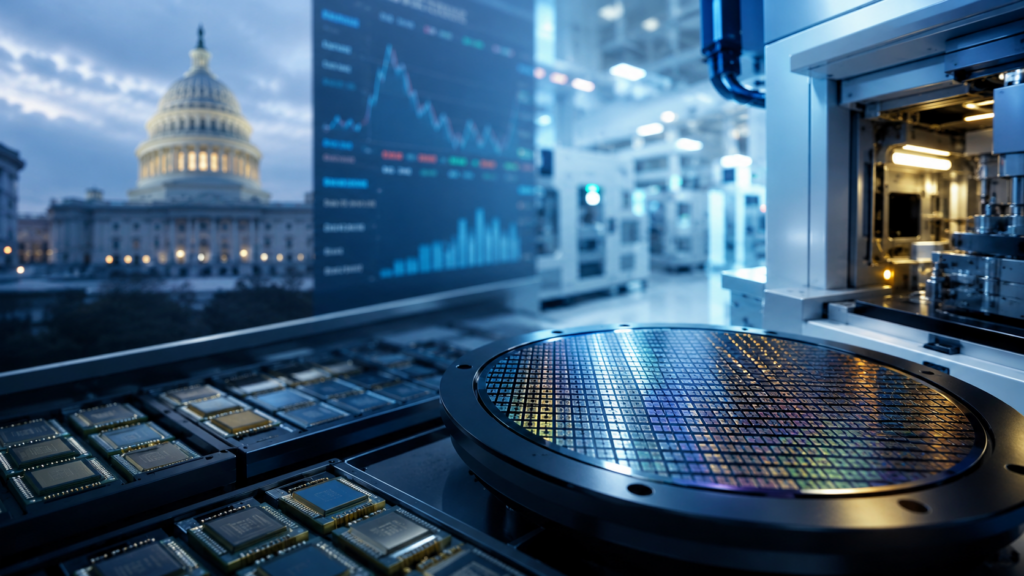
The stock setup makes this risk more relevant. TSM recently traded around $421.07, within sight of its 52-week high of $450.16, after a powerful rally driven by AI chip demand. Trading data showed the stock down about 2.02 percent over five days but up about 5.86 percent over one month, suggesting that investors are still constructive but no longer ignoring volatility. A stock near record territory has less room for policy surprises, especially when it already reflects strong expectations for AI infrastructure demand.
The market is therefore balancing two truths. Taiwan Semiconductor Manufacturing Company Limited’s fundamentals remain strong, but its strategic importance increases headline sensitivity. If the International Trade Commission process produces a narrow outcome with limited operating impact, investors may treat the issue as manageable. If remedies threaten meaningful chip imports or create uncertainty for key customers, the valuation debate could shift from AI scarcity premium to geopolitical and legal risk premium.
Why does TSMC’s May revenue growth keep the bull case alive?
Taiwan Semiconductor Manufacturing Company Limited’s May 2026 revenue report gives bulls a strong anchor. The company generated NT$416.98 billion in May revenue, up 1.5 percent from April 2026 and 30.1 percent from May 2025. Revenue for January through May reached NT$1.96 trillion, up 30.0 percent year on year. Those numbers show that the AI semiconductor cycle is still translating into real sales, not just optimistic investor presentations.
The revenue performance matters because Taiwan Semiconductor Manufacturing Company Limited is not simply another AI stock riding sentiment. The company manufactures the advanced chips used by many of the world’s most important technology companies, including customers exposed to AI accelerators, smartphones, networking, cloud infrastructure and high-performance computing. Its growth is therefore a direct read on physical semiconductor demand at the leading edge of the supply chain.
However, strong revenue does not eliminate risk. In fact, it can make policy risk more visible because the company’s expanding role increases dependence among customers and governments. Strong demand also brings pressure around capacity allocation, pricing, power availability, water usage, overseas manufacturing costs and customer negotiation. The May revenue numbers keep the bull case alive, but they also show why any disruption to Taiwan Semiconductor Manufacturing Company Limited would be felt far beyond Taiwan.
How does U.S. export-control pressure complicate TSMC’s AI chip position?
The patent dispute is not the only Washington issue facing Taiwan Semiconductor Manufacturing Company Limited. U.S. lawmakers are also pressing for tighter rules on contract chipmakers that could make advanced artificial intelligence chips for overseas subsidiaries of Chinese companies. That export-control pressure matters because Taiwan Semiconductor Manufacturing Company Limited is the world’s leading manufacturing partner for advanced chips, and policymakers want to ensure that restricted AI technology does not reach China through indirect channels.
For Taiwan Semiconductor Manufacturing Company Limited, this creates a difficult compliance environment. The company must serve major global customers while navigating U.S. export controls, Taiwan’s national security priorities, customer confidentiality, and the risk that front companies or foreign subsidiaries may be used to bypass restrictions. That is a heavy burden because the foundry model depends on manufacturing designs created by customers, not always controlling the end-use strategy behind every order.
The wider implication is that contract chipmakers are becoming enforcement chokepoints in the AI race. Washington can restrict chip designers, cloud providers and equipment suppliers, but it also needs foundries to prevent circumvention. That puts Taiwan Semiconductor Manufacturing Company Limited in a sensitive role. The company benefits from being the trusted manufacturing platform for advanced AI chips, but trust now comes with a much thicker rulebook.
What does this mean for TSMC’s Arizona investment and U.S. semiconductor policy?
Taiwan Semiconductor Manufacturing Company Limited’s major Arizona investment is central to the political backdrop. The company has committed roughly $165 billion to U.S. manufacturing projects, making it one of the most visible symbols of America’s semiconductor reshoring strategy. That investment gives Taiwan Semiconductor Manufacturing Company Limited strategic weight in Washington because U.S. officials want domestic advanced chip capacity to succeed.
The patent and export-control disputes expose the contradiction inside U.S. semiconductor policy. Washington wants Taiwan Semiconductor Manufacturing Company Limited to build more advanced capacity in the United States, support AI leadership, reduce supply-chain dependence on East Asia and strengthen national security. At the same time, lawmakers do not want strategic importance to become a shield against patent enforcement or export-control obligations. The company is both partner and policy subject.
For Arizona and the wider U.S. supply chain, the stakes are high. Any disruption that affects Taiwan Semiconductor Manufacturing Company Limited’s operations, import flows or customer relationships could create uncertainty for local employment, equipment suppliers, construction plans, utilities and downstream technology companies. The political challenge is to enforce rules without damaging the very semiconductor capacity Washington has spent years trying to attract. That is easy to say and much harder to manage.
Why does TSMC’s customer concentration make Washington risk more important?
Taiwan Semiconductor Manufacturing Company Limited’s customer base includes some of the most important companies in global technology. That concentration is a strength because major AI, cloud, smartphone and semiconductor companies rely on its advanced manufacturing. It also creates risk because any policy shock affecting Taiwan Semiconductor Manufacturing Company Limited can quickly become a shock for customers that depend on its process technology.
The AI infrastructure boom has increased this dependency. Advanced AI accelerators need leading-edge manufacturing, high-bandwidth memory integration, advanced packaging and reliable high-volume execution. Few companies can deliver that at Taiwan Semiconductor Manufacturing Company Limited’s scale. That gives the company pricing power and strategic leverage. It also means governments watch it more closely than they would a normal supplier.
Competitors such as Intel Corporation, Samsung Electronics Co., Ltd. and GlobalFoundries Inc. may benefit if customers seek second-source options, but replacing Taiwan Semiconductor Manufacturing Company Limited at the leading edge is not simple. Semiconductor manufacturing leadership is built through decades of process engineering, supplier ecosystems, yield improvement and customer trust. That makes TSMC difficult to displace quickly. It also explains why policymakers are uneasy about depending on a single company for so much of the AI hardware stack.
How should investors read TSM stock sentiment after the latest policy pressure?
Investor sentiment toward TSM stock remains broadly constructive because the company’s operating performance is strong and AI demand continues to support revenue growth. The stock’s one-month gain shows that investors are still willing to pay for foundry leadership, advanced-node exposure and AI supply-chain scarcity. The five-day decline shows that the market is also sensitive to short-term semiconductor volatility, valuation concerns and policy headlines.
The 52-week range is important. TSM stock’s move from $206.20 to near $450.16 over the past year reflects extraordinary confidence in the company’s role in the AI cycle. That rally makes sense if demand remains strong, pricing stays firm and capacity expansion is absorbed by customers. It becomes more fragile if investors believe legal, export or geopolitical pressures could slow shipments, raise compliance costs or force customers to diversify faster than expected.
The clean sentiment read is that Taiwan Semiconductor Manufacturing Company Limited remains a high-quality AI infrastructure stock, but it is no longer valued like a company operating in a quiet industry. It is valued like a strategic asset at the center of U.S.-China technology competition, supply-chain nationalism and AI industrial policy. That can support premium valuation in good times and sharper volatility when policy risk appears. Investors get the crown jewel, but they also get the security guards, lawyers and politicians standing around it.
What happens next if the International Trade Commission issue escalates or fades?
If the International Trade Commission process produces a narrow outcome with limited operating consequences, the issue may fade into the background and TSM stock could refocus on revenue growth, AI demand, gross margin, capital expenditure and advanced-node capacity. In that scenario, the market may decide that Washington risk is real but manageable, especially if customers remain confident and no major import disruption occurs.
If the dispute escalates, the consequences could be more serious. Import restrictions, uncertainty around affected chips, customer delays or wider congressional pressure could create a more visible risk premium. Even if Taiwan Semiconductor Manufacturing Company Limited ultimately prevails or limits the impact, uncertainty alone can influence customer planning, investor positioning and supplier negotiations. Semiconductor supply chains dislike ambiguity almost as much as they dislike power outages.
The next milestones are legal and political. Investors should watch the initial determination expected from the International Trade Commission process, any full commission review, congressional statements, export-control guidance, and customer commentary from major AI chip designers. The bigger story is already clear. Taiwan Semiconductor Manufacturing Company Limited’s dominance has made it essential to the AI economy, and essential companies rarely enjoy quiet lives.
What are the key takeaways from TSMC’s Washington scrutiny for TSM stock and the AI chip sector?
- Taiwan Semiconductor Manufacturing Company Limited is facing a sharper U.S. policy test as lawmakers press for patent enforcement in a dispute involving foreign-made chips.
- The issue matters because Taiwan Semiconductor Manufacturing Company Limited is critical to artificial intelligence, defence electronics, cloud infrastructure and advanced semiconductor supply chains.
- TSM stock remains supported by strong AI demand, but its valuation near the upper end of its 52-week range leaves investors more exposed to legal and policy shocks.
- May 2026 revenue rose 30.1 percent year on year to NT$416.98 billion, confirming that the company’s operating momentum remains strong despite headline risk.
- U.S. export-control pressure adds a second policy layer because lawmakers want tighter safeguards around advanced AI chips made for overseas subsidiaries of Chinese companies.
- The Arizona manufacturing commitment strengthens Taiwan Semiconductor Manufacturing Company Limited’s Washington importance, but it does not remove the risk of legal or regulatory pressure.
- Competitors such as Intel Corporation, Samsung Electronics Co., Ltd. and GlobalFoundries Inc. may gain strategic attention, but replacing Taiwan Semiconductor Manufacturing Company Limited at leading-edge scale remains difficult.
- The key market question is whether U.S. policy pressure becomes a manageable compliance cost or a larger risk to customer planning and chip supply.
- For AI infrastructure investors, the story shows that semiconductor leadership is now inseparable from patents, export controls, industrial policy and national security.
- For TSM shareholders, the investment case remains strong, but the stock now carries the political complexity that comes with being one of the world’s most important companies.
Discover more from Business-News-Today.com
Subscribe to get the latest posts sent to your email.