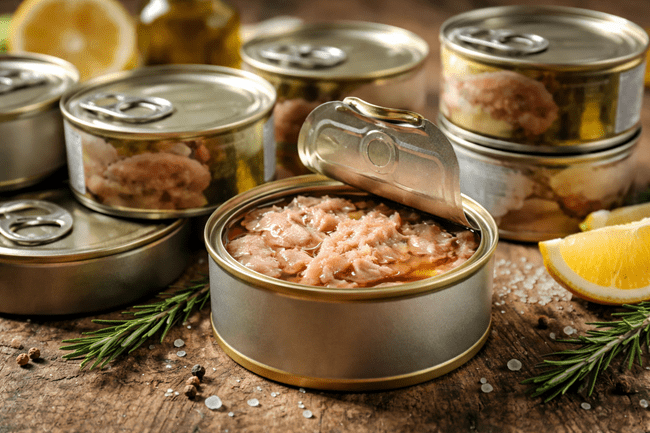
Tri-Union Seafoods, a subsidiary of Thai Union Group, has issued a second recall involving its Genova-brand Yellowfin tuna products after discovering that a third-party distributor mistakenly released quarantined inventory originally flagged in a February 2025 recall. The affected products, tied to a manufacturing defect in the pull-tab can lids that could lead to contamination with clostridium botulinum, have now re-entered circulation across selected U.S. retailers in multiple states.
The development represents a serious containment breach of food safety protocol and poses both reputational and operational risks for the company, which had previously stated that the initial voluntary recall was fully controlled and that no other product lines were affected.
Why the 2026 recall of Genova tuna signals a breakdown in distributor quarantine enforcement
What distinguishes this latest episode is not the emergence of a new defect but the failure of quarantine protocols from within the supply chain. Tri-Union Seafoods confirmed that products previously placed in quarantine as part of the 2025 recall were inadvertently released by a third-party distributor, resulting in exposure to consumers nearly a year after the original safety warning.
The root of the issue remains a packaging defect linked to “easy open” pull-tab lids, which in limited cases may compromise the vacuum seal and allow the growth of clostridium botulinum, a toxin that can cause severe and potentially fatal food poisoning. While no illnesses have been reported so far, the accidental re-release of affected cans indicates a failure of downstream risk mitigation efforts that were assumed closed.
Retailers affected by the new breach include Meijer stores across six Midwestern states, Giant Foods locations in Maryland and Virginia, and multiple supermarket chains in California including Safeway, Albertsons, Vons, and Pavilions. The compromised cans are marked with specific production codes and expiration dates extending as far out as January 2028, underscoring the long shelf life and latent consumer exposure of these products.
What are the implications for Tri-Union Seafoods’ brand trust and product safety assurance?
This second recall could carry a disproportionately large reputational cost for Tri-Union Seafoods, not because of the magnitude of distribution but due to the erosion of consumer trust in the company’s ability to manage product safety across its brand ecosystem. Genova tuna has long positioned itself as a premium offering in the canned seafood category, differentiated by its use of olive oil, sustainable sourcing narratives, and nutritional positioning. However, brand premiums in the packaged food sector are fragile and heavily reliant on the perception of quality control.
Tri-Union Seafoods’ admission that a third party reintroduced recalled inventory undermines its original assurance that the 2025 recall was complete and contained. It also risks creating a narrative of systemic oversight failure, where initial recalls are not just safety alerts but ongoing liabilities. This is particularly problematic in the canned seafood segment, where consumers rely on multi-year shelf life and visual cues to judge spoilage, which are ineffective in detecting risks like botulism.
The company’s broader portfolio includes household names such as Chicken of the Sea, and although the current recall is restricted to Genova and related private label lines like Van Camp’s, Trader Joe’s, and H-E-B, the incident could cast a shadow across the entire product suite. Retail buyers, especially in private label agreements, may seek enhanced contractual safeguards or re-evaluate sourcing relationships if distributor management controls are not visibly strengthened.
How does this reflect broader weaknesses in U.S. food recall systems and distributor compliance?
This recall event highlights a persistent weakness in the United States food safety ecosystem: the difficulty in closing the loop on product quarantines, especially when distribution chains are fragmented across third-party intermediaries. The Food and Drug Administration does not currently mandate centralized digital traceability for most shelf-stable food products, leaving enforcement of voluntary recalls largely dependent on trust-based cooperation among suppliers, distributors, and retail partners.
Even in cases where manufacturers initiate recalls promptly and responsibly, lapses can occur if distributors fail to quarantine, destroy, or return inventory effectively. The fact that the recalled Genova tuna cans carried expiration dates several years into the future only adds to the complexity. It raises the likelihood that additional units, even if not yet sold, remain in limbo across warehouses, trucks, or retailer backrooms. Without serialized tracking or automated lot-level accountability, this type of unintentional release may not be fully preventable under current protocols.
Tri-Union Seafoods has now positioned itself at the center of this recall systems debate. The company must go beyond reissuing consumer warnings and begin a process of revalidating its entire distributor control architecture. Failure to do so could risk further erosion of retailer trust, consumer confidence, and regulatory goodwill.
What does this mean for Thai Union Group’s U.S. operations and seafood leadership positioning?
Thai Union Group has been a vocal proponent of seafood sustainability, traceability, and ethical sourcing, with global initiatives aimed at improving supply chain transparency through blockchain pilots and digital tracking technologies. Its corporate narrative rests on being a leader in responsible seafood, and the United States represents a core strategic market for its premium and mass-market brands.
The recurrence of the Genova tuna recall weakens that narrative. Although the problem stems from packaging and distributor lapses rather than sourcing violations, consumers and retailers may view it as a broader failure of operational rigor. This could impact Thai Union Group’s ability to expand its U.S. footprint, especially with new product launches or contract bids where food safety reputation is a key differentiator.
For an industry leader, the challenge now lies not just in mitigating the current recall but in restoring credibility through tangible reforms. This could include implementing serialized inventory systems, enhancing distributor audits, and creating tamper-evident packaging solutions. These steps would need to be demonstrated quickly and publicly to avoid losing ground to competitors in a retail environment increasingly shaped by consumer scrutiny and retailer liability concerns.
What changes should regulators, retailers, and investors monitor going forward?
For regulators, the Tri-Union Seafoods case underscores the need to strengthen enforcement mechanisms for voluntary recalls and to explore mandates around traceability for long-shelf-life packaged goods. The Food and Drug Administration may use this as a case study to revisit aspects of the Food Safety Modernization Act, especially provisions related to recall verification and distributor compliance.
Retailers, meanwhile, will likely increase pressure on suppliers to certify recall closures and to offer documentation of destruction or verified quarantine. They may also demand greater indemnity provisions in supply contracts or even shift volume to competitors perceived as safer bets.
For investors and analysts tracking Thai Union Group, the situation introduces near-term brand risk and potential margin pressure from increased compliance costs. While the financial exposure from the recall itself may be limited, the strategic risk lies in contract renegotiations, slowed growth in private label channels, and increased marketing spend required to restore consumer trust.
The company’s handling of this episode could serve as a benchmark for evaluating its operational integrity and its preparedness to scale responsibly in international markets. Clear corrective actions, transparent disclosures, and system-wide improvements will be critical signals in determining whether this becomes a contained reputational setback or a lingering competitive disadvantage.
Key takeaways on what this development means for Tri-Union Seafoods, its competitors, and the packaged food industry
- Tri-Union Seafoods’ follow-up recall highlights a failure in distribution quarantine enforcement, not just initial supplier defect detection.
- The release of previously quarantined Genova tuna products into retail channels signals persistent risk exposure in third-party distribution relationships.
- Consumer trust in the Genova brand may weaken due to recurring safety concerns, even in the absence of reported illness.
- Regulatory focus may intensify around recall closure mechanisms and downstream distributor compliance tracking.
- Thai Union Group’s global brand positioning around seafood safety and traceability could be challenged in the U.S. market if issues persist.
- Competitors may capitalize on the incident by emphasizing their own food safety protocols and recall efficacy systems.
- Investors may look for evidence of supply chain modernization and contract improvements to prevent future lapses.
- This case reinforces the need for digital traceability systems in long-shelf-life packaged foods like canned tuna.
Discover more from Business-News-Today.com
Subscribe to get the latest posts sent to your email.