




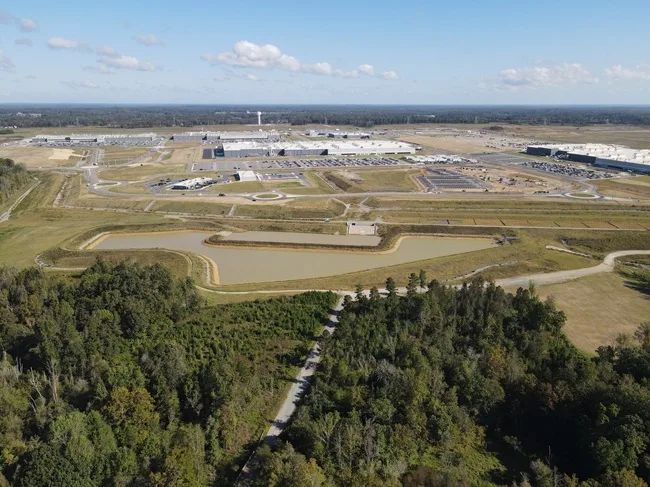
Toyota Motor North America has officially commenced production at its long-anticipated lithium-ion battery manufacturing facility in Liberty, North Carolina. The $13.9 billion plant, the first of its kind for Toyota outside of Japan and the company’s eleventh manufacturing site in the United States, marks a new phase in Toyota’s electrification strategy for the North American market. At full capacity, the 1,850-acre site is expected to deliver up to 30 GWh of battery output annually and generate more than 5,100 direct jobs across the region.
Alongside the operational launch, Toyota Motor North America unveiled plans to inject an additional $10 billion into its U.S. operations over the next five years. This move will bring the automaker’s cumulative investment in the country to nearly $60 billion since first entering the U.S. market almost seven decades ago. The announcement reinforces Toyota’s multi-pathway electrification roadmap, which includes hybrid electric vehicles, battery electric vehicles, plug-in hybrid models, and fuel cell systems.
Why is Toyota expanding its U.S. battery production footprint in North Carolina now?
President and chief executive officer Ted Ogawa described the launch as a pivotal milestone in Toyota’s U.S. history. He emphasized that the facility not only serves as a cornerstone in Toyota’s production network, but also as a long-term commitment to American workers, communities, suppliers, and customers. Ogawa framed the Liberty battery site as proof of Toyota’s commitment to “build where we sell,” while expanding electrification options across segments and price points.
U.S. Secretary of Transportation Sean Duffy endorsed the development as a strategic validation of the federal administration’s industrial policy. Duffy stated that Toyota’s decision to expand production in North Carolina reflects growing confidence in the country’s reshoring efforts and the creation of high-wage jobs. He linked the announcement to broader macroeconomic goals of revitalizing American manufacturing and building domestic capacity in critical clean technology sectors.
What will the Liberty facility produce and how does it support Toyota’s electrification mix?
The Liberty facility will house 14 battery production lines dedicated to a wide range of vehicle platforms. These include existing hybrid electric models such as the Toyota Camry HEV, Toyota Corolla Cross HEV, and Toyota RAV4 HEV. Additionally, the plant is being positioned as the central hub for an all-new, three-row battery electric vehicle that will be developed and assembled in the United States. The plant currently supplies modules to Toyota Kentucky and Mazda Toyota Manufacturing in Alabama. More production lines are scheduled to come online through 2030, with staggered rollouts tied to Toyota’s model roadmap and powertrain diversification strategy.
How are state leaders and federal officials responding to Toyota’s investment in the region?
The investment was met with strong support from North Carolina’s top elected officials. Governor Josh Stein described the launch as a historic moment for the state and praised Toyota’s decision to invest in North Carolina’s clean energy future. Stein noted that the job creation and supply chain spillovers would position the Piedmont Triad region as a core hub in the national EV transition. State Senate President Phil Berger and House Speaker Destin Hall echoed those sentiments, calling the project a generational economic opportunity that cements North Carolina’s status as a manufacturing leader.
What employee-focused amenities and community services are part of the Liberty battery complex?
The Liberty battery complex is not just a production facility but also a workplace ecosystem. Toyota Motor North America has incorporated several on-site amenities, including childcare services, a pharmacy, a medical clinic, and a fitness center to support workforce wellness and retention. According to Don Stewart, president of Toyota North Carolina, the development of a “vibrant community” for employees was a critical element of Toyota’s operational planning. Stewart credited the team members’ dedication for bringing the project from concept to production readiness and extended appreciation to Randolph County and the greater Triad region for their collaborative role.
How is Toyota linking battery production to long-term STEM education and workforce development?
In addition to the manufacturing investment, Toyota Motor North America is expanding its social impact footprint through education initiatives. The automaker announced a $2.7 million grant as part of the second phase of its Driving Possibilities program. The funding will support STEM education initiatives in Guilford County Schools and Asheboro City School District. The program, coordinated by nonprofit shift_ed, aims to close the opportunity and exposure gap in historically underserved communities by creating direct pathways from classroom learning to STEM careers in advanced manufacturing.
Wendy Poteat, chief executive officer of shift_ed, noted that Toyota’s continued investment in education is helping to equip students and families with transformative career opportunities. She stated that the partnership reflects a shared vision of nurturing curiosity and fostering innovation in young learners, from early exposure through to workforce integration. The initiative is funded by the Toyota USA Foundation, with added support from Toyota Financial Services and Toyota Motor North America.
How does the Liberty battery plant fit into Toyota’s broader U.S. electrification roadmap?
From a market standpoint, Toyota Motor Corporation has sold over 6.6 million hybrid electric, plug-in hybrid, fuel cell, and battery electric vehicles in the United States since 2000. The automaker currently assembles 11 electrified vehicle models in the U.S., with manufacturing plants spread across Kentucky, Alabama, Mississippi, Texas, and Indiana. The Liberty plant adds a dedicated battery production footprint to this network and reflects Toyota’s long-term strategy of localizing both powertrain and final vehicle assembly for cost, regulatory, and customer alignment.
What are analysts saying about Toyota’s strategy and how is the stock reacting?
Analysts tracking Toyota Motor Corporation (NYSE: TM) have expressed moderate optimism following the Liberty plant’s commissioning. While the company has historically been cautious in its battery electric rollout, this investment signals a more deliberate ramp-up of domestic capabilities. Market observers expect Toyota’s future BEV portfolio to gain momentum as the Liberty plant scales output and enables more competitive pricing across segments. With vehicle eligibility under the Inflation Reduction Act linked to domestic battery sourcing, the North Carolina site may also help boost customer access to federal incentives.
Investor sentiment around Toyota’s U.S. strategy has remained stable, with the stock seeing modest movements in recent trading sessions. Institutional investors have largely welcomed Toyota’s multi-pathway approach, which provides diversification across hybrid and battery electric offerings without exposing the company to the volatility of a BEV-only model. Some analysts noted that the Liberty plant may serve as a hedge against regulatory tightening on combustion engine vehicles and as a base for future export opportunities, should demand emerge in Canada or Latin America.
What milestones are coming next as Toyota scales the Liberty site through 2030?
As of now, Toyota Motor North America has not confirmed which additional BEV models will be added to the Liberty production pipeline beyond the three-row SUV. However, the company has stated that construction and commissioning of the remaining battery lines will continue through the end of the decade. Future expansion phases are expected to include both volume growth and potential next-generation chemistries as Toyota evolves its battery technology portfolio.
Why is the Liberty plant central to Toyota’s clean mobility ambitions in the United States?
Looking ahead, the Liberty facility is likely to play a foundational role in Toyota’s U.S. clean mobility roadmap. In addition to supporting near-term production of hybrid and BEV models, the site is also positioned as a learning center for operational scaling, workforce development, and supplier localization. The alignment of manufacturing, education, and community impact initiatives suggests that Toyota is treating Liberty not just as an asset but as a strategic node in its global value chain.
With other automakers also investing heavily in domestic battery production, the race to secure EV supply chains is intensifying. However, Toyota’s legacy in hybrid leadership, combined with its methodical investment strategy and deep community ties, may provide a unique edge as the electrification transition accelerates.
What are the key developments from Toyota’s U.S. battery plant launch and investment roadmap?
- Toyota Motor North America has launched production at its $13.9 billion lithium-ion battery manufacturing plant in Liberty, North Carolina, its first such facility in the United States.
- The site spans 1,850 acres and is expected to produce up to 30 GWh of batteries annually at full capacity by 2030, supporting up to 5,100 direct jobs.
- Alongside the launch, Toyota committed an additional $10 billion investment in the United States over the next five years, bringing total U.S. investments to nearly $60 billion.
- The plant will supply modules for hybrid models including the Camry HEV, RAV4 HEV, and Corolla Cross HEV, as well as a future three-row BEV designed for the U.S. market.
- The facility includes employee-focused amenities like childcare, fitness, healthcare services, and community integration features.
- Toyota announced a $2.7 million STEM education grant to expand its “Driving Possibilities” initiative in North Carolina schools through the Toyota USA Foundation and local partners.
- Officials from the Trump administration and North Carolina leadership praised the project for reshoring advanced manufacturing and creating long-term regional economic benefits.
- Toyota Motor Corporation (NYSE: TM) stock sentiment remains cautiously optimistic, with analysts viewing the Liberty plant as a key enabler of domestic electrification scale.
- Full ramp-up of 14 battery production lines is planned by 2030, with further BEV model launches expected in the U.S. over the coming years.
- The Liberty site is positioned to become a cornerstone of Toyota’s U.S. clean mobility strategy and EV supply chain localization.
Discover more from Business-News-Today.com
Subscribe to get the latest posts sent to your email.