


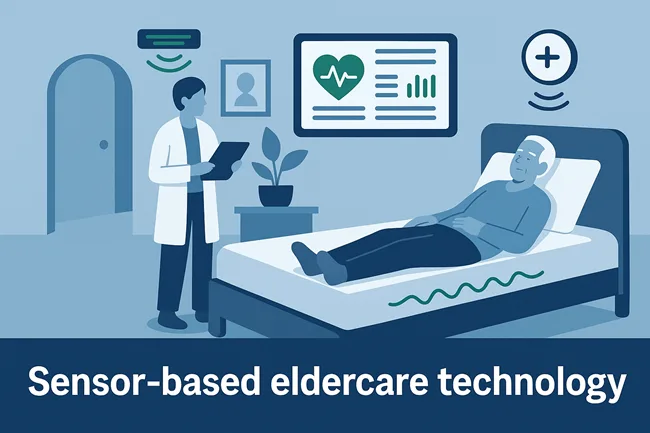
How are sensor-driven technologies transforming eldercare solutions in 2025?
In 2025, the intersection of aging demographics, digital transformation, and chronic understaffing has accelerated the demand for intelligent eldercare solutions. Across hospitals, nursing homes, and private residences, sensor-based technologies are becoming vital tools to reduce avoidable injuries, automate monitoring, and maintain quality care with fewer human resources. These devices leverage pressure sensors, motion tracking, AI, and data logging to detect early warning signs of patient deterioration, prevent falls, and preserve dignity.
Institutional investors are actively funding sensor-based platforms that combine real-time detection with workflow efficiency. Analysts note that litigation exposure from pressure ulcers and falls has become a major driver for adoption, with hospitals and skilled nursing facilities seeking compliance-ready, proactive monitoring systems. Below, we explore five standout innovations in the sensor-based eldercare space that are setting benchmarks for 2025 and beyond.
How is NthJEN’s MEIDISHEET smart bed helping caregivers prevent pressure ulcers and patient falls?
Overland Park–based NthJEN LLC recently launched its MEIDISHEET smart bed technology after more than five years of development and clinical validation. The product consists of a pressure-sensitive membrane overlay that integrates over 1,000 micro-sensors capable of detecting a patient’s pressure distribution and movement patterns. When immobility or risky postures persist too long, or if a patient exits the bed without returning within a safe timeframe, precision alerts are triggered and sent directly to clinicians or caregivers via a web dashboard.
Founder and CEO Naveen Gogumalla emphasizes that the system is not simply reactive—it is a predictive platform built to reduce alarm fatigue and avoid unnecessary interventions. With pressure ulcers and falls costing the U.S. healthcare system more than USD 50 billion annually, the device is positioned to bring measurable value in both hospital and home settings. It also supports remote access for family members, providing real-time visibility across locations.
MEIDISHEET’s unique offering is its combination of dignity-preserving design (no cameras or audible alarms) and a defensible audit trail that documents caregiver responses. This aligns with legal risk management strategies many eldercare institutions now consider critical.
What role does SafelyYou play in combining fall detection with AI video analytics for dementia patients?
San Francisco–based SafelyYou has emerged as a leading eldercare tech player by integrating AI-powered fall detection into existing camera systems used in memory care units. Originally incubated at the University of California, Berkeley, the platform uses machine learning to review video streams and identify fall events with high accuracy—often within 30 seconds.
SafelyYou’s main advantage lies in post-fall analytics, which help caregivers and family members understand how and why a fall occurred. The system differentiates between intentional movements (like sitting on the floor) and actual incidents, significantly reducing false alarms. According to internal performance data, installations of the technology have led to up to a 40% reduction in falls and a 70% decrease in emergency room visits.
Privacy concerns are mitigated by local edge processing and secure access policies, making it a viable option even in highly regulated memory care settings. Analysts believe this model will become standard in cognitive decline management environments, especially as AI-enhanced video continues to outperform traditional alarm systems.
How is VitalConnect’s wearable biosensor reshaping hospital-to-home transitions for older adults?
VitalConnect, based in California, produces a wearable biosensor called the VitalPatch, which is being increasingly used to track patients during and after hospitalization. The patch captures eight vital signs—including ECG, respiratory rate, skin temperature, and body posture—offering continuous monitoring over a multi-day window. For older adults transitioning out of acute care, this tool has proven especially useful in detecting early signs of deterioration before readmission becomes necessary.
Used in both remote patient monitoring and hospital-at-home models, the biosensor’s small form factor and adhesive design make it ideal for non-invasive eldercare applications. Institutional sentiment surrounding the product has grown more favorable as clinical partners report better patient compliance and reduced burden on overworked care teams.
With reimbursement codes now aligning more closely with continuous care models, VitalConnect’s biosensors could soon become standard in transitional and palliative care environments.
How does Sensi.AI use audio-based intelligence to detect cognitive and behavioral risks in elderly patients?
Sensi.AI, an Israeli-American startup, brings an unconventional but increasingly relevant approach to eldercare: AI-powered audio sensors. Instead of using video or pressure pads, Sensi deploys smart microphones in the living space to listen for anomalies in behavior, such as expressions of confusion, wandering, agitation, or caregiver neglect. The system is designed to preserve privacy by excluding content recording and instead focusing on pattern recognition and anomaly scoring.
Sensi’s AI models are trained to differentiate normal conversational tones from signs of distress or cognitive deterioration. The technology is currently used by home care agencies in North America and Europe to support aging-in-place strategies. For institutional investors, the appeal lies in its ability to deliver behavioral insights without breaching surveillance norms.
The system also generates trend reports and caregiver coaching suggestions, making it a value-added layer for both quality assurance and family reassurance. In 2025, Sensi.AI is being piloted in assisted living chains and home healthcare networks aiming to reduce turnover and improve incident transparency.
What is the value proposition of EarlySense in passive vital sign monitoring for skilled nursing facilities?
EarlySense, a digital health company formerly based in Israel and now operating out of Massachusetts, offers contact-free sensor solutions that sit beneath a mattress or chair cushion. The device uses ballistic sensors to continuously monitor heart rate, respiratory rate, and motion without requiring direct skin contact. This non-intrusive design has proven highly compatible with long-term care environments, where patient compliance and comfort are critical.
One of EarlySense’s major selling points is its passive model—care teams receive alerts only when vital signs or movement patterns deviate from preset thresholds. This hands-free approach enables a lower caregiver-to-patient ratio without compromising safety. Peer-reviewed studies have demonstrated a 45% reduction in falls and a 60% decrease in code blue events in some deployments.
Despite having exited some direct-to-consumer channels, EarlySense continues to partner with OEMs and technology integrators in eldercare, with analysts pointing to its potential role in enterprise health systems managing chronic and frail populations.
Why are investors prioritizing sensor-based eldercare platforms over legacy care models in 2025?
Across these five standout technologies—NthJEN’s MEIDISHEET, SafelyYou, VitalConnect, Sensi.AI, and EarlySense—a broader strategic shift is becoming evident across the eldercare ecosystem: prevention-first frameworks, precision monitoring, and privacy-centric design principles are rapidly outpacing traditional reactive models that rely heavily on scheduled nursing rounds, caregiver intuition, or legacy alert systems. These emerging sensor-based solutions are transforming passive care environments into intelligent safety nets that anticipate risk before harm occurs, aligning seamlessly with the healthcare industry’s shift toward value-based care.
This transformation is occurring at a time when chronic staffing shortages in both hospitals and long-term care facilities show no signs of reversing. With burnout rates among nurses and home health aides reaching historic highs, administrators are under pressure to maintain high standards of care despite constrained human resources. In this environment, AI-enhanced technologies and sensor-integrated platforms are being embraced not as replacements for human caregivers, but as augmentation layers that extend caregiver reach, reduce manual workload, and ensure continuous observation without constant presence. This is especially critical in settings such as skilled nursing facilities, memory care units, and post-operative recovery centers, where time-sensitive responses can be the difference between complication and recovery.
From an investment standpoint, institutional capital is flowing into medtech platforms that not only offer real-time intervention capabilities but also deliver measurable business impact. Investors and healthcare operators alike are increasingly prioritizing sensor systems that feature litigation mitigation capabilities—such as timestamped event logs, fall analytics, or caregiver response tracking—which are now seen as critical in reducing liability exposure from adverse events like pressure injuries or unattended falls. These features, when bundled with compliance-ready audit trails, enable care providers to strengthen their legal defense and demonstrate adherence to patient safety protocols, a factor that is becoming non-negotiable under regulatory scrutiny.
Another significant driver of adoption is the economic efficiency of these systems. By catching early warning signs of patient deterioration, these tools can materially reduce hospital readmissions, length of stay, and emergency room visits. For example, biosensors like VitalPatch or sub-mattress systems like EarlySense have been associated with up to 60% reductions in code blue events and up to 70% fewer ER transfers in select deployments. Such data-backed savings are resonating with both public and private payors, particularly under bundled payment models where outcomes-based performance is tied to reimbursement.
Device manufacturers that support flexible reimbursement pathways, including compatibility with Medicare billing codes, home health payment plans, and even private insurance models, are increasingly viewed as scalable investments. Similarly, platforms that provide integration-ready APIs are gaining favor among health systems that aim to incorporate sensor data into broader EHR (Electronic Health Record) systems or telehealth platforms. The emphasis is now on solutions that offer plug-and-play functionality, cloud-based dashboards, and modular software that can evolve with care requirements—whether in hospitals, skilled nursing facilities, or private residences.
At a macro level, the global policy shift toward aging-in-place strategies—where older adults are supported in staying in their homes and communities rather than moving to institutional care—is further accelerating the demand for unobtrusive, intelligent eldercare devices. Governments across the United States, European Union, and East Asia are investing in home-based care infrastructure, often subsidizing technologies that reduce reliance on in-person staffing and improve long-term health outcomes. In this policy context, sensor-based eldercare platforms are no longer considered experimental—they are becoming foundational to national health resilience strategies.
In 2025, these five innovators are not merely launching devices—they are redefining what it means to care for older adults in a data-driven, resource-constrained world. As patient safety, caregiver empowerment, and operational efficiency continue to converge, sensor-backed eldercare is poised to become the new standard. Whether through contact-free vitals, pressure mapping overlays, AI-based fall analytics, or behavioral sound detection, these technologies are converging toward a common goal: keeping seniors safe, seen, and supported—without compromising dignity or overburdening staff.
Discover more from Business-News-Today.com
Subscribe to get the latest posts sent to your email.