
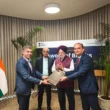

Tarsus Pharmaceuticals, Inc. (NASDAQ: TARS) has entered into a definitive agreement to acquire privately held Alkeus Pharmaceuticals for up to $800 million in cash, stock and milestone payments, adding an investigational oral Stargardt disease therapy to a rapidly widening retina pipeline. The transaction, announced on 6 August 2026 alongside second-quarter results and an oversubscribed $125 million private placement, is the Irvine-based company’s second retinal acquisition in under a month. It follows the up to $565 million purchase of iRenix Medical in July, and cements a strategic shift from a single-product commercial story around XDEMVY into a broader eye care platform. The central tension is now whether Tarsus can convert two back-to-back deals, heavy near-term dilution and a distant Phase 3 readout into durable shareholder value before the Stargardt competitive window narrows.
How does the up to $800 million Alkeus acquisition reset the Tarsus Pharmaceuticals pipeline beyond XDEMVY?
Under the definitive agreement, Tarsus Pharmaceuticals will pay Alkeus stockholders approximately $450 million at close, comprising $270 million in cash and $180 million in Tarsus common stock priced at $61.38 per share, with up to a further $350 million payable in milestone payments tied to regulatory approval and first commercial sale of gildeuretinol. Former Alkeus shareholders will also receive low single-digit tiered descending royalties on any future gildeuretinol net sales, an unusual feature in a full acquisition that keeps the seller economically aligned with commercial delivery. The transaction has been approved by both boards and by Alkeus stockholders, and management has guided to a close in 2026, subject to the expiration or termination of the applicable waiting period under the Hart-Scott-Rodino Antitrust Improvements Act and other customary conditions.
For a company that has been almost entirely defined by XDEMVY, the lotilaner ophthalmic solution for demodex blepharitis, this is a meaningful widening of the pipeline. Tarsus reported XDEMVY net product sales of $173.9 million in the second quarter of 2026, up more than 69 per cent year on year, and lifted full-year 2026 guidance to a range of $685 million to $705 million. Even with that commercial momentum, the company remains loss-making at the bottom line; Q2 2026 earnings per share came in at a loss of 43 cents versus a consensus loss of 20 cents. The Alkeus deal reframes Tarsus around three visible growth vectors: continued XDEMVY scaling, a retina platform built on gildeuretinol and IRX-101, and lifecycle expansion of lotilaner through TP-04 and TP-05.

Why is gildeuretinol’s Phase 2 data considered central to the Alkeus valuation and the Tarsus retina thesis?
Gildeuretinol, previously known as ALK-001, is a once-daily oral small molecule designed to reduce the formation of toxic vitamin A dimers while preserving the visual cycle, a mechanism aimed at the underlying biology of Stargardt disease rather than the downstream retinal damage. Stargardt is an inherited retinal dystrophy that affects more than 36,000 clinically diagnosed patients in the United States, with no therapy currently approved by the US Food and Drug Administration. It is a young-onset disease that progresses through adolescence and early adulthood, which is one reason the programme has attracted Breakthrough Therapy, Orphan Drug and Rare Pediatric Disease designations from the FDA.
The clinical evidence that has drawn Tarsus in comes from placebo-controlled Phase 2 work. In one study, gildeuretinol treatment appeared to slow the yearly growth of retinal lesions by 29.5 per cent, with a p-value below 0.001. In another dataset, patients on gildeuretinol were reported to be substantially less likely than placebo patients to lose the ability to see in dim lighting. More than 400 individuals have received the drug across development programmes, and some have been on treatment for more than seven years with reported favourable tolerability. The pivotal Phase 3 NORTHSTAR trial is ongoing, with top-line results expected in the second half of 2029. That readout, not the deal close, is the moment at which the Alkeus valuation will be tested in earnest.
How does the deal structure balance upfront cost, milestone risk and dilution for Tarsus shareholders?
The structure Tarsus Pharmaceuticals has agreed with Alkeus is deliberately weighted toward execution. Only $450 million of the potential $800 million headline value is committed at close, and $180 million of that is paid in stock priced at $61.38 per share, a level slightly below the reference share price on the day of the announcement. The remaining $350 million is contingent on regulatory approval and first commercial sale, which realistically pushes the bulk of the milestone risk into the early 2030s. The addition of low single-digit tiered descending royalties tilts the economics further toward performance, effectively extending seller participation in commercial outcomes rather than pricing all upside up front.
The dilution picture is more immediate. The $180 million equity component of the Alkeus consideration adds roughly 2.9 million new Tarsus shares at $61.38. The separately announced $125 million private placement, priced at $56.00 per share plus a small tranche of pre-funded warrants at a nominal exercise price of $0.0001, adds another 2,232,144 shares of common stock on a fully converted basis. Against a market capitalisation that stood at roughly $2.98 billion after the announcement, the combined near-term share issuance is material but manageable, and the PIPE was disclosed as oversubscribed. Together with existing cash balances, the PIPE gives Tarsus balance-sheet flexibility to fund the Alkeus cash consideration, keep pushing the IRX-101 Phase 3 into H1 2027 and continue investing in the TP-04 and TP-05 programmes.
Where does gildeuretinol sit in the competitive race with Belite Bio, Ocugen and Nanoscope Therapeutics?
Stargardt disease has quietly become one of the more contested rare ophthalmology races. Belite Bio is the current frontrunner, having begun the rolling submission of a new drug application to the FDA for tinlarebant in April 2026. Ocugen is advancing its gene therapy OCU410ST through a late-stage study, with a Q2 2027 top-line readout guided by the company in its most recent update. Nanoscope Therapeutics is moving its rival gene therapy MCO-010 into Phase 3 after positive Phase 2 results in the STARLIGHT study. Against that backdrop, gildeuretinol arrives with a differentiated profile, a small molecule taken orally once a day rather than a delivered gene therapy, but with a Phase 3 readout that is still several years away.
The competitive read for Tarsus Pharmaceuticals is nuanced. Being second or third to an approval in Stargardt is not necessarily a strategic failure. The addressable population is small and treatment-naive, and an oral therapy with strong long-term tolerability data could be easier to prescribe and adhere to than a one-off gene therapy dose. However, the timing gap matters. If tinlarebant reaches the market first, Belite Bio will build the initial disease-awareness infrastructure, engage the community organisations and set the pricing anchor. Gildeuretinol will then need to demonstrate meaningful clinical differentiation, not just a different mechanism, to unseat an incumbent in a small patient pool. The strength of the Phase 3 NORTHSTAR data will therefore determine whether Alkeus becomes a franchise asset for Tarsus or a well-tolerated second-line option.
What does the $125 million private placement tell investors about how Tarsus plans to fund its next growth phase?
The oversubscribed $125 million PIPE, priced at $56.00 per share, is the clearest signal of how Tarsus intends to fund a multi-programme retina platform without over-relying on debt or eating too far into commercial cash flow. The transaction consists of 2,098,519 shares of common stock and pre-funded warrants to purchase an additional 133,625 shares at $55.9999, with a nominal exercise price of $0.0001. The pricing at $56.00, a discount to the reference share price at announcement, is consistent with typical PIPE terms for a company running heavy near-term investment, and the oversubscription indicates that institutional investors were willing to accept that discount to gain exposure ahead of two potential approvals and a NORTHSTAR readout.
The company has said it intends to use the net proceeds for the pending Alkeus acquisition, ongoing clinical development and commercial activities across its eye care portfolio, and general corporate purposes. Tarsus expects top-line Phase 3 data to represent the primary near-term value milestone for the combined pipeline. Read in that context, the PIPE is not a defensive raise; it is a bridge that lets management prosecute the Alkeus deal without draining the operating cash generated by XDEMVY, which is likely to be needed to sustain the field force as the product moves through its next stage of commercial scaling.
How does the Alkeus deal fit alongside the iRenix Medical acquisition in Tarsus Pharmaceuticals’ retina strategy?
Only a month before the Alkeus announcement, Tarsus Pharmaceuticals had agreed to acquire iRenix Medical for up to $565 million, adding IRX-101, an investigational ocular antiseptic for patients receiving intravitreal therapy. The stated plan is for Tarsus to initiate a Phase 3 trial of IRX-101 in the first half of 2027, with top-line data to follow later in the decade. Combined with the Alkeus transaction, Tarsus is building a retina franchise on two mechanistically distinct assets, an antiseptic protecting against the procedural risks of an already large intravitreal market and an oral visual cycle modulator addressing a rare inherited condition.
The commercial thesis behind that combination is that Tarsus is trying to reproduce, at a smaller and more focused scale, the same category economics that once made large ophthalmology franchises so profitable for legacy players. The stack is intentional. XDEMVY funds the field infrastructure. IRX-101 gives Tarsus a large potential adjacency in intravitreal procedures, which are performed in high volume by retinal specialists. Gildeuretinol brings a rare disease franchise with premium pricing potential and long duration of therapy. If NORTHSTAR delivers, the sales channel investment starts to look increasingly leveraged.
Why does the appointment of former Allergan CEO David Pyott matter to the deal’s strategic logic?
The February 2026 appointment of David Pyott, the former chief executive of Allergan, to the Tarsus Pharmaceuticals board preceded both retinal acquisitions. That timing is not coincidental. Under David Pyott, Allergan built its ophthalmology franchise through a long series of targeted acquisitions of differentiated assets, ultimately combining a demanding commercial machine with a highly acquisitive pipeline strategy. The sequential deals for iRenix Medical and Alkeus Pharmaceuticals suggest that Tarsus is drawing directly from that playbook, extending its founder-led scientific base with a more experienced serial-acquisition governance layer.
The strategic implication for investors is that Tarsus should be expected to keep looking. Chief Executive Officer Bobak Azamian M.D., Ph.D., who co-founded the company, has framed both transactions as steps in a longer-term platform build. With Jeffrey Farrow now covering both the chief financial officer and chief strategy officer roles, and with Seshadri Neervannan Ph.D. as chief operating officer, the executive team appears aligned for further disciplined asset acquisition. Investors weighing the Alkeus deal in isolation may be underestimating the extent to which further transactions could shape the equity story over the next 12 to 24 months.
What are the main execution and regulatory risks that could delay or unwind the gildeuretinol thesis?
Several risk vectors sit around the deal. Regulatory approval of gildeuretinol depends on the strength of the NORTHSTAR trial, and top-line data is not expected until the second half of 2029, a long window during which competitor programmes may deliver meaningful updates or unforeseen safety events could emerge. The Hart-Scott-Rodino antitrust review is a standard step for a transaction of this size but adds a small timing risk to a 2026 close. The stock component of the consideration, priced at $61.38 per share, is exposed to any deep negative move in Tarsus shares between signing and closing, which could either be neutralised or worsened by market reaction to Q2 earnings and the pipeline reshape.
Commercially, the Stargardt opportunity is genuine but bounded. A patient population above 36,000 in the United States supports orphan pricing but demands high compliance from a small salesforce and specialist channel. Belite Bio’s rolling NDA submission for tinlarebant creates a first-mover risk that gildeuretinol will need to answer with strong Phase 3 differentiation, not just mechanism-of-action language. Meanwhile, Tarsus continues to operate at a bottom-line loss even as XDEMVY scales, and the combined obligations from iRenix Medical, Alkeus Pharmaceuticals and the internal lotilaner programmes add up to a demanding capital plan. The next year’s cash burn and commercial execution around XDEMVY will be as important to the equity story as any single trial readout.
What has improved for Tarsus Pharmaceuticals, what remains unresolved, and what is the next measurable proof point for the market?
What has clearly improved is strategic optionality. In roughly four weeks, Tarsus Pharmaceuticals has moved from a one-product commercial story into a company with two live retina programmes, a growing lotilaner lifecycle stack and an oversubscribed PIPE that funds the transition. The XDEMVY quarter, with $173.9 million in net product sales and raised full-year 2026 guidance to $685 million to $705 million, provides a real cash-generation base against which the pipeline can be developed. The involvement of David Pyott at board level lends the acquisition posture more credibility than it would otherwise carry for a company of Tarsus’s size.
What remains unresolved is the durability of that transition. Gildeuretinol’s Phase 2 data is encouraging, but the value case rests on a Phase 3 NORTHSTAR readout in the second half of 2029 in a competitive field where Belite Bio has already begun a rolling FDA submission. IRX-101’s Phase 3 trial has yet to start. The company continues to report bottom-line losses even as XDEMVY grows, and the near-term dilution from the Alkeus stock consideration and the PIPE is real, if manageable. The next measurable proof point is neither a milestone payment nor a further acquisition; it is the successful execution of the Alkeus close later in 2026, followed by the initiation of the IRX-101 Phase 3 in the first half of 2027 and the top-line readouts from the TP-04 and TP-05 programmes in the same window. Each of those events is a chance to demonstrate that the retina platform is being built with discipline, not just ambition.
What should investors track as Tarsus Pharmaceuticals moves the Alkeus acquisition toward a 2026 close and 2029 Phase 3 readout?
- Tarsus Pharmaceuticals has entered into a definitive agreement to acquire Alkeus Pharmaceuticals for up to $800 million, comprising $450 million at close and up to $350 million in regulatory and commercial milestones, plus low single-digit tiered descending royalties on gildeuretinol net sales.
- The $450 million upfront consideration is structured as $270 million in cash and $180 million in Tarsus common stock priced at $61.38 per share, with close expected in 2026 subject to Hart-Scott-Rodino clearance and customary conditions.
- Gildeuretinol is a once-daily oral small molecule for Stargardt disease with FDA Breakthrough Therapy, Orphan Drug and Rare Pediatric Disease designations, targeting an addressable population of more than 36,000 diagnosed US patients and no currently approved therapy.
- Phase 2 data showed a 29.5 per cent slowing of yearly retinal lesion growth with p below 0.001 and a materially lower likelihood of losing low-light visual acuity versus placebo, across a treated population of more than 400 individuals.
- The pivotal Phase 3 NORTHSTAR trial top-line readout is expected in the second half of 2029, extending the Alkeus valuation risk deep into the decade and giving the milestone economics real bite.
- The concurrent oversubscribed $125 million private placement, priced at $56.00 per share with a small tranche of pre-funded warrants, gives Tarsus the balance-sheet flexibility to fund the Alkeus cash consideration and continue investing in IRX-101, TP-04 and TP-05 without leaning on debt.
- The Alkeus transaction follows the up to $565 million iRenix Medical acquisition in July 2026, indicating a deliberate two-pillar retina strategy combining IRX-101 as an ocular antiseptic for intravitreal procedures with gildeuretinol as an oral rare disease therapy.
- Competition in Stargardt disease is real, with Belite Bio already in rolling FDA submission for tinlarebant since April 2026, Ocugen’s OCU410ST gene therapy heading for a Q2 2027 top-line readout and Nanoscope Therapeutics moving MCO-010 into Phase 3.
- The appointment of former Allergan CEO David Pyott to the Tarsus board in February 2026, ahead of both acquisitions, suggests a governance shift toward serial acquisition of differentiated ophthalmology assets under CEO Bobak Azamian.
- The next measurable proof points are a clean Alkeus close in 2026, initiation of the IRX-101 Phase 3 in the first half of 2027, top-line data from the TP-04 ocular rosacea and TP-05 Lyme disease programmes in the same window, and continued XDEMVY commercial scaling toward the $685 million to $705 million full-year 2026 guidance.
Discover more from Business-News-Today.com
Subscribe to get the latest posts sent to your email.