What makes Stablepharma’s fridge-free vaccine technology a game changer for global health access?
Stablepharma, a UK-based pharmaceutical innovator, is challenging one of the biggest logistical barriers in global health: the cold chain. Founded by Dr Bruce Roser, a medical doctor and PhD scientist whose decades of research into the sugar trehalose led to groundbreaking thermostabilisation technology, the company is developing what it calls the world’s first fridge-free vaccines. Trehalose, a sugar found in organisms such as the “resurrection” plant, is used to place vaccines in a state of suspended animation, making them stable even in harsh climates.
Dr Roser’s earlier ventures, including Quadrant Healthcare, were acquired for over £50 million by Elan Pharmaceuticals in 2001, underscoring the commercial and scientific credibility of his work. Today, Stablepharma’s proprietary technology platform, StablevaX™, is designed to reformulate approved vaccines into thermostable versions, allowing distribution in regions where refrigeration is unreliable. This not only cuts costs—up to 70% of vaccine expenses are linked to logistics rather than the vaccine itself—but also has the potential to reduce vaccine wastage and carbon emissions from global cold-chain operations.
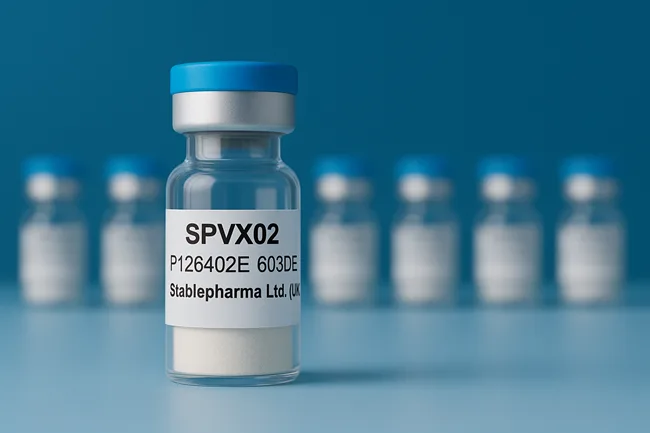
The company’s lead candidate, SPVX02, is a thermostable tetanus and diphtheria vaccine currently undergoing Phase 1 trials at University Hospital Southampton NHS Foundation Trust. Early data indicate that SPVX02 maintains efficacy and stability for up to four years in extreme climate zones, making it a potentially transformative product for the developing world.
To discuss this innovation, Business-News-Today.com interacted with Dr Karen O’Hanlon, Chief Development Officer at Stablepharma, who is spearheading the clinical development of SPVX02. Dr O’Hanlon, who has a PhD in Biochemistry and Molecular Biology from Manchester University, has over 20 years of experience in clinical drug development, particularly in vaccines and advanced therapies. Before joining Stablepharma, she served as Vice President of Clinical Operations at Boyds Consulting, where she focused on strategic design and execution of early-phase trials. At Stablepharma, she leads the clinical programme in collaboration with University Hospital Southampton, bringing expertise in trial translation and regulatory strategy to a technology that could redefine vaccine accessibility worldwide.
Interview with Dr Karen O’Hanlon on Stablepharma’s fridge-free vaccine technology
Could you explain the core scientific principles behind the StablevaX™ technology? How exactly does it stabilise vaccines without refrigeration?
At Stablepharma, our mission is to revolutionise vaccine and pharmaceutical distribution by leveraging our proprietary StablevaX™ technology platform to reformulate and thermostabilise both existing and emerging temperature sensitive products. By eliminating the need for cold-chain storage, we aim to enhance global access, reduce vaccine wastage and lower costs. It is worth noting that in Europe alone, only 30% of the vaccine costs are attributed to the cost of the actual product, the remaining 70% of the vaccine cost is associated with logistics and maintaining the cold chain.
While vaccines have proven to be the most effective tool in preventing infectious diseases, their global distribution is hindered by the need for reliable cold-chain logistics. To achieve worldwide immunity to tetanus, diphtheria and other infectious diseases, innovative solutions are required to ensure the rapid and effective distribution of vaccines via multiple customer channels. For international organisations such as the WHO, thermostable vaccines typically enable equitable access to vaccines, ensuring that LMICs receive the same access to high-quality vaccines as wealthier nations, despite infrastructure limitations.
The StablevaXTM platform enhances vaccines and pharmaceuticals to offer thermostability for up to 4 years in Climate Zone IVb, maintaining the same efficacy and safety as conventional products. SPVX02 (our lead candidate vaccine for the prevention of Tetanus and Diphtheria), is stabilised through lyophilisation with a carefully selected GRAS excipient to ensure thermostability and efficacy. This results in a stable, dry product for reconstitution with water for injection prior to dosing. This formulation not only extends the shelf life of the vaccine and improves its stability at higher temperatures, but also demonstrates stability during freeze-thaw cycles, proving its robustness during transport.
What prompted the idea of creating a fridge-free tetanus and diphtheria vaccine? Was there a particular experience or global event that highlighted the urgency of this innovation?
The global human vaccine market, currently valued at an estimated $74.12 billion annually, has witnessed a significant surge in recent years. The StablevaX™ technology platform represents a highly dynamic solution that can be applied to over 60 currently marketed vaccines and many more pharmaceutical products. SPVX02 will become part of the global tetanus and diphtheria-containing vaccine market. This market accounts for the largest volume of doses of all vaccine markets (aside from COVID-19 in recent years) globally. In addition, it is accepted that nearly 50% of medicines in the global pipeline require cold chain storage and the market share of cold chain medicines grew from 26% in 2017 to 35% in 2022.
Therefore, SPVX02 addresses critical challenges in vaccine distribution and storage, especially in regions where cold-chain logistics create barriers to vaccine access. It was identified in a recent report by IMIR Market Research that the global vaccine cold storage and packaging market is projected to reach USD 60.15 billion by 2031, given the growing need for cold chain logistics for temperature sensitive pharmaceutical products. By stabilising vaccines and pharmaceuticals at ambient temperatures, Stablepharma is extending the reach and impact of these life-saving products, to underserved populations worldwide without any reliance on the global cold chain.
In your view, what is the single most transformative aspect of Stablepharma’s SPVX02 vaccine compared to traditional refrigerated vaccines?
The shortcomings of the global cold chain in the distribution and storage of life saving vaccines can be addressed through Stablepharma’s proven fridge-free solution. The elimination of the cold-chain is revolutionary for the entire vaccine industry and enables rapid deployment of vaccines across the world.
What are the primary objectives and endpoints of the Phase 1 clinical trial currently underway?
The phase 1 clinical trial is currently ongoing in the Clinical Research Facility at the University Hospital Southampton and aims to recruit up to 60 healthy adult volunteers. The primary objective of this phase 1 study is to evaluate the safety and tolerability of a single dose of SPVX02 (our lead candidate tetanus and diphtheria vaccine),and the secondary objectives are to assess immunogenicity using seroprotection rates, as a key endpoint, to ensure that our vaccine results in a comparable immune response to that observed with current, approved tetanus and diphtheria vaccines.
What were some key challenges your team faced when preparing SPVX02 for clinical trials, and how did you overcome them?
As expected, when working with such an innovative technology, the Stablepharma development team faced a number of key challenges when preparing for clinical trials which included ensuring that the vaccine manufacture was completed on schedule, ensuring that the study team at University Hospital Southampton were fully trained and ready to deliver the trial and ensuring that all required regulatory and ethics approvals were in place. All of the challenges faced by the team were successfully overcome thanks to hard work, dedication and an incredibly motivated study team.
How critical was the partnership with Thermo Fisher Scientific in successfully preparing SPVX02 for the current clinical trials?
Our partnership with Thermo Fisher for the manufacture of the clinical trial batch of SPVX02 was critical to the success of our clinical development programme. We manufactured a clinical batch of SPVX02 in August last year which comprised over 10,000 doses of SPVX02 under EU GMP conditions at Thermo Fisher’s site in Monza, Italy. We have since gone on to dose this vaccine in our clinical trial, whilst in parallel running a stability study programme to ensure we have data to support a 4-year shelf life.
In addition to our partnership with Thermo Fisher, we have a growing network of key partners working with us to advance our pipeline of reformulated, fridge-free vaccines and pharmaceuticals which will enable improved access to lifesaving medicines.
How do you anticipate SPVX02 impacting global vaccination rates, particularly in developing regions or areas with limited healthcare infrastructure?
We anticipate that SPVX02 will have a hugely positive impact on global vaccination rates for tetanus and diphtheria vaccines and we are already in discussion with organisations which include WHO and UNICEF to ensure that our fridge-free technology, which includes SPVX02 (Td vaccine), can be made available to those global populations which stand to benefit the most.
Can you describe the potential environmental and economic benefits if SPVX02 is widely adopted globally?
Compared to conventional tetanus and diphtheria vaccines, SPVX02 offers several advantages. It provides an extended shelf-life of up to 48 months at room temperature, surpassing the 24-36 months of current market-leading vaccines that require refrigeration. This reduction in vaccine wastage, along with lower transportation and storage costs due to the elimination of cold-chain requirements, makes it not only more cost-effective but also more sustainable. SPVX02 also aligns with global environmental goals by reducing greenhouse gas emissions and energy consumption linked to cold storage. For example, the CO2 emissions of the global cold chain are considerable – the pharmaceutical cold chain emits 55% more greenhouse gas emissions than the automotive sector and relies mainly on fossil fuels for warehousing and storage and transportation of temperature-sensitive goods.
The global health landscape is increasingly focused on equitable access to vaccines, especially considering the challenges exposed by the COVID-19 pandemic. Rising logistical costs and energy prices, coupled with climate change-driven goals for sustainability, make the introduction of a fridge-free vaccine particularly timely. Additionally, global initiatives like those from the UN, CEPI, and WHO are calling for innovative solutions to ensure vaccine access for all, making this the ideal moment to bring SPVX02 to the market.
Beyond tetanus and diphtheria, what other vaccines could benefit significantly from your StablevaX™ platform? Are there plans already in motion for these additional vaccines?
Yes, we have a significant R&D programme ongoing at the moment which we expect to lead to the provision of fridge-free vaccines for the prevention diseases which include; hepatitis B, human papilloma virus and polio. There are approx. 60 established vaccines on the market that could benefit from StablevaX™ technology and we are actively engaging with vaccine developers and manufacturers to expand our existing R&D pipeline.
What level of scalability does StablevaX™ offer? Could it realistically meet global vaccine distribution demands, and how soon could this happen after regulatory approvals?
The StablevaX™ manufacturing process can be implemented at a large number of manufacturing facilities (e.g. CDMOs) with relative ease because the manufacturing process relies on a reformulation step, followed by fill-finish and lyophilisation steps. The equipment and expertise required is widely available across the globe and we have already shown that we can tech transfer our manufacturing process from one facility to another. We are planning to scale up our manufacturing activities in parallel with the clinical development programme and at the moment we anticipate a commercial batch size of approximately 170,000 doses. Our estimations demonstrate that we can make several million doses of SPVX02 (tetanus and diphtheria vaccine) each year on a single manufacturing line, so we have already demonstrated the scalability of our technology. As part of the scale up manufacturing activities, we have planned to include commercial product so we will be in a position to supply the global vaccine market as soon as the required regulatory approvals are in place.
After Phase 1 trials conclude, what are the next immediate steps for SPVX02’s clinical development and eventual market introduction?
Following the completion of the phase 1 trial in a few months’ time, we will submit the Clinical Trial Applications for the pivotal, phase 2 registration study. This next study is already being set up in the background and we are excited to bring this study into life later this year. The data obtained from both clinical trials will be included into our Marketing Authorisation Application which we will submit to the European Medicines Agency in due course.
What kind of regulatory challenges or milestones do you anticipate moving forward with SPVX02’s clinical development?
Following on from the successful completion of the phase 1 study in a few months’ time, the next regulatory challenge faced by our team will be the completion of Clinical Trial Application submissions in the UK and / or EU for our pivotal, phase 2 registration study. We have already been through this process for the phase 1 study with the UK regulator, MHRA, so we are confident that we will be able to complete these submissions in a smooth and efficient manner, especially as many of the documents prepared and approved for the ongoing Phase 1 trial can be updated and utilised for the next trial.
Given the positive preclinical outcomes, how optimistic is the team about the next phases of clinical development? Are there particular areas that you’ll closely monitor as potential hurdles?
The Stablepharma development team are very optimistic about the next (and final) phase of clinical development which includes the completion of our pivotal, phase 2 registration study. As expected, an in line with GxP regulations, we will closely monitor all aspects of this study but we do not foresee any sizeable hurdles on the horizon. We are excited to bring our pivotal clinical trial into fruition and take another step towards successful marketing authorisation for SPVX02.
So in summary, our ambition is to create a “new era” in the production of thermostable vaccines and pharmaceutical products which are not temperature sensitive. By working with our partners, we can significantly reduce reliance on the cold chain and enable greater global access to ensure important medicines are available to everyone regardless of their location in the world. We are not just referring to countries with inadequate infrastructures to store refrigerated products, but also more broadly the entire world where the burden, cost and environmental impact is huge.
How close is Stablepharma to bringing a fridge-free vaccine to market, and what should the world watch for next?
As Stablepharma advances SPVX02 through clinical development, its broader mission reflects a shift in how the world may think about vaccine logistics. The potential to eliminate cold-chain dependence has implications not just for cost and distribution, but also for environmental sustainability and equitable access. Discussions with organisations such as the World Health Organization and UNICEF are already underway, and if regulatory approvals move as planned, SPVX02 could become a template for other fridge-free vaccines, including for hepatitis B, human papillomavirus and polio.
Dr Karen O’Hanlon’s insights highlight a clear vision: to create a “new era” in vaccine distribution where life-saving medicines reach every corner of the globe, regardless of infrastructure. For now, all eyes are on the pivotal Phase 2 trials that could bring this technology closer to commercial reality.
Discover more from Business-News-Today.com
Subscribe to get the latest posts sent to your email.