

South32 Limited (ASX: S32, LSE: S32, JSE: S32; ADR: SOUHY) has agreed to sell most of its aluminium value-chain assets to Alcoa Corporation (NYSE: AA, ASX: AAI) for an implied enterprise value of up to approximately US$5.6 billion. The transaction covers South32’s interests in Worsley Alumina in Western Australia, Hillside Aluminium in South Africa and bauxite, alumina and aluminium operations in Brazil. South32 will receive US$3.1 billion in cash, approximately 17 million Alcoa shares and potential contingent payments of up to US$750 million, while Alcoa will assume associated debt, leases and significant closure obligations. The deal transforms South32 into a more concentrated copper, zinc, silver and lead producer while giving Alcoa greater scale across the upstream aluminium supply chain.
Why is South32 selling most of its aluminium portfolio when commodity demand remains supportive?
South32 is not exiting aluminium because the metal lacks long-term demand. The company is selling because its aluminium portfolio combines mining, refining and smelting operations across several jurisdictions, creating significant operational complexity, capital requirements and exposure to energy, freight and rehabilitation costs.
Worsley Alumina has historically been one of South32’s stronger assets, supported by integrated bauxite mining and alumina refining in Western Australia. However, maintaining a geographically dispersed aluminium chain also requires management attention across mining approvals, energy contracts, environmental obligations and downstream processing economics.
Hillside Aluminium adds a different risk profile. The South African smelter is a large and established producer, but smelting economics are heavily influenced by electricity availability and pricing. Energy-intensive smelters can generate strong cash during favourable commodity and power cycles, yet quickly become balance-sheet burdens when energy terms weaken or aluminium prices fall.
South32’s Brazilian interests add further minority ownership and joint-venture complexity. Selling these interests allows the company to reduce the number of operating models, regulatory systems and capital-allocation decisions inside the portfolio.
The transaction also reflects a strategic preference for commodities offering stronger growth and margin potential. South32 is increasing its exposure to copper through Sierra Gorda in Chile, while the Hermosa project in Arizona provides a development platform centred on zinc, silver and potentially manganese. These assets are more closely aligned with electrification, grid investment, data-centre construction and broader demand for conductive and energy-transition materials.
The portfolio after completion should be smaller in operational breadth but potentially stronger in margin, capital efficiency and management focus. The risk is that South32 is selling profitable cash-generating assets during an attractive point in the aluminium cycle and must redeploy the proceeds without destroying the value created by the divestment.

What assets will Alcoa acquire and why do they fit its existing aluminium operations?
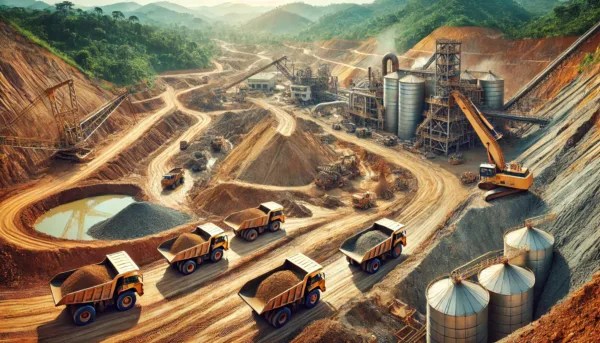
Alcoa will acquire South32’s 86% interest in Worsley Alumina, including the Boddington bauxite mine and Worsley refinery in Western Australia. It will also acquire full ownership of Hillside Aluminium in South Africa and South32’s stakes in the Mineração Rio do Norte bauxite operation, the Alumar alumina refinery and the Alumar aluminium smelter in Brazil.
The portfolio provides a mixture of upstream bauxite, alumina refining and aluminium smelting. Alcoa estimates the acquired assets generated approximately US$4.7 billion of revenue and US$900 million of earnings before interest, tax, depreciation and amortisation during the 2025 calendar year.
Worsley and Boddington are particularly important because they sit close to Alcoa’s existing Western Australian mining and refining system. The geographic overlap creates opportunities to coordinate mine planning, transport, procurement, technical expertise and access to higher-grade bauxite.
In Brazil, Alcoa already operates the Alumar assets in which South32 holds minority interests. Acquiring those stakes simplifies ownership and gives Alcoa greater economic participation in operations it already understands and manages.
Hillside creates a new wholly owned aluminium platform in South Africa. It adds approximately 700,000 tonnes of annual attributable aluminium production based on recent operating levels, although the asset sits higher on the cost curve than several of the bauxite and alumina interests included in the transaction.
Alcoa is effectively buying scale, ownership simplification and operational overlap. South32 is selling complexity that may be worth more inside Alcoa’s aluminium-focused structure than inside a diversified miner increasingly prioritising base metals.
Mozal Aluminium in Mozambique is excluded. Its absence is strategically significant because Mozal has faced uncertainty around future electricity supply. South32 retains the challenge of determining whether Mozal can secure commercially sustainable power arrangements, be sold separately or require another long-term solution.
How does the US$5.6 billion headline value translate into cash and shareholder returns?
The transaction includes US$3.1 billion of cash and approximately 17 million newly issued Alcoa shares valued at about US$1 billion when the agreement was structured. South32 is expected to own approximately 6% of Alcoa after completion.
At least half of those Alcoa shares are expected to be distributed directly to eligible South32 shareholders through an in-specie distribution following completion. South32 may retain or sell the remaining shares in an orderly manner, giving the company flexibility over the timing of further cash realisation.
The deal also contains a contingent value right worth up to US$750 million. Payments will depend on future aluminium and alumina prices through 2030, allowing South32 shareholders to retain some exposure to commodity-price upside after the assets transfer to Alcoa.
The contingent component improves the transaction’s potential value but should not be treated as guaranteed consideration. Payments only arise if agreed price thresholds and revenue-sharing conditions are satisfied.
Alcoa’s presentation calculates an implied enterprise value of approximately US$4.7 billion before the contingent value right and between US$4.7 billion and US$5.4 billion if the entire contingent amount is included. South32’s higher headline valuation of up to approximately US$5.6 billion reflects differences in assumed debt and lease liabilities transferred with the assets.
South32 plans to return approximately US$500 million to shareholders through a fully franked special dividend after completion. The planned dividend, combined with the distribution of Alcoa shares, ensures that part of the transaction value flows directly to investors rather than remaining entirely available for acquisitions or project spending.
The final shareholder outcome will depend on the Alcoa share price, foreign-exchange movements, contingent payments and the tax treatment applicable to individual investors. Alcoa shares fell sharply after the deal was announced, demonstrating that equity consideration introduces market risk before South32 investors receive it.
Why does Alcoa believe the South32 assets can generate US$900 million of synergies?
Alcoa estimates the transaction can produce approximately US$900 million of net present value from operating, procurement, logistics, technology and life-of-asset improvements. It expects about US$50 million of annual run-rate cost savings within 12 months of completion.
The first savings should come from areas where integration can occur relatively quickly. Combined purchasing, freight, raw-material sourcing, marketing and working-capital management could create benefits without requiring major changes to physical infrastructure.
Process improvements are expected to take longer. Alcoa intends to apply operating practices and technical knowledge across the enlarged portfolio to improve production consistency, energy consumption and material use.
The largest and longest-dated opportunity may sit in Western Australia. Coordinated mine planning between Alcoa’s existing bauxite system and the Worsley operation could improve access to ore, reduce haulage, defer certain mine moves and support longer asset lives.
Those benefits are credible in principle because the operations are geographically close and involve related processes. However, the US$900 million estimate is a discounted long-term calculation rather than immediate cash savings.
Mine-plan coordination requires regulatory approvals, technical integration and agreement with joint-venture stakeholders. Procurement benefits may also be partly offset by inflation, implementation costs or operational disruption.
Alcoa is paying a multiple of approximately 5.2 to 6.1 times the acquired assets’ 2025 earnings before interest, tax, depreciation and amortisation before synergies. The valuation appears reasonable relative to Alcoa’s historical trading multiples, but the financial case still depends on converting projected synergies into measurable cash flow.
Does the acquisition create a stronger Alcoa or simply a larger and more indebted company?
Alcoa expects the transaction to increase annual alumina production by approximately 53%, aluminium production by about 37% and third-party revenue by around 28% on a pro-forma 2025 basis. The company also expects the acquisition to improve earnings per share and free cash flow immediately after completion.
Scale gives Alcoa greater influence across bauxite, alumina and aluminium markets. It also increases the company’s net-long alumina position, meaning it should have more alumina available for external sale after satisfying internal smelter requirements.
This position could become valuable if alumina demand grows faster than new supply outside China. It can also increase earnings volatility because a larger share of production remains exposed to market prices.
Financing is the immediate concern. Alcoa has secured a US$3.1 billion bridge facility that it expects to replace with cash and permanent debt before completion. The company intends to reduce leverage after closing and preserve investment-grade financial metrics.
Alcoa will also assume substantial environmental, closure and rehabilitation obligations. These liabilities may not require immediate cash expenditure, but they remain real claims on future capital.
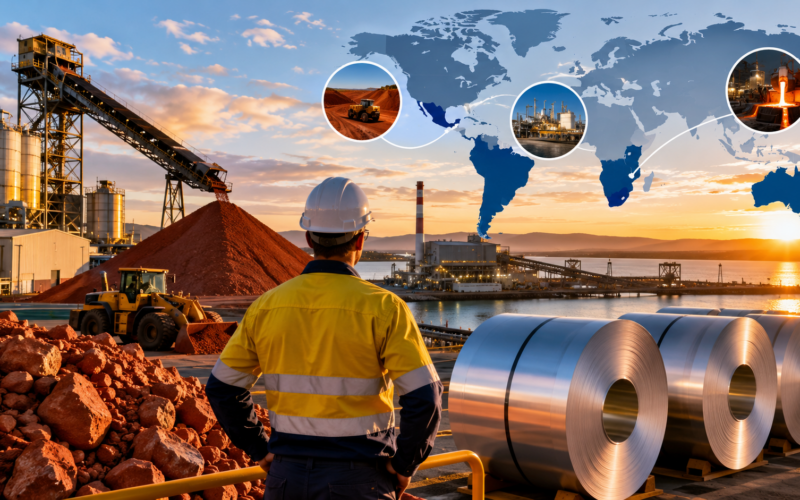
The buyer must integrate operations across Australia, Brazil and South Africa while managing different currencies, energy markets, workforces and regulatory regimes. A transaction that looks coherent on a map can still become difficult in the control room.
The strategic argument for Alcoa is strong because the acquired businesses fit its existing aluminium focus. The market’s initial negative response suggests investors are less certain about financing, execution and whether the company is taking on too much exposure near a cyclical high.
How will the aluminium sale reshape South32’s earnings mix and strategic identity?
The divested businesses account for a substantial portion of South32’s earnings and operating footprint. Selling them will reduce group revenue and absolute earnings, but management expects the remaining portfolio to produce higher margins with lower complexity.
Copper is likely to become South32’s dominant earnings contributor. The company owns 45% of Sierra Gorda, a large open-pit copper and molybdenum mine in Chile, and has approved investment in a fourth grinding line through the joint venture.
South32 also retains Cannington in Queensland, which produces silver, lead and zinc, and the Hermosa development platform in Arizona. The portfolio will therefore become more clearly concentrated around base and precious metals rather than spanning the full aluminium chain.
The shift could improve how investors value South32. Diversified miners often receive conglomerate discounts when their assets have very different cost structures, capital needs and commodity exposures.
A cleaner copper-led portfolio may attract investors seeking exposure to electrification and constrained copper supply. It could also make South32 easier for a larger mining group to analyse as a potential acquisition target.
That possibility should not become the investment thesis. South32 must first demonstrate that the remaining portfolio can replace the earnings sold to Alcoa and generate acceptable returns from its growth pipeline.
The company expects the simplified structure to support approximately US$125 million of annual overhead savings. Delivering those savings will require genuine organisational resizing rather than simply moving costs between corporate and operating functions.
Why does the Sierra Gorda expansion show where South32’s capital could move next?
South32 announced final investment approval for Sierra Gorda’s fourth grinding line alongside the aluminium transaction. The project is expected to increase processing capacity from approximately 48 million tonnes per year to around 60 million tonnes per year on a 100% basis.
The expansion carries expected growth capital expenditure of approximately US$725 million on a 100% basis between the 2027 and 2030 financial years. South32’s 45% ownership implies an attributable share of roughly US$326 million before considering working capital or other project-related expenditure.
First production is targeted for the middle of the 2030 financial year, with full rates expected during the 2031 financial year. Once completed, the project is expected to lift average copper-equivalent production by approximately 30% and reduce average operating unit costs by around 10%.
This is the type of brownfield project that explains South32’s strategic pivot. The company can invest in existing infrastructure, known mineralisation and an operating team rather than assuming the full risk of constructing a new mine in an undeveloped district.
The timing also demonstrates why retaining financial capacity matters. South32 must fund Sierra Gorda, advance Hermosa and manage its remaining operations before considering major acquisitions.
The aluminium proceeds create optionality, but optionality can become expensive when management feels compelled to use it. Any acquisition will have to compete against organic copper and zinc projects with established strategic logic.
New Chief Executive Officer Matthew Daley has indicated that South32 remains open to acquisitions that are strategically aligned, financially disciplined and capable of competing with the internal project pipeline. That is the correct framework, although investors will judge the company on the price and timing of its next major move rather than the elegance of the framework itself.
Why did ASX: S32 rally while Alcoa investors initially questioned the transaction?
South32 shares traded near A$4.16 after the announcement period, compared with A$3.90 immediately before the transaction was revealed. ASX: S32 had gained roughly 3.7% across five sessions but remained about 11.9% lower over one month, with a 52-week range of approximately A$2.52 to A$4.95.
The announcement-day rally reflected several favourable signals. South32 secured substantial upfront cash, retained aluminium-price participation through the contingent payment and promised direct shareholder returns through Alcoa shares and a special dividend.
Investors also appeared to welcome the sharper copper focus and the transfer of substantial rehabilitation and closure obligations. The positive response does not mean the market has assigned full value to the transaction, particularly because completion remains subject to shareholder and regulatory approvals.
Alcoa’s Australian-listed securities, ASX: AAI, ended July 3 near A$73.09. They were approximately 9.6% higher over five sessions but around 9.5% weaker over one month, within a 52-week range of roughly A$43.50 to A$117.87.
The different reactions capture the capital-allocation tension. South32 is being rewarded for receiving cash and reducing complexity. Alcoa must prove that paying for scale, assuming liabilities and increasing debt will generate the expected synergies.
For ASX: S32 shareholders, the rerating can continue if the transaction closes, shareholder distributions occur and the retained business delivers stronger margins. The rerating could fade if completion is delayed, Alcoa shares weaken further or South32 uses the proceeds for an expensive acquisition.
What regulatory, environmental and completion risks could still disrupt the deal?
The transaction requires South32 shareholder approval and regulatory clearances across several jurisdictions. Competition authorities must assess whether the enlarged Alcoa portfolio would materially reduce competition in bauxite, alumina or aluminium markets.
Australian approval will receive particular attention because Alcoa is already a major Western Australian bauxite and alumina producer. The company argues that the transaction combines complementary operations and improves supply resilience, but regulators will independently examine market concentration and customer effects.
Environmental approvals create a separate risk. Bauxite mining in Western Australia involves sensitive jarrah forest areas, rehabilitation obligations and sustained public scrutiny. Combining operating systems does not remove those permitting pressures.
The transaction is not subject to further due diligence or financing conditions, which improves completion certainty. However, shareholder votes, regulatory reviews and customary conditions can still delay or prevent closing.
Commodity-price volatility may also change the perceived economics before completion. Rising alumina and aluminium prices could increase the value of the contingent payment but leave South32 shareholders questioning whether the assets were sold too cheaply. Falling prices could reduce contingent value while making Alcoa’s purchase appear less attractive.
The expected 2027 completion timetable leaves an extended period during which South32 must continue operating the assets, funding agreed capital requirements and maintaining workforce and customer confidence.
Both companies therefore face an awkward transition. South32 must manage assets it has agreed to sell without allowing performance to deteriorate, while Alcoa must prepare for integration without controlling the businesses until completion.
Key takeaways on what South32’s Alcoa transaction means for ASX: S32 investors
- South32 is selling most of its aluminium value chain to Alcoa for an implied enterprise value of up to approximately US$5.6 billion.
- The transaction includes US$3.1 billion in cash, about 17 million Alcoa shares and contingent payments of up to US$750 million.
- South32 plans to distribute at least half of the Alcoa shares directly to eligible investors and pay an approximately US$500 million special dividend.
- The sale shifts South32 towards copper, zinc, silver and lead while reducing exposure to energy-intensive refining and smelting.
- Alcoa gains Worsley Alumina, Hillside Aluminium and Brazilian assets that strengthen its bauxite, alumina and aluminium scale.
- The estimated US$900 million of synergies depends on procurement, technology integration and long-term Western Australian mine planning.
- Mozal Aluminium remains outside the transaction, leaving South32 with unresolved power-supply and portfolio decisions in Mozambique.
- Sierra Gorda’s fourth grinding line shows that copper growth is likely to absorb part of South32’s future capital capacity.
- ASX: S32 initially rerated as investors welcomed cash proceeds, shareholder returns and a simpler portfolio.
- The decisive test will be whether South32 redeploys its stronger balance sheet without overpaying for its next growth asset.
Discover more from Business-News-Today.com
Subscribe to get the latest posts sent to your email.