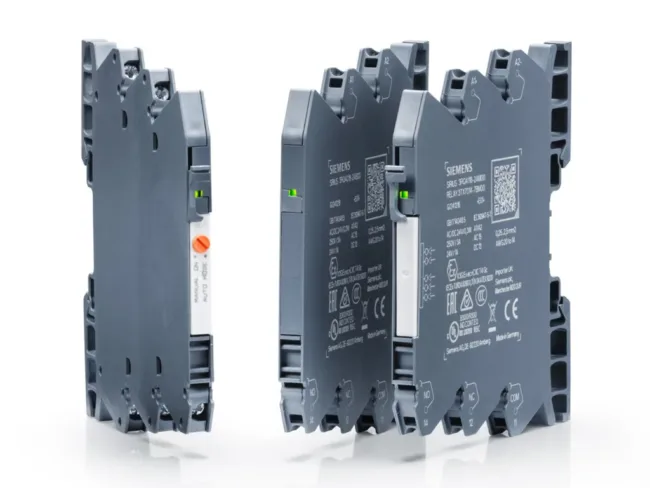
Siemens AG has unveiled its latest sustainable innovation in industrial electronics by launching the SIRIUS 3RQ4 coupling relay series, housed in material derived from used cooking oil (UCO). Developed in partnership with Envalior, a global supplier of high-performance engineering materials, this new product aims to set a new benchmark for eco-conscious electrical components in industrial automation.
With 70% of the plastic used in these relays derived from biomass waste, Siemens is integrating circular economy principles into mainstream manufacturing. The new relays not only promise sustainability but also technical excellence—addressing safety-critical environments, railway systems, and high-frequency switching applications through three differentiated variants.
The announcement marks a meaningful milestone in Siemens Smart Infrastructure’s decarbonization agenda, as it attempts to meet rising industrial demands without compromising on environmental goals. It also reflects a growing trend among global manufacturers seeking alternatives to traditional petrochemical-based plastics.
Why is Siemens using used cooking oil in the design of industrial electrical relays?
In a move that blends material innovation with circular economy goals, Siemens Smart Infrastructure has collaborated with Envalior to develop relay housings made from Akulon K225-KS B-MB, a bio-based polyamide derived from waste UCO. This material is non-toxic, halogen-free, and flame-retardant. The use of UCO, a waste product typically incinerated or converted into biodiesel, is intended to reduce the reliance on fossil-based plastics while avoiding competition with food or animal feed production.
Envalior, which operates globally across the automotive, electrical, and industrial sectors, repurposes UCO through a mass balance approach to produce engineering plastics. According to the company, this method avoids the combustion of waste oil and instead uses it as a primary raw material to create durable polymers that meet industrial-grade performance specifications.
Siemens has integrated this bio-based material into its new SIRIUS 3RQ4 coupling relays, designed for use in control cabinets across a variety of heavy-duty industrial settings. In addition to contributing to sustainability, the plastic offers significant advantages in chemical resistance, high-temperature tolerance, and durability under harsh conditions.
What technical specifications differentiate the SIRIUS 3RQ4 coupling relay family?
The SIRIUS 3RQ4 product line includes three functionally distinct variants tailored to specific industrial use cases. The first variant incorporates an integral relay output and is designed for deployment in harsh environments and safety-critical zones, including ATEX-certified explosive atmospheres. Options for gold-plated contacts and protective-coated PCBs further extend its suitability for low-current switching and railway infrastructure applications.
The second variant features a plug-in relay format, ideal for maintenance-heavy operations where quick component replacement is a priority. This format also supports gold-plated contacts for precise switching in sensitive electronic environments.
The third variant introduces a semiconductor output for noiseless, high-speed switching. With an enhanced switching capacity of up to 6A, it competes with traditional electromechanical relays. Its long service life makes it a cost-effective solution for industrial setups where frequent replacement is either impractical or expensive.
All three variants maintain a slim-line design for optimized space utilization within control cabinets and are designed for full compatibility with Siemens controllers, ensuring seamless integration into larger industrial ecosystems.
How does the Siemens–Envalior collaboration align with broader industrial decarbonization efforts?
The collaboration is part of Siemens’ broader EcoTech label initiative, which certifies products that meet rigorous environmental benchmarks across their lifecycle. For the SIRIUS 3RQ4 range, Siemens stated that the design improvements include a 33 percent reduction in energy loss for the semiconductor variant compared to earlier models. The relays are also free from halogens and PFAS—materials increasingly restricted due to their environmental and health risks. In addition, the components have been engineered for easier disassembly and recyclability at the end of their service life, aligning with Siemens’ broader EcoTech standards for sustainable product development.
By leveraging Envalior’s green material science, Siemens is able to shorten its supply chain with automated manufacturing out of its Amberg facility in Germany, reducing transportation emissions for European clients.
From a regulatory standpoint, such advancements help industrial vendors comply with EU Green Deal targets, extended producer responsibility (EPR) frameworks, and upcoming sustainability reporting mandates.
Dr. Marc Rudolf, Envalior’s Global Key Account Manager, indirectly emphasized the importance of maintaining product integrity while innovating with greener feedstocks. He noted that Envalior’s bio-based polymer achieved both UL94 V-0 flame retardancy at 0.4mm thickness and favorable mechanical performance, overcoming long-standing trade-offs in bio-polymer applications.
What investor signals and institutional sentiment are emerging around Siemens’ sustainability innovation?
For Siemens AG (ETR: SIE), the launch of bio-based relay systems is being viewed by institutional investors as part of its broader green growth strategy. While the company’s industrial automation business has historically emphasized robustness and scale, recent investor sentiment favors low-carbon innovation that aligns with ESG mandates and green capex cycles in Europe and North America.
Market participants tracking industrial sustainability have noted a positive correlation between decarbonization initiatives and premium pricing power, especially in sectors such as electrical infrastructure, EV manufacturing, and smart buildings.
While Siemens has not provided specific sales forecasts for the SIRIUS 3RQ4 series, institutional investors are likely to monitor order volumes from industrial OEMs and EU-based utilities, where regulatory incentives for sustainable procurement are accelerating.
As of October 2025, Siemens AG shares have shown moderate resilience amid broader volatility in European equities. Analysts tracking the stock attribute this to a combination of margin discipline in Smart Infrastructure, order wins in Mobility and Digital Industries, and positive sentiment around its decarbonization narrative.
How does Envalior’s strategy in renewable energy and emissions reduction factor into this partnership?
Beyond its contribution to Siemens’ eco-label product line, Envalior is investing heavily in its own sustainability roadmap. As of 2024, the company had already met over 50% of its global electricity needs through renewable sources. It has committed to reducing total emissions by 35% by 2030, targeting 100% renewable electricity consumption and decentralized emission reduction projects near its global production hubs.
This makes Envalior a strategic partner for OEMs looking to align their Scope 3 emissions targets with upstream material providers. Its investment in climate-friendly heat sources and renewable power sourcing represents a rare convergence of chemical engineering and net-zero leadership in the manufacturing value chain.
The Siemens–Envalior partnership, therefore, is not a one-off materials contract but a signal of growing symbiosis between hardware OEMs and materials science innovators in the green industrial transition.
What is the future outlook for bio-based electrical components in industrial automation?
While Siemens is among the first movers to adopt bio-based plastics at a component level in control systems, the broader market for green materials in automation is projected to grow. Trends in circular economy policy, EPR regulations, and sustainable procurement standards are expected to pressure vendors across sectors—from automotive to power distribution—to pivot away from legacy petrochemical polymers.
As capital flows increasingly target green manufacturing ecosystems, the success of projects like SIRIUS 3RQ4 could accelerate adoption of similar bio-based designs across product categories such as circuit breakers, connectors, and sensors.
For Siemens, success metrics will likely hinge on performance validation, durability benchmarks, and customer adoption across regulated sectors like rail, chemicals, and energy utilities. Early momentum in these segments could allow Siemens to replicate this strategy in higher-margin automation portfolios.
From a materials science standpoint, continued improvements in flow behavior, thin-wall performance, and fire safety certifications will be crucial in unlocking wider industrial acceptance.
Share this:
Discover more from Business-News-Today.com
Subscribe to get the latest posts sent to your email.