



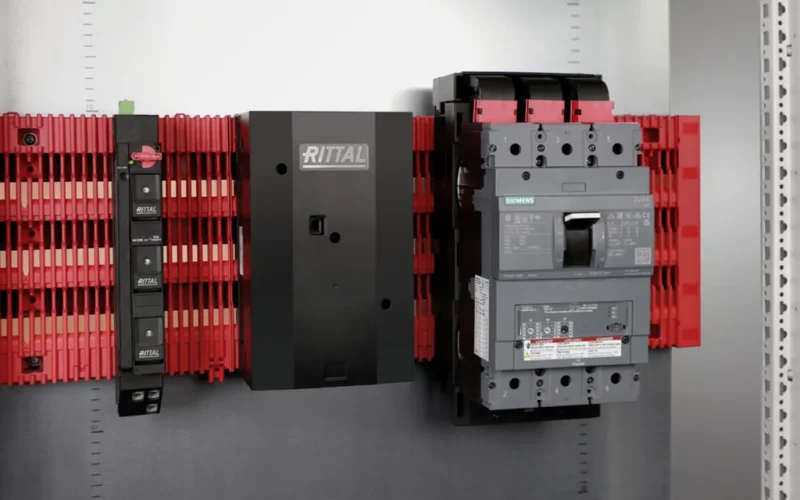
Siemens AG (ETR: SIE), the Munich-headquartered industrial and technology conglomerate, and Rittal GmbH & Co. KG, the Herborn-based global leader in rack systems and data center infrastructure owned by the Friedhelm Loh Group, have announced a formal strategic partnership targeting one of the most pressing bottlenecks in AI infrastructure buildout: power distribution at extreme density. The collaboration, unveiled on 17 March 2026, will combine Siemens Smart Infrastructure’s electrical products and power electronics expertise with Rittal’s standardized enclosure and power platforms to develop next-generation data center solutions calibrated for IEC market requirements. The headline deliverable is a dedicated “sidecar” power rack designed to sit directly in the data center white space, delivering high-capacity, scalable power to adjacent server racks without routing it through legacy distribution architectures. With AI rack densities already routinely exceeding 100 kW and credible projections pointing to 1 MW per rack by 2030, the timing of this partnership is less a product launch and more an infrastructure imperative.
Why are AI data centers outgrowing conventional power distribution infrastructure so rapidly?
The structural mismatch between AI compute demands and conventional data center electrical design has been building for several years, but the pace of acceleration is now forcing infrastructure vendors to respond in real time rather than through standard product-cycle timelines. Traditional data center architectures were engineered to handle power densities in the range of 5 to 15 kW per rack. Modern GPU clusters, particularly those running large language model training and inference workloads, routinely operate at 40 to 100 kW per rack, with next-generation NVIDIA and AMD platforms pushing the practical ceiling higher with each product generation. The fundamental problem is not simply wattage: it is the distance and architecture through which power travels from grid connection to compute unit. Conventional designs route medium-voltage power through multiple transformation and distribution stages before it reaches the rack, introducing latency in provisioning, complexity in capacity management, and substantial energy losses along the way. The Siemens and Rittal sidecar concept attacks this directly by relocating power conversion and distribution electronics into a dedicated rack unit sitting adjacent to server cabinets in the white space, shortening the electrical path and enabling operators to add compute capacity without redesigning their upstream distribution topology.
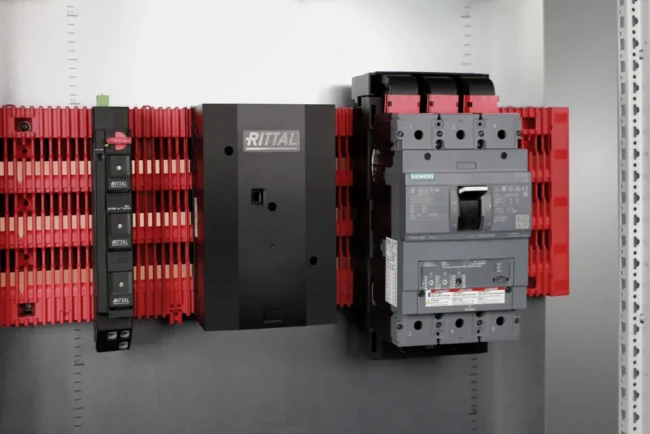
What does the Siemens and Rittal sidecar power rack actually do and how does OCP standardization matter?
The sidecar architecture bundles power electronics into a standalone rack unit that feeds server racks directly within the data center white space, the physical area where active compute and storage equipment is deployed. This matters because white space proximity reduces cable runs, simplifies capacity scaling, and eliminates the need to provision additional switchroom or mechanical plant infrastructure for each power expansion increment. The solution is built around Open Compute Project standards, specifically the OCP Open Rack specification that both Rittal and hyperscalers have been developing in parallel. OCP compliance is not a marketing credential in this context: it is a procurement and interoperability signal to the hyperscale and enterprise data center market that the combined Siemens and Rittal solution will integrate without custom engineering into facilities that have adopted OCP infrastructure blueprints. Rittal has been an active contributor to OCP rack standards, having unveiled its MGX Architecture Rack in collaboration with Nvidia at the OCP Global Summit in October 2025. That earlier work provides a meaningful foundation for the sidecar power delivery concept. The Siemens contribution brings electrical product depth, particularly in low-voltage switchgear and power distribution units, that Rittal’s enclosure and rack manufacturing heritage alone would not cover. The partnership is therefore complementary rather than overlapping, with each company contributing distinct engineering capability to a jointly validated solution stack.
How does this partnership position Siemens Smart Infrastructure against Schneider Electric and Eaton in the AI data center market?
The data center power infrastructure sector is competitive and consolidating. Schneider Electric, Eaton, ABB, and Vertiv have all been investing heavily in AI-optimized power distribution products, and each maintains significant installed-base relationships with hyperscale operators. Siemens Smart Infrastructure has historically been stronger in industrial and building technology applications than in the pure-play data center market, which has tended to favor vendors with deep colocation and hyperscale reference architectures. The Rittal partnership addresses this gap strategically. Rittal is not a peripheral player in data centers: the company describes itself as a supplier to leading hyperscalers and has 10 production facilities and 65 subsidiaries globally, with the broader Friedhelm Loh Group generating revenue of 3.1 billion euros in 2024. Embedding Siemens power electronics into a Rittal-standardized enclosure and power platform gives Siemens Smart Infrastructure a route to market through a vendor that already has procurement relationships with the customers it needs to reach. For Rittal, access to Siemens electrical product depth closes the gap between its mechanical and thermal engineering strengths and the power electronics sophistication that high-density AI deployments require. The combined offering also develops a standardized low-voltage distribution system for modular and containerized data centers, a segment growing rapidly as enterprise AI adoption pushes demand for deployable, self-contained compute infrastructure beyond hyperscale campuses.
What are the execution risks and timeline pressures for delivering AI-ready power solutions at scale before competitors move?
Strategic partnerships between large industrial companies are sometimes announced well ahead of commercially deployable products, and there is reason to apply scrutiny here. The press release confirms that first customer projects are already underway, which is a meaningful signal that this is not pre-commercial positioning. However, moving from pilot customer engagements to volume supply contracts at hyperscale is a materially different challenge. Hyperscale operators run rigorous qualification processes for new infrastructure components, particularly power electronics, where reliability standards are unforgiving: a power unit failure in a 100 kW AI rack takes down substantially more compute capacity than a failure in a conventional server environment. Siemens and Rittal will need to demonstrate not just that the sidecar solution works in controlled deployments, but that it meets the mean-time-between-failure benchmarks, serviceability requirements, and lifecycle cost models that large-scale data center operators use as procurement gates. There is also a supply chain dimension. The global market for power distribution infrastructure in data centers is tightening as every major hyperscaler simultaneously accelerates capital expenditure. Lead times for key components including bus bars, modular uninterruptible power supplies, and power distribution units have extended materially. A partnership that promises standardized, scalable power delivery will need a manufacturing and logistics footprint capable of executing against demand signals that could arrive suddenly and at volume.
How does Siemens AG stock performance reflect investor sentiment about its AI infrastructure and data center strategy?
Siemens AG shares on the Frankfurt Exchange (SIE) are trading in a range of approximately 225 to 230 euros as of mid-March 2026, down materially from the 52-week high of approximately 275 euros reached earlier in the year and sitting near the lower end of a 52-week trading band of approximately 162 to 276 euros. The year-to-date retreat reflects a combination of sector-wide rotation away from European industrials and company-specific uncertainty around the planned separation of Siemens Healthineers, which carries structural questions about debt refinancing and earnings composition. The analyst consensus, aggregated across multiple platforms, points to a 12-month price target in the range of 267 to 276 euros, implying meaningful upside from current levels, with the dominant rating across major brokers standing at Buy or Outperform. The current price weakness is therefore arguably a valuation dislocation rather than a fundamental revision, though the Healthineers uncertainty is keeping institutional buyers cautious. The data center partnership with Rittal does not move the needle on near-term earnings in isolation. However, it fits into a broader narrative around Siemens Smart Infrastructure’s repositioning toward AI-adjacent infrastructure markets, which represents one of the more credible long-cycle growth levers available to the group as traditional industrial automation markets mature. Investors looking for a catalyst to re-engage with Siemens at current levels may find that sustained evidence of data center order intake, rather than partnership announcements alone, is the signal they require.
What does the Siemens and Rittal collaboration signal about the broader convergence of IT and operational technology in AI infrastructure?
The partnership is also a data point in a structural shift playing out across the technology and industrial sectors: the erosion of the traditional boundary between information technology and operational technology. Data centers were once managed as IT estates, with power and cooling treated as building services managed by facilities teams. AI compute density has made that separation untenable. A 100 kW rack is a piece of electrical infrastructure as much as it is a computing asset, and managing it effectively requires engineering expertise from both domains simultaneously. Siemens Smart Infrastructure and Rittal each straddle this boundary in different ways. Siemens brings decades of low-voltage electrical engineering and industrial control systems expertise, alongside software platforms for energy management. Rittal brings the mechanical and thermal engineering that determines whether a high-density rack can be safely and reliably deployed. Together, they are assembling a vertically integrated offer that competes not just on product specifications but on the total engineering capability a data center operator needs to deploy AI infrastructure at pace. The press release mentions intentions to extend the collaboration beyond data centers to other industries and applications, which suggests the companies see the OT-IT convergence thesis as a structural opportunity rather than a one-vertical play. That longer-term ambition, if executed, would give both companies a differentiated positioning in industrial AI infrastructure that neither could credibly occupy independently.
Key takeaways: what the Siemens and Rittal AI data center power partnership means for infrastructure markets and investors
- Siemens AG and Rittal GmbH & Co. KG have announced a formal strategic partnership to develop AI-optimized, IEC-standard power distribution infrastructure for high-density data centers, with first customer projects already underway.
- The headline product is a sidecar power rack deployed directly in the data center white space, delivering scalable power to adjacent server racks via a shortened electrical path that bypasses legacy distribution architectures.
- AI rack densities exceeding 100 kW are already standard, with projections pointing toward 1 MW per rack by 2030, creating structural demand for the power delivery redesign that Siemens and Rittal are targeting.
- OCP standardization compliance is a critical commercial differentiator that positions the combined solution for hyperscale procurement processes without custom engineering requirements.
- Siemens Smart Infrastructure gains market access through Rittal’s existing hyperscale and enterprise relationships; Rittal acquires power electronics depth that its enclosure and rack manufacturing heritage alone could not deliver.
- The partnership competes directly with Schneider Electric, Eaton, ABB, and Vertiv in the AI data center power infrastructure segment, where all major vendors are simultaneously accelerating investment.
- Execution risks include hyperscaler qualification timelines, component supply chain constraints, and the challenge of scaling from pilot deployments to volume contracts in a compressed competitive window.
- Siemens AG (ETR: SIE) shares are trading near the lower end of their 52-week range at approximately 225 to 230 euros, with analyst consensus targets of 267 to 276 euros suggesting valuation support, though Healthineers separation uncertainty is restraining institutional buying.
- The scope of the partnership extends beyond data centers to other industries, reflecting a broader conviction from both companies that IT and OT convergence represents a multi-vertical structural growth opportunity.
- Investors and procurement teams should monitor Siemens’ data center order intake and Rittal’s hyperscale contract disclosures as the more meaningful validation points beyond the partnership announcement itself.
Discover more from Business-News-Today.com
Subscribe to get the latest posts sent to your email.