




Saudi Arabia’s Defence Minister, Prince Khalid bin Salman, urged Iran on Saturday, 7 March 2026, to exercise wisdom and avoid miscalculation, following a series of ballistic missile and drone attacks targeting the kingdom’s military infrastructure and energy installations. The warning came after Saudi air defence systems intercepted multiple incoming projectiles in one of the most intensive single-day barrages directed at the kingdom since the conflict between the United States, Israel, and the Islamic Republic of Iran erupted on 28 February 2026. The public warning and the emergency security summit that preceded it represent the most direct and formal response Saudi Arabia has issued since the regional conflict began.
Prince Khalid bin Salman issued the warning on the social media platform X following a meeting in Riyadh with Pakistan’s Chief of Army Staff and Chief of Defence Forces, Field Marshal Asim Munir. In his statement, Prince Khalid said the two officials had discussed Iranian attacks on the Kingdom and the measures needed to halt them within the framework of the Joint Strategic Defence Agreement between Saudi Arabia and Pakistan. Both sides stressed that the attacks do not serve the security and stability of the region, and expressed hope that the Iranian side would exercise wisdom and avoid miscalculation.
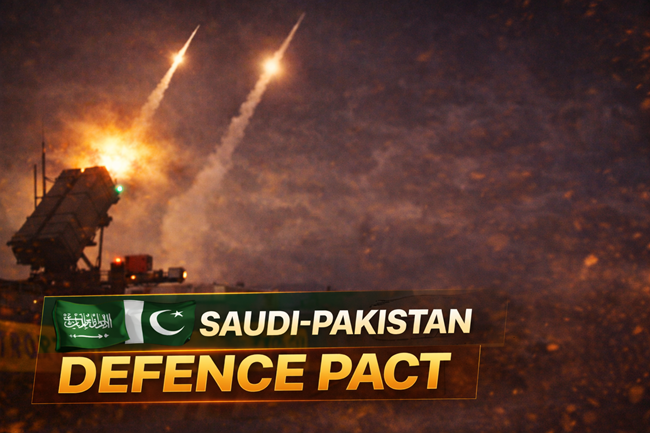
What is the Saudi-Pakistan Strategic Mutual Defence Agreement and why does it matter now?
The meeting between Prince Khalid bin Salman and Field Marshal Asim Munir was convened under the framework of the Strategic Mutual Defence Agreement, a bilateral security pact signed between Saudi Arabia and Pakistan in September 2025 by Saudi Crown Prince Mohammed bin Salman and Pakistani Prime Minister Shehbaz Sharif. The agreement, which mirrors the mutual defence principle enshrined in the North Atlantic Treaty Organization’s Article 5, commits both nations to treating an attack on either country as an act of aggression against both.
Pakistan’s Inter-Services Public Relations confirmed the meeting focused on the gravity of the security situation arising from Iranian drone and missile attacks on the Kingdom and on joint measures needed to halt them. The Inter-Services Public Relations statement said both sides expressed hope that Iran would demonstrate prudence and sagacity to avoid miscalculation and strengthen the hands of countries seeking a peaceful settlement of the crisis.
The meeting in Riyadh on 7 March constitutes the first substantive invocation of the Strategic Mutual Defence Agreement since the pact was concluded in September 2025, marking a significant shift in the formalisation of the Saudi-Pakistani security relationship from a historically close but informally structured partnership into a binding treaty-based obligation. Pakistani officials had not announced any direct military action as of 7 March. Pakistan shares a 900-kilometre border with Iran in its southwestern Balochistan province and has millions of workers resident in Saudi Arabia and other Gulf states, placing Islamabad in a delicate geopolitical position as the conflict continues to widen.
How has Iran targeted Saudi Arabia’s military infrastructure since the conflict began on 28 February 2026?
The Saudi Ministry of Defence confirmed on the morning of 7 March that a ballistic missile launched toward Prince Sultan Air Base, located southeast of the capital Riyadh in the Al-Kharj governorate, was intercepted and destroyed. The Saudi Press Agency subsequently reported a second ballistic missile attack targeting the same base, also intercepted and destroyed, citing a ministry spokesperson. Prince Sultan Air Base houses United States military personnel and serves as a primary hub for coalition air operations on the Arabian Peninsula. A series of drone attacks targeting the Shaybah oil field near the border with the United Arab Emirates were intercepted and destroyed on the same day. A separate drone was also intercepted east of Riyadh. Saudi Arabia confirmed that no human or material losses resulted from the 7 March attacks.
The 7 March exchanges form part of a sustained campaign of Iranian ballistic missile and drone attacks against Saudi Arabia that began immediately following the joint United States and Israeli strikes against the Islamic Republic of Iran on 28 February 2026. Iranian drones struck the United States Embassy in Riyadh on 3 March, causing a fire and limited structural damage. Saudi defence forces confirmed intercepting eight drones near Riyadh and the Al-Kharj area on that same day. Satellite imagery analysed by multiple outlets showed smoke rising from a compound near Prince Sultan Air Base as early as 1 March, with a radar shelter associated with a Terminal High Altitude Area Defence battery sustaining damage, indicating that Iranian targeting has deliberately focused on air defence radar and interception infrastructure across Saudi Arabia and other Gulf states.
What has Iran’s drone campaign done to Saudi Arabia’s critical energy infrastructure at Ras Tanura?
Saudi Arabia, the world’s largest oil exporter, reported at least two drone attacks targeting the Ras Tanura oil refinery on the kingdom’s Gulf coast in the Eastern Province earlier in the week. Two Iranian drones were intercepted over the Ras Tanura facility on 2 March, with debris from the interceptions causing a limited fire. Saudi Aramco subsequently halted operations at the refinery as a precautionary measure. The Ras Tanura complex has a crude processing capacity of 550,000 barrels per day, making it Saudi Arabia’s largest domestic refinery and a critical export terminal for the kingdom’s crude oil exports to European and Asian markets. The Saudi Ministry of Defence confirmed that no operational disruption to petroleum product supplies to local markets occurred. The refinery was targeted a second time on 4 March, with the Saudi defence ministry reporting no damage from that subsequent attack.
The shutdown at Ras Tanura, even on a precautionary basis, sent gasoil futures sharply higher and contributed to Brent crude surging toward 80 dollars per barrel in the days following the initial attack. The Ras Tanura refinery and export terminal had previously been targeted in attacks attributed to Yemen’s Houthi group in 2021. The September 2019 drone and missile attacks on Saudi Aramco’s Abqaiq and Khurais processing facilities, widely attributed to Iran at the time, temporarily disrupted more than half of Saudi Arabia’s crude production and produced the largest single-day oil price surge since the 1990 Gulf War. The renewed targeting of Ras Tanura signals that Saudi Arabia’s energy export infrastructure remains a central element of Iran’s retaliatory strategy.
Why have all Gulf Cooperation Council states condemned Iran’s missile and drone campaign across the region?
Iran launched attacks against every Gulf Cooperation Council member state in the days following the United States-Israel strikes of 28 February. Kuwait’s air defence forces reported intercepting 97 ballistic missiles and 283 drones in total. Bahrain, which hosts the United States Fifth Fleet, reported intercepting 86 missiles and 148 drones. Qatar, which hosts the Al Udeid Air Base used by United States Central Command, reported intercepting 18 ballistic missiles, cruise missiles, and drones in coordinated engagements. The United Arab Emirates Ministry of Defence reported dealing with 165 ballistic missiles, two cruise missiles, and 541 Iranian drones since the conflict began. Jordan reported intercepting 13 ballistic missiles and 49 drones.
The governments of the United States, Bahrain, Jordan, Kuwait, Qatar, the Kingdom of Saudi Arabia, and the United Arab Emirates issued a joint statement through the United States Department of State condemning the Islamic Republic of Iran’s indiscriminate and reckless missile and drone attacks against sovereign territories across the region, including Bahrain, Iraq and the Iraqi Kurdistan Region, Jordan, Kuwait, Oman, Qatar, Saudi Arabia, and the United Arab Emirates.
The joint statement described the attacks as unjustified strikes that targeted sovereign territory, endangered civilian populations, and damaged civilian infrastructure. The statement said the Islamic Republic of Iran’s actions represented a dangerous escalation that violates the sovereignty of multiple states and threatens regional stability, and reaffirmed the signatories’ right to self-defence.
Saudi Arabia convened a Cabinet session chaired by Crown Prince Mohammed bin Salman on 3 March 2026, at which the kingdom declared it reserves the full right to respond to Iranian attacks in accordance with international law. Saudi Arabia had previously summoned the Iranian diplomatic envoy following earlier attacks. An extraordinary ministerial meeting of the Gulf Cooperation Council held in Riyadh on 1 March affirmed the collective right of member states to defend their territories. The League of Arab States subsequently scheduled a videoconference session at the request of Kuwait, Saudi Arabia, Qatar, Oman, Jordan, and Egypt to address the escalating regional security situation.
What does Saudi Arabia’s warning to Iran mean for Gulf stability and the broader regional conflict?
Prince Khalid bin Salman’s public warning to Tehran, combined with the formal invocation of the Saudi-Pakistan Strategic Mutual Defence Agreement, represents an escalation in the diplomatic and strategic signalling directed at the Islamic Republic of Iran. Saudi Arabia has so far maintained a posture of air defence and restraint rather than direct military retaliation, while simultaneously affirming treaty obligations and issuing formal condemnations through multilateral channels including the Gulf Cooperation Council and the joint United States-Arab statement. The Cabinet declaration on 3 March that Saudi Arabia reserves the full right to respond reflects a shift in official language toward a more assertive deterrence posture.
The continued targeting of Prince Sultan Air Base, which houses United States military personnel, adds a layer of direct United States-Saudi military alliance significance to what might otherwise be framed as a bilateral Iran-Saudi dispute.
The Islamic Revolutionary Guard Corps has separately warned the United States about operations in the Strait of Hormuz, the waterway through which approximately one-fifth of global oil consumption is transported, where Iranian attack operations have contributed to an 86 percent decline in oil traffic according to reports from multiple outlets. The convergence of energy supply disruption, military base targeting, and the formal activation of the Saudi-Pakistan mutual defence treaty makes the current situation the most consequential escalation in Gulf security since the 2019 Abqaiq and Khurais attacks.
What do Saudi Arabia’s warnings and the Pakistan defence pact activation mean for Iran, the Gulf, and global energy security?
- Saudi Arabia’s Defence Minister Prince Khalid bin Salman publicly called on Iran to avoid miscalculation on 7 March 2026, following the interception of ballistic missiles targeting Prince Sultan Air Base, which houses United States military personnel, and drone attacks on the Shaybah oil field near the Emirati border.
- Saudi Arabia and Pakistan formally invoked their September 2025 Strategic Mutual Defence Agreement in meetings between Prince Khalid bin Salman and Pakistan’s Chief of Army Staff and Chief of Defence Forces Field Marshal Asim Munir in Riyadh, marking the first activation of the pact since its signing.
- The Saudi Aramco Ras Tanura refinery, with a processing capacity of 550,000 barrels per day, was targeted by Iranian drones on at least two occasions since 2 March 2026, resulting in a precautionary operational shutdown that contributed to a surge in Brent crude futures.
- Six Gulf Cooperation Council member states have all been targeted by Iranian ballistic missiles and drones since 28 February 2026, with Saudi Arabia, the United States, Bahrain, Jordan, Kuwait, Qatar, and the United Arab Emirates issuing a joint statement condemning the Islamic Republic of Iran’s attacks as a dangerous escalation violating the sovereignty of multiple states.
- Saudi Arabia has declared it reserves the full right to respond to Iranian attacks in accordance with international law, representing a formal shift in official deterrence posture as the conflict enters its second week.
Discover more from Business-News-Today.com
Subscribe to get the latest posts sent to your email.
