



Samsung Electronics has taken a significant step forward in advancing AI-RAN technology, partnering with NVIDIA to integrate artificial intelligence into radio access networks (RAN). This collaboration highlights Samsung’s commitment to developing a next-generation network infrastructure that harnesses AI to optimize mobile network efficiency, scalability, and performance. By leveraging NVIDIA’s AI computing capabilities, Samsung aims to strengthen its virtualized RAN (vRAN) solutions, demonstrating how software-based networks can unlock new levels of automation and adaptability.
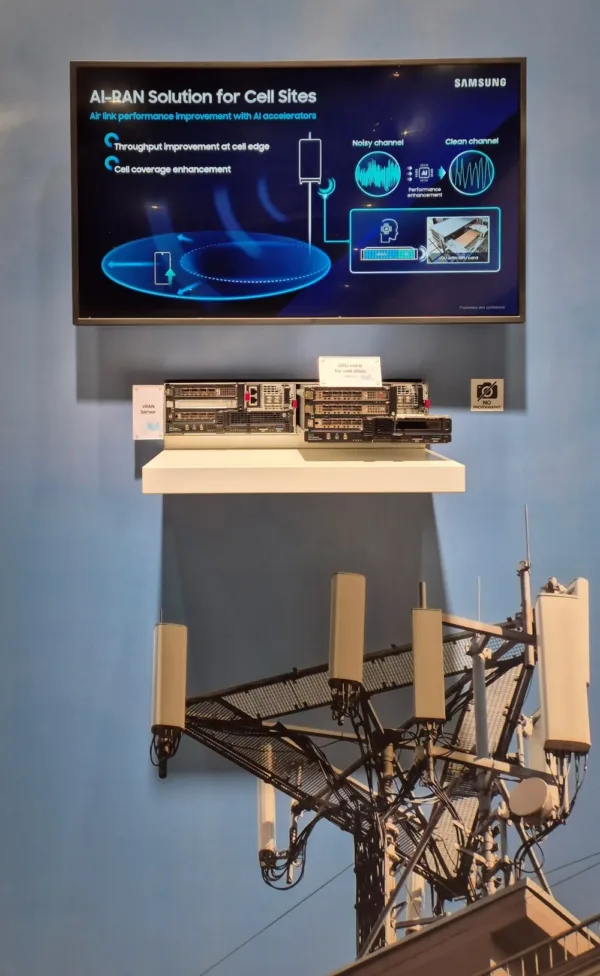
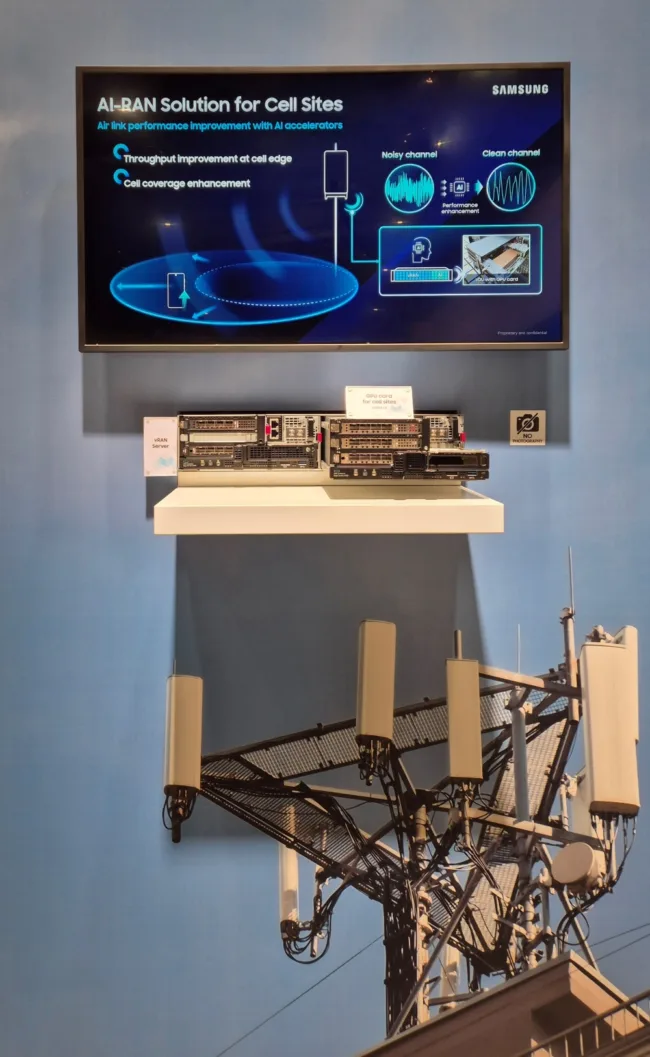
At Mobile World Congress (MWC) 2025, Samsung showcased its latest AI-RAN innovations, presenting real-world use cases of AI integration in telecom networks. The company successfully demonstrated interoperability between its O-RAN-compliant vRAN and NVIDIA’s AI computing platform, marking a critical milestone in its AI-powered network transformation strategy.
How Is Samsung Integrating AI Into RAN With NVIDIA?
Samsung has been working on AI-driven RAN technology since early 2024, focusing on enhancing virtualized network capabilities through machine learning and accelerated computing. The company’s latest breakthrough took place at Samsung Research’s laboratory, where it successfully validated how NVIDIA’s computing platform can be seamlessly integrated with Samsung’s vRAN software. By incorporating AI into software-defined networks, Samsung is improving network automation, resource allocation, and overall performance optimization.
This technological advancement allows Samsung to deploy its virtualized Distributed Unit (vDU) on commercial-off-the-shelf (COTS) servers, running NVIDIA’s Grace CPU and GPU-based AI platform. This innovation enables mobile operators to scale AI-RAN deployments efficiently, adapting network configurations for rural, suburban, and dense urban environments.
What AI-RAN Innovations Did Samsung Showcase at MWC 2025?
At MWC 2025, Samsung demonstrated two AI-driven solutions developed in collaboration with NVIDIA and other members of the AI-RAN Alliance. These advancements illustrate the potential of AI in enhancing network operations and improving spectrum efficiency.
One demonstration focused on AI-based physical uplink shared channel (PUSCH) estimation, which optimizes network transmission by dynamically adjusting radio signals based on AI-driven predictions. The second showcased non-uniform modulation techniques, which improve spectral efficiency by adjusting modulation levels in real time. These breakthroughs highlight Samsung’s leadership in AI-RAN development, reinforcing its position at the forefront of AI-powered network evolution.
How Is Samsung Shaping the Future of AI in Mobile Networks?
Samsung’s deep involvement in the AI-RAN Alliance, established in 2024, has played a pivotal role in accelerating AI adoption in telecom networks. As an elected Vice Chair of the Board of Directors and leader of Working Group #3 (AI-on-RAN), Samsung is actively driving industry-wide discussions on AI-powered RAN solutions. The company is collaborating with academic institutions and technology leaders to explore new AI applications in mobile networks, ensuring that AI-driven automation becomes a core component of future telecom infrastructure.
What Are Industry Experts Saying About AI-RAN Development?
Samsung executives emphasized that AI is reshaping telecommunications, requiring a robust and scalable AI-powered RAN ecosystem. The company’s leadership in virtualized RAN solutions allows operators to build flexible network architectures where AI plays a central role in optimizing performance, efficiency, and automation.
Representatives from NVIDIA’s telecom division also noted that AI-RAN technology is critical for improving network utilization, reducing latency, and enabling new AI-driven services. The integration of NVIDIA’s AI computing capabilities into Samsung’s vRAN software is expected to accelerate the transition toward AI-native wireless networks, unlocking new possibilities for telecom operators worldwide.
Why Is Samsung’s AI-RAN Strategy a Game-Changer for Telecom Networks?
Samsung’s AI-powered network architecture is designed to provide mobile operators with unprecedented flexibility in network deployment and operation. The company’s end-to-end software-based solutions enable seamless AI adoption at every layer of the network, ensuring that operators can enhance service quality while reducing operational complexity.
By integrating AI into RAN, Samsung is creating a data center-like network infrastructure, allowing telecom providers to optimize network performance, automate network management, and introduce AI-driven business models. The ability to repurpose network infrastructure for general computing tasks also opens new opportunities for telecom operators looking to expand beyond traditional mobile services.
How Is Samsung Driving AI Innovation in 5G and Beyond?
Samsung has long been a leader in 5G network solutions, offering a comprehensive portfolio of chipsets, radios, and core network technologies. The company continues to push the boundaries of 5G vRAN, Open RAN, private networks, and AI-powered automation tools, ensuring that mobile operators have access to cutting-edge solutions for enhanced connectivity and network intelligence.
The company’s latest AI-RAN initiatives position it as a key player in defining the future of AI-native mobile networks, setting the stage for widespread AI integration in next-generation telecom infrastructures. As AI continues to revolutionize telecommunications, Samsung and NVIDIA’s partnership is expected to drive further breakthroughs in AI-powered network automation.
Discover more from Business-News-Today.com
Subscribe to get the latest posts sent to your email.