

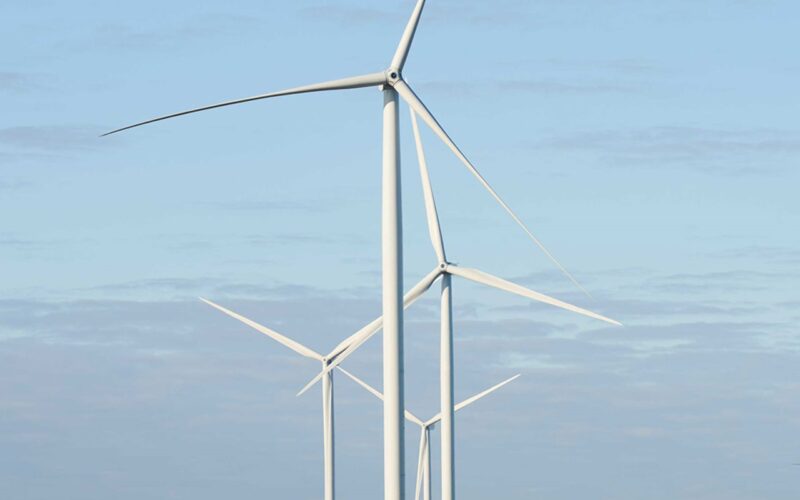
RWE Aktiengesellschaft (XETR: RWE) said on July 15, 2026 that its proposed Theodore Wind Farm in Central Queensland had received Australian federal approval under the Environment Protection and Biodiversity Conservation Act. The 1.1-gigawatt project, estimated to require A$3 billion of investment, would include up to 170 turbines and a battery storage system in Banana Shire. The clearance follows Queensland state development approval in June 2025 and a federal Capacity Investment Scheme contract awarded in May 2026, meaning the project has secured its principal state and federal approvals. RWE now expects construction to begin in 2027, subject to a final investment decision and secondary consents from the local council and other authorities. The central question is therefore no longer whether Theodore can pass its main planning gates, but whether RWE can lock down financing, grid arrangements, procurement and delivery discipline for one of Australia’s largest proposed onshore wind developments.
How does federal EPBC approval change Theodore Wind Farm’s path to a final investment decision?
The federal decision removes a material development risk because the Environment Protection and Biodiversity Conservation process determines whether projects with potential impacts on nationally protected environmental matters can proceed and under what conditions. RWE said the approval contains requirements focused on biodiversity protection and the management of environmental impacts, which the company intends to address through environmental management and monitoring plans.
This is not the same as an unconditional construction authorisation. RWE must still obtain secondary consents involving Banana Shire Council and other authorities, comply with the federal approval conditions and complete the commercial work required to support a final investment decision. Those tasks could influence the final turbine layout, construction sequencing, access infrastructure and environmental mitigation costs.
Theodore Wind Farm is proposed approximately 22 kilometres east of Theodore, 50 kilometres southwest of Biloela and 150 kilometres southwest of Gladstone. The location places it close enough to Central Queensland’s industrial corridor to carry wider economic significance, but it also makes transmission access, workforce accommodation, heavy transport routes and regional contractor capacity important elements of execution.
The latest timeline targets initial operations in 2028 and full operation in 2030. Construction could take up to four years, with staged commissioning potentially allowing some turbines to begin generating before the entire project is complete.
There is also a subtle timing change in RWE’s recent disclosures. When the Capacity Investment Scheme contract was announced in May, the company said construction was expected to begin later in 2026, subject to federal approval and a final investment decision. The July announcement now places the expected start in 2027. RWE has not characterised this as a delay, but the revised wording gives the company more time to complete financing, procurement, environmental planning and secondary approvals.

Why does the Capacity Investment Scheme contract improve the economics of RWE’s A$3 billion project?
Theodore Wind Farm entered the federal approval stage with an important commercial advantage. In May 2026, RWE secured a contract through Tender 7 of Australia’s Capacity Investment Scheme, a mechanism designed to support new electricity generation through an agreed revenue floor and ceiling.
That structure can improve financeability by reducing exposure to unusually weak wholesale electricity prices. It does not eliminate market, construction or operating risk, but it can give lenders and equity investors greater confidence in the project’s minimum revenue characteristics. The ceiling also means the arrangement is not simply an unrestricted subsidy when market revenues are exceptionally strong.
The Australian government’s Tender 7 results identified Theodore Energy Development as the successful proponent for 1,022 megawatts of wind capacity at Camboon in Queensland. RWE describes the broader development as a 1.1-gigawatt wind farm incorporating a battery storage system. The official Tender 7 project list did not allocate hybrid storage capacity to Theodore, indicating that the battery included in the approved development concept should not automatically be treated as part of the underwritten CIS capacity.
RWE has not disclosed the proposed battery’s power rating, energy duration, investment cost or delivery timetable. That leaves an important commercial question open. Storage could improve how the project manages variable output, market prices and grid requirements, but its economics will depend on its size, operating strategy and whether it is delivered alongside the wind farm or through a later investment phase.
Tender 7 selected 19 renewable projects expected to provide 7.8 gigawatts of generation and 7.9 gigawatt-hours of battery storage through hybrid developments. The Australian government estimated that the successful projects could unlock A$17 billion of private investment and create about 19,000 construction jobs. Theodore’s awarded capacity makes it one of the larger projects in the tender, although it will enter construction alongside a substantial national pipeline competing for equipment, workers and network capacity.
What still has to happen before construction can begin at Theodore Wind Farm in 2027?
The final investment decision is the most important remaining corporate milestone. It will indicate that RWE has approved the project’s capital requirements, expected returns, construction plan, revenue arrangements and risk allocation.
The federal clearance materially improves the probability of reaching that decision, but it does not prove that the current A$3 billion budget will remain unchanged. Large wind projects are sensitive to turbine pricing, financing costs, exchange rates, civil works, transmission infrastructure, contractor availability and environmental compliance obligations. Even a revenue-underwriting contract cannot neutralise cost escalation if construction expenses rise faster than expected.
RWE has not used the latest announcement to disclose a turbine supplier, engineering and construction package, detailed financing structure, grid-connection agreement or notice to proceed. Their absence from the announcement does not mean that negotiations are not advanced, but investors still lack the commercial detail needed to assess the standalone return profile.
Secondary consents could cover areas including local roads, traffic management, construction compounds, environmental implementation, workforce arrangements and other site-specific requirements. RWE must also translate the federal conditions into practical controls that can be audited throughout construction and operation.
The company expects a workforce of up to 500 people during peak construction. Mobilising that workforce in a regional market will require accommodation, transport, health and safety systems and coordination with existing businesses. The construction schedule must also account for the movement of turbine blades, towers and other oversized components through regional roads.
The strongest evidence of commercial readiness would therefore be a formal final investment decision accompanied by updated capital expenditure, financing, turbine procurement, grid connection and construction timing. Until then, Theodore remains an advanced development project rather than an asset under construction.
Why could a 1.1-gigawatt wind farm matter to Queensland’s industrial energy transition?
RWE estimates that Theodore Wind Farm could generate enough electricity to supply the equivalent of about 500,000 Queensland homes. Household-equivalent figures provide an accessible measure of scale, but the project’s strategic importance may be broader because of its proximity to the Gladstone region’s industrial base.
Large industrial facilities require dependable electricity supply, while electrification and decarbonisation can increase future demand. Theodore could add a substantial volume of renewable generation to Queensland, although the value ultimately delivered to consumers and industrial users will depend on network availability, transmission congestion, curtailment levels and how effectively variable wind generation is balanced.
The proposed battery could strengthen that role if it is sized to shift meaningful volumes of energy or support the grid during periods of changing supply and demand. However, no detailed battery specification has been disclosed, so it would be premature to assign a quantified reliability or revenue contribution.
Theodore also provides RWE with a route to expand beyond its existing Australian operating base. The company has been active in Australia since 2013 and commissioned the 314-megawatt alternating-current Limondale Solar Farm in New South Wales in 2021. It has also brought the adjacent Limondale battery into full operation, describing it as Australia’s first eight-hour battery energy storage system.
Moving from a large solar asset to a wind development of Theodore’s scale would deepen RWE’s Australian platform and establish a more diversified generation portfolio. Successful delivery could also improve its credibility when competing for future Australian renewable energy and storage opportunities.
The strategic prize is therefore larger than one project. Theodore could become evidence that RWE can transfer its global development, procurement and operating experience into Australia’s rapidly expanding renewables market. Conversely, cost overruns, grid delays or a prolonged final investment process would limit the value of the approval and weaken the project’s ability to serve as a platform for further growth.
How do biodiversity conditions and local delivery commitments shape RWE’s execution risk?
Environmental approval gives RWE permission to advance the project subject to conditions, rather than removing environmental exposure. The development documentation includes ecological assessments and management planning covering vegetation, fauna, birds and bats. These obligations could affect turbine placement, access routes, vegetation clearing, monitoring and rehabilitation.
The project will need to demonstrate that those plans remain effective during construction and operation. Environmental performance can affect regulatory compliance, construction sequencing, local confidence and the cost of maintaining the asset over its planned operating life.
Community acceptance is similarly important. RWE said the project could create as many as 500 construction jobs, approximately 25 operating positions and around 300 indirect jobs over an expected 30-year life. The company also estimates that Theodore Wind Farm could contribute A$500 million to Queensland during construction.
RWE has committed to a Community Benefit Fund worth at least A$500,000 annually once the project enters construction. That would amount to approximately A$17.5 million over the proposed operating period. The company’s separate sponsorship programme has already approved more than A$260,000 for community organisations and events.
These figures are forecasts and commitments rather than economic benefits already realised. Their credibility will depend on local procurement, employment outcomes and transparent delivery over several decades. A project can meet its megawatt target while underperforming against community expectations if benefits are concentrated outside the host region.
This makes local delivery part of the project’s commercial resilience rather than a peripheral public-relations exercise. Effective engagement can reduce disruption and improve access to local suppliers, while unresolved concerns about roads, accommodation, environmental impacts or benefit-sharing can create delays even after major statutory approvals have been secured.
Can RWE finance Theodore Wind Farm while sustaining its wider €35 billion investment programme?
RWE enters the decision with a large earnings base and significant experience financing energy infrastructure. The group reported adjusted EBITDA of €1.63 billion for the first quarter of 2026, up 25% from €1.31 billion a year earlier. Adjusted net income rose to approximately €600 million, while adjusted earnings per share increased to €0.85.
The Onshore Wind and Solar segment generated adjusted EBITDA of €507 million, compared with €496 million in the first quarter of 2025. The modest improvement reflected capacity additions and better European wind conditions, partly offset by currency effects and lower hedged electricity prices.
RWE invested €2.3 billion net during the quarter and expects full-year net investment of between €6 billion and €8 billion. It already had 10.4 gigawatts of capacity under construction at the end of March, showing that Theodore would join an extensive portfolio of projects competing for capital and management attention.
Net debt increased from €10.9 billion at the end of 2025 to €15.6 billion at March 31, 2026, largely because of investment and seasonal operating cash-flow movements. RWE expects leverage to increase significantly from the 2025 level of 2.1 times adjusted EBITDA and has indicated that it is targeting the lower end of a 3.0 to 3.5 range.
The group nevertheless confirmed its 2026 guidance for adjusted EBITDA of between €5.2 billion and €5.8 billion and adjusted net income of €1.55 billion to €2.05 billion. RWE is planning approximately €35 billion of net investment between 2026 and 2031 as it seeks to expand its generation portfolio to 65 gigawatts.
Against that background, Theodore’s A$3 billion cost appears manageable at group level but remains substantial enough to demand capital discipline. The Capacity Investment Scheme contract may support financing, yet RWE still has to determine whether the project’s expected return competes successfully with other wind, solar, storage and grid opportunities in its global pipeline.
The final investment decision should reveal whether RWE funds Theodore entirely on its own, introduces a partner or uses project-level financing. RWE has not disclosed its intended equity contribution, financing mix or standalone return expectations, leaving investors unable to calculate the project’s potential earnings contribution.
What does RWE’s share-price performance reveal about investor sentiment after the approval?
RWE shares traded at approximately €55.39 on July 16, down 2.34% from the previous close of €56.72. The price was about 1.2% below its July 10 close but approximately 0.8% above its June 16 close, indicating that the stock had been broadly range-bound over the preceding month.
Theodore’s approval did not produce an obvious positive rerating. It would be misleading, however, to attribute the session’s decline directly to the announcement because RWE is a diversified group and the broader German market was also weaker.
The shares remained approximately 10.7% below their 52-week high of €62 but about 64% above the 52-week low of €33.72. That longer-term recovery indicates considerably stronger sentiment than a year earlier, even as the latest trading suggests that investors require larger financial or operating catalysts before assigning additional value.
RWE’s market capitalisation was around €43 billion at the reference price. At that scale, approval for a development-stage project, even one costing A$3 billion, is unlikely to dominate short-term valuation without an accompanying final investment decision, earnings forecast or quantified return profile.
The market’s neutral-to-cautious response therefore looks proportionate. The approval reduces risk, but value creation will depend on whether RWE can preserve the expected economics through procurement, financing, construction and operation.
Which milestones will show whether Theodore is becoming an operating asset rather than an approved project?
The federal approval has materially improved Theodore Wind Farm’s development position. RWE now holds the principal state and federal approvals and has secured a Capacity Investment Scheme contract that can reduce revenue uncertainty.
What remains unresolved is equally important. RWE must complete secondary consents, meet environmental conditions, finalise the commercial structure and approve the A$3 billion investment. The company must then convert that decision into contracts, site mobilisation, turbine delivery and staged generation.
The next decisive proof point is the final investment decision. A credible announcement would ideally include an updated construction budget, financing structure, turbine supplier, grid arrangements, battery specification and timetable for initial and full operations.
The project thesis would strengthen if RWE confirms construction during 2027 without a material increase in cost or erosion of the expected schedule. It would weaken if the final investment decision moves further out, the budget rises significantly, network constraints intensify or environmental conditions require material redesign.
Theodore has crossed the regulatory threshold that many large renewable projects fail to reach. The commercial test is now whether RWE can turn that approval, and the stability offered by the Capacity Investment Scheme, into an investable project that begins producing electricity from 2028.
What are the key takeaways from RWE’s Theodore Wind Farm federal approval in Queensland?
- RWE’s proposed 1.1-gigawatt Theodore Wind Farm has received Australian federal approval under the Environment Protection and Biodiversity Conservation Act.
- The A$3 billion project has now secured its principal Queensland state and federal approvals, although secondary consents and environmental obligations remain.
- Theodore Wind Farm could include up to 170 turbines and a battery storage system, but RWE has not disclosed the battery’s size or delivery schedule.
- The Capacity Investment Scheme contract provides a revenue floor and ceiling, improving project financeability without removing construction and operating risks.
- RWE now expects construction to begin in 2027, compared with its May disclosure that indicated a possible start later in 2026.
- Initial operations are targeted for 2028, with full operation expected in 2030 after a construction period that could last up to four years.
- The company estimates that the wind farm could power the equivalent of 500,000 Queensland homes and create up to 500 construction jobs.
- RWE’s financial scale supports the project, but rising net debt, a large existing construction portfolio and its €35 billion investment programme increase the importance of capital discipline.
- The next measurable catalyst is a final investment decision supported by updated cost, financing, procurement, grid and construction details.
Discover more from Business-News-Today.com
Subscribe to get the latest posts sent to your email.