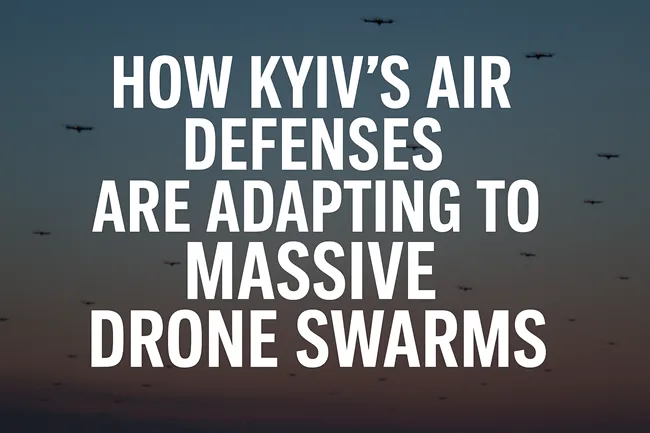



A large Russian missile and drone attack struck Kyiv during the early hours of July 2, 2026, killing at least two people and injuring 16 others as explosions, fires and structural collapses were reported across the Ukrainian capital.
Residential buildings were hit during the overnight barrage, including an apartment block where the first six floors collapsed after a direct strike. Emergency workers searched damaged buildings for residents believed to be trapped, while fires broke out at several locations, including a hotel on the central Shevchenko Boulevard.
Kyiv Mayor Vitali Klitschko said the casualties included emergency medical personnel and drivers at an ambulance station. Residents carrying children, pets and personal belongings crowded into underground metro stations as repeated explosions shook the city and air raid warnings covered much of Ukraine.
Ukrainian President Volodymyr Zelenskyy cut short a visit to Dublin after Ukrainian intelligence warned that Russia was preparing a significant attack. Poland also scrambled fighter aircraft as a precaution, underlining how major strikes on Ukraine can immediately raise security concerns along the eastern border of the North Atlantic Treaty Organization.
What happened during Russia’s July 2 missile and drone attack on Kyiv?
The attack unfolded through the night as waves of drones and missiles approached Kyiv from different directions. Ukrainian officials reported multiple explosions, ballistic missile warnings and fires in residential areas, with damage recorded on both sides of the Dnipro River.
Tymur Tkachenko, head of the Kyiv City Military Administration, said at least two people were killed and 16 were injured. The casualty figures remained provisional while emergency teams searched damaged structures and assessed reports of people trapped beneath debris.
One of the most serious incidents involved a residential building that suffered a direct hit. Vitali Klitschko said floors one through six collapsed, creating a complex rescue operation in which emergency personnel had to enter an unstable structure while fires and continuing air raid alerts complicated access.
Another high-rise residential building suffered a rooftop fire, while a hotel on Shevchenko Boulevard burned during the attack. Images from central Kyiv showed flames rising above the city skyline as firefighters worked to prevent the blaze from spreading through surrounding structures.
An ambulance facility was also affected. Vitali Klitschko said paramedics and drivers were among those injured, demonstrating how attacks on urban areas can disrupt the emergency services needed to respond to the same bombardment.
Reports indicated that damage or emergency incidents were recorded across all ten administrative districts of Kyiv. The geographical spread suggested that the attack was not confined to one military or industrial zone but created simultaneous emergencies throughout a city with several million residents.
Why did Volodymyr Zelenskyy cut short his diplomatic visit to Ireland?
Volodymyr Zelenskyy had travelled to Dublin as Ireland began its six-month presidency of the Council of the European Union. The visit was intended to reinforce Ukraine’s diplomatic links with European governments and maintain support for military assistance, sanctions and post-war reconstruction.
However, Volodymyr Zelenskyy said Ukrainian intelligence had detected preparations for a possible large-scale Russian strike. Volodymyr Zelenskyy subsequently shortened the trip and urged Ukrainians to follow air raid warnings, use shelters and take particular care to protect children and family members.
The decision illustrated how the war continues to shape even the highest levels of Ukrainian diplomacy. Foreign visits by Volodymyr Zelenskyy are not only political events but also operational security calculations because a major attack can require the Ukrainian president to return immediately to coordinate with military and emergency authorities.
The timing also carried a wider European dimension. Ireland assumed a prominent role in coordinating the European Union’s legislative agenda at a moment when European governments continue to debate air-defence supplies, financial support for Ukraine and measures intended to increase pressure on Russia.
The Kyiv attack therefore occurred against the background of Ukraine’s effort to keep European attention focused on the war. For the Ukrainian government, the destruction of civilian buildings strengthens its argument that European security assistance cannot be separated from the protection of cities, transport systems and emergency infrastructure.
Russia has repeatedly said its military operations are directed against Ukrainian military and strategic targets and has denied deliberately attacking civilians. Ukraine has made comparable denials regarding its strikes inside Russia. Independent verification of individual wartime targeting claims is frequently difficult.
How did the Kyiv attack expose continuing pressure on Ukraine’s air defences?
The combination of drones, cruise missiles and ballistic missiles presents a layered challenge for Ukrainian air-defence forces. Drones can be launched in large numbers to exhaust interceptors and force defenders to reveal radar positions, while faster missiles can arrive after air-defence resources have already been stretched.
Ballistic missiles pose a particularly serious threat because of their speed and flight characteristics. Systems capable of reliably intercepting such weapons are limited, expensive and dependent on a continuing supply of interceptor missiles from Ukraine’s international partners.
The July 2 attack showed that interception rates alone do not determine civilian safety. Even when Ukrainian forces destroy a large proportion of incoming weapons, missiles, drones or falling debris can still strike apartment blocks, commercial properties and emergency facilities across a densely populated city.
Ukraine has repeatedly asked its partners for additional air-defence systems, including United States-made Patriot batteries and interceptors. The latest damage is likely to reinforce Kyiv’s position that protecting the capital and other major cities requires more launchers, wider radar coverage and a stable supply of missiles rather than occasional emergency transfers.
The attack also demonstrated the importance of Kyiv’s underground transport network. Metro stations again served as shelters for residents who arrived with children, pets, bedding and personal possessions. These stations reduce exposure to blast effects, but long overnight alerts impose psychological, physical and economic costs on the civilian population.
Repeated attacks can interrupt schools, hospitals, businesses, public transport and government operations even when the immediate casualty count remains limited. The strategic pressure is therefore broader than physical destruction because every alert forces the city to suspend normal activity and move people into protected spaces.
Why did Poland scramble fighter aircraft during the Russian attack on Ukraine?
Poland deployed fighter aircraft as a preventive measure while Russia conducted the overnight assault. Such responses are intended to protect Polish airspace and ensure that military aircraft can react quickly if missiles or drones approach the territory of a North Atlantic Treaty Organization member.
Poland shares a long border with Ukraine and has previously increased military readiness during large Russian aerial attacks. The precaution does not necessarily indicate that an object has crossed into Polish territory, but it reflects the reduced response time available when missiles are operating near the alliance’s eastern frontier.
For the North Atlantic Treaty Organization, the central concern is preventing accidental or deliberate spillover from escalating into a confrontation involving member states. Air-defence radars, fighter patrols and coordination centres must distinguish between weapons directed at Ukraine, Ukrainian interceptors and objects that may deviate from their intended route.
Poland’s response also carries a message of deterrence. By placing aircraft in the air, Poland demonstrates that national and allied forces are monitoring the attack and are prepared to defend the country’s airspace.
The incident adds to pressure on European governments to strengthen integrated air defence. Ukraine’s experience has shown that low-cost drones can be combined with advanced missiles to place expensive defensive systems under sustained pressure, a threat that European military planners increasingly view as relevant beyond the Ukrainian battlefield.
The broader consequence is that an attack aimed at Kyiv can activate military procedures hundreds of kilometres away. This means Russia’s campaign against Ukrainian cities continues to influence defence planning, aircraft deployments and public-security calculations throughout Central and Eastern Europe.
How does the Kyiv barrage fit into the expanding exchange of long-range attacks?
The attack occurred as Ukraine intensified long-range strikes on targets inside Russia. Ukrainian operations have increasingly focused on oil refineries, fuel depots, military facilities, logistics centres and other infrastructure considered important to Russia’s war effort.
Reuters reported that Ukrainian attacks had contributed to fuel disruption inside Russia and forced the country to import gasoline from suppliers including India. Russia remains one of the world’s largest oil producers, but damage to refining and distribution infrastructure can create local shortages even when crude production remains substantial.
During the same period as the Kyiv attack, authorities in Russia’s Leningrad region said six Ukrainian drones were intercepted. The region contains major oil refining and export infrastructure and is politically significant because it includes areas associated with Russian President Vladimir Putin.
Authorities in Russia’s Belgorod region separately said a Ukrainian drone struck a home, killing a man and injuring his wife. Reuters said it could not independently verify the casualty accounts issued by Russian and Ukrainian authorities.
The reciprocal strikes reveal an increasingly extensive long-range campaign. Russia retains a much larger missile and drone arsenal and continues to conduct attacks across Ukraine, while Ukraine is attempting to raise the economic and logistical cost of the war by striking assets deeper inside Russia.
This pattern creates a cycle in which each side presents its operations as retaliation or military necessity. Civilian areas remain exposed because military, energy, transport and residential infrastructure often exist close together in major cities and industrial regions.
The exchange also complicates diplomatic efforts. Even when officials discuss negotiations, new attacks can harden political positions, increase public anger and reduce the space available for compromises that could be portrayed domestically as rewarding the opposing side.
What does the Kyiv attack mean for attempts to negotiate an end to the war?
The July 2 attack came after Volodymyr Zelenskyy proposed direct talks with Russian President Vladimir Putin. The Kremlin rejected the proposed meeting, leaving the prospect of high-level negotiations uncertain as the war continues more than four years after Russia’s full-scale invasion began.
For Ukraine, the attack supports the argument that diplomatic proposals must be backed by stronger military protection and continued pressure on Russia. Ukrainian officials have repeatedly warned that negotiations conducted while cities remain vulnerable could allow Russia to improve its position without reducing attacks.
Russia has maintained that any settlement must reflect what it describes as realities on the ground and address its security demands. Ukraine rejects territorial concessions imposed by force and seeks security guarantees strong enough to discourage another invasion.
The result is a negotiation environment in which the parties disagree not only over territory but also over the sequence of a ceasefire, military withdrawals, sanctions relief, security guarantees and the future status of occupied regions.
Large attacks on Kyiv can influence international partners as well. Governments supporting Ukraine must decide whether additional air-defence systems and long-range capabilities would strengthen Ukraine’s negotiating position or increase the risk of a wider confrontation with Russia.
The attack is therefore unlikely to be viewed merely as another overnight bombardment. It represents a test of Ukraine’s urban defences, Europe’s willingness to sustain military assistance and the credibility of diplomatic efforts that have not yet produced a durable reduction in hostilities.
What are the key takeaways from Russia’s July 2 missile and drone attack on Kyiv?
- At least two people were killed and 16 were injured after Russian missiles and drones struck Kyiv during the early hours of July 2, 2026, with authorities warning that casualty figures could change as rescue operations continued.
- A direct strike caused the first six floors of an apartment building to collapse, while residents were reportedly trapped in damaged structures and emergency crews worked amid fires, debris and continuing air raid alerts.
- Fires were reported at a hotel on Shevchenko Boulevard and on residential rooftops, while an ambulance facility was damaged and emergency medical personnel and drivers were among those injured during the attack.
- Ukrainian President Volodymyr Zelenskyy shortened a diplomatic visit to Ireland after intelligence indicated that Russia was preparing a large aerial assault and urged residents to follow warnings and use protected shelters.
- Poland scrambled fighter aircraft as a precaution, showing how large attacks against Ukraine can rapidly activate air-defence and surveillance procedures within a neighbouring member of the North Atlantic Treaty Organization.
- The combination of drones and ballistic missiles placed renewed attention on Ukraine’s limited air-defence capacity and its continuing requests for additional Patriot systems, interceptors and radar coverage from international partners.
- The Kyiv barrage occurred alongside Ukrainian attacks inside Russia, including drone activity reported in the Leningrad and Belgorod regions, illustrating the widening geographical scope of long-range operations conducted by both sides.
- The attack further weakened the immediate prospects for diplomacy after Volodymyr Zelenskyy proposed talks with Vladimir Putin and the Kremlin rejected the initiative, leaving the war’s central territorial and security disputes unresolved.
Discover more from Business-News-Today.com
Subscribe to get the latest posts sent to your email.