



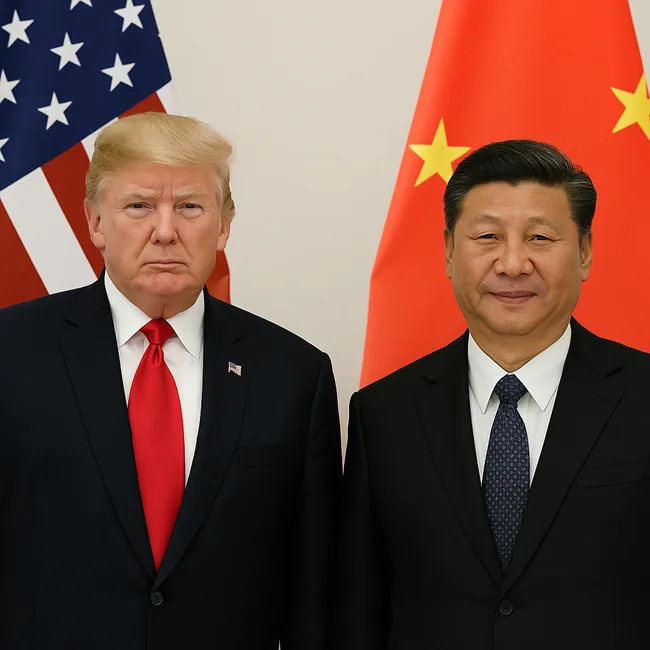


The Indian rupee weakened sharply past ₹87 to the U.S. dollar on July 30, 2025, after U.S. President Donald Trump’s announcement of a 25 percent tariff on Indian imports starting August 1 sent shockwaves through financial markets. The tariff move, which also included unspecified penalties related to India’s continued purchase of Russian oil and defense hardware, triggered immediate selling pressure on Indian assets and heightened concerns about imported inflation.
Spot rupee quotes touched intraday lows around 87.11 as foreign portfolio outflows accelerated, while traders reported intermittent dollar sales through state-run banks—likely on behalf of the Reserve Bank of India (RBI)—to curb disorderly conditions. The intervention was described as measured and designed to smooth volatility rather than defend a fixed level.
How severe is the rupee’s breach of ₹87 per dollar and what is visible in terms of RBI presence and market depth?
Traders described a sharp opening move in USD/INR, followed by periods of dollar selling that appeared to be central bank intervention. Market participants noted that the selling pressure was not heavy and seemed aimed at containing volatility rather than holding the rupee at a specific level.
As of mid-session, the rupee was hovering near 87.11 after testing 87.13 earlier in the day. Non-deliverable forwards briefly moved toward 87.80 before stabilizing, suggesting the presence of official support. Broader Asian currencies were largely stable, highlighting that the rupee’s weakness was linked directly to India-specific developments.
Gift Nifty futures, a key offshore sentiment indicator, fell by approximately 170 points in early trade, reflecting a broader risk-off tone across markets.
What near-term actions is the RBI likely to take to balance currency stability and inflation risks?
Market observers expect the RBI to continue its typical approach of using foreign exchange reserves to smooth sharp moves in the rupee. Intervention is likely to remain measured and dependent on the pace of market outflows.
The next Monetary Policy Committee (MPC) meeting, scheduled for August 4–6, offers policymakers a chance to adjust guidance if the currency’s weakness raises concerns about imported inflation. Analysts believe the central bank will avoid signaling any firm exchange rate target and instead focus on maintaining orderly market conditions.
How are foreign portfolio investors and equities responding, and what does that mean for the rupee?
Foreign portfolio investors (FPIs) have stepped up selling in the equity market following the tariff announcement. Provisional exchange data indicated that FPIs sold more than ₹46 billion ($530 million) in equities on Tuesday alone, adding to already substantial outflows for the month.
This surge in outflows increased demand for dollars onshore, putting additional pressure on the rupee. Market participants also observed heavier selling in sectors such as financials and exporters, while equity market breadth narrowed sharply.
The broader equity market remains cautious as the August 1 tariff effective date approaches. Persistent FPI selling could force the RBI to increase intervention efforts to prevent excessive volatility.
What impact could rupee weakness have on inflation and the RBI’s policy stance heading into the August MPC meeting?
Economists note that a weaker rupee can raise the cost of imports, leading to upward pressure on inflation. Historical estimates suggest that a 5 percent depreciation in the rupee can add approximately 30 to 35 basis points to headline inflation over the following quarters.
If the rupee stabilizes quickly, the impact on inflation is likely to be limited. However, a prolonged move above 87 to the dollar would keep imported cost pressures in focus, particularly for energy and other essential commodities.
The RBI is expected to factor this into its deliberations at the upcoming MPC meeting, where any further rise in inflation expectations could limit its ability to support growth through policy easing.
What factors will determine the rupee’s trajectory and the RBI’s strategy over the coming week?
The outlook for the rupee will depend largely on three factors. The first is the RBI’s daily presence in the market: traders will be watching for signs of consistent intervention aimed at curbing excessive volatility. The second is the behavior of foreign portfolio investors: continued outflows would increase dollar demand and pressure the rupee further. The third is the central bank’s guidance at the August MPC meeting, which could influence market expectations on the balance between currency stability and inflation control.
Market observers emphasize that the RBI is likely to maintain a flexible approach, intervening when necessary but avoiding any commitment to a fixed level that could encourage speculation.
How much of the rupee’s weakness is tariffs-driven versus broader macro positioning, and what baseline for volatility should markets expect if tariffs persist?
While the trigger for the rupee’s weakness was the U.S. tariff announcement, broader macro positioning also contributed. Global investors had already been reducing exposure to Indian assets ahead of the earnings season, and the tariff headlines accelerated this trend.
If the tariffs remain in place without signs of de-escalation, analysts expect higher volatility in USD/INR and closer correlations with daily foreign investor flows. This scenario would likely prompt the RBI to continue its incremental intervention strategy to avoid destabilizing moves in the currency.
Why the RBI’s measured response could shape currency stability in the coming weeks
The RBI’s approach of smoothing sharp moves without defending a specific level has historically been effective in maintaining confidence during episodes of stress. By using foreign exchange reserves judiciously, the central bank can keep markets orderly without sending signals that could encourage one-way speculation.
Market strategists suggest that this approach is the most appropriate in the current context, given the external nature of the shock and the importance of preserving credibility. Policymakers are expected to maintain this stance into the August MPC meeting, where the balance between containing inflation risks and supporting growth will be closely scrutinized.
Discover more from Business-News-Today.com
Subscribe to get the latest posts sent to your email.


