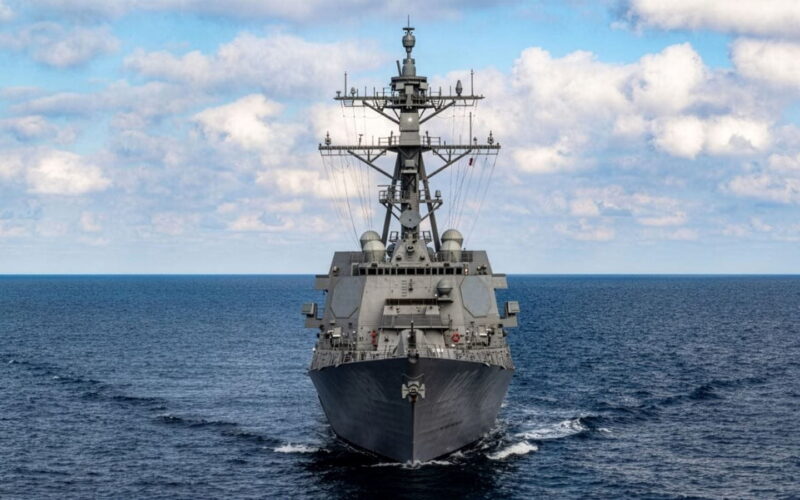
RTX Corporation, listed on the New York Stock Exchange as RTX, has secured a $1.8 billion U.S. Navy contract extension through its Raytheon business for hardware production and sustainment of the SPY-6 family of radars. The award builds on the original 2022 production and sustainment contract and could take cumulative programme value to $3.3 billion if options are exercised. The radar family is now installed or being tested across multiple U.S. Navy ship classes, making SPY-6 one of the most important sensor-modernisation programmes in the American surface fleet. RTX has invested more than $800 million to modernise radar manufacturing capacity and expects to double SPY-6 output by 2028. With RTX shares trading close to a 52-week high after strong second-quarter results, the SPY-6 award strengthens the market view that naval sensors, air defence and missile systems are becoming core drivers of Raytheon’s defence growth.
The contract extension is not only about equipping individual ships with better radars. It reflects a structural shift in naval warfare, where detection range, discrimination quality, electronic resilience, software upgradeability and production scale increasingly determine fleet survivability. Missiles, drones, hypersonic threats and electronic warfare are forcing navies to treat radar capacity as industrial infrastructure, not simply shipboard equipment.
Why does RTX’s $1.8 billion SPY-6 contract extension matter for U.S. Navy modernisation?
The SPY-6 award matters because the U.S. Navy is moving from selective deployment of advanced radar to fleet-wide sensor standardisation. SPY-6 is expected to be installed on more than 50 U.S. Navy ships over the next decade, spanning destroyers, amphibious ships, aircraft carriers and frigates. That gives RTX a long production runway in one of the most critical areas of naval modernisation.
The $1.8 billion extension also indicates that the programme has moved beyond early validation into industrial scaling. Prototype success is useful, but a ship radar becomes strategically valuable only when it can be manufactured repeatedly, installed across different classes and sustained through long service lives. The Navy’s confidence is therefore being expressed not only through testing, but through procurement depth.
The options element is important. If exercised, the cumulative value of the original production and sustainment framework and the extension could reach $3.3 billion. That does not mean RTX can recognise all of that value immediately, but it does signal that the Navy is building a multi-year procurement architecture rather than issuing isolated radar orders.
The contract also improves revenue visibility for Raytheon at a time when defence demand is rising across missiles, radars, air defence and naval systems. RTX’s Raytheon business reported strong second-quarter growth, supported by Patriot, Standard Missile, AMRAAM and naval programmes. SPY-6 adds another platform-linked growth pillar in a segment already benefiting from replenishment and modernisation demand.
For the U.S. Navy, the strategic value is operational. A ship that can detect threats earlier and track them more accurately can make better engagement decisions, preserve interceptors and improve fleet-level coordination. In a contested maritime environment, radar performance can be the difference between engaging the threat on the fleet’s terms and reacting too late.

How does SPY-6 change the economics and architecture of naval radar procurement?
SPY-6 is built around a modular radar architecture that uses radar modular assemblies. This allows the U.S. Navy and RTX to scale radar size and sensitivity across different ship classes while using common technology building blocks. That matters commercially because it can support manufacturing efficiency, shared upgrades and common sustainment practices.
A modular family approach is more attractive than a bespoke radar for every vessel. Each ship class may require a different array size, power profile or integration path, but using a common technology base reduces fragmentation. For RTX, this means production investments can support multiple variants rather than one narrow product line.
The architecture also creates life-cycle value. Once SPY-6 is installed across a large portion of the fleet, future software, processing, sustainment and hardware refreshes can become recurring revenue opportunities. The initial radar sale is only the entry point. Long-term value comes from maintaining, upgrading and adapting the system as threats evolve.
This is why the sustainment element of the contract matters. Naval radars must operate in harsh maritime conditions, integrate with combat systems and remain available during long deployments. Sustainment revenue can be less headline-friendly than production revenue, but it is essential to fleet readiness and can improve programme durability for the supplier.
The risk is that commonality also concentrates responsibility. If one supplier’s production line or subsystem base becomes constrained, the Navy’s fleet-wide radar plan can be affected. RTX’s manufacturing investments are therefore not just a corporate expansion decision. They are part of the Navy’s broader risk management strategy.
Why is radar manufacturing capacity becoming a strategic issue for RTX and the U.S. Navy?
RTX has invested more than $800 million to modernise radar manufacturing facilities and expand production capacity. The company expects to double SPY-6 output by 2028, which is one of the most important operational claims attached to the programme.
That production ramp is strategically significant because radar demand is rising faster than legacy manufacturing models were designed to support. Surface ships need advanced radar to detect cruise missiles, ballistic threats, aircraft, drones and sea-skimming targets. The technology also has to handle cluttered environments, electronic attack and increasingly complex threat profiles.
Scaling production is difficult because modern radar systems depend on specialised electronics, gallium nitride components, power systems, cooling, signal processing, software and rigorous testing. A radar factory is not just an assembly hall. It is a high-precision electronics and systems-integration environment.
The bottleneck risk is real. Even if RTX has the prime contract and facility investment, supplier capacity can still constrain deliveries. Semiconductors, high-frequency electronics, thermal-management components and test equipment may all require qualified suppliers with defence-grade reliability.
For investors, this is where the contract becomes more than backlog. The value of the award depends on whether RTX can convert demand into production without margin damage. Higher output can improve absorption and scale economics, but rapid expansion can also create overtime, rework, supplier premiums and quality-control pressure.
For the Navy, manufacturing capacity affects readiness planning. If ships enter construction or modernisation windows before radar hardware is ready, installation schedules can slip. A radar delay can become a ship-delivery problem, which is why production scale now carries strategic weight.
How does SPY-6 fit into the U.S. Navy’s layered defence against missiles, aircraft and drones?
The U.S. Navy faces a more complicated threat environment than it did when earlier radar systems were designed. Ships must be prepared to detect and track ballistic missiles, cruise missiles, aircraft, drones, surface threats and electronic decoys, often in dense and contested environments.
SPY-6 is designed to improve sensitivity, discrimination and multi-mission performance. Greater sensitivity allows the radar to detect smaller or more distant targets. Better discrimination helps operators and combat systems distinguish real threats from clutter, decoys or non-threatening objects.
That matters because modern defence is not only about seeing more objects. It is about understanding which objects deserve a response. A ship has limited interceptors and limited time. False alarms waste attention and resources, while missed detections can be catastrophic.
SPY-6 also supports the Navy’s broader integrated air and missile defence architecture. A ship equipped with a stronger radar can contribute more effectively to fleet-wide tracking and engagement decisions. The radar becomes part of a network rather than a standalone sensor.
This is commercially important for RTX because the company also participates in missile, interceptor and air-defence systems. Strong radar performance can reinforce the value of weapons such as Standard Missile systems and other layered defence tools. The better the sensor layer, the more effective the shooter layer can become.
The drone angle is increasingly relevant. Small unmanned aircraft can be difficult to detect and classify, especially near land, ships, weather clutter or other objects. Naval radars must adapt to this lower-cost threat without losing focus on larger missile and aircraft threats. SPY-6’s scalability and software upgrade path are therefore central to its future relevance.
What does the award mean for Raytheon’s defence growth inside RTX?
Raytheon is becoming a major growth engine within RTX’s defence and aerospace portfolio. In the second quarter of 2026, Raytheon sales rose 18% to $8.27 billion, helped by demand for air and missile defence systems, naval programmes, Patriot, Standard Missile and AMRAAM. That performance came as RTX raised its 2026 guidance and reported a total backlog of $289 billion, including $119 billion in defence.
SPY-6 fits directly into this stronger Raytheon narrative. It is a mature, high-priority U.S. Navy programme with a long deployment runway, substantial sustainment demand and manufacturing scale potential. That profile is attractive because investors generally prefer production and sustainment programmes over high-risk development awards.
The award also helps diversify Raytheon’s defence growth. Missiles and air-defence interceptors have attracted much of the attention because governments are replenishing stockpiles and increasing demand for Patriot, Standard Missile and AMRAAM. SPY-6 adds a naval sensor pillar that is less dependent on munitions consumption and more tied to fleet modernisation.
That balance matters. A defence business built only on missiles can benefit from urgent demand but may face capacity constraints and political sensitivity around conflict-driven orders. A radar and naval-systems franchise offers a different kind of visibility, linked to ship construction, modernisation and through-life support.
The challenge for RTX is execution across all of these demand lanes at once. Raytheon is expanding in air defence, naval radars, missiles, space and integrated sensors. Demand is not the limiting factor right now. Production discipline, supplier readiness and margin protection are the real tests.
Why is SPY-6 important for destroyers, frigates, aircraft carriers and amphibious ships?
SPY-6 is not a one-ship-class radar. The U.S. Navy plans to deploy variants across multiple ship types, including Arleigh Burke-class destroyers, Constellation-class frigates, aircraft carriers and amphibious ships. That breadth is strategically and commercially important.
For destroyers, radar performance is central to air and missile defence. These ships often serve as key nodes in fleet protection, ballistic missile defence and maritime strike operations. A more capable radar can improve their ability to detect, track and support engagements against advanced threats.
For frigates, SPY-6 provides a modern sensor baseline for ships intended to expand distributed naval presence. Frigates may operate independently or as part of larger formations, making reliable multi-mission sensing essential.
For aircraft carriers and amphibious ships, radar upgrades can improve protection of high-value vessels carrying aircraft, Marines, command capabilities and logistics capacity. These ships are attractive targets, so their defensive sensing architecture matters even when escorts provide additional protection.
Deploying a common radar family across varied platforms can simplify training, sustainment and software upgrades. It can also allow the Navy to improve fleet-wide capability incrementally as new radar software and processing enhancements become available.
The industrial benefit for RTX is that ship-class diversity reduces reliance on a single procurement line. If one shipbuilding programme slows, another modernisation or new-build programme may continue generating demand. That does not eliminate risk, but it reduces dependence on one platform schedule.
How does the SPY-6 contract affect competition in naval radar and defence electronics?
The SPY-6 extension strengthens RTX’s position in U.S. naval radar against competitors such as Lockheed Martin Corporation, Northrop Grumman Corporation, BAE Systems plc and European electronics suppliers. Naval radar is a strategically protected market where technical performance, integration history and customer trust are decisive.
RTX’s advantage lies in having the U.S. Navy’s selected radar family for a broad fleet-modernisation effort. Once a radar is embedded across multiple ship classes, the incumbent benefits from training, sustainment, software, spares and future upgrade pathways.
However, the competitive battle is not over. Future naval sensors may integrate more artificial intelligence, electronic warfare, passive sensing, distributed apertures and space-based data. Competing suppliers can still win related work in combat systems, electronic warfare, infrared search and track, data fusion and future radar upgrades.
There is also international potential, although SPY-6 exports would be controlled by U.S. government approvals and ship integration requirements. Allied navies may want similar capabilities, particularly countries operating Aegis-equipped ships or working closely with the U.S. Navy.
The export case will depend on cost, technology-release policy and national shipbuilding plans. Some allies may choose domestic or European radar alternatives for sovereignty reasons, while others may value U.S. interoperability.
For RTX, the U.S. Navy programme remains the anchor. International demand would be attractive upside, but the main commercial priority is delivering on the domestic ramp while controlling cost and schedule.
Why is RTX stock trading close to its 52-week high after the SPY-6 award and Q2 results?
RTX traded around $215.64 on July 29, close to its 52-week high of approximately $220.39 and far above its 52-week low of about $150.61. The stock has benefited from a combination of commercial aerospace recovery, defence demand and improved investor confidence after the company raised its 2026 outlook.
The SPY-6 award alone is not large enough to explain RTX’s market strength. RTX’s market capitalisation is roughly $291 billion, and the company’s total backlog is far larger than the radar contract. The award matters because it reinforces a broader pattern investors already like: defence electronics, missile systems and naval programmes are converting into funded growth.
RTX’s second-quarter update provided the larger catalyst. The company raised its 2026 sales and profit guidance, reported a $289 billion backlog and showed double-digit Raytheon growth. That combination supports the view that demand is robust across both commercial aerospace and defence.
The valuation context is important. Trading near a 52-week high means the market is giving RTX credit for execution before every production risk has disappeared. Investors will expect backlog conversion, margin expansion and continued cash generation.
Raytheon’s strong performance helps offset some historical concerns around RTX, including Pratt & Whitney engine issues and supply-chain pressure. However, those risks have not vanished. RTX remains a complex aerospace and defence group with large commercial and military operating commitments.
The SPY-6 award strengthens the defence side of the thesis, but the stock’s next move will likely depend on whether RTX can deliver across all three segments without production bottlenecks or margin disappointments.
What execution risks could affect RTX’s SPY-6 production and sustainment programme?
The first risk is production ramp complexity. Doubling output by 2028 requires not only more factory capacity but also qualified suppliers, test equipment, engineering support and workforce growth.
The second risk is integration across ship classes. A radar family can use common technology, but each ship type has different space, power, cooling, combat-system and installation requirements. Managing those differences without schedule disruption is essential.
The third risk is cost discipline. High-demand defence electronics can face component inflation, supplier premiums and labour constraints. A large contract does not automatically guarantee attractive margins.
The fourth risk is technology evolution. Threats are changing quickly, especially hypersonic glide vehicles, low-observable missiles, drone swarms and electronic attack. SPY-6 must remain upgradeable if it is to stay relevant across decades of fleet service.
The fifth risk is Navy shipbuilding schedules. Radar production is tied partly to ship construction and modernisation timing. Delays in shipyards can affect installation cadence, while radar delays can affect ship readiness.
The sixth risk is sustainment performance. Once deployed across the fleet, SPY-6 must achieve high availability in operational conditions. Reliability, spares availability and software support will become as important as initial production.
RTX has the technical base and investment plan to manage these risks, but the scale of the programme leaves little room for complacency. The Navy is not buying only radar hardware. It is buying confidence that RTX can keep the fleet’s sensing layer ahead of the threat.
What should investors and defence suppliers watch after RTX’s SPY-6 contract extension?
The first indicator will be production milestones. RTX’s plan to double SPY-6 output by 2028 should be watched closely, especially facility utilisation, workforce additions and supplier announcements.
The second indicator will be ship-installation progress. SPY-6 is aboard two commissioned ships and installed on 11 others in different testing stages. Movement from installation to operational service will be a critical validation point.
The third indicator will be option exercise. The contract framework could reach $3.3 billion cumulatively if options are exercised, but investors should track actual funded orders and revenue conversion.
The fourth indicator will be Raytheon margins. Strong defence sales are valuable only if RTX converts them into operating profit. A production ramp that erodes margin would weaken the investment case.
The fifth indicator will be international interest. Allied naval radar opportunities could expand the SPY-6 market, but export controls and competition will shape the addressable opportunity.
The sixth indicator will be software and threat-upgrade cadence. A radar designed for decades of service must be upgraded continuously as threat profiles evolve. Investors should watch whether RTX turns that requirement into recurring software, processing and sustainment revenue.
RTX has secured a major extension for a radar programme that sits at the centre of U.S. naval modernisation. The contract supports revenue visibility, manufacturing scale and Raytheon’s defence-growth profile. The next test is whether RTX can turn the Navy’s confidence into repeatable factory output, shipboard availability and margin-protected growth.
Key takeaways on RTX’s $1.8 billion SPY-6 radar contract extension
- RTX’s Raytheon business has received a $1.8 billion U.S. Navy contract extension for SPY-6 radar hardware production and sustainment.
- Options could raise cumulative programme value to $3.3 billion under the broader production and sustainment framework.
- SPY-6 is now aboard two commissioned U.S. Navy ships and installed on 11 more undergoing testing.
- The radar family is expected to be deployed on more than 50 U.S. Navy ships over the next decade.
- RTX has invested more than $800 million to modernise radar manufacturing and expects to double SPY-6 output by 2028.
- The award strengthens Raytheon’s defence growth profile, alongside Patriot, Standard Missile and AMRAAM demand.
- RTX reported a $289 billion total backlog in Q2 2026, including $119 billion in defence backlog.
- RTX shares traded close to their 52-week high after Q2 results and raised 2026 guidance strengthened investor sentiment.
- The main execution risks are supplier capacity, ship integration, cost control, testing schedules and long-term sustainment performance.
- Investors should monitor SPY-6 production milestones, funded option exercise, Raytheon margins and international naval radar opportunities.
Discover more from Business-News-Today.com
Subscribe to get the latest posts sent to your email.