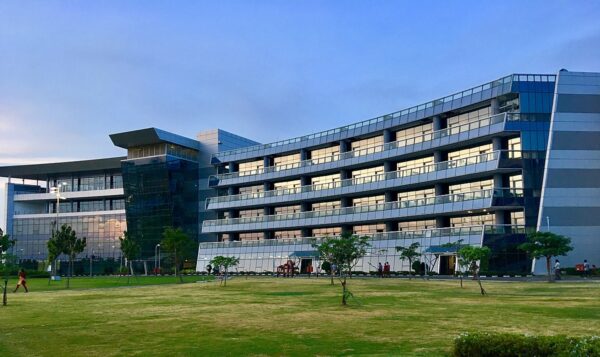

India’s Defence Minister Rajnath Singh issued a strongly worded statement on October 18, 2025, declaring that every inch of Pakistan’s territory now lies within range of India’s homegrown BrahMos missile system. While inaugurating the BrahMos Aerospace missile integration facility in Sarojini Nagar, Lucknow, Singh referred to the recently executed Operation Sindoor as merely a “trailer” — implying that it was only a fraction of India’s true capability.
The statement was not merely rhetorical. Coming during the commissioning of a state-of-the-art missile assembly facility, it was timed to underline the shift in India’s missile deployment posture and its ability to rapidly manufacture and deploy strategic weapons systems. Singh’s comments serve as a reminder that India’s conventional strike capabilities are growing not only in volume but also in geographic scope, with implications for regional deterrence, conflict escalation thresholds, and South Asia’s defence equilibrium.
While Singh did not directly link the statement to any immediate conflict or provocation, his phrasing — notably the assertion that “what was seen in Operation Sindoor was only a trailer” — strongly implied that India is prepared to go further, both in operational depth and strategic clarity. He also noted that Pakistan’s creation itself was a result of India’s historical decisions, saying that “when we can create Pakistan, you can understand what we can do next,” a statement that was met with cheers from the audience present.
What did Rajnath Singh mean by calling Operation Sindoor “just a trailer”?
Singh’s reference to Operation Sindoor — a recent, undisclosed precision military operation conducted near the Pakistan border — has drawn intense scrutiny. Although official details on the operation remain limited, it is widely believed to have demonstrated India’s cross-border strike capabilities using advanced systems like BrahMos and other surveillance and precision-guidance tools. Singh referred to the operation as one that “made every Indian proud” and proved India’s strategic superiority.
By calling it “just a trailer,” the minister may be signalling that India possesses far more robust strike options and readiness than it revealed during Sindoor. His comments are also part of a broader narrative intended to reassure domestic audiences while serving as a warning to adversaries.
This messaging strategy is not new. It echoes India’s rhetoric post the Balakot airstrikes in 2019 and the surgical strikes in 2016. The difference now, however, lies in the emphasis on indigenisation and industrial scale — not just tactical deterrence, but the long-term ability to repeat, scale, and diversify missile-led responses.
How does BrahMos missile deployment enhance India’s deterrence posture?
BrahMos is one of the world’s fastest supersonic cruise missiles, capable of speeds around Mach 2.8 to Mach 3.0. Developed jointly by India’s Defence Research and Development Organisation (DRDO) and Russia’s NPO Mashinostroyenia, the missile has evolved from a conventional platform into a multi-platform weapon system. It can be launched from land, air, sea, and submarine platforms, with a growing range of variants.
The version being produced in Lucknow is part of a broader initiative to localize not just integration but the entire supply chain. The defence corridor in Uttar Pradesh has been a pet project of the government, and the BrahMos facility is among the most high-profile developments in that region.
Singh’s announcement that the entire territory of Pakistan is now within range suggests that India has extended the missile’s operational radius through newer variants, potentially crossing the earlier 290 km cap that was removed after India’s entry into the Missile Technology Control Regime (MTCR) in 2016. Newer versions of BrahMos are believed to have ranges between 450 and 800 km, with further enhancements in development. This expanded range puts strategic installations deep within Pakistan in theoretical reach.
Why is the Lucknow facility significant in the larger defence manufacturing push?
The BrahMos Aerospace facility inaugurated in Sarojini Nagar is designed to produce 80–100 missile systems per year at full capacity. Set up on nearly 200 acres of land, the facility represents a major investment in domestic manufacturing, logistics capability, and technological self-reliance. The project is part of the Uttar Pradesh Defence Corridor, which has been positioned as a hub for Make in India military projects.
Singh hailed the facility as a symbol of Atmanirbhar Bharat in defence and as proof that India is no longer dependent on foreign platforms for critical military capabilities. This is important not only from a strategic point of view but also for export ambitions. Several Southeast Asian countries have expressed interest in acquiring BrahMos missiles, including the Philippines, which has already signed a deal. Expanding domestic production will be crucial to meeting both Indian and export requirements.
The symbolism of manufacturing advanced missiles in India’s most populous state also reinforces the government’s political messaging — bringing high-tech jobs to the heartland and reshaping India’s industrial geography beyond traditional defence clusters like Hyderabad and Bangalore.
What are the geopolitical implications of Singh’s “every inch of Pakistan” warning?
Singh’s remarks may have multiple cascading effects in South Asia and beyond. First, it solidifies India’s public messaging about credible conventional deterrence — the idea that Pakistan cannot assume a lack of response to provocations along the Line of Control or in the terror domain.
Second, the language used is unusually explicit. In defence communications, a statement that “every inch of Pakistan is within range” leaves little ambiguity and moves the deterrence doctrine into overt strategic signalling. It also raises the question of whether India is actively pursuing a posture of “proactive deterrence,” where visible deployment and manufacturing capabilities are part of the psychological toolkit.
Third, Pakistan is likely to respond, at least rhetorically. Past statements from India’s political leadership have often resulted in diplomatic pushback or military escalation on Pakistan’s side. Singh’s reference to “creating Pakistan” may also be viewed as inflammatory in diplomatic circles, with Islamabad expected to lodge formal objections or issue counter-warnings.
Additionally, Singh’s speech may impact India’s relations with third-party defence partners and global arms buyers. As India positions BrahMos as an export product, its deployment posture and geopolitical signalling will be closely watched by prospective buyers and regional allies. Countries like Vietnam and Indonesia — potential buyers of BrahMos — will be evaluating both the missile’s technical parameters and the strategic baggage it may carry.
How does this fit into India’s broader military narrative?
India’s doctrine has steadily shifted over the past decade from a “no first use, minimal credible deterrent” model to one that increasingly includes surgical strike capabilities, hybrid warfare deterrence, and a visible technological edge. Singh’s statements are emblematic of this evolution. What was once a relatively defensive strategic posture has now become more assertive — especially in the conventional space.
BrahMos is central to this strategy. It’s fast, accurate, versatile, and increasingly indigenous. Its integration across the Army, Navy, and Air Force makes it a true tri-service asset. What Singh has now done is connect the dots between the hardware and the messaging — explicitly stating what the system is capable of and against whom it is potentially directed.
The timing is also noteworthy. Coming just ahead of key regional summits and amid global realignments post-Russia–Ukraine and Israel–Hamas conflicts, India is likely reminding the world of its own readiness posture, while affirming that it is no longer willing to sit back passively in the face of provocation.
From an institutional sentiment perspective, this moment also underscores the government’s growing confidence in its military-industrial complex. With the defence sector opening up to private participation, IPOs, and joint ventures, BrahMos and similar projects could become bellwethers for India’s strategic economy.
Key takeaways: What does this moment signify for India’s defence future?
- India’s defence minister Rajnath Singh declared that every inch of Pakistan is within the strike range of BrahMos missiles.
- Operation Sindoor, a recent limited engagement, was described as “just a trailer” of what India can do militarily.
- The new BrahMos integration facility in Lucknow marks a manufacturing milestone in India’s defence corridor strategy.
- Singh’s rhetoric signals a deliberate elevation in India’s deterrence posture and self-reliance in defence.
- Geopolitically, the messaging is aimed at both adversaries and allies — showcasing India’s growing capacity and intent to use it if needed.
- Strategically, it reflects India’s transition from regional balancing to hard-edged signalling backed by industrial capability.
Discover more from Business-News-Today.com
Subscribe to get the latest posts sent to your email.