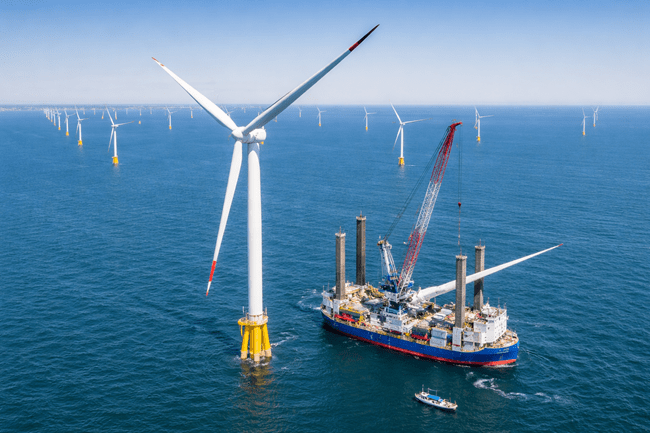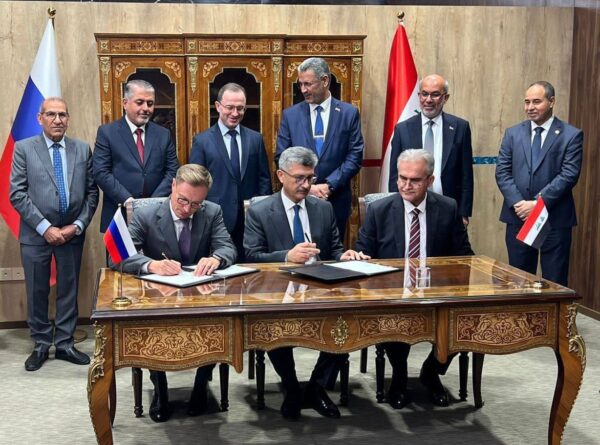

Powerica Limited (NSE: POWERICA; BSE: 544744) has emerged as a winning bidder for a 100MW wind power project in the Solar Energy Corporation of India Limited’s 2,000MW grid-connected wind tender. The electronic reverse auction concluded on 15 July 2026 with a discovered tariff of ₹3.85 per unit, although the formal Letter of Award remains pending. Powerica expects to sign a power purchase agreement with Solar Energy Corporation of India Limited after receiving the award and intends to use its internal engineering capabilities to execute the project. The development follows a separate 50MW Gujarat wind bid secured earlier in July, creating a potentially significant expansion pathway for the company’s higher-margin renewable energy business. The central tension is whether Powerica can convert its rapid tender success into commissioned, cash-generating capacity without weakening tariff discipline or stretching project execution resources.
How significant is the 100MW SECI wind project compared with Powerica’s existing portfolio?
Powerica currently operates 12 wind power projects with combined capacity of 330.85MW. Its existing operational portfolio is supported by long-term fixed-tariff power purchase agreements with Gujarat Urja Vikas Nigam Limited and Solar Energy Corporation of India Limited, generally extending for 25 years. The company has also developed balance-of-plant engineering, procurement and construction experience covering 450.40MW and provides operations and maintenance services across projects totalling 296.50MW.
Viewed against that operating base, the new 100MW SECI allocation is substantial. If it receives the Letter of Award, reaches financial closure and is ultimately commissioned, the project alone would represent capacity equal to just over 30% of Powerica’s present operational wind portfolio.
The strategic picture becomes more significant when the recent Gujarat award is included. Powerica emerged as the successful bidder for a separate 50MW project in Gujarat Urja Vikas Nigam Limited’s tender, with the electronic reverse auction completed on 9 July 2026 at ₹3.51 per unit. Both projects remain subject to formal awards and subsequent power purchase agreements.
Together, the two preferred-bidder outcomes cover 150MW. If both projects become operational and there are no corresponding capacity retirements, Powerica’s operating wind portfolio could rise from 330.85MW to 480.85MW, an expansion of approximately 45%.
That potential increase should not yet be described as commissioned capacity or secured revenue. The company still needs to receive the formal awards, complete contractual documentation, arrange project financing, secure or confirm land and connectivity, procure turbines and balance-of-plant equipment, construct the projects and achieve commercial operation.
The announcement is nevertheless a material strategic signal. Powerica is no longer approaching renewable energy merely as a diversification experiment attached to its diesel generator business. It is increasingly competing for utility-scale projects capable of changing the company’s earnings mix.
Why does a future power purchase agreement with SECI matter for revenue visibility?
The expected power purchase agreement with Solar Energy Corporation of India Limited is important because it would give the project a contracted route to market rather than exposing Powerica entirely to merchant electricity prices.
Contracted renewable projects can provide greater long-term visibility over electricity sales, supporting project-finance discussions and reducing uncertainty around the buyer for generated power. Powerica’s existing wind portfolio already demonstrates this model through fixed-tariff agreements with Solar Energy Corporation of India Limited and Gujarat Urja Vikas Nigam Limited.
However, Powerica did not disclose the proposed tenure, project location, scheduled commissioning date, expected plant load factor or detailed performance obligations for the 100MW project. It would therefore be premature to assume that the economics will mirror those of its existing 25-year contracts.
The timing of the Letter of Award also matters. The company stated that it expects the award within the timelines prescribed by the tender document, but it did not identify a specific date. Until the award arrives and the power purchase agreement is signed, the disclosure represents a successful auction outcome rather than a fully contracted generating asset.
Solar Energy Corporation of India Limited’s role as the tendering agency may improve the project’s commercial visibility, but the power purchase agreement will not remove construction and operating risks. Delays in land access, grid connectivity, turbine delivery, transmission infrastructure or regulatory approvals could affect the date at which revenue begins.
The economic value of the award will therefore depend less on the headline capacity than on Powerica’s ability to move efficiently from auction success to commercial operation.
What does the ₹3.85 tariff reveal about the economics of Powerica’s latest wind bid?
Powerica’s discovered tariff of ₹3.85 per unit is approximately 9.7% higher than the ₹3.51 per unit discovered in its 50MW Gujarat auction. At first glance, the higher tariff may appear to offer more attractive revenue per unit of electricity generated.
The two figures should not be treated as directly comparable project margins. Tender structures can differ in location, wind resource, transmission requirements, commissioning obligations, payment arrangements, land costs, turbine specifications, project scale and counterparty structure. A higher tariff can be accompanied by higher development or construction expenditure.
Powerica has not disclosed the anticipated capital cost, equity commitment, project debt, interest rate, turbine supplier, estimated annual generation or targeted return on equity for the SECI project. Without those details, the ₹3.85 tariff cannot independently establish whether the project will generate returns above the company’s cost of capital.
The reverse-auction format creates another consideration. Competitive bidding rewards developers that can estimate equipment costs, financing requirements, generation assumptions and execution risks with considerable accuracy. A bid that is too conservative may fail to win capacity, while an aggressive bid can create long-term margin pressure because the tariff is locked in while construction and operating costs remain exposed to change.
Powerica’s internal engineering capabilities may help control part of this risk. However, the eventual economics will still depend on turbine pricing, debt costs, project utilisation, transmission availability and the speed of execution.
The most constructive interpretation is that the ₹3.85 tariff gives Powerica a potential long-duration revenue opportunity. The more cautious interpretation is that investors still lack enough information to determine the project’s likely returns.
Can Powerica’s integrated wind model help it retain more value from the project?
Powerica participates across several parts of the wind project lifecycle. It develops and operates independent power producer assets, undertakes balance-of-plant engineering and construction, and provides operations and maintenance services.
That structure could allow the company to retain value that might otherwise be paid to external contractors. Internal expertise may also reduce coordination risk across civil works, electrical systems, substations, transmission infrastructure and commissioning.
Powerica’s disclosed track record includes 450.40MW of completed balance-of-plant engineering and construction work. The company has also been executing a 585MW balance-of-plant order pipeline, including 175MW in Gujarat and a 410MW order in Maharashtra for Torrent Power Limited. Management previously indicated that the Gujarat work was expected to be completed by December 2026, while the broader order base provided execution visibility into 2027.
The growing workload creates both operating leverage and execution risk. A larger project base can improve procurement scale, workforce utilisation and overhead absorption. It can also place pressure on project managers, contractors, working capital and equipment availability if multiple developments advance simultaneously.
The 100MW SECI project may therefore test whether Powerica’s integrated structure can produce genuine cost and scheduling advantages. The evidence will come from milestone delivery, not simply from the number of megawatts awarded.
Execution discipline is especially important because delays can postpone revenue while finance costs and project expenditure continue accumulating. Powerica must also ensure that expanding its owned generating portfolio does not weaken delivery standards for third-party engineering and construction customers.
Why is wind power becoming increasingly important to Powerica’s earnings profile?
Powerica remains predominantly a generator-set company. Its generator-set division generated ₹2,501.69 crore in FY26 revenue, representing 83.1% of consolidated revenue. The wind power division generated ₹511.99 crore, or 16.9% of the total.
The profitability difference between the businesses is more revealing than the revenue mix. The generator-set division recorded an FY26 earnings before interest, tax, depreciation and amortisation margin of 9.1%. The wind power division achieved a margin of 31.3%.
Wind therefore contributed a disproportionately large share of segment earnings relative to its revenue contribution. Increasing the proportion of contracted renewable generation could improve Powerica’s blended margin and create recurring cash flows that are less dependent on individual generator-set orders.
The wind division’s FY26 revenue grew 28.6%, substantially faster than the 10.9% growth recorded by the generator-set business. That strengthens the strategic rationale for allocating capital toward renewable capacity.
There is still a margin caution. The wind division’s earnings margin declined from around 41% in FY25 to 31.3% in FY26. Powerica has explained that its overall margin profile varies according to the mixture of independent power production, engineering contracts and maintenance work recognised during a period.
More wind revenue will not automatically mean proportionately higher consolidated profitability. Owned generating projects generally offer attractive recurring economics after commissioning but require substantial upfront capital. Engineering and construction work may generate revenue earlier but at lower margins than mature independent power producer assets.
The strategic objective is therefore not simply to add wind megawatts. It is to create a portfolio in which contracted generation, construction income and maintenance revenue support one another while producing acceptable returns on capital.
How does Powerica’s post-IPO balance sheet support the new renewable project pipeline?
Powerica completed a ₹1,100 crore initial public offering in March 2026, comprising a ₹700 crore fresh issue and a ₹400 crore offer for sale. Net fresh-issue proceeds were approximately ₹662 crore after expenses, with ₹525 crore allocated toward the repayment or prepayment of borrowings and ₹137 crore earmarked for general corporate purposes.
Following the listing, Powerica repaid ₹525 crore of debt during the first quarter of FY27. Management reported that the company held approximately ₹450 crore in cash and investments as of 26 May 2026 and expected the reduction in borrowing costs to support net profit margins from Q1FY27.
This balance-sheet reset gives Powerica greater flexibility to participate in renewable tenders and fund development expenditure. It also improves its potential ability to raise project-level debt because lower corporate leverage can strengthen financing capacity.
However, the company has not said how the SECI or Gujarat projects will be financed. Utility-scale wind developments may require a mixture of sponsor equity, project debt and working capital before commercial operation.
Cash availability should therefore not be confused with proof that both projects are fully funded. Powerica may still need to commit meaningful equity, raise additional debt or sequence construction expenditure across its project pipeline.
Capital allocation will become an increasingly important investor test. The IPO was largely presented as a balance-sheet strengthening transaction. Shareholders will now assess whether the financial flexibility created by debt repayment is being deployed into projects capable of generating returns that exceed their financing and execution costs.
What does recent Powerica share performance suggest about investor expectations?
Powerica shares closed at ₹574.25 on 15 July 2026, up approximately 1.2% for the session. The stock had gained around 2.1% over one week and 19.9% over one month, while its market capitalisation stood at approximately ₹7,267 crore. Its available 52-week range was ₹365.10 to ₹676.95.
The shares were approximately 45% above Powerica’s ₹395 initial public offering price, despite having listed at ₹366 on the National Stock Exchange of India Limited on 2 April 2026. The stock nevertheless remained roughly 15% below its recorded high of ₹676.95.
The 100MW announcement was filed with the exchanges late on 15 July, after the regular trading session. The closing movement on that date should therefore not be described as a market reaction to the SECI bid. The 16 July session provides the first opportunity for investors to price the new information.
Recent share strength suggests that expectations had already risen following Powerica’s debt repayment, FY26 performance and expanding renewable pipeline. The company reported FY26 revenue growth of 13.5% to ₹3,011.52 crore, while reported profit after tax increased 61% to ₹277.31 crore. Part of the profit improvement reflected a ₹51.03 crore deferred tax credit arising from the adoption of a new tax regime, making future underlying earnings progression an important valuation test.
At around 26 to 27 times trailing earnings, the market valuation appears to incorporate expectations of continued growth. The SECI project can support that narrative, but a further sustained rerating would likely require formal contract execution, financing visibility and evidence that new renewable assets are improving recurring earnings.
Which milestones will determine whether the SECI bid creates lasting shareholder value?
The first milestone is receipt of the formal Letter of Award. Powerica must then disclose or complete the power purchase agreement and clarify the project’s contractual timeline.
Investors will need additional information on location, land, grid connectivity, turbine procurement, project cost and financing structure. These factors will determine whether the ₹3.85 tariff provides an attractive return after debt servicing, operating expenses and construction risks.
The next financial results will also matter. Management has targeted double-digit revenue growth for FY27 while warning that geopolitical uncertainty, higher energy prices and supply-chain pressure could weigh on near-term generator-set demand. Stronger wind execution could help offset some of that pressure, but only as projects begin contributing revenue and generation income.
Powerica has improved its strategic position by winning two wind auctions covering 150MW within a week and by using IPO proceeds to reduce debt. What remains unresolved is the amount of capital required, the return available at the discovered tariffs and the pace at which preferred-bidder status becomes operating capacity.
The decisive proof point will be Powerica’s ability to convert the 100MW SECI allocation into a commissioned project on schedule while preserving returns and continuing to deliver its existing engineering pipeline.
Key takeaways from Powerica’s 100MW SECI wind power project bid
- Powerica emerged as a winning bidder for 100MW in Solar Energy Corporation of India Limited’s 2,000MW wind tender.
- The electronic reverse auction concluded on 15 July 2026 at a discovered tariff of ₹3.85 per unit.
- The formal Letter of Award remains pending, after which Powerica expects to enter into a power purchase agreement.
- The 100MW project is equivalent to just over 30% of Powerica’s current 330.85MW operational wind portfolio.
- Combined with a recent 50MW Gujarat bid, Powerica has obtained preferred-bidder status for 150MW during July.
- The wind division generated 16.9% of FY26 revenue but recorded a 31.3% earnings margin, compared with 9.1% for generator sets.
- Powerica’s debt repayment following its initial public offering provides greater financing flexibility, although project funding terms remain undisclosed.
- The ₹3.85 tariff cannot be assessed in isolation because capital expenditure, generation assumptions and connectivity requirements have not been provided.
- Powerica’s integrated independent power producer, engineering and maintenance model could retain more project value but also increases execution demands.
- The next measurable catalysts are the formal award, power purchase agreement, financing structure and commissioning timetable.
Discover more from Business-News-Today.com
Subscribe to get the latest posts sent to your email.