



Porter Airlines has launched new roundtrip routes from Toronto Pearson International Airport to Puerto Vallarta and Cancun, marking a significant milestone in the airline’s strategic international expansion. The flights to Mexico represent the latest additions to its winter leisure network, reinforcing its push into sunny southern markets and showcasing its growing ambition beyond North America.
The inaugural flight to Puerto Vallarta took off this week, following the earlier launch of Porter Airlines’ Cancun service. These routes are the first operated by the Canadian carrier outside Canada and the United States. The latest moves come as part of an aggressive winter schedule that now includes destinations across Mexico, the Caribbean, Central America, and the southern United States. Executives view the new international routes as both a response to rising demand from Canadian travellers and a natural extension of the company’s next-generation fleet capabilities.
Flights to Puerto Vallarta will initially operate three times per week and scale up to five roundtrips weekly beginning December 14. The Cancun route, which is already running with daily frequencies, will expand to twice-daily service starting January. Porter Airlines is also planning additional nonstop services to both Mexican destinations from Hamilton and Ottawa, which are scheduled to begin in mid-December. These new offerings provide greater flexibility and access for passengers from Canada’s major urban centres as well as secondary hubs.
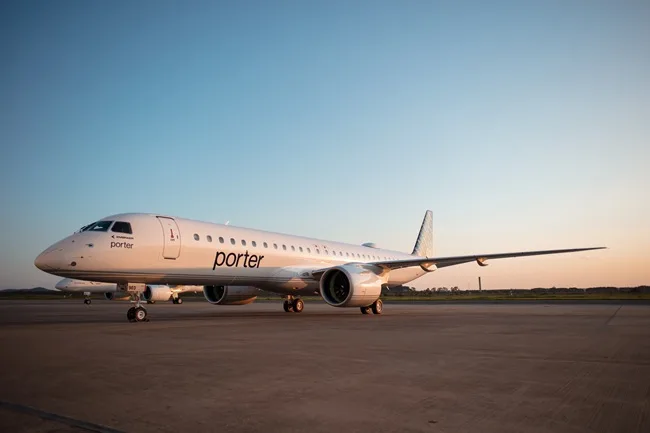
Why Porter Airlines’ entry into Mexico marks a turning point for its growth strategy
Since its founding in 2006, Porter Airlines has been known primarily as a regional player, operating short-haul routes in Eastern Canada and select cities in the United States. Historically focused on turboprop services with the De Havilland Dash 8-400 aircraft, the airline has gradually been expanding its vision and capabilities. The introduction of the Embraer E195-E2 jet has played a pivotal role in enabling longer-range, higher-capacity international routes without compromising on passenger comfort.
By adding Puerto Vallarta and Cancun to its winter network, Porter Airlines is deliberately positioning itself against a competitive backdrop of legacy carriers and low-cost vacation airlines such as Air Canada, WestJet, Sunwing, and Flair Airlines. The aim is not simply to compete on price, but to differentiate through its elevated economy experience that blends premium inflight offerings with accessible fares.
Porter Airlines is currently operating its new Mexico routes using the Embraer E195-E2, a 132-seat narrowbody jet that features a two-by-two cabin configuration. This seating arrangement ensures that no passenger has a middle seat, enhancing onboard comfort. The aircraft is optimized for fuel efficiency and supports the airline’s mission to serve longer, high-demand leisure routes during the winter travel season.
How Porter’s onboard service is redefining the leisure travel experience
One of the most notable elements of Porter Airlines’ expansion is its decision to maintain a full-service economy offering on all flights, even on routes traditionally dominated by ultra-low-cost carriers. Every passenger on the new Mexico flights is provided with complimentary beer and wine served in glassware, high-speed WiFi, and premium Canadian snacks as standard.
The airline has also introduced two fare classes tailored to different customer preferences. PorterReserve is a bundled fare that includes premium pre-mixed cocktails, fresh meals, extra legroom seating, and priority check-in services. Meanwhile, PorterClassic allows passengers to select individual perks à la carte, such as additional baggage, meals, or seat upgrades. This bifurcated model enables Porter Airlines to meet the needs of both value-conscious and experience-focused travellers, without compromising brand consistency.
With its VIPorter loyalty program, passengers can redeem reward points for one-way travel to sun destinations such as Puerto Vallarta and Cancun starting at 10,000 points. The program has been integrated with Air Transat, Porter Airlines’ joint venture partner, enabling greater flexibility in terms of travel dates, frequency, and destination variety.
What travel officials and tourism leaders are saying about the new routes
The launch of the Puerto Vallarta route was met with strong support from regional tourism authorities and industry leaders. Michelle Fridman Hirsch, Secretary of Tourism of Jalisco, confirmed that Canadian arrivals have grown by 8 percent in recent months, underlining the growing appetite among Canadians for travel to Mexico’s Pacific coast. She welcomed Porter Airlines’ decision to establish the new service, calling it an important step toward strengthening cultural and economic ties between Canada and Mexico.
At Toronto Pearson International Airport, interim chief commercial officer Kurush Minocher described the expanded flight schedule as a timely and necessary addition. He noted that winter demand for sun destinations was rising and welcomed the added passenger capacity and convenience that Porter Airlines brings to the Canadian market.
Andrew Pierce, vice president of network planning and reporting at Porter Airlines, emphasized that the new routes reflect strong and sustained demand for high-quality leisure travel experiences. He highlighted the company’s commitment to service and hospitality, adding that customers are increasingly seeking more than just cheap fares when choosing a travel provider.
How Porter Airlines is leveraging its partnership with Air Transat for competitive edge
The expanded winter network aligns closely with Porter Airlines’ strategic partnership with Air Transat. Together, the two carriers are offering coordinated scheduling, cross-selling opportunities, and shared loyalty benefits. This relationship is expected to strengthen Porter Airlines’ position in the southern leisure market by allowing it to offer broader connectivity and frequency, without overstretching its fleet.
From a strategic standpoint, this arrangement allows Porter Airlines to punch above its weight class. Rather than going head-to-head with larger carriers on all routes, the airline can offer complementary services that provide passengers with more choices for timing and destinations, while preserving its signature inflight offering.
Analysts observing the Canadian aviation market have noted that Porter Airlines’ focus on mid-sized airports such as Hamilton and Ottawa gives it a tactical advantage. These airports often have lower operating costs, shorter wait times, and underserved international connectivity, allowing Porter to reach leisure travellers more efficiently.
What the international expansion signals for Porter’s broader transformation
Porter Airlines’ foray into international leisure markets is not an isolated initiative. Instead, it appears to be part of a broader transformation of the carrier’s business model. By investing in next-generation jets and expanding into longer-haul destinations, Porter Airlines is signaling its intent to evolve from a boutique regional operator into a competitive, full-service airline with both domestic and international ambitions.
This transformation may pave the way for future expansion into other markets across Latin America, the Caribbean, and potentially transatlantic routes, especially as its Embraer E195-E2 fleet continues to grow. The airline’s model, which blends premium service with accessible pricing, positions it uniquely in a market that is increasingly segmented between no-frills carriers and high-cost legacy operators.
Looking ahead, industry experts believe Porter Airlines will continue to scale its southern network through 2025 and beyond. The winter season remains a strong driver of traffic for Canadian carriers, and with increased demand for flexible, customer-friendly services, Porter Airlines is well-positioned to capitalize.
Travellers seeking alternatives to the traditional economy experience now have a differentiated option with Porter Airlines, one that includes perks typically reserved for business class without the premium price tag. As airline competition heats up in the post-pandemic travel recovery, this model may become a template for other carriers seeking to combine comfort with cost-effectiveness.
Key takeaways: What Porter Airlines’ Mexico expansion reveals about its winter travel strategy
- Porter Airlines has launched new international flights from Toronto to Puerto Vallarta and Cancun, marking its first routes beyond Canada and the United States.
- Puerto Vallarta service begins with three weekly roundtrips and scales to five by December 14, while Cancun flights move from daily to twice daily by January.
- Additional nonstop flights from Hamilton and Ottawa to both Mexican destinations will commence in mid-December, expanding reach across Ontario.
- The airline operates these routes with Embraer E195-E2 aircraft, offering 132 seats in a two-by-two layout with no middle seats.
- All passengers receive free WiFi, beer and wine served in glassware, and premium Canadian snacks as part of Porter’s elevated economy experience.
- PorterReserve fares include priority check-in, extra legroom, fresh meals, and premium cocktails; PorterClassic allows à la carte upgrades.
- Travellers can redeem VIPorter loyalty points for one-way travel starting at 10,000 points, with rewards integrated across Porter Airlines and Air Transat.
- Tourism authorities in Jalisco welcomed the new routes, citing an 8% increase in Canadian visitors and growing bilateral tourism interest.
- The expansion signals Porter Airlines’ transformation from a regional carrier into a full-service player targeting the sun destination leisure market.
- Analysts see the airline’s fleet strategy, mid-size airport focus, and premium service model as key differentiators heading into 2025’s high-travel season.
Discover more from Business-News-Today.com
Subscribe to get the latest posts sent to your email.