


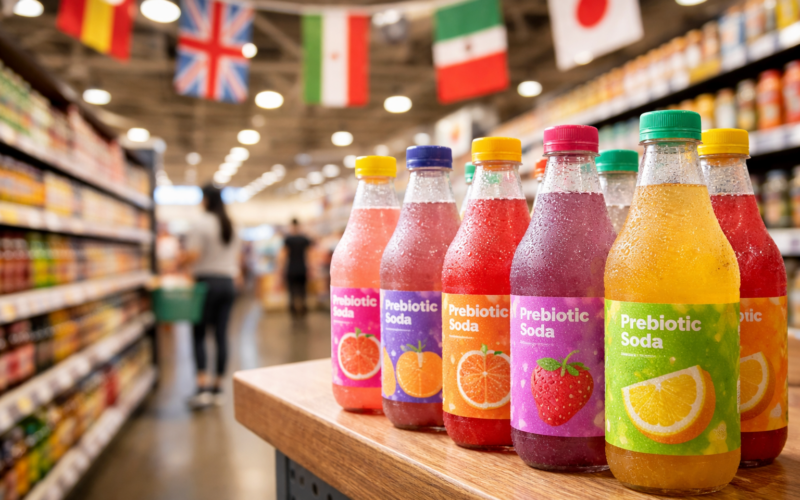
PepsiCo, Inc. is moving to internationalise the Poppi prebiotic soda brand, marking the first overseas expansion of the product since its acquisition in 2025 and signalling a broader strategic push into functional beverages beyond North America. The company has confirmed that Poppi will launch in the United Kingdom through major retail and foodservice channels, positioning the brand as a health-forward alternative to traditional carbonated soft drinks. The move reflects PepsiCo’s intent to scale a fast-growing wellness brand using its global distribution infrastructure while responding to shifting consumer demand for lower-sugar, function-led beverages. For investors and competitors alike, the expansion offers an early test of whether prebiotic soda can transition from a U.S. health trend into a durable global category.
PepsiCo, Inc. trades on the Nasdaq under the ticker PEP and remains one of the world’s largest food and beverage companies by revenue. The decision to push Poppi beyond its home market comes at a time when growth in legacy carbonated soft drinks is increasingly driven by pricing rather than volume, intensifying the need for structurally higher-growth adjacencies.
Why is PepsiCo expanding Poppi into international markets now rather than scaling further in the United States alone
The timing of Poppi’s international rollout is closely linked to maturity dynamics in the U.S. beverage market and the evolving economics of functional drinks. In the United States, prebiotic sodas have moved rapidly from novelty to mainstream shelf presence, supported by social media-driven consumer education around gut health, sugar reduction, and ingredient transparency. While category growth remains strong, competitive intensity has increased as both startups and established beverage companies introduce similar products.
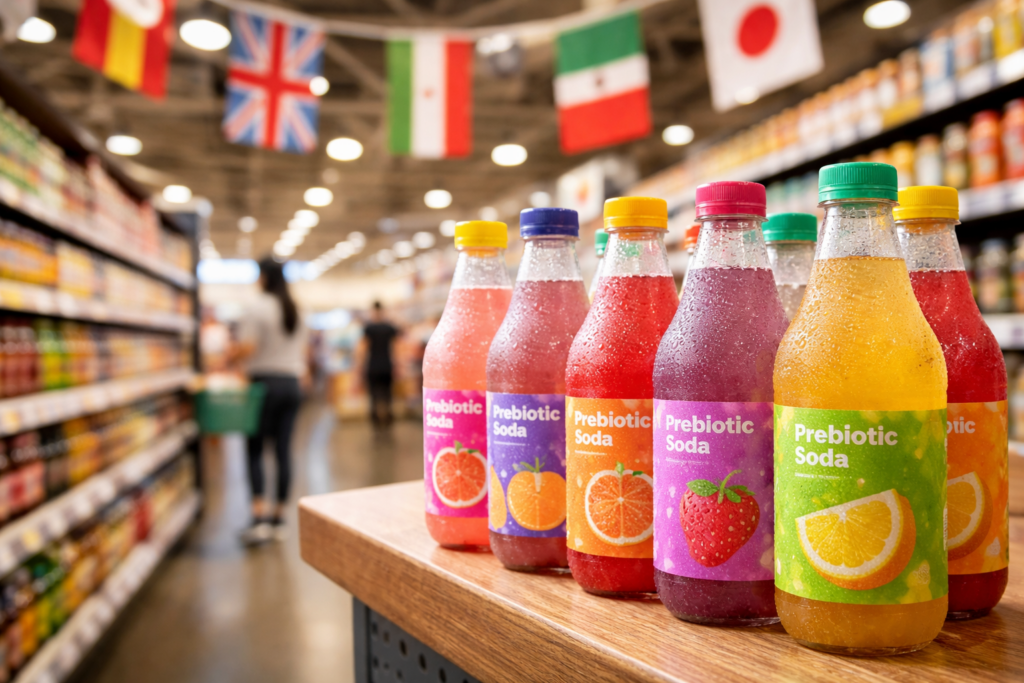
By contrast, many international markets, particularly in Europe, remain earlier in the adoption curve for functional carbonated beverages. PepsiCo’s decision to launch Poppi in the United Kingdom reflects a calculated effort to enter before the category becomes saturated, allowing the brand to shape consumer expectations rather than chase incumbents. The United Kingdom also offers regulatory clarity around health claims and sugar labelling, providing a relatively predictable environment for a product positioned around digestive wellness.
From a capital allocation perspective, international expansion allows PepsiCo to leverage existing bottling, logistics, and retail relationships. The marginal cost of adding a new brand into an established distribution system is materially lower than building scale from scratch, improving the probability that Poppi can achieve profitability outside the United States faster than an independent operator could.
How does the Poppi acquisition fit into PepsiCo’s broader functional beverage strategy
PepsiCo’s acquisition of Poppi in 2025 was not an isolated transaction but part of a multi-year repositioning toward beverages that sit at the intersection of indulgence and perceived health benefits. The company has steadily increased exposure to zero-sugar sodas, enhanced waters, sports hydration, and energy drinks with cleaner ingredient profiles.
Poppi occupies a distinct niche within this portfolio. Unlike zero-sugar colas that replicate traditional soda experiences, Poppi is positioned as a category challenger that reframes soda as compatible with wellness-oriented lifestyles. Its use of apple cider vinegar, prebiotic fibre, and low sugar content allows PepsiCo to participate in the gut health narrative without relying on pharmaceutical-style claims that could invite regulatory scrutiny.
Strategically, Poppi also provides PepsiCo with brand diversification. Rather than extending legacy trademarks into health-focused formats, which can dilute brand equity, PepsiCo has preserved Poppi’s identity as a modern, culturally resonant label. This approach mirrors successful strategies in other consumer goods categories, where acquired challenger brands are allowed to retain autonomy while benefiting from corporate scale.
What makes the prebiotic soda category structurally different from previous better-for-you beverage trends
The prebiotic soda category differs from earlier health beverage waves in several important ways. First, it targets an everyday consumption occasion traditionally dominated by carbonated soft drinks rather than positioning itself as a supplement or specialty product. This significantly expands the total addressable market if adoption broadens beyond early adopters.
Second, the value proposition combines immediate sensory appeal with longer-term wellness perception. Unlike diet sodas that historically traded taste for calorie reduction, prebiotic sodas emphasise flavour variety and visual branding while layering in functional benefits. This dual appeal reduces the behavioural friction associated with switching from traditional sodas.
Third, consumer awareness of gut health has moved from niche to mainstream. The rise of probiotics, fibre-rich foods, and digestive wellness content has created a receptive audience for products that reference microbiome support, even if scientific literacy varies. For large beverage companies, this creates an opportunity to scale products that would previously have struggled to achieve mass relevance.
However, this structural attractiveness also invites competition. As more brands enter the space, differentiation will increasingly depend on taste consistency, ingredient sourcing, price positioning, and credibility. PepsiCo’s ability to defend Poppi’s positioning against private label and multinational rivals will be central to the brand’s long-term value.
Why the United Kingdom launch matters as a test case for global scalability
The United Kingdom launch serves as a strategically meaningful pilot rather than a symbolic expansion. British consumers have shown strong uptake of reduced-sugar beverages following the implementation of the Soft Drinks Industry Levy, creating favourable conditions for alternatives to traditional sugary sodas. At the same time, scepticism toward exaggerated health claims remains relatively high, placing pressure on brands to balance messaging carefully.
Poppi’s entry through mainstream grocery and foodservice channels suggests PepsiCo is confident in the brand’s ability to resonate beyond specialty health retailers. Success in this environment would provide a blueprint for entry into other European markets with similar regulatory and consumer profiles.
Failure, by contrast, would raise questions about whether prebiotic soda’s appeal is culturally specific to the United States or overly dependent on influencer-driven marketing dynamics. For PepsiCo, the UK market offers a controlled environment to refine pricing, flavour selection, and messaging before committing to broader global rollouts.
How does this expansion affect competition across the global beverage landscape
PepsiCo’s move places additional pressure on both independent functional beverage brands and established competitors. Smaller players face the challenge of competing with a multinational that can subsidise shelf placement, absorb marketing costs, and iterate rapidly across markets. This dynamic may accelerate consolidation within the functional beverage space as startups seek acquisition rather than attempting to scale independently.
For rival multinationals, the expansion underscores the risk of underestimating category shifts. Companies that remain overly reliant on traditional carbonated soft drinks may find themselves reacting rather than leading if consumer preferences continue to evolve toward function-led alternatives. The presence of Poppi in international markets also raises the bar for innovation, forcing competitors to either acquire comparable brands or develop credible in-house alternatives.
Retailers, meanwhile, stand to benefit from category diversification. Functional sodas typically command higher price points than conventional carbonated drinks, improving margin potential per unit. If consumer uptake materialises, shelf space allocation is likely to shift accordingly, reinforcing the category’s visibility.
What are the execution risks PepsiCo must manage as Poppi scales globally
Despite the strategic rationale, execution risk remains significant. Taste preferences vary widely across regions, and flavours that perform well in the United States may not translate directly to international markets. PepsiCo will need to balance localisation with brand consistency, avoiding excessive complexity that could erode operational efficiency.
Supply chain considerations also matter. Prebiotic ingredients such as inulin require reliable sourcing at scale, and cost volatility could compress margins if not managed carefully. Pricing strategy will be particularly sensitive in markets where consumers are accustomed to lower-priced carbonated beverages.
Brand authenticity represents another risk. Poppi’s appeal has been closely tied to its origin story and perceived independence. Over-commercialisation or aggressive global marketing could dilute this perception, reducing the brand’s credibility among its core audience. PepsiCo’s challenge will be to apply scale without stripping the brand of the attributes that made it attractive in the first place.
How investors should interpret Poppi’s international expansion within PepsiCo’s growth narrative
From an investor standpoint, Poppi’s international rollout should be viewed as a medium-term growth option rather than an immediate earnings driver. While the brand is unlikely to move the needle on PepsiCo’s near-term financials, it represents an investment in future relevance as beverage consumption patterns evolve.
The market has generally rewarded consumer staples companies that demonstrate credible pathways to growth beyond price increases. Functional beverages offer one such pathway, particularly if they can command premium pricing while maintaining volume resilience. If Poppi succeeds internationally, it could justify further acquisitions or internal development within the category.
Conversely, underperformance would not materially impair PepsiCo’s financial position but could prompt reassessment of how aggressively the company pursues niche wellness brands. For now, the expansion signals confidence rather than desperation, reflecting a willingness to place measured bets on emerging consumer trends.
What are the key takeaways from PepsiCo taking the Poppi brand international as it rides the prebiotic wave
- PepsiCo, Inc. is using Poppi’s international expansion to test whether prebiotic soda can evolve from a U.S. trend into a global beverage category
- The United Kingdom launch functions as a strategically important pilot market due to its sugar regulations and consumer openness to reduced-sugar alternatives
- Poppi strengthens PepsiCo’s functional beverage portfolio without diluting legacy soda brands through forced health positioning
- Prebiotic soda offers a structurally larger opportunity than previous wellness beverage trends because it targets everyday soda consumption occasions
- Global expansion leverages PepsiCo’s distribution scale, lowering the cost and risk of international brand building
- Competitive pressure is likely to intensify as multinationals and private labels respond to category momentum
- Execution risks include taste localisation, ingredient sourcing, pricing sensitivity, and preservation of brand authenticity
- For investors, Poppi represents a long-term relevance play rather than a short-term earnings catalyst
- Success could accelerate further functional beverage acquisitions or global rollouts within PepsiCo’s portfolio
Discover more from Business-News-Today.com
Subscribe to get the latest posts sent to your email.