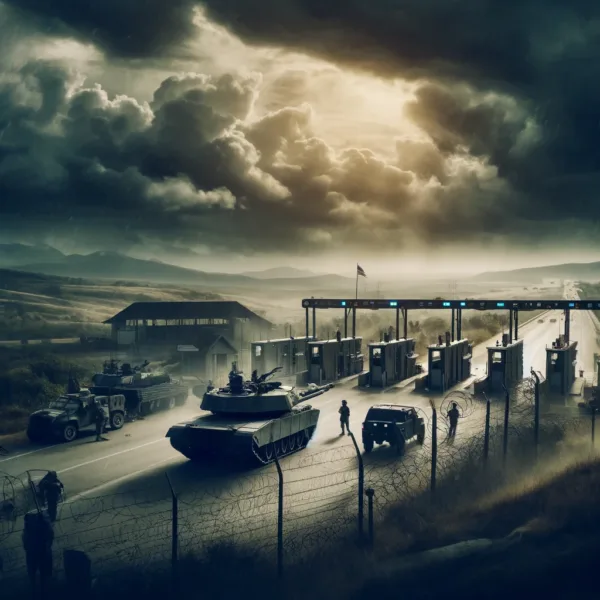

The United States military now estimates that its war with Iran has generated approximately $43.6 billion in defence costs through September 3, substantially increasing the publicly documented financial burden of a conflict that began on February 28. Figures supplied by US Central Command to congressional lawmakers include approximately $28.1 billion to replace expended munitions, $4.3 billion for lost or damaged equipment and about $11.2 billion in operating expenses already obligated. The figures represent a combination of expenditures and estimated replacement requirements rather than $43.6 billion already paid out entirely in cash.
The updated military estimate follows a separate Congressional Budget Office assessment that put Department of Defense costs at approximately $38 billion through August 1 and projected additional costs of roughly $2 billion to $3 billion for every month that fighting continues at recent levels. CBO also warned that some missile-defence inventories consumed during the conflict could require at least five years to rebuild even if procurement accelerates.
What makes up the Pentagon’s new $43.6 billion Iran war estimate?
The largest component is weapons replacement. US Central Command’s estimate places the cost of replenishing munitions used during operations at roughly $28.1 billion, illustrating how modern missile and drone warfare can consume enormous quantities of expensive precision weapons and interceptors. Equipment that was destroyed or damaged adds another roughly $4.3 billion, while operating costs such as additional flying, fuel, personnel and logistical activity account for approximately $11.2 billion already obligated.
Even that estimate is incomplete. The figures do not fully capture the future cost of rebuilding damaged American facilities across the Middle East, long-term healthcare and disability obligations for wounded personnel or wider economic effects generated by higher energy prices. The ultimate public cost could consequently remain uncertain long after direct military operations eventually end.

Why did the Pentagon figure rise above the Congressional Budget Office’s $38 billion estimate?
The two numbers cover different dates and were produced through different methodologies. CBO calculated approximately $38 billion through August 1 using government databases, public reporting and its own models because the Defense Department did not provide all information the budget office requested. The Central Command estimate runs through September 3 and incorporates updated military assessments, including higher munitions-replacement and equipment-loss values.
The difference therefore does not necessarily mean one estimate is wrong. It demonstrates how quickly costs continue accumulating as the conflict persists and how replacement values change as commanders determine the quantity and type of weapons expended or equipment damaged. CBO itself projected another $2 billion to $3 billion of monthly costs depending on combat intensity, broadly consistent with a higher total one month later.
Why has ammunition become the largest financial pressure from the Iran war?
The United States has used large numbers of precision-strike weapons and defensive interceptors because the conflict involves both attacks on Iranian targets and repeated efforts to defend American forces and regional partners from missiles and drones. Expensive air-defence systems such as Patriot and THAAD can consume interceptors costing millions of dollars against repeated incoming threats, while replacing advanced long-range weapons depends on industrial production lines that cannot be expanded overnight.
CBO estimated that the conflict has consumed between one-half and two-thirds of the US inventory of some missile-defence interceptors when accounting for the wider period of Middle East operations beginning before the February war. The budget office said rebuilding depleted stocks could take at least five years even with higher production rates, creating a readiness issue extending beyond the immediate financial cost.
Could depleted missile inventories affect US commitments in Europe and Asia?
Weapons inventories are inherently global because an interceptor allocated to one theatre cannot simultaneously be available elsewhere. European allies rely on US air-defence support as they strengthen deterrence against Russia, while American planners also maintain requirements for possible contingencies involving North Korea or conflict in the Indo-Pacific. A prolonged Middle East war therefore creates opportunity costs even when factories eventually replace every weapon used.
CBO specifically highlighted the time needed to rebuild certain stockpiles, making production capacity as important as congressional appropriations. Congress can approve billions of dollars immediately, but expanding solid-rocket motor production, explosives manufacturing, skilled labour and specialised component supply chains can require several years.
How many American personnel have been killed or wounded during the Iran conflict?
Associated Press reported that 18 US service members had been killed and more than 830 wounded as the conflict approached its seventh month. Those human costs are separate from the $43.6 billion military estimate and can create additional long-term government obligations through healthcare, rehabilitation, survivor benefits and disability compensation.
The distinction illustrates why headline military expenditure never captures the complete economic cost of a war. Immediate Pentagon accounting focuses on operations, weapons and damaged equipment, whereas long-term veteran-related costs can continue for decades. Damage to American bases, diplomatic facilities and broader regional infrastructure adds still more expenditure that may eventually appear in separate budgets.
How is the Iran war affecting inflation and ordinary US households?
CBO concluded that disruption to energy flows through the Strait of Hormuz and Red Sea had already contributed materially to higher energy prices. Its analysis projected that personal-consumption inflation during the first quarter of 2027 could be roughly 0.5 percentage points higher than it would have been without the conflict, although economic projections carry considerable uncertainty and depend on future oil and gas flows.
That indirect cost can matter more politically to households than the Pentagon budget itself because higher crude prices can filter into gasoline, diesel, aviation, freight and ultimately consumer goods. A war costing tens of billions of dollars through federal spending therefore creates a second economic channel when disrupted energy markets increase costs throughout the private economy.
What happens to the US defence budget if the war continues into 2027?
The Trump administration has sought additional defence funding while proposing an exceptionally large overall military budget. AP reported that the administration is pursuing a $1.5 trillion defence budget alongside a roughly $95 billion funding package covering the war and other military priorities. Congress will have to determine how much of the requested money is provided and whether replenishment programmes receive the production capacity necessary to convert appropriations into actual weapons.
The central challenge is that money cannot instantly solve inventory shortages. If monthly military costs remain between $2 billion and $3 billion while expensive interceptors continue being used, the United States could simultaneously be financing current combat and rebuilding weapons expended months earlier. The financial impact therefore increasingly resembles a multi-year procurement problem rather than a one-time emergency bill.
What are the key takeaways from the $43.6 billion Iran war estimate?
The newest number is the most detailed military estimate yet, but it should be described accurately as a combination of operating obligations and replacement costs through September 3. Munitions account for approximately $28.1 billion, meaning weapons consumption rather than routine troop operations has become the dominant cost driver.
The strategic issue may ultimately prove more important than the headline dollar amount. A conflict can be financed through borrowing, but rebuilding sophisticated missile inventories requires factories, supply chains and time, while higher energy prices impose costs outside the Pentagon altogether. The new estimate therefore measures not only how expensive the Iran war has become but how extensively it is reshaping US defence planning for other potential crises.
Discover more from Business-News-Today.com
Subscribe to get the latest posts sent to your email.