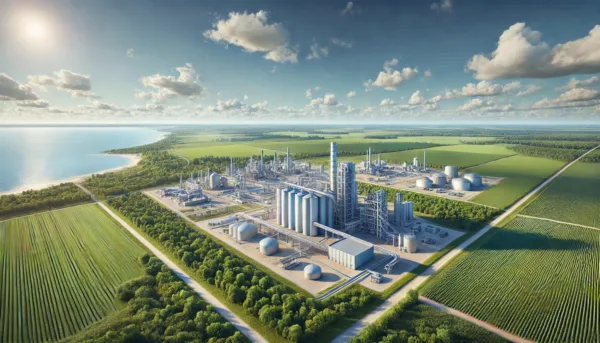



Berkshire Hathaway (NYSE: BRK.A, BRK.B) has completed its $9.7 billion acquisition of Occidental Chemical Corporation (OxyChem), marking a decisive expansion into basic and performance chemicals. The deal, which transfers control of one of North America’s largest producers of polyvinyl chloride and chlor-alkali chemicals, positions Berkshire Hathaway to further diversify its industrial footprint beyond energy, insurance, and freight rail.
The transaction was first disclosed in late 2025 as part of Occidental Petroleum Corporation’s broader deleveraging and portfolio refocusing strategy. With the transaction now closed, Berkshire Hathaway gains full ownership of OxyChem’s assets across the United States, Canada, and Latin America. OxyChem will continue to operate as a standalone entity under the leadership of Wade Alleman, maintaining its Dallas headquarters and operational continuity across the value chain.
Why does Berkshire Hathaway want full ownership of a legacy chemicals business like OxyChem?
This acquisition is not Berkshire Hathaway’s first foray into the industrial chemicals sector, but it is one of its most directly strategic. OxyChem is a stable, cash-generative business operating in oligopolistic markets with limited global substitutes. The company ranks among the top three North American producers of polyvinyl chloride (PVC), chlorinated organics, and chlor-alkali products—core inputs in applications ranging from water treatment and pharmaceuticals to residential construction and personal hygiene.
Berkshire Hathaway’s longstanding investment thesis favors capital-intensive, high-barrier businesses with durable demand and pricing power. OxyChem fits that mold. Its operations include vertically integrated production, deep Gulf Coast infrastructure, and a legacy customer base with long-term offtake agreements. These attributes align with Warren Buffett’s historical preference for businesses that produce predictable cash flows in commodity-adjacent sectors without taking on undue market speculation risk.
The deal structure also removes execution friction. Berkshire already owns a significant equity stake in Occidental Petroleum, and OxyChem’s spin-out allows Occidental to accelerate deleveraging without reducing its upstream exposure. For Berkshire, buying a known and adjacent asset simplifies diligence and integration.
What changes for Occidental Petroleum now that OxyChem is fully off the books?
For Occidental Petroleum Corporation, the sale of OxyChem completes one of the more substantial non-core divestments since its acquisition of Anadarko Petroleum in 2019. The proceeds are expected to further reduce net debt and strengthen Occidental’s balance sheet heading into a new capital discipline phase. By shedding a non-upstream asset, the company sharpens its focus on its core oil and gas operations and its emerging low-carbon businesses, including direct air capture and carbon management platforms.
While OxyChem has historically been a steady contributor to cash flow and margin stability during periods of commodity volatility, it is also capex-intensive and cyclical on the demand side. Offloading the chemicals business at an attractive valuation allows Occidental to sidestep multi-billion-dollar reinvestments in chlor-alkali or PVC expansions, particularly in an era where shareholder preference is shifting toward returns over reinvestment.
With the exit now finalized, analysts are likely to reassess Occidental’s future dividend flexibility, capital return policies, and appetite for further asset sales as part of its deleveraging roadmap. The transaction also removes any potential regulatory complexities tied to running a chemicals business alongside carbon capture and upstream oil.
Could OxyChem become a Berkshire industrial anchor similar to BNSF or Precision Castparts?
While OxyChem may not match the revenue scale of BNSF Railway or the precision component depth of Precision Castparts, it occupies a similar strategic tier within Berkshire Hathaway’s ecosystem: low cyclicality, high capital intensity, defensible margins, and high replacement cost. The chlor-alkali and PVC industries are mature, consolidated, and structurally aligned with essential sectors such as municipal infrastructure, automotive manufacturing, pharmaceuticals, and construction.
Berkshire Hathaway’s conglomerate model allows it to own and operate industrial subsidiaries with minimal intervention but strong financial discipline. OxyChem fits well into this structure. Its cash flows could be reinvested internally, used to fund other Berkshire subsidiaries, or simply contribute to Berkshire’s massive cash reserve—a hallmark of the Buffett-Munger model.
Importantly, OxyChem’s feedstock access, location proximity to the U.S. Gulf Coast, and logistics integration with rail and pipeline infrastructure give it natural hedges against import pressures and international chemical dumping. These geographic and operational moats enhance its appeal as a long-term industrial asset.
What does this say about Berkshire Hathaway’s broader capital allocation and sector preferences?
Berkshire Hathaway continues to gravitate toward companies and sectors that offer structural durability rather than speculative upside. The OxyChem acquisition follows the firm’s well-established strategy of favoring tangible assets with strong cash flow profiles, low technological disruption risk, and well-understood market dynamics.
In 2023 and 2024, Berkshire Hathaway had been sitting on record cash piles north of $150 billion, drawing scrutiny from investors and analysts about where that capital might go. This deal suggests that Buffett’s team still prefers large, unglamorous assets over high-valuation tech or financial plays. Chemical manufacturing, while cyclically sensitive, offers the kind of earnings consistency that can compound quietly over decades.
That said, OxyChem also reflects Berkshire’s increasingly active stance in legacy industrials amid a shifting geopolitical and reshoring climate. With global supply chains under strain and domestic manufacturing regaining strategic favor, a U.S.-anchored chemicals portfolio could quietly accrue both economic and policy advantages over time.
How are markets interpreting this transaction—and what risks remain?
Because Berkshire Hathaway is privately acquiring OxyChem rather than absorbing it into a publicly traded operating company, the transaction has not materially moved share prices. However, Occidental Petroleum stock had been trading higher on divestiture rumors in Q4 2025, reflecting investor approval of the company’s debt-reduction strategy.
From a risk standpoint, OxyChem’s exposure to housing construction, automotive production, and water infrastructure spending makes it somewhat sensitive to macroeconomic slowdowns. Regulatory scrutiny over chlorine and organochlorine compounds could also intensify depending on future environmental rulemaking.
However, as part of Berkshire Hathaway, OxyChem gains an owner with deep balance-sheet capacity, regulatory insulation, and a long-term capital horizon. This could translate into more disciplined capacity expansions, investment in process efficiency, and longer-term product portfolio shifts toward lower-carbon or higher-performance chemistries.
What Berkshire Hathaway’s acquisition of OxyChem means for the chemicals industry and investors
- Berkshire Hathaway has completed the $9.7 billion acquisition of OxyChem from Occidental Petroleum, adding a strategic industrial chemicals portfolio to its holdings.
- The deal reflects Berkshire’s continued preference for mature, capital-intensive, and cash-generating businesses with limited disruption risk.
- OxyChem ranks among the top three producers in the U.S. for PVC, chlor-alkali, and chlorinated organics, with strategic end-market exposure in pharmaceuticals, water treatment, and construction.
- Occidental Petroleum will use proceeds to accelerate deleveraging and simplify its focus on upstream oil and gas and low-carbon ventures.
- Wade Alleman will continue leading OxyChem as president and CEO, preserving operational continuity under Berkshire’s ownership model.
- The acquisition underscores Berkshire’s broader reshoring thesis and willingness to deploy capital into “boring but essential” businesses.
- Key risks to watch include chemical regulatory scrutiny, cyclical end-user markets, and integration of ESG-aligned process innovation.
- For investors, the move signals Berkshire’s return to large-scale industrial acquisitions after a relatively quiet period on the M&A front.
Discover more from Business-News-Today.com
Subscribe to get the latest posts sent to your email.