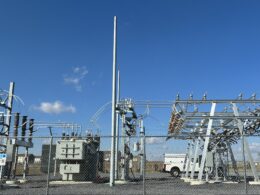
Oil and Natural Gas Corporation Limited (NSE: ONGC) slipped on May 8, 2026, keeping ONGC in focus for retail investors ahead of its May 26 board meeting for Q4 FY26 and full-year FY26 results. The stock was trading around the ₹279 to ₹284 zone across market feeds after the May 8 close, below its 52-week high of ₹307.50 but still above its 52-week low of ₹228.45. For investors tracking ONGC before the result date, the key question is whether crude oil realisations, KG-DWN-98/2 production ramp-up, dividend expectations and government energy priorities can support a fresh FY27 rerating.
Why did ONGC shares weaken on May 8 before the company’s Q4 FY26 results?
ONGC shares weakened on May 8 even though the company remains one of India’s most important upstream energy stocks. The fall came before the company’s May 26 board meeting, where audited Q4 FY26 and full-year FY26 financial results are expected to be reviewed along with any final dividend recommendation. That timing matters because investors are not reacting only to past numbers. They are positioning ahead of an earnings event that could reset expectations for FY27.
The stock’s move also reflected the sensitivity of upstream energy companies to crude oil prices. ONGC’s earnings are strongly linked to realised crude oil and gas prices, production volumes, subsidy-sharing risk, exploration costs and subsidiary performance. When global crude prices soften or become volatile, upstream stocks often trade cautiously even if their dividend appeal remains intact.
For retail investors, the May 8 weakness should be read as a pre-result risk adjustment rather than a full rejection of the ONGC story. The stock remains above its 52-week low, and analyst consensus still points to moderate upside from current levels. However, the market now wants Q4 numbers, production clarity and dividend visibility before giving ONGC a stronger FY27 valuation.

What does ONGC do and why does its upstream energy model matter to shareholders?
Oil and Natural Gas Corporation Limited is India’s largest crude oil and natural gas producer and a central public sector enterprise in the country’s energy system. Its core business includes exploration, development and production of crude oil and natural gas from offshore and onshore fields. The company also has downstream and refining exposure through subsidiaries and group companies such as Hindustan Petroleum Corporation Limited and Mangalore Refinery and Petrochemicals Limited.
ONGC’s business model is different from a downstream oil marketing company. A refiner or fuel retailer is judged on refining margins, fuel-marketing margins, inventory gains and government pricing decisions. ONGC, as an upstream producer, is judged mainly on oil and gas production, realised prices, field-development success, exploration outcomes and cost control.
For shareholders, this creates a commodity-linked investment profile. When crude oil prices and gas realisations are supportive, ONGC’s earnings and cash flows can improve quickly. When prices weaken or exploration write-offs rise, profit can come under pressure. That is why ONGC can look like a dividend stock, a commodity play, a PSU energy proxy and a production-growth story at the same time.
How is the market pricing ONGC after the stock stayed below its 52-week high?
ONGC was trading around the ₹279 to ₹284 zone after the May 8 close, compared with a 52-week high of ₹307.50 and a 52-week low of ₹228.45. That range shows that the stock is neither deeply distressed nor fully priced for a strong production-led rerating. It is sitting in the middle of a debate around crude prices, dividend yield, and whether future production growth can offset mature-field decline.
The company’s market capitalisation remains above ₹3.5 lakh crore, keeping it among India’s largest public sector enterprises. That gives ONGC strong institutional relevance and high visibility among retail investors who track PSU stocks, dividend names and energy-sector counters. However, the valuation also reflects persistent caution around production stagnation and commodity-price uncertainty.
For new retail investors, the current pricing creates a watchful setup. ONGC is not at a fresh high, which leaves room for recovery if Q4 results, dividend and FY27 commentary are supportive. At the same time, the stock is not deeply discounted enough to ignore execution risk. The market wants evidence that ONGC can grow volumes from key assets and maintain cash returns without relying only on crude-price support.
Why are crude oil prices and gas realisations so important for ONGC investors in FY27?
Crude oil prices are the most important external variable for ONGC’s earnings. As an upstream producer, the company’s profitability is heavily influenced by the price it realises on crude oil sales. When global crude prices rise, ONGC can benefit through higher realisations, provided government policy or windfall-tax mechanisms do not absorb too much of the upside.
Gas realisations are another key factor. Natural gas pricing affects ONGC’s earnings from domestic gas production, and any favourable price movement can support revenue and profitability. However, gas pricing in India is partly shaped by policy frameworks, which means investors must watch both market trends and regulatory decisions.
The risk is that commodity prices can move faster than company fundamentals. A strong operational quarter can look weaker if crude prices fall sharply. A modest production quarter can look better if crude prices rise. Retail investors should therefore avoid judging ONGC only on one earnings number. The cleaner approach is to track realised crude prices, gas prices, production volumes and policy changes together.
How could KG-DWN-98/2 change the ONGC production growth story?
KG-DWN-98/2 is one of the most important assets in ONGC’s production-growth narrative. The deepwater block has been positioned as a key contributor to future oil and gas output, especially as mature fields face natural decline. For investors, the project matters because ONGC needs new production sources to prevent its upstream base from becoming too dependent on ageing assets.
The market has been watching KG-DWN-98/2 closely because production ramp-up can change how investors value ONGC. If the block contributes meaningfully to output, it can improve confidence in the company’s ability to arrest or reverse production stagnation. That would support both earnings visibility and the long-term upstream thesis.
The risk is execution timing. Deepwater projects are complex, capital-intensive and vulnerable to delays, technical challenges and cost escalation. Retail investors should watch not only whether ONGC mentions production growth, but also whether actual quarterly output confirms the ramp-up. A credible production increase from KG-DWN-98/2 would strengthen the bull case. Continued delays or slower ramp-up would keep the valuation debate cautious.
What are the next catalysts for ONGC shareholders before and after the May 26 board meeting?
The immediate catalyst is the May 26, 2026 board meeting for Q4 FY26 and full-year FY26 results. Investors will watch standalone profit, consolidated profit, crude oil and gas production, exploration write-offs, subsidiary performance, cash flow, capex, and any final dividend recommendation. Because ONGC is closely followed for payouts, dividend commentary could shape near-term sentiment.
The next catalyst after the result will be FY27 production guidance. Retail investors should look for management commentary on crude oil output, gas output, KG-DWN-98/2, mature-field redevelopment, enhanced recovery projects and capex priorities. Production guidance will matter because ONGC’s long-term rerating depends on volume growth, not only commodity prices.
Another catalyst is crude-price direction. If oil prices strengthen into FY27, ONGC can regain investor attention quickly. If crude prices weaken, even a decent operational update may not be enough to drive a strong move. That makes ONGC a stock where company-specific catalysts and global macro triggers need to be tracked together.
Why are retail investors debating whether ONGC is a dividend stock or an energy-cycle trade?
Retail investors are debating ONGC because it offers two different narratives. The first is the dividend story. As a public sector energy major with strong cash generation, ONGC has historically attracted investors looking for income, PSU exposure and relatively visible shareholder payouts. The interim dividend declared during FY26 reinforced that income appeal.
The second narrative is the energy-cycle trade. ONGC’s earnings can move with crude oil prices, gas pricing and production trends. If crude prices recover and production improves, the stock can behave like a cyclical upstream energy play. If crude prices soften and production disappoints, the dividend may not be enough to support a strong rerating.
This dual identity is why ONGC can be difficult for retail investors to classify. It is not only a passive dividend counter. It is also not a pure high-growth energy stock. The investment case sits between cash returns, crude-price exposure, government ownership, project execution and India’s energy-security needs.
What risks should ONGC shareholders watch before expecting a stronger FY27 rerating?
The first risk is crude-price weakness. If global crude prices decline, ONGC’s realised prices and profitability can come under pressure. The stock may then struggle even if production volumes remain stable.
The second risk is production stagnation. ONGC operates several mature fields where natural decline is a continuing challenge. New projects such as KG-DWN-98/2 need to contribute meaningfully to offset that pressure. If production growth remains slow, the market may continue to apply a discount to the stock.
The third risk is policy and capital allocation. As a government-owned energy company, ONGC operates in a sector influenced by pricing rules, taxes, energy-security priorities and public policy. Large capex commitments, exploration write-offs or pressure from subsidiary performance can also affect cash flows. Retail investors should therefore watch free cash flow and dividend sustainability, not only profit.
Why does ONGC still deserve a place on retail investor watchlists before Q4 results?
ONGC deserves attention because it remains one of India’s most important listed energy companies and a direct play on domestic oil and gas production. The company’s scale, strategic role, PSU status, dividend history and exposure to crude oil prices make it highly relevant for retail investors tracking energy and dividend themes.
The May 8 weakness makes the stock more interesting because the next catalyst is clearly visible. The May 26 board meeting gives investors a near-term event around Q4 FY26 results, FY26 numbers and final dividend expectations. That is exactly the kind of catalyst-driven setup retail investors tend to follow.
For investors building a watchlist, ONGC should be tracked through three lenses: crude prices, production growth and payout discipline. If all three improve together, the stock can build a stronger FY27 case. If only the dividend story holds while production and crude-price support weaken, the stock may remain range-bound despite its strategic importance.
Key takeaways for retail investors tracking ONGC (NSE: ONGC)
- ONGC weakened on May 8, 2026, ahead of its May 26 board meeting for Q4 FY26 and full-year FY26 results.
- The stock was trading around the ₹279 to ₹284 zone after the May 8 close, below its 52-week high of ₹307.50 but above its 52-week low of ₹228.45.
- ONGC’s Q3 FY26 consolidated net profit rose to ₹11,946 crore, while the company declared a second interim dividend of ₹6.25 per share.
- The May 26 result and any final dividend recommendation are the next major catalysts for shareholders.
- Crude oil realisations, gas pricing and KG-DWN-98/2 production ramp-up are the most important FY27 variables.
- The stock’s appeal combines dividend income, PSU energy exposure and upstream crude-price sensitivity.
- The biggest risks are crude-price weakness, production stagnation, exploration costs, policy pressure and delayed project execution.
Discover more from Business-News-Today.com
Subscribe to get the latest posts sent to your email.