
Why did Equinor extend the Deepsea Atlantic contract with Odfjell Drilling for Johan Sverdrup phase 2?
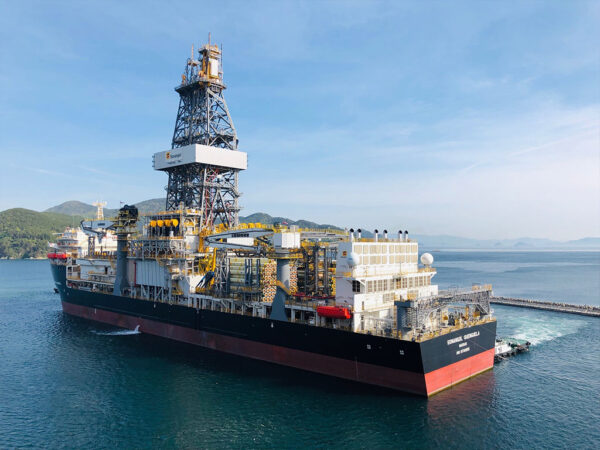
Equinor Energy has moved to extend its collaboration with Odfjell Drilling by exercising priced options for the Deepsea Atlantic rig, securing drilling work for five additional wells on the Johan Sverdrup phase 2 project. The extension, announced on November 30, 2022, carries an estimated value of $64 million and is expected to keep the high-specification rig active until at least the first quarter of 2024.
The development further cements Odfjell Drilling’s role as a critical service partner on Johan Sverdrup, one of the largest oil fields on the Norwegian continental shelf. Equinor, as operator of the project, continues to balance cost discipline with long-term energy security commitments, making such contract extensions pivotal to maintaining project momentum.
How much work will the Deepsea Atlantic rig perform under this extended drilling program?
According to Odfjell Drilling, the extension covers drilling of five new wells, which are expected to span approximately 190 days of rig activity. This timeline places the work neatly within the operational schedule for Johan Sverdrup phase 2, a project that remains central to Norway’s petroleum output strategy.
By stretching the firm backlog of the Deepsea Atlantic rig into 2024, Odfjell Drilling gains improved earnings visibility and more predictable utilization rates. With dayrates forming the backbone of offshore drilling revenues, such long-duration contracts provide stability against the backdrop of volatile oil market conditions.
What makes the Johan Sverdrup phase 2 project so strategically important for Equinor and Norway?
The Johan Sverdrup oil field represents one of the largest oil discoveries ever made in the North Sea, with estimated recoverable reserves ranging from 2.7 billion to 3.2 billion barrels of oil equivalent. Its significance extends beyond volume. As an energy source with some of the lowest carbon emissions per barrel globally, Johan Sverdrup underpins Norway’s dual strategy of maximizing resource value while adhering to ambitious climate goals.
Phase 2 of the project, which came onstream in December 2022, is designed to lift Johan Sverdrup’s production capacity from around 535,000 barrels per day to 720,000 barrels per day at plateau. Equinor has repeatedly emphasized that Johan Sverdrup alone is expected to meet up to one-third of Norway’s total oil production once at full capacity. For Odfjell Drilling, securing a place in this development is not just a matter of revenue but also of prestige, given the global visibility of Johan Sverdrup.
What role does Odfjell Drilling play in Equinor’s offshore portfolio?
Odfjell Drilling, headquartered in Bergen, Norway, operates a fleet of harsh-environment drilling rigs designed to handle demanding North Sea conditions. The Deepsea Atlantic, delivered in 2009, is a sixth-generation, semi-submersible rig built for operations in water depths up to 3,000 meters. It has been a consistent presence on the Johan Sverdrup field, providing both drilling efficiency and technical reliability.
The drilling contractor’s relationship with Equinor has been shaped by contracts such as the November 2020 agreement, under which the Deepsea Atlantic was initially engaged for Johan Sverdrup phase 2. That contract included options, now exercised, that allowed Equinor to extend work at pre-agreed rates. By activating these options, Equinor not only secures continuity but also shields itself from dayrate escalation in the tightening offshore rig market.
How does this contract extension reflect broader offshore drilling market dynamics in late 2022?
In 2022, offshore drilling contractors have been experiencing an upswing in demand after years of subdued activity. The supply of active rigs remains constrained, with many units cold-stacked during the downturn of 2015–2020 and only slowly returning to service.
Dayrates for harsh-environment rigs in the North Sea have been trending upward, reflecting both stronger oil prices and increased exploration and development spending by operators such as Equinor, Aker BP, and Lundin Energy. By locking in five additional wells under a priced option structure, Equinor ensures drilling continuity while limiting cost inflation exposure.
For Odfjell Drilling, the extension offers revenue visibility into 2024 and strengthens its utilization profile at a time when rig owners are prioritizing backlog stability. Investors and analysts in the sector generally view such contract extensions as a vote of confidence in both the rig’s performance and the contractor’s operational capabilities.
What financial impact does the $64 million extension have on Odfjell Drilling?
The extension, valued at approximately $64 million, translates to an effective dayrate near $337,000 based on the estimated 190-day schedule. While exact commercial terms remain confidential, this figure aligns with market expectations for high-specification rigs in the North Sea during 2022.
By extending the Deepsea Atlantic’s firm backlog, Odfjell Drilling not only secures additional revenues but also improves its visibility for investors tracking quarterly earnings. The extended contract mitigates exposure to idle time risk and strengthens the company’s position in a competitive drilling market.
Such contracts also feed into broader financial stability. For instance, a secured backlog stretching into 2024 allows Odfjell Drilling to plan capital expenditures, crew management, and maintenance schedules with greater certainty. It also provides assurance to shareholders looking for consistent cash flows in a cyclical industry.
What does this development signal for Norway’s energy strategy going into 2023 and beyond?
The decision by Equinor to secure additional wells on Johan Sverdrup reflects the Norwegian state-backed company’s emphasis on long-term field development. At a time when Europe faces heightened energy security concerns following disruptions in global supply chains, Johan Sverdrup remains a cornerstone asset for both Norway and the wider region.
By extending contracts with trusted service providers such as Odfjell Drilling, Equinor demonstrates continuity in project execution. The move underscores a broader theme: Norway intends to remain a reliable supplier of oil even as it continues to invest in renewable energy and carbon reduction technologies.
With Johan Sverdrup’s low break-even costs—reportedly below $20 per barrel—the project provides resilience against oil price volatility and ensures profitability under a wide range of market conditions.
How are institutional investors viewing Odfjell Drilling and Equinor’s outlook after the contract extension?
Institutional sentiment toward Odfjell Drilling is likely to improve with the extension, as investors favor companies with strong backlogs and visible earnings streams. The deal also reinforces Equinor’s reputation as a disciplined operator, one that balances cost with reliability.
Market watchers in late 2022 note that with global oil prices stabilizing above $80 per barrel, offshore drilling is regaining momentum. Contract extensions such as this reflect confidence in long-cycle projects and suggest that both Equinor and Odfjell Drilling are well-positioned to benefit from the upturn.
Looking ahead into 2023, the central theme will be whether more operators follow Equinor’s lead in exercising options and locking in rigs before rates rise further. For Odfjell Drilling, the ability to leverage proven performance on Johan Sverdrup may also open doors to additional contracts across the North Sea.
Discover more from Business-News-Today.com
Subscribe to get the latest posts sent to your email.