



Nuclear and uranium stocks rallied broadly after Urenco USA, the only commercial-scale uranium enrichment facility in the United States, unveiled a multibillion-dollar plan to expand its capacity by nearly 50 percent, a move aimed at rebuilding domestic nuclear fuel supply as the country weans itself off Russian imports. The announcement sent uranium and reactor names sharply higher, with Ur-Energy (NYSE: URG) jumping 22.8 percent, Uranium Energy (NYSE: UEC) rising 13.6 percent, Oklo (NYSE: OKLO) gaining 9.8 percent, Centrus Energy (NYSE: LEU) adding 5.3 percent, and the largest Western miner Cameco (NYSE: CCJ) climbing about 7 percent. Urenco USA said it will add 2.1 million separative work units of capacity at its Eunice, New Mexico site, lifting annual output to 6.4 million from 4.3 million, with the first new units operating in 2032. The expansion is backed by long-term customer contracts and lands as a United States ban on enriched-uranium imports from Russia moves toward full effect in 2028, even though Russia still supplies up to a quarter of American needs. The rally extends a powerful bull run across the entire nuclear fuel cycle, from mining to enrichment to advanced reactors.
What did Urenco USA announce and why did nuclear and uranium stocks jump?
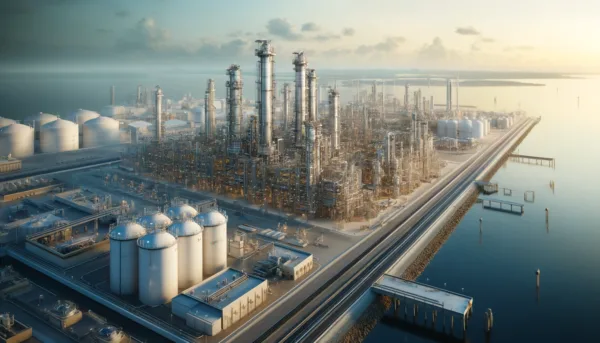
The announcement targeted a critical chokepoint in the fuel supply chain. Urenco USA said it would expand the only commercial uranium enrichment plant in the country by nearly 50 percent, adding 2.1 million separative work units through gas-centrifuge technology to take annual capacity to 6.4 million from 4.3 million. The first cascades are expected to begin operating in 2032, with additional units installed through 2036.
The market read the move as confirmation of a structural supply shortage. Investors responded immediately by bidding up the entire uranium and nuclear complex, because a major capacity expansion validates the thesis that demand for nuclear fuel is outpacing the West’s ability to supply it. When the operator of the sole domestic enrichment facility commits billions to new capacity backed by long-term contracts, it signals durable, contracted demand.
The breadth of the rally is telling. Gains spanned miners, enrichers, and reactor developers alike, from Ur-Energy and Uranium Energy in mining to Centrus Energy in enrichment and Oklo in advanced reactors, alongside exchange-traded funds tracking the sector. A move that lifts every segment of the fuel cycle at once reflects a thematic re-rating of nuclear power rather than a company-specific event.
Why does enrichment, not mining, sit at the heart of the US nuclear fuel bottleneck?
The fuel cycle has several distinct stages, and enrichment is the hardest to replace. Uranium must be mined, converted, and then enriched, raising the concentration of the fissile isotope before it can be fabricated into reactor fuel. Enrichment is technologically demanding and capital-intensive, and the West allowed its capacity to atrophy for decades while relying heavily on Russian supply.
This is why the Urenco expansion matters more than a new mine would. Mining capacity, which companies like Cameco and Energy Fuels can expand, addresses the raw material, but without sufficient domestic enrichment the United States cannot turn that material into usable fuel independent of Russia. The bottleneck has shifted downstream, and the Eunice expansion directly addresses the segment where Western capacity is most constrained.
Advanced reactors intensify the challenge. Many next-generation designs require high-assay low-enriched uranium, a more concentrated fuel that requires even greater enrichment capability and that the United States currently produces in minimal quantities. Oklo’s chief executive Jacob DeWitte has described fuel supply constraints as a key throttle on the industry, capturing why enrichment investment is the linchpin of the entire nuclear revival.
How does the 2028 Russian uranium import ban reshape the domestic fuel supply chain?
Policy is forcing a rapid restructuring of supply. A United States ban on enriched-uranium imports from Russia is moving toward full effect in 2028, yet Russia still supplies up to a quarter of American uranium and enrichment needs, leaving a significant gap that domestic and allied producers must fill within a few years. This creates an urgent, government-backed demand signal for Western capacity.
The energy security imperative is the driving force. Following geopolitical tensions and the broader effort to reduce reliance on Russian supply across the energy sector, building domestic and allied nuclear fuel capacity has become a strategic priority, supported by policy and long-term contracts. The Urenco expansion is a direct response to that mandate, underwritten by customer commitments rather than speculative demand.
The transition reshapes the competitive landscape in favor of Western producers. Companies positioned to supply uranium, conversion, and enrichment outside the Russian system stand to capture market share and pricing power as utilities scramble to secure non-Russian fuel ahead of the deadline. This dynamic underpins the bull case across the sector and explains why the Urenco news lifted miners and enrichers together.
How does AI data center power demand connect to the nuclear fuel cycle buildout?
The demand side of the story is being supercharged by AI. The explosion of artificial intelligence computing is driving unprecedented electricity demand, and nuclear power, which provides carbon-free baseload generation, has emerged as a preferred solution for technology companies seeking reliable round-the-clock energy for data centers. That demand ultimately flows back through the entire fuel cycle.
The reactor pipeline illustrates the linkage. Oklo, for example, has a commercial agreement with Meta for a large nuclear energy campus intended to supply data centers, and the broader wave of reactor commitments, including small modular reactors, each requires enriched fuel. More reactors mean more fuel demand, which is what makes enrichment capacity the gating factor for the whole expansion.
This connects the nuclear trade to the same forces lifting AI infrastructure broadly. Just as power delivery and energy storage have drawn investor attention as enablers of AI data centers, the nuclear fuel cycle is being repriced as a foundational input to the electricity those data centers consume. The Urenco expansion sits at the intersection of AI-driven power demand, decarbonization, and energy security, the three forces underpinning the sector’s structural bull case.
Which listed uranium, enrichment and reactor stocks are the market’s chosen plays?
Investors expressed the theme across distinct segments. In mining, Cameco remains the bellwether as the largest Western producer, recently consolidating its stake in the world’s highest-grade mine, while Ur-Energy, Uranium Energy, Energy Fuels, Denison Mines, and NexGen offer varying exposure to uranium extraction. Energy Fuels is also advancing projects intended to lift its production toward a multimillion-pound annual run rate while diversifying into critical minerals.
Enrichment and conversion are narrower but strategically vital. Centrus Energy stands out as a United States producer working toward domestic high-assay low-enriched uranium capability, positioning it directly in the segment the Urenco expansion highlights. Urenco itself is privately held, owned by European governments and utilities, so public investors gain enrichment exposure mainly through Centrus and the broader sector.
Reactor developers represent the highest-growth, highest-risk tier. Oklo, NuScale Power, Nano Nuclear Energy, and Lightbridge offer leverage to the deployment of advanced and small modular reactors, with Oklo benefiting from its data center partnerships and government engagement, including talks over a surplus plutonium program. For diversified exposure, sector exchange-traded funds tracking uranium and nuclear stocks bundle the entire fuel cycle into a single instrument.
What execution, timeline and valuation risks should nuclear investors weigh?
The first risk is the long timeline. The Urenco expansion will not begin operating until 2032 and will continue installing capacity through 2036, underscoring that the supply response to today’s demand is years away. The gap between near-term enthusiasm and distant delivery means the investment thesis depends on demand persisting over a long horizon.
The second risk is valuation and speculation. Many nuclear names, particularly reactor developers like Oklo, carry large market capitalizations relative to current revenue, and uranium itself is a historically cyclical commodity prone to long downturns. A meaningful portion of the sector’s gains reflects sentiment and policy expectations rather than current cash flows, leaving stocks exposed if enthusiasm cools or timelines slip.
The third risk is execution and policy dependence. Building enrichment capacity, permitting and constructing new reactors, and scaling advanced fuel production all carry technical and regulatory hurdles, and the bull case leans heavily on continued government support and the enforcement of the Russian import ban. None of this is investment advice, and the structural drivers of AI power demand, decarbonization, and energy security are genuine. But the nuclear fuel cycle remains a long-duration bet where the rewards are real and the timelines are measured in years, and investors chasing the rally should weigh the distance between the sector’s promise and its delivery.
Key takeaways on what the Urenco expansion means for the nuclear sector
- Urenco USA will expand the only commercial United States enrichment facility by nearly 50 percent, adding 2.1 million separative work units to reach 6.4 million annually.
- The news lifted the entire nuclear complex, with Ur-Energy up 22.8 percent, Uranium Energy up 13.6 percent, Oklo up 9.8 percent, and Cameco up about 7 percent.
- Enrichment, not mining, is the hardest bottleneck to replace, as Western capacity atrophied during decades of reliance on Russian supply.
- A United States ban on Russian enriched-uranium imports takes full effect in 2028, yet Russia still supplies up to a quarter of American needs.
- The expansion is backed by long-term customer contracts, signalling durable, contracted demand rather than speculative growth.
- AI data center power demand is a major driver, with reactor deals like Oklo’s Meta partnership flowing back into fuel demand.
- Advanced reactors require high-assay low-enriched uranium, intensifying the need for domestic enrichment capacity.
- Investors can play the theme across mining, enrichment, reactor developers, and diversified sector funds.
- The Urenco capacity will not operate until 2032 and build through 2036, underscoring the long timeline of the supply response.
- Cyclical uranium prices, elevated valuations, and dependence on policy support are the key risks to the structural bull case.
Discover more from Business-News-Today.com
Subscribe to get the latest posts sent to your email.