
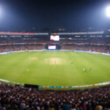



Millions of demonstrators took to the streets across the United States on Saturday, March 28, 2026, in what event organisers and independent observers described as potentially the largest single day of domestic political protest in the nation’s history. More than 3,300 events were held under the banner of the No Kings movement, a coalition of progressive organisations, in the third round of nationwide demonstrations against the policies of President Donald Trump.
The protests brought together participants across the political and geographic spectrum of the country, with organisers reporting that almost half of all events took place in Republican-leaning constituencies. Texas, Florida, and Ohio each recorded more than 100 individual events. States including Idaho, Wyoming, and Utah, which voted decisively for Trump in the 2024 presidential election, each hosted events in the double digits. Rural and small-town communities that had not previously participated in No Kings mobilisations joined the movement for the first time, including Kotzebue, Alaska; East Glacier Park, Montana; Seward, Alaska; and Driggs, Idaho. Organisers reported that roughly two-thirds of all events were held outside major urban centres.
The Minneapolis-Saint Paul metropolitan area in Minnesota served as the national flagship site, reflecting the central role the Twin Cities had come to play in domestic resistance to the Trump administration’s immigration enforcement operations. In January 2026, federal officers fatally shot two American citizens, Renee Good and Alex Pretti, in two separate incidents in Minneapolis during a large-scale federal enforcement surge. The deaths triggered immediate and sustained protests across Minnesota, including a general strike in the state on January 23, 2026, and a broader national strike on January 30, 2026.
How did the fatal shootings of Renee Good and Alex Pretti in Minneapolis set the context for the March 28 protest?
The deaths of Renee Good and Alex Pretti at the hands of federal agents conducting immigration operations in Minneapolis marked a turning point in the No Kings movement’s public profile and scope. Prior to the January 2026 killings, the movement had drawn millions into opposition to President Trump’s exercise of executive power, immigration enforcement at scale, and what organisers characterised as authoritarian governance. The shooting of two American citizens during domestic federal enforcement operations extended the movement’s reach beyond its existing base.
The Minnesota State Capitol in Saint Paul was designated the national centrepiece of the March 28 protests, with organisers describing it as the event ‘the whole country is watching.’ No Kings organisers estimated that more than 200,000 people attended the Saint Paul rally, a figure that, if accurate, would surpass attendance at the Women’s March in Washington, D.C. in January 2017. Saint Paul police closed multiple streets around the Capitol complex to accommodate the crowds.
Bruce Springsteen headlined the Saint Paul rally, performing ‘Streets of Minneapolis,’ a song written in response to the killings of Good and Pretti. Speaking from the stage, Springsteen praised Minnesotans for their sustained opposition to federal enforcement operations, stating that their commitment had told the rest of the country that ‘this was still America.’ Minnesota Governor Tim Walz, Independent Senator Bernie Sanders of Vermont, Attorney General Keith Ellison, and Representative Ilhan Omar also addressed the crowd. Performers including Joan Baez, Maggie Rogers, and Jane Fonda were in attendance.
What immigration enforcement policies and Iran war grievances were motivating demonstrators at No Kings events nationwide?
The March 28 protests reflected a wider range of political grievances than the two preceding rounds of No Kings mobilisations. The conduct of United States Immigration and Customs Enforcement operations remained the primary stated concern for many demonstrators, including what participants described as the use of masked federal agents in military-style operations, detention without due process, and the deaths of Renee Good and Alex Pretti. Demonstrators in Saint Paul, Philadelphia, Portland, New York City, and dozens of other cities carried signs and chanted slogans directed at Immigration and Customs Enforcement policy.
The United States military operation in Iran, which had been underway for approximately one month by the date of the protests, emerged as a second major driver of turnout. The operation, which the Trump administration launched alongside Israel, had resulted in the deaths of more than 1,500 Iranian civilians and 13 United States military personnel by late March 2026, according to reporting around the time of the demonstrations. The conflict had drawn criticism from within the Republican Party, with some members of Congress objecting to the administration’s refusal to share operational details and to the potential deployment of ground troops at a cost of hundreds of billions of dollars.
Secretary of State Marco Rubio stated on Friday, March 27, 2026, that the United States could achieve its objectives in Iran without deploying ground troops. President Trump had stated publicly that boots on the ground were not currently planned but declined to rule out the option. In Washington, D.C., protesters at the Lincoln Memorial cited the Iran conflict directly. In Kansas City, Missouri, participants including family members of active-duty military personnel drove significant distances to attend rallies.
Which major cities hosted the largest No Kings protests on March 28 and what was the scale of turnout in each location?
In Washington, D.C., large crowds gathered at the Lincoln Memorial and marched across Memorial Bridge from Arlington, Virginia, into the capital. Speakers at the Washington event included Senator Chris Murphy, Bill Nye, and Mehdi Hasan. In New York City, demonstrators marched south from Midtown Manhattan through Times Square, with participants carrying anti-Immigration and Customs Enforcement, anti-Trump, and anti-Iran war signs. The October 2025 No Kings protests drew more than 100,000 participants across New York City’s five boroughs, according to the New York Police Department, with organiser estimates considerably higher.
In Boston, Massachusetts, Governor Maura Healey, Senator Ed Markey, and Representative Ayanna Pressley addressed demonstrators. The Dropkick Murphys performed at the Boston event. In Philadelphia, Pennsylvania, crowds packed Benjamin Franklin Parkway, with roadways in the city centre closed. In Chicago, Illinois, large crowds gathered in Grant Park on the lakefront, organised in part by Indivisible Chicago and the American Civil Liberties Union of Illinois. An estimated 250,000 people participated in Chicago during the October 2025 No Kings protests, according to organisers.
In Los Angeles, California, thousands gathered outside Los Angeles City Hall, where a large inflatable balloon depicting President Trump was displayed by protesters. San Francisco demonstrators assembled at the Embarcadero Plaza and marched through the city. In San Diego, tens of thousands of participants marched along Harbor Drive. The San Francisco Bay Area recorded an estimated 220,000 participants in the October 2025 No Kings protests, according to a survey of organisers conducted by the Bay Area News Group. Portland, Oregon, saw a large crowd march through the city centre accompanied by a brass band.
How did the No Kings protests extend into Republican-voting states and rural communities for the first time in March 2026?
The geographic expansion of the March 28 protests was among the most reported developments of the day. Organisers had previously drawn their largest crowds in Democratic-leaning metropolitan areas, but registrations for events in conservative-leaning states surged ahead of the March mobilisation. In Kansas, a rally was held outside the Kansas Statehouse in Topeka. In Missouri, demonstrators gathered in Kansas City. In Florida, events were held in Boynton Beach, Fort Myers, and multiple other locations. In Fort Myers, participants dressed as characters from Margaret Atwood’s novel ‘The Handmaid’s Tale’ joined the march.
Emily Gregory, a Florida Democrat who won a state House special election days before the March 28 protests in the Palm Beach district encompassing Mar-a-Lago, attended the local No Kings rally near the estate and described meeting first-time protesters at each successive round of demonstrations. Small communities including Driggs, Idaho, a town of fewer than 2,000 people in a state Trump carried with 66 per cent of the vote in the 2024 presidential election, hosted events, as did remote Alaskan communities and rural Montana and Vermont towns.
What is the organisational structure behind the No Kings movement and how does it relate to previous protest waves in United States history?
The No Kings movement was co-organised principally by Indivisible, 50501, and the American Federation of Labor and Congress of Industrial Organizations, among other groups. Indivisible was founded in 2016 by former United States congressional staffers who drafted a public guide on how citizens could pressure their elected representatives, borrowing organising methods from conservative grassroots movements including the Tea Party. The 50501 movement’s name denotes 50 states, 50 protests, and one movement, framing the coalition’s reach as inherently national.
The first round of No Kings protests, held in June 2025, drew an estimated five million participants nationwide. The second round, in October 2025, drew an estimated seven million participants across approximately 2,600 events. Ahead of the March 28 mobilisation, organisers projected approximately nine million total attendees, a figure that, if verified, would place the day among the largest protest events in United States history. The October 2025 protests drew comparisons in scale with the historic Women’s March of January 2017, which had itself been described at the time as the largest single-day protest in United States history.
How did the international No Kings and No Tyrants solidarity protests on March 28 reflect global opposition to the Trump administration?
Demonstrations took place in more than a dozen countries outside the United States on March 28, 2026. In countries with constitutional monarchies, parallel events were organised under the name ‘No Tyrants,’ according to Indivisible co-executive director Ezra Levin. In Rome, thousands marched with banners opposing the United States and Israeli military operations in Iran, calling for ‘a world free from wars.’ The Rome protests occurred against the backdrop of domestic political tensions in Italy over the Meloni government’s referendum on judicial reform, which had failed earlier in the week.
In London, demonstrators carried signs reading ‘Stop the far right’ and ‘Stand up to Racism.’ In Paris, hundreds gathered at the Bastille, including Americans resident in France alongside French labour unions and human rights organisations. Banners in Paris read ‘No Kings, No War.’ The international dimension of the March 28 events reflected the movement’s stated objective of situating its opposition to the Trump administration within a broader global context of democratic accountability and anti-war activism.
How did the White House respond to the No Kings protests and what was the reaction from Democratic officials and protest leaders?
The White House declined to engage substantively with the stated grievances of the No Kings protesters. Spokesperson Abigail Jackson issued a written statement dismissing the demonstrations as ‘Trump Derangement Therapy Sessions’ and asserting that they were funded by ‘major leftist’ financial networks. Jackson stated that the ‘only people who care about these Trump Derangement Therapy Sessions are the reporters who are paid to cover them.’
President Trump had previously dismissed earlier rounds of No Kings protests in public statements, describing them as unrepresentative of the country and characterising participants in dismissive terms. At the same time, Trump had also referenced and in some instances appeared to engage with the royal framing of the protests, including posting an artificial-intelligence-generated video depicting himself wearing a crown.
Randi Weingarten, president of the American Federation of Teachers, addressed the protests, stating that Trump could not ignore millions in the streets. Fedrick Ingram, secretary treasurer of the American Federation of Teachers, told reporters in Portland that the union’s presence was intended to demonstrate hope and resilience. Democratic elected officials appeared at flagship events in several states, including Minnesota, Massachusetts, Washington, D.C., and Florida.
Key takeaways on what the March 28 No Kings protests mean for United States politics, civil society, and democratic institutions
- The March 28, 2026 No Kings protests were the third and largest round of coordinated nationwide demonstrations against the Trump administration, with more than 3,300 events planned across all 50 states and at least a dozen countries, and pre-event projections of approximately nine million attendees.
- The flagship rally at the Minnesota State Capitol in Saint Paul, headlined by Bruce Springsteen and attended by senior Democratic officials, drew an estimated 200,000 participants according to organiser figures, making it a focal point of opposition to the Trump administration’s immigration enforcement operations in the state.
- The dual political triggers of the event were the Trump administration’s Immigration and Customs Enforcement operations, including the January 2026 fatal shootings of American citizens Renee Good and Alex Pretti in Minneapolis, and the approximately one-month-old United States military operation in Iran, which had drawn criticism from within the Republican Party.
- The geographic scope of the protests expanded significantly compared to the June and October 2025 rounds, with organisers reporting that nearly half of all events took place in Republican-leaning constituencies and roughly two-thirds outside major metropolitan areas, including in rural Alaska, Idaho, Montana, Kansas, and Vermont.
- The White House dismissed the protests as ‘Trump Derangement Therapy Sessions’ attributed to ‘leftist funding networks,’ while the movement’s organisers confirmed plans for continued mobilisation and follow-up organising events in the weeks following March 28.
Discover more from Business-News-Today.com
Subscribe to get the latest posts sent to your email.