

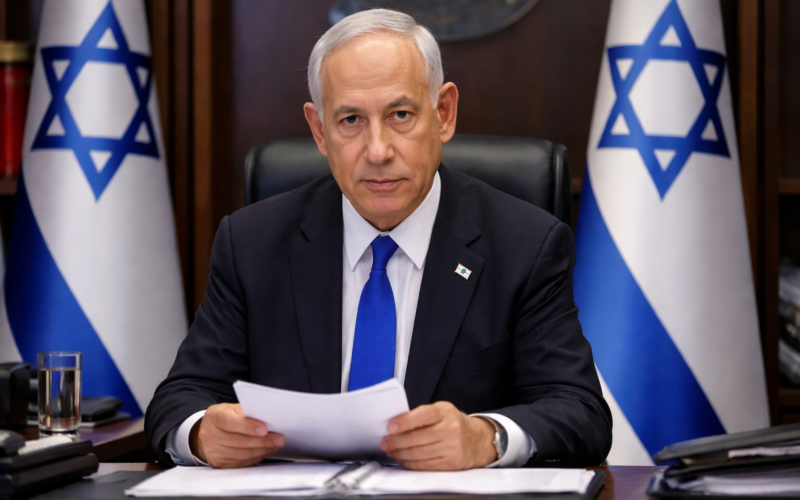
Israel has publicly drawn a distinction between diplomacy with the Lebanese state and any discussion of a ceasefire with Hezbollah, saying it refused to discuss a truce with the armed group while agreeing to begin formal peace negotiations with Lebanon. The development follows a preparatory call involving Israeli and Lebanese ambassadors to the United States on Friday and points to a U.S.-mediated effort to open a state-to-state negotiating channel even as fighting between Israel and Hezbollah continues.
The immediate significance of the statement is that Israel is trying to frame the coming diplomatic process as one with Lebanon as a sovereign state rather than with Hezbollah as an armed non-state actor. That framing matters because Lebanon has been pressing for a ceasefire to create space for broader talks, while Israel has been signaling that any negotiation it accepts will be tied instead to Hezbollah’s disarmament and to wider questions about the future relationship between Israel and Lebanon.
Why is Israel saying it will negotiate with Lebanon but not discuss a ceasefire with Hezbollah?
Israel’s public line reflects two tracks that are moving at the same time but not on the same terms. On one track, Israel has indicated that it is ready to begin direct negotiations with Lebanon as soon as possible. On the other, Israeli officials have made clear that they do not view Hezbollah as a legitimate counterpart for ceasefire bargaining and continue to describe the group as the main obstacle to peace. That is why the reported message from Israel’s side after the ambassador-level contact was not that a truce had been opened for negotiation, but that a formal negotiation framework with Lebanon would begin.
This distinction also helps explain the seeming contradiction in the headlines around the story. One set of reports emphasizes that Israel and Lebanon are preparing for talks in Washington. Another emphasizes that Israel rejected a ceasefire discussion. Both can be true at the same time because the parties are not describing the purpose of the talks in identical terms. Lebanon has stressed ceasefire needs, while Israel has stressed formal peace negotiations, Hezbollah’s disarmament, and broader political arrangements.
What happened between the Israeli and Lebanese ambassadors before Tuesday’s planned meeting?
Available reporting indicates that Israeli, Lebanese, and U.S. officials held a preparatory phone call on Friday ahead of an in-person meeting expected at the United States Department of State next week. The call reportedly included the Israeli ambassador to the United States, the Lebanese ambassador to the United States, the U.S. ambassador to Lebanon, and a senior United States Department of State official. The purpose was to set up an initial diplomatic format for further talks rather than to announce a finalized ceasefire arrangement.
That preparatory format is important because Israel and Lebanon do not have normal diplomatic relations and have historically relied on indirect or U.S.-mediated channels even when they have managed targeted agreements. Reuters noted that the two countries engaged in U.S.-mediated discussions before, including the 2022 maritime boundary deal, but the current talks are being presented as broader and more politically sensitive because they touch security, armed non-state actors, and the possibility of more formalized relations.
Why are Israel-Lebanon talks emerging now as fighting with Hezbollah continues?
The talks are emerging amid a wider regional diplomatic scramble shaped by the fragile U.S.-Iran ceasefire process and by concern that the Lebanon front could undermine that effort. Reuters reported that pressure from President Donald Trump helped push Israeli Prime Minister Benjamin Netanyahu toward accepting negotiations with Lebanon after the U.S. and Iran reached a ceasefire agreement, even though Israeli military action in Lebanon did not stop. Vice President JD Vance also said earlier this week that the U.S.-Iran ceasefire was not agreed to cover Lebanon.
That means the Lebanon track is developing in a narrow and unstable diplomatic window. Israel appears willing to talk, but only without conceding that Lebanon is covered by the broader ceasefire language that some regional actors believed should apply. Lebanon, by contrast, has been seeking a temporary ceasefire to allow broader discussions to move forward. The gap between those two positions explains why even the start of formal talks is being described as tentative and why the scope of the negotiations remains contested before they have properly begun.
How are Lebanon and Hezbollah framing the proposed negotiations differently from Israel?
Lebanon’s official position, as reflected in recent reporting, has been to seek a ceasefire first and then use that pause to enter broader discussions. Lebanese President Joseph Aoun supported direct talks while emphasizing the need for a ceasefire. A senior Lebanese official also told Reuters that Beirut had been working to secure a temporary ceasefire to enable wider peace talks. This places the Lebanese state closer to a sequencing argument: stop the fighting first, then negotiate.
Hezbollah has taken a harder line. Reuters reported that Hezbollah lawmaker Ali Fayyad said the group rejected any direct negotiations with Israel and argued that Lebanon’s position should require a ceasefire first, along with the withdrawal of Israeli troops from Lebanese territory and the return of displaced people. This means the emerging negotiation format is not only a dispute between Israel and Lebanon, but also a test of whether the Lebanese state can sustain a diplomatic track that Hezbollah itself opposes.
What does Israel’s position reveal about the goals of the coming Washington negotiations?
Israel’s stated goals point to a negotiation agenda that is much broader than de-escalation alone. Reuters and Associated Press reporting both indicate that Israeli officials are linking the talks to Hezbollah’s disarmament and to the possibility of peaceful relations between Israel and Lebanon. If that remains the operative Israeli position, the talks are not merely about tactical restraint on the border. They are about whether the Lebanese state can assume greater security authority in ways that reduce Hezbollah’s military role.
That is also why Israel’s refusal to discuss a ceasefire with Hezbollah is more than rhetorical positioning. It signals an attempt to deny Hezbollah the status of a negotiating equal and to push responsibility upward onto the Lebanese state. In practical terms, that approach raises the threshold for any immediate breakthrough, because the actor Israel most wants constrained is not the same actor with which Lebanon’s constitutional order can easily sever itself politically or militarily. Reuters described Hezbollah’s political and social influence in Lebanon as a major complication for any disarmament effort.
Why does this Israel-Lebanon diplomatic opening matter beyond the immediate border conflict?
The broader importance of the story lies in how it intersects with regional diplomacy, U.S. mediation, and the architecture of state authority in Lebanon. If talks proceed, they could become one of the most consequential direct or near-direct Israel-Lebanon diplomatic contacts in decades. If they stall immediately over sequencing, they will still have clarified a key policy divide: Israel wants talks detached from any Hezbollah ceasefire bargain, while Lebanon wants de-escalation to enable talks.
The talks also matter because they are unfolding while active hostilities continue. Associated Press reported fresh Israeli strikes and Hezbollah attacks ahead of the planned negotiations, underlining the fragility of the diplomatic opening. That combination of live conflict and formal diplomatic preparation makes the coming Washington meeting less a peace breakthrough than a test of whether state-level diplomacy can survive while the battlefield remains unsettled.
At a minimum, the latest exchange establishes one verified point with more clarity than many of the early headlines conveyed. Israel is not signaling readiness to negotiate a ceasefire with Hezbollah. It is signaling readiness to begin formal negotiations with Lebanon, with U.S. mediation, on terms Israel wants defined around state responsibility, Hezbollah’s disarmament, and a wider political settlement. Whether Lebanon can engage on that basis without a prior ceasefire is the central unresolved question going into Tuesday’s next step.
What Israel’s refusal to discuss a ceasefire with Hezbollah means for Lebanon and U.S. diplomacy
- Israel has separated formal negotiations with Lebanon from any discussion of a ceasefire with Hezbollah, signaling that it wants diplomacy conducted state to state rather than with the armed group directly.
- The planned Washington talks follow a preparatory Friday call involving Israeli, Lebanese, and U.S. officials, showing active United States mediation even as the scope of the talks remains disputed.
- Lebanon has been pressing for a ceasefire before broader talks, while Israel has emphasized Hezbollah’s disarmament and broader peace terms, leaving a clear sequencing gap before negotiations formally begin.
- Hezbollah has rejected direct negotiations with Israel, which means the Lebanese state may enter talks while facing internal political and security constraints from a powerful domestic actor.
- The diplomatic opening is tied to a wider regional effort to stabilize the aftermath of the U.S.-Iran ceasefire process, making the Lebanon file significant beyond the immediate Israel-Hezbollah front.
Discover more from Business-News-Today.com
Subscribe to get the latest posts sent to your email.