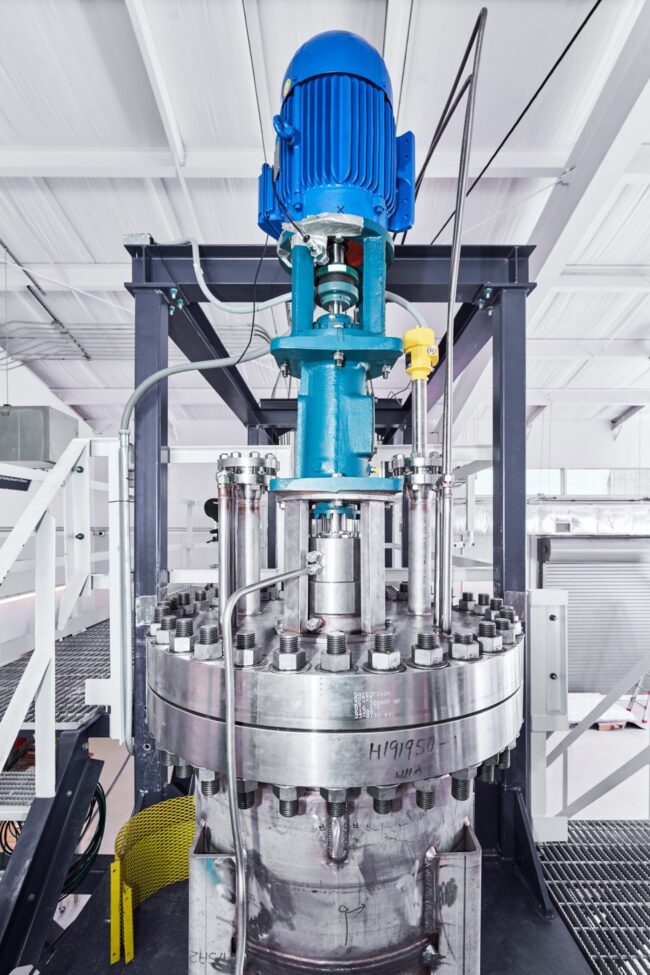
Natura Resources LLC, a Texas-based advanced nuclear energy company, has made a bold move to accelerate its small modular reactor (SMR) roadmap by acquiring Shepherd Power and signing a wide-ranging commercialization partnership with NOV Inc. (NYSE: NOV). The two-tiered transaction brings together Natura’s molten salt reactor (MSR) design, Shepherd’s deployment know-how, and NOV’s manufacturing scale in a strategic play to deliver gigawatt-level nuclear power by the early 2030s.
The acquisition and partnership were announced on December 10, 2025, positioning Natura as a frontrunner among advanced reactor developers aiming for commercial readiness within the decade. The deal gives Natura full access to Shepherd Power’s expertise in regulatory licensing and turnkey reactor operations, while enabling NOV to apply its global supply chain and energy equipment capabilities to the nuclear sector through equity investment and board representation.
Analysts tracking the clean energy transition said the move could significantly strengthen the U.S. advanced nuclear ecosystem, especially for mission-critical sectors like data centers, semiconductor fabs, and industrial desalination, which are seeking high-temperature, dispatchable, low-carbon energy.

How does the Natura–NOV alliance plan to scale SMRs for industrial baseload needs?
The partnership aligns Natura Resources’ MSR design with NOV’s project management, engineering, and equipment manufacturing strengths—an approach aimed at slashing deployment costs and timelines for modular nuclear systems. Under the deal, NOV will provide core hardware fabrication, logistics, and commercialization support to roll out multiple gigawatts of SMR capacity between 2029 and 2032, with target customers ranging from hyperscale computing operators to heavy industries.
Doug Robison, Founder and Chief Executive Officer of Natura Resources, described the partnership as a pivotal leap toward market readiness. He emphasized that Shepherd Power’s leadership in regulatory engagement and siting expertise will allow Natura to offer fully integrated “site, build, own, operate” models for its customers. The three-party structure is also expected to enable streamlined permitting pathways, which have historically slowed down nuclear innovation.
Jose Bayardo, President and Chief Operating Officer of NOV, said the power market represents one of the largest industrial opportunities of the next decade. He highlighted NOV’s ability to deliver engineering-scale systems with the reliability and quality assurance required by the energy sector. According to Bayardo, Natura’s reactor could be one of the first Gen IV designs to reach full commercialization in the United States.
What makes Natura’s molten salt reactor different from conventional nuclear designs?
Unlike traditional light-water reactors, Natura’s MSR uses liquid fuel dissolved in a molten salt mixture, allowing it to operate at high temperatures and atmospheric pressure. This significantly reduces the risks of meltdown and improves thermal efficiency. The design also supports a flexible fuel cycle, capable of using low-enriched uranium, recycled nuclear waste, and potentially thorium.
Another advantage is isotope harvesting. Natura’s reactor design facilitates the extraction of rare medical isotopes, such as actinium-225 and molybdenum-99, which are used in cancer diagnostics and treatment. This dual-purpose capability—electricity plus isotopes—could help justify deployments in both grid-connected and research-oriented environments.
Natura claims its modular 100-megawatt reactors will be cost-competitive with natural gas plants, especially in regions requiring 24/7 baseload power with zero-carbon attributes. The company’s commercial systems are also being considered for produced water desalination in the Permian Basin, where oil and gas activities create significant water stress and energy demand.
What is the deployment timeline for Natura’s advanced reactor systems?
Natura is currently building its MSR-1 test facility at Abilene Christian University, which received a Nuclear Regulatory Commission (NRC) construction permit in September 2024. This 1-megawatt demonstration unit is scheduled to go online in 2026 and will serve as the technical and safety validation platform for the 100-MW commercial version.
In parallel, Natura plans to file two separate NRC applications before the end of 2025. One will focus on a dedicated medical isotope production reactor, while the other will address grid-scale power generation. The first 100-megawatt full-scale unit is expected to be operational by 2029, with volume deployments following in the early 2030s.
U.S. Department of Energy officials have previously identified Natura’s MSR program as one of the most likely Gen IV designs to achieve early commercial deployment, given its construction readiness, modular scalability, and use of existing uranium supply chains.
Why did NOV invest in Natura, and what role will it play going forward?
As part of the transaction, NOV has taken an equity stake in Natura and will appoint a member to the company’s board of directors. This signals a long-term commitment to advanced nuclear as a strategic diversification move beyond oilfield services and conventional energy.
NOV’s 150-year history in manufacturing highly engineered equipment, from offshore drilling rigs to high-spec pressure systems, makes it uniquely positioned to industrialize reactor construction. Analysts familiar with both firms say NOV’s involvement could help derisk manufacturing timelines and bring “design for manufacturability” principles to a sector traditionally hampered by cost overruns and bespoke builds.
NOV’s entry into nuclear echoes a broader trend of industrial conglomerates and legacy energy firms seeking exposure to clean energy platforms with large addressable markets and regulatory tailwinds.
Can Natura lead the next wave of American nuclear innovation?
With over $120 million in private capital and an equal commitment from the State of Texas, Natura Resources is one of the best-funded private SMR developers in the U.S. outside of government-funded labs or defense contractors. Its combination of academic collaboration, regulatory engagement, and industrial partnerships gives it a unique positioning in the post-Inflation Reduction Act nuclear landscape.
Investors and policy observers are closely watching how quickly Natura can move from demonstration to commercial scale. With the Biden administration, and now the second-term Trump administration, both maintaining bipartisan support for nuclear innovation, advanced reactor developers are benefiting from loan guarantees, DOE grants, and permitting reforms.
If Natura can hit its deployment targets by 2029 and prove cost competitiveness, it could unlock a new era of distributed nuclear for AI infrastructure, industrial hubs, and water-stressed regions. The firm’s ability to integrate medical, power, and manufacturing value streams also sets it apart in a crowded SMR field.
Key takeaways from Natura’s SMR acquisition and NOV partnership
- Natura Resources has acquired Shepherd Power and partnered with NOV Inc. to scale its molten salt small modular reactor (SMR) technology.
- The deal aims to deploy gigawatts of SMR capacity between 2029 and 2032, with focus on AI data centers and industrial customers.
- Shepherd Power brings regulatory and siting experience, while NOV offers manufacturing, supply chain, and board-level support.
- Natura’s MSR uses liquid fuel at atmospheric pressure, enabling high safety margins and isotope harvesting for medical use.
- A 1-MW test reactor is under construction at Abilene Christian University and slated for deployment in 2026.
- Two commercial NRC applications—one for isotopes, one for grid power—are expected by end-2025.
- The first 100-MW commercial reactor is targeted for 2029, with full-scale rollout to follow.
- Analysts say Natura could be among the first Gen IV reactors to reach U.S. commercial deployment.
- The design is modular, cost-competitive with natural gas, and suitable for water desalination and baseload power.
- NOV’s equity investment signals growing industrial interest in advanced nuclear as a long-term growth vertical.
Discover more from Business-News-Today.com
Subscribe to get the latest posts sent to your email.