

How MOIL Limited’s state trading enterprise status could reshape India’s manganese export landscape
MOIL Limited (NSE: MOIL, BSE: 533286), India’s largest manganese ore producer and a Government of India enterprise, has entered a pivotal new phase in its strategic evolution. The company’s shares rallied more than 5% to ₹389.50 on October 3, 2025, following the dual announcement of record quarterly production and the successful dispatch of its first export consignment of manganese ore under its newly acquired state trading enterprise (STE) status. The developments together underscore MOIL’s ambition to extend its influence from domestic mining to global mineral trade.
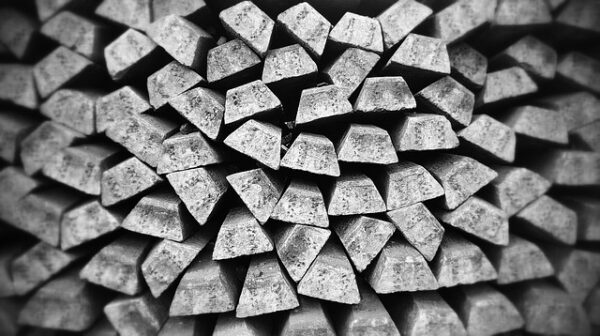
The Ministry of Commerce and Industry officially appointed MOIL as the authorized state trading enterprise for exporting manganese ore below 46% Mn grade. Acting under this mandate, MOIL shipped 54,600 tonnes of manganese ore fines from Visakhapatnam port to Indonesia on August 22, 2025. This was the first shipment under the new regime, establishing MOIL as the sole channel for routing low-grade manganese exports from India in line with the national trade policy. The transaction was executed through a back-to-back arrangement with domestic suppliers, allowing MOIL to serve as both exporter and facilitator while ensuring regulatory compliance and traceability across the supply chain.
The company’s Chairman and Managing Director, Ajit Kumar Saxena, described the export as a landmark event that reaffirmed MOIL’s operational capabilities and its role in enhancing India’s global footprint in critical minerals. He emphasized that the achievement was a result of meticulous planning and the establishment of a transparent, mechanism-driven export process that aligns with India’s strategic trade objectives.
What does MOIL’s record second-quarter performance reveal about its operational momentum?
On October 3, 2025, MOIL reported its highest-ever September and quarterly production figures, setting a new performance benchmark in the company’s 63-year history. The firm produced 1.52 lakh tonnes of manganese ore during September 2025, registering a 3.8% increase compared to the same month last year. For the July to September 2025 quarter, total output climbed to 4.42 lakh tonnes, representing a 10.3% year-on-year rise and the strongest quarterly production ever recorded by the company.
Sales momentum mirrored this upward trajectory, increasing 18.6% year-on-year to 3.53 lakh tonnes in the same quarter. This strong sales performance suggests that MOIL has successfully balanced supply growth with demand optimization in both domestic alloy and steel industries. Equally significant was the expansion of exploratory core drilling activity, which reached 21,035 meters in Q2 FY’26—a 4.1% increase from the previous year—signaling the company’s intent to build long-term mineral reserves and sustain output growth.
September alone saw a surge in drilling to 5,314 meters, nearly 46% higher than the previous year. This focus on exploration underscores MOIL’s strategy to enhance resource visibility and reduce geological risk across its operating mines. Saxena attributed these results to a disciplined approach to production planning and a renewed emphasis on sustainable mining practices that balance growth with environmental responsibility.
Why do low-grade manganese exports matter for India’s mineral strategy and foreign exchange earnings?
The export of low-grade manganese ore is particularly significant for India’s trade and resource management strategy. The country produces large volumes of ore with manganese content around 25%, much of which exceeds domestic demand due to limited applicability in higher-grade alloy production. Traditionally, this low-grade material has remained underutilized, affecting inventory turnover and mine productivity.
By exporting surplus low-grade ore through an authorized mechanism, MOIL is not only monetizing underused assets but also contributing to India’s foreign exchange earnings. The company’s move aligns with the government’s broader goal of optimizing mineral exports to enhance value realization from non-strategic grades while reserving higher-grade resources for domestic steelmaking and battery-grade applications.
In practical terms, the export initiative reduces waste and enables Indian miners to participate more effectively in global supply chains. It also helps stabilize the market by creating an outlet for surplus production that could otherwise depress domestic prices. Analysts have pointed out that MOIL’s leadership in this domain could set a precedent for other state-controlled enterprises seeking to expand their international trade presence in non-ferrous minerals.
How are investors and institutional players responding to MOIL’s growth trajectory?
Investor reaction to MOIL’s September and Q2 updates was overwhelmingly positive, as evidenced by the stock’s strong movement on the Bombay Stock Exchange and National Stock Exchange. The share price climbed to ₹389.50, up from ₹368.40 in the previous session, bringing its market capitalization to approximately ₹7,925 crore. The rally pushed the stock closer to its 52-week high of ₹409.90, suggesting growing confidence among both retail and institutional investors.
At a price-to-earnings ratio of around 28, the stock trades roughly in line with the NIFTY Total Market Index, reflecting balanced valuation metrics relative to its peers in the mining sector. However, MOIL’s recent operational momentum and policy-backed export privileges have added a strategic premium to its market outlook. Trading volume for the day surpassed 5.2 million shares, indicating heightened institutional activity and fresh buying interest from mutual funds and domestic institutional investors (DIIs).
Market observers note that the company’s dual advantage—record output and exclusive export authority—has significantly improved its long-term narrative. The convergence of policy support, rising global manganese demand, and MOIL’s production efficiency has repositioned it as a critical mineral stock to watch in India’s public-sector portfolio.
What does MOIL’s expansion mean for the global manganese market and India’s steel supply chain?
MOIL’s operational progress comes at a time when global manganese markets are undergoing structural shifts. With Indonesia, South Africa, and Australia dominating international trade in manganese ore, India’s entry as a consistent low-grade exporter adds new diversity to supply chains. The shift also supports India’s steel industry, which continues to rely heavily on manganese as a key alloying element.
Increased export capability could, paradoxically, strengthen India’s domestic supply resilience by allowing producers to optimize mine economics. The revenue generated from exports can be reinvested into mechanization, exploration, and environmental management, creating a virtuous cycle of productivity. Additionally, the presence of an STE model ensures that exports remain transparent, regulated, and strategically aligned with national interests—an approach that helps avoid resource leakage while maintaining global competitiveness.
Industry insiders suggest that MOIL’s leadership in manganese could mirror Coal India’s central role in the coal sector, with both serving as pillars of India’s resource self-sufficiency narrative. However, unlike coal, manganese operates within a global commodity ecosystem where pricing volatility, freight costs, and geopolitical shifts in demand—especially from China and Southeast Asia—play defining roles in profitability.
How sustainable is MOIL’s current growth, and what risks could shape its near-term outlook?
While MOIL’s near-term fundamentals appear robust, several external factors could influence its trajectory. Global manganese prices, driven by steel output trends and Chinese demand cycles, remain a key determinant of export margins. Freight rates and port handling efficiencies also impact competitiveness, particularly for lower-grade ore.
Domestically, MOIL faces the challenge of balancing export growth with the supply needs of local ferro-alloy producers. Maintaining equilibrium between domestic allocation and export commitments will be crucial for long-term stakeholder alignment. Nonetheless, the company’s aggressive exploration push, improved mechanization, and operational discipline position it well to manage cyclical pressures.
Institutional sentiment remains bullish, with many investors viewing the current expansion phase as an inflection point that could lead to improved cash flows and valuation re-rating. If MOIL continues to deliver double-digit production growth through FY’26 while scaling exports, it could emerge as one of India’s top-performing public-sector mining firms by volume and profitability.
How do MOIL’s record production and first export milestone collectively redefine India’s leadership in the global manganese value chain in 2025?
MOIL’s transition from a domestic mining leader to a globally engaged exporter represents a strategic turning point for India’s mineral economy. By combining production efficiency with export-driven diversification, the company is helping India reclaim relevance in the global manganese trade after years of limited participation. The dual achievements—record output and the first international consignment under STE status—underline its role as both industrial performer and policy instrument.
For investors, this blend of operational growth and government endorsement presents a rare convergence of stability and upside potential. As the global steel and battery industries expand, demand for manganese will likely rise, providing a tailwind for MOIL’s long-term strategy. With disciplined exploration, continued modernization, and a clear trade framework, MOIL Limited appears well positioned to lead India’s next phase of mineral export growth.
Discover more from Business-News-Today.com
Subscribe to get the latest posts sent to your email.