Milestone Pharmaceuticals Inc. (NASDAQ: MIST) has secured U.S. Food and Drug Administration approval for CARDAMYST (etripamil), a first-in-class nasal spray that allows adults to self-treat acute episodes of paroxysmal supraventricular tachycardia (PSVT) without clinical supervision. This regulatory milestone enables Milestone to transition from a development-stage biotech to a commercial-stage cardiovascular company, while also laying the foundation for expansion into additional indications such as atrial fibrillation with rapid ventricular rate (AFib-RVR).
The approval positions Milestone Pharmaceuticals at the forefront of a strategic shift in cardiac arrhythmia care. By enabling patients to treat unpredictable PSVT episodes at home, CARDAMYST addresses a long-standing therapeutic gap and could reduce the reliance on emergency department visits and intravenous interventions. With commercial launch targeted for the first quarter of 2026, the focus now turns to payer engagement, prescriber adoption, and execution across retail pharmacy channels.
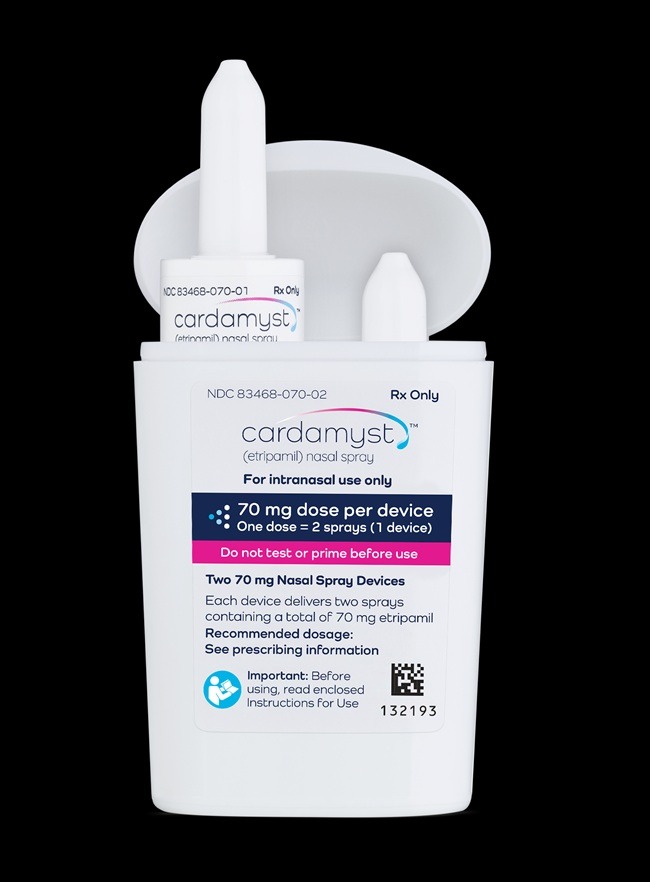
Why the FDA approval of CARDAMYST represents a major turning point in PSVT management and biotech commercialization
For over three decades, the PSVT treatment landscape has remained largely unchanged, with patients relying on emergency care or invasive procedures to restore normal heart rhythm. PSVT episodes are marked by abrupt, sustained heart rate acceleration, often reaching 150 to 200 beats per minute, and may last from minutes to hours. The anxiety around episode unpredictability and the disruptive nature of symptoms has left patients with limited options, often dependent on hospital-based care.
The FDA’s green light for CARDAMYST introduces a completely new modality. Delivered intranasally, etripamil is a fast-acting calcium channel blocker designed for self-use at the onset of symptoms. In clinical trials, the product demonstrated statistically significant and clinically meaningful efficacy in restoring sinus rhythm faster and more consistently than placebo. This redefines both the standard of care and the patient experience, placing treatment within reach of the user in real time.
For Milestone Pharmaceuticals, the decision marks its transition into a commercial organization. With CARDAMYST set to enter the retail channel in early 2026, the company must now pivot from regulatory focus to payer negotiations, distribution logistics, and marketing to cardiologists and primary care physicians. It also places Milestone in a competitive arena where reimbursement, education, and patient advocacy will play decisive roles in determining adoption velocity.
What clinical evidence supported the FDA’s decision and how it strengthens Milestone’s market credibility
The approval was anchored by data from more than 1,800 participants across a clinical program that tracked over 2,000 PSVT episodes. Central to the application was the Phase 3 RAPID trial, a double-blind, placebo-controlled study that enrolled 184 patients and achieved its primary endpoint. Results published in The Lancet demonstrated that 64 percent of patients self-administering CARDAMYST converted to sinus rhythm within 30 minutes, compared to 31 percent on placebo. The median time to conversion was 17 minutes in the treatment group, compared with 54 minutes for placebo.
These outcomes underscore the therapeutic value of etripamil as an at-the-ready intervention. Importantly, the safety profile was favorable, with most adverse events being mild to moderate and transient. The most commonly reported side effects included nasal discomfort, congestion, and throat irritation. Less than two percent of patients discontinued therapy due to adverse events. The consistency of response across subgroups, including those on beta blockers or calcium channel blockers, supports CARDAMYST’s versatility across a broad patient population.
From a regulatory standpoint, the clean safety profile combined with meaningful time-to-conversion data was critical in securing FDA approval for a product that shifts administration from medical personnel to patients. The level of rigor in trial design, combined with reproducible outcomes, enhances Milestone’s clinical credibility and sets a strong foundation for future regulatory interactions, particularly in pursuing additional cardiovascular indications.
How this launch could alter emergency care utilization and payer dynamics across arrhythmia treatment
One of the most consequential implications of CARDAMYST’s approval is the potential to reduce strain on emergency departments and lower the cost burden associated with PSVT. Historically, patients experiencing an acute episode have had few options outside seeking urgent care, which often results in intravenous intervention, observation periods, or in some cases, catheter ablation procedures. This cost-intensive pathway also introduces emotional and logistical stress for patients.
By introducing a treatment that patients can administer themselves, Milestone Pharmaceuticals is introducing a value proposition directly aligned with payer objectives. The shift to at-home treatment could substantially decrease hospital utilization rates, which in turn supports arguments for formulary inclusion and insurance coverage. Early commercial success will likely depend on how rapidly Milestone can demonstrate these health-economic benefits to payers and secure reimbursement at a price point that balances access with commercial sustainability.
Additionally, CARDAMYST may prompt guideline updates or inclusion in clinical practice recommendations, which will be critical for long-term prescriber trust and widespread use. Should early real-world evidence mirror the RAPID trial data, it could reinforce the therapeutic and financial rationale for adopting etripamil as a first-line rescue therapy.
What this signals for Milestone’s pipeline, starting with AFib-RVR and beyond
While the PSVT approval serves as a launchpad, Milestone Pharmaceuticals is already positioning etripamil for broader use. The next frontier is atrial fibrillation with rapid ventricular rate, a condition affecting a significantly larger population than PSVT. An estimated 10 million Americans suffer from atrial fibrillation, and a sizable subset experience episodes requiring acute rate control.
Milestone’s ReVeRA Phase 2 trial in AFib-RVR, published in Circulation: Arrhythmia and Electrophysiology, demonstrated encouraging results, with etripamil showing potential in rapidly reducing heart rate and relieving symptoms. With guidance from the FDA, the company is now planning a Phase 3 registrational study for this indication. If successful, Milestone would follow a supplemental New Drug Application pathway using both the PSVT dataset and new AFib-RVR data to expand CARDAMYST’s label.
This dual-indication strategy is both capital-efficient and scientifically justified. It positions Milestone to extract maximum value from its lead asset without needing to launch an entirely new product. Moreover, it deepens the company’s presence in a space where pharmacologic alternatives often fall short or require monitored, intravenous administration.
If executed well, the combination of PSVT and AFib-RVR could form a durable commercial franchise. Milestone will need to balance operational focus on CARDAMYST’s launch with ongoing clinical investment in the AFib-RVR program. Successful expansion could also attract strategic interest from larger pharmaceutical firms with established cardiovascular infrastructure, particularly if uptake in the PSVT indication meets or exceeds early benchmarks.
How investors are reassessing Milestone Pharmaceuticals post-approval
Investor sentiment surrounding Milestone Pharmaceuticals has been closely tied to the binary nature of the CARDAMYST regulatory decision. With that hurdle now cleared, equity analysts and institutional investors will shift their attention to commercial execution risk and real-world traction. The company’s share price has exhibited volatility in the days following the announcement, reflecting both optimism around the launch potential and caution around the challenges of scaling a specialty pharmaceutical product.
The next key data points for investors include formulary wins, retail distribution agreements, physician prescription rates, and early revenue guidance. With a modest-sized salesforce relative to cardiovascular incumbents, Milestone will need to demonstrate efficient market penetration strategies. Its ability to activate advocacy groups, patient education platforms, and virtual outreach to clinicians could serve as multipliers to its physical infrastructure.
If CARDAMYST achieves strong early adoption and formulary coverage, investor confidence could expand rapidly, potentially supporting secondary offerings or strategic licensing deals. Conversely, any indication of lagging uptake could pressure management to revisit pricing strategies or seek partnerships for commercialization support.
What are the key takeaways on Milestone Pharmaceuticals’ CARDAMYST approval and strategic trajectory?
Milestone Pharmaceuticals has secured a pivotal FDA approval that redefines the PSVT treatment model and signals its entry into the commercial phase of operations. CARDAMYST’s success in trials and potential in real-world application creates a foundation for broader cardiovascular innovation under the etripamil franchise. The company’s next challenges revolve around execution, payer engagement, and label expansion.
- CARDAMYST is the first self-administered nasal spray approved for PSVT, enabling at-home intervention and reducing dependency on emergency care.
- The RAPID trial provided robust data, with a median time to conversion of 17 minutes and a strong safety profile, supporting FDA approval.
- Milestone Pharmaceuticals now faces execution risk as it launches into retail and seeks rapid payer adoption and reimbursement coverage.
- The company is advancing toward a second indication in AFib-RVR using the supplemental pathway, expanding the addressable market.
- Institutional investors are now focused on commercialization metrics rather than regulatory outcomes, with early traction likely to shape share performance.
- CARDAMYST aligns with health-economic goals by potentially lowering emergency room visits and offering patients more autonomy.
- Strategic interest from larger cardiovascular players may increase if etripamil demonstrates utility across multiple arrhythmias.
- The FDA approval resets the company’s narrative from clinical development to revenue generation and platform expansion.
Discover more from Business-News-Today.com
Subscribe to get the latest posts sent to your email.