





Lords Hotels & Resorts has signed Lords Sambhav Villas, a 112-room hotel scheduled to open in Pushkar, Rajasthan, in September 2026. Located about 1.5 kilometres from Brahma Mandir, the property will become the hospitality chain’s ninth hotel in Rajasthan and will include accommodation, dining, recreation and large-event infrastructure. The signing expands Lords Hotels & Resorts in a destination where religious travel increasingly overlaps with leisure tourism, destination weddings and corporate gatherings. Its central commercial challenge will be converting Pushkar’s highly visible but seasonal visitor demand into consistent room occupancy, banquet revenue and repeat business throughout the year.
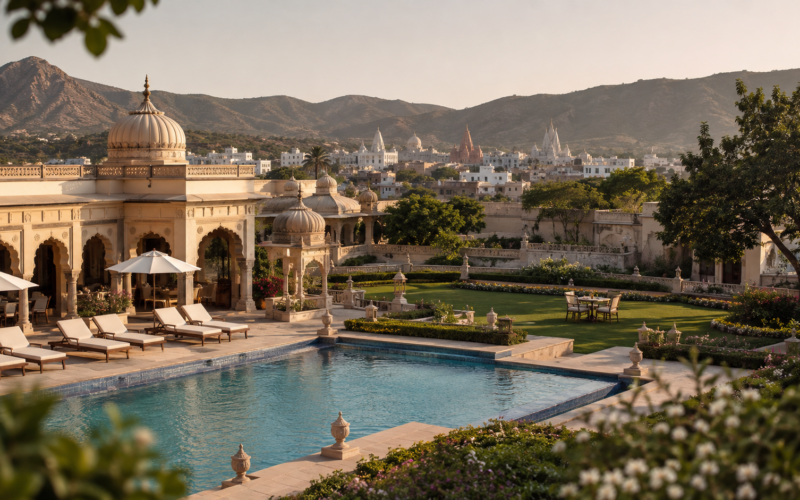
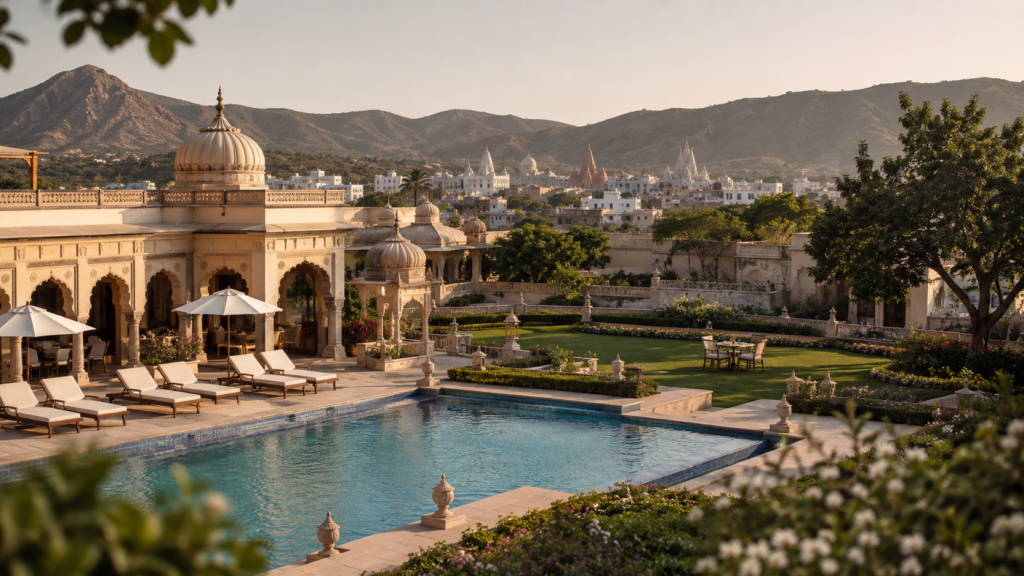
The new property will feature 112 rooms, an all-day dining restaurant, a swimming pool and a dedicated children’s play area. It will also include a banquet hall and landscaped lawns designed to support destination weddings, social celebrations, conferences, business meetings and incentive programmes. That combination places Lords Sambhav Villas somewhere between a pilgrimage-oriented hotel and a full-service destination resort, broadening the number of customer segments it can pursue.
The scale is strategically important. A 112-room hotel is large enough to accommodate wedding groups, corporate delegations and organised tours without depending solely on individual travellers, while the banquet and outdoor-event facilities create revenue opportunities beyond overnight stays. The design therefore suggests that food, events and group bookings will be important parts of the property’s economics rather than secondary amenities.
Lords Hotels & Resorts has not publicly disclosed the identity of the property owner, the financial terms of the signing, the duration of the agreement or the capital contribution expected from each party. The announcement confirms that a contract has been signed, but it does not specify whether the arrangement is structured as a management agreement, franchise agreement, lease or another operating model. That missing information limits any precise assessment of the capital employed, fee structure or financial return expected from the expansion.
Why is Lords Hotels & Resorts combining pilgrimage, wedding and MICE demand in Pushkar?
Pushkar offers a commercially unusual mix of demand. The town is an important Hindu pilgrimage destination built around Pushkar Lake, Brahma Mandir and hundreds of temples, but it also attracts domestic leisure travellers, international visitors, wedding groups and tourists moving through Rajasthan’s broader heritage circuit. Rajasthan Tourism describes Pushkar as one of India’s oldest cities and a destination visited by large numbers of tourists and devotees.
Lords Hotels & Resorts executives said the Pushkar signing reflects the company’s focus on culturally significant destinations capable of attracting pilgrimage, leisure, wedding and corporate travel. Chief Operating Officer Pushpendra Bansal indicated that the company views Pushkar as a market with several overlapping demand drivers rather than a destination dependent on religious travel alone. Vice President of Operations and Development Vikas Suri similarly identified spiritual heritage, leisure appeal, weddings and MICE activity as the factors supporting the property’s inclusion in the portfolio.
This diversification matters because hotel demand in pilgrimage destinations can be concentrated around festivals, auspicious dates, weekends and school holidays. Weddings, conferences and incentive groups can fill rooms during different periods, while banqueting generates revenue from guests who may not stay overnight. A successful mixed-demand strategy can therefore reduce dependence on one seasonal calendar, although it also requires separate sales capabilities for religious tours, travel agents, wedding planners and corporate accounts.
The location near Brahma Mandir should support visibility among religious and leisure visitors. However, proximity alone will not guarantee premium pricing or sustained occupancy. The hotel will still need convenient transport access, reliable service, effective digital distribution and a clear value proposition against independent resorts, heritage properties and other branded hotels operating around Pushkar and nearby Ajmer.
How could 112 rooms and event facilities change the economics of Lords Sambhav Villas?
The property’s 112-room inventory provides the scale needed to pursue larger organised groups. Wedding parties and corporate events often require room blocks, food and beverage packages, meeting spaces, outdoor functions and multiple-day itineraries. Lords Sambhav Villas can potentially bundle those services into higher-value packages rather than competing only on nightly room prices.
The banquet hall and landscaped lawns could become particularly important in Rajasthan’s destination-wedding market. Wedding business can improve occupancy while generating additional income from catering, venue rental, decorations and related services. It can also produce booking visibility months in advance, giving hotel operators greater control over staffing, procurement and pricing.
However, event-led hotels face their own operating risks. Revenue may become concentrated around a limited number of large functions, while service failures during a wedding or corporate gathering can damage the property’s reputation quickly. Event spaces also require dedicated sales teams, banquet operations, kitchen capacity, parking, logistics coordination and the ability to handle sharp fluctuations in guest numbers.
The children’s play area and swimming pool indicate that the property is also positioning itself for families and leisure groups. These facilities may help extend stays beyond temple visits, especially for travellers combining Pushkar with Ajmer, Jaipur or other Rajasthan destinations. The real test will be whether Lords Hotels & Resorts can turn those amenities into longer average stays rather than simply adding facilities that increase maintenance costs.
Why does the September 2026 opening create both an opportunity and an execution test?
A September opening would give Lords Sambhav Villas a short period to stabilise operations before Rajasthan’s stronger autumn and winter travel season. It would also place the hotel in the market ahead of the 2026 Pushkar Camel Fair, scheduled for November 17 to November 24, an event that brings together religious visitors, tourists, traders and cultural activities.
That timing creates a potentially valuable launch window. The hotel could use the fair period to build visibility, attract travel agents and test its ability to handle high occupancy. It could then pursue winter weddings, year-end leisure travel and corporate off-sites as the Rajasthan tourism season develops.
The timetable also leaves limited room for delay. A September launch requires the building, rooms, kitchens, banquet infrastructure, technology systems, recruitment, licensing and supplier network to be ready almost immediately. A soft opening with incomplete facilities could undermine the property’s positioning just as customer demand begins to strengthen.
Pre-opening sales will therefore be almost as important as construction completion. Wedding planners, tour operators and corporate travel managers typically make decisions well before arrival dates. Lords Hotels & Resorts will need to market the property before opening, publish room and event packages, secure distribution across online travel platforms and build a pipeline of group business rather than waiting for walk-in demand.
September should consequently be viewed as the beginning of the commercial test, not the completion of the project. The first measurable indicators will be whether the opening occurs on schedule, whether all major facilities are operational and whether the property secures meaningful bookings for the festival and wedding seasons.
How does the Pushkar signing fit Lords Hotels & Resorts’ broader expansion strategy?
Lords Hotels & Resorts describes itself as a hospitality chain with more than 3,000 rooms across 70 hotels, 57 destinations and three countries. Its portfolio includes brands aimed at premium, contemporary business, mid-market, extended-stay, economy and resort customers.
The Pushkar hotel extends that portfolio in a destination where the group can apply several of those capabilities simultaneously. It requires resort-style leisure amenities, business-event infrastructure, group sales, religious-tourism distribution and wedding operations. Success would strengthen the company’s credibility with property owners seeking an operator capable of serving more than one guest segment.
The signing also deepens Lords Hotels & Resorts’ exposure to Rajasthan. A ninth property can create regional advantages through shared sales relationships, staff development, supplier networks and cross-selling between destinations. A guest visiting one Lords property can potentially be introduced to another hotel elsewhere in the state, particularly when travelling through Rajasthan on a multi-city itinerary.
Scale, however, can create pressure on brand consistency. Expanding quickly across multiple destinations requires trained general managers, revenue-management systems, food and beverage standards and quality-control processes that work across different owners and property formats. The commercial value of adding hotels depends not only on the number of signings but on whether each property achieves acceptable occupancy, guest satisfaction and owner returns.
The company’s official website identifies partner and investor returns as part of its operating vision. Lords Sambhav Villas will therefore need to demonstrate that its 112 rooms and event infrastructure can generate sufficient revenue across multiple seasons, rather than relying on the strength of Pushkar’s name alone.
What does Rajasthan’s tourism growth mean for branded hotels entering Pushkar?
Rajasthan’s tourism market provides a supportive demand backdrop. The state reportedly received around 25.44 crore tourist visits in 2025, up approximately 10 percent from 23.22 crore in 2024, with heritage, religious tourism, weddings and MICE activity contributing to growth.
The expansion of branded hotels into spiritual and secondary destinations reflects a broader shift in Indian hospitality. Operators are increasingly moving beyond major metropolitan markets as improved roads, rising domestic travel and higher spending on experiences create demand for standardised accommodation in smaller cities and tourism centres. International and domestic hotel groups are also competing for management and franchise opportunities in markets that historically relied heavily on independent hotels.
For guests, branded properties can offer predictable service, centralised reservations, loyalty benefits and clearer quality standards. For hotel owners, established operators can provide revenue management, distribution, recruitment and corporate sales. Yet branded supply also raises the competitive threshold for existing independent properties, especially in destinations where online reviews and digital visibility strongly influence booking decisions.
Pushkar’s challenge is that strong visitor numbers do not automatically translate into high hotel profitability. Some tourists visit as part of day trips from Ajmer or Jaipur, while pilgrimage travellers may be price-sensitive or stay for short periods. Lords Sambhav Villas must persuade customers to remain overnight, extend their visits or purchase event and dining services.
That makes product positioning crucial. If room rates are pushed too high, the property could lose value-conscious families and pilgrimage groups. If rates are set too low, the hotel may struggle to support the operating cost of a 112-room property with a pool, lawns, banquet facilities and full-service dining. Revenue management must balance high-demand festival and wedding periods against softer weekdays and off-season months.
What will determine whether Lords Sambhav Villas becomes a durable Pushkar hotel business?
The signing gives Lords Hotels & Resorts a credible strategic entry into Pushkar, backed by meaningful room inventory and facilities capable of serving several customer segments. The location, September opening target and proximity to Brahma Mandir create an opportunity to capture pilgrimage, leisure and festival demand soon after launch.
What remains unresolved is the property’s ownership structure, investment model, opening readiness, pricing strategy and initial booking pipeline. The absence of disclosed financial terms also means the commercial importance of the signing to Lords Hotels & Resorts cannot be measured purely from the announcement.
The strongest evidence of success will come after opening. An on-time launch, functioning banquet and leisure facilities, strong customer reviews and bookings extending beyond major festivals would indicate that the property is building a balanced demand base. Delays, excessive dependence on discounted group business or weak off-season occupancy would suggest that Pushkar’s visitor popularity is not translating into durable hotel economics.
Lords Sambhav Villas therefore represents more than another location on the company’s portfolio map. It is a test of whether Lords Hotels & Resorts can combine religious tourism, destination events and family leisure within one operating model, while maintaining service standards during a period of continued expansion.
Key takeaways from the Lords Sambhav Villas hotel signing in Pushkar
- Lords Hotels & Resorts has signed the 112-room Lords Sambhav Villas in Pushkar, Rajasthan.
- The property is scheduled to open in September 2026.
- Lords Sambhav Villas will become the group’s ninth hotel in Rajasthan.
- The hotel will be located around 1.5 kilometres from Brahma Mandir.
- Facilities will include an all-day restaurant, banquet hall, landscaped lawns, swimming pool and children’s play area.
- The commercial strategy targets pilgrimage, leisure, destination weddings, MICE and corporate travel.
- A September launch could position the hotel ahead of the November 2026 Pushkar Camel Fair.
- Financial terms, ownership details and the precise operating-contract structure have not been disclosed.
- Execution priorities include opening readiness, pre-launch group sales, service recruitment and event operations.
- Long-term success will depend on generating steady occupancy and event revenue outside festival and wedding peaks.
Discover more from Business-News-Today.com
Subscribe to get the latest posts sent to your email.

